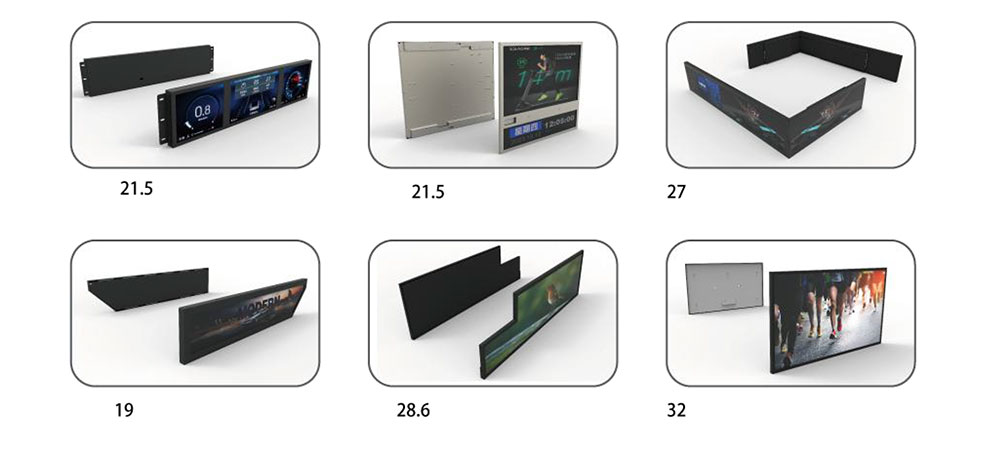
Why the British installed base keeps breaking: the bar-format obsolescence problem
Walk into a British rail depot, a West Midlands machine shop, a Scottish bottling hall or a Thames Valley pharmaceutical suite and you will find the same quiet crisis. The equipment itself is mechanically sound — gearboxes, pumps, ovens, presses and signalling racks that were built to last thirty years. What fails is the sliver of glass in the fascia: a bar-shaped or "stretched" LCD showing status lines, weight readings, shift counters, passenger information or alarm banners. It is a 6.2-inch 640×240 panel from a Japanese fab that ceased production in 2016. The OEM has been absorbed twice. The distributor's last-time-buy stock ran out during the pandemic. Now a £250,000 asset is idled by a component that cost £38 when it was current.
This article is written for the maintenance engineers, design authorities and procurement managers who have to solve that problem under a fixed budget and a looming production restart date. It sets out what a bar LCD actually is, why the original disappears, which replacement routes exist, how each route is engineered and qualified, and — critically for Britain — which certification evidence you must hold to keep the machine legally placeable on the market after a display change.
What "bar LCD" means in engineering terms
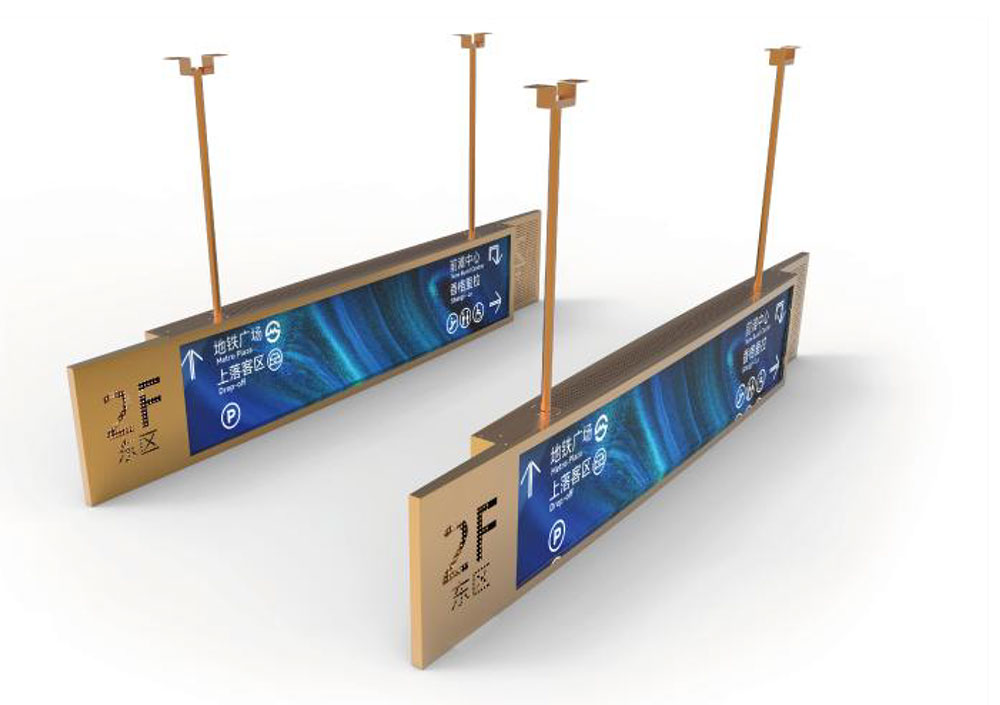
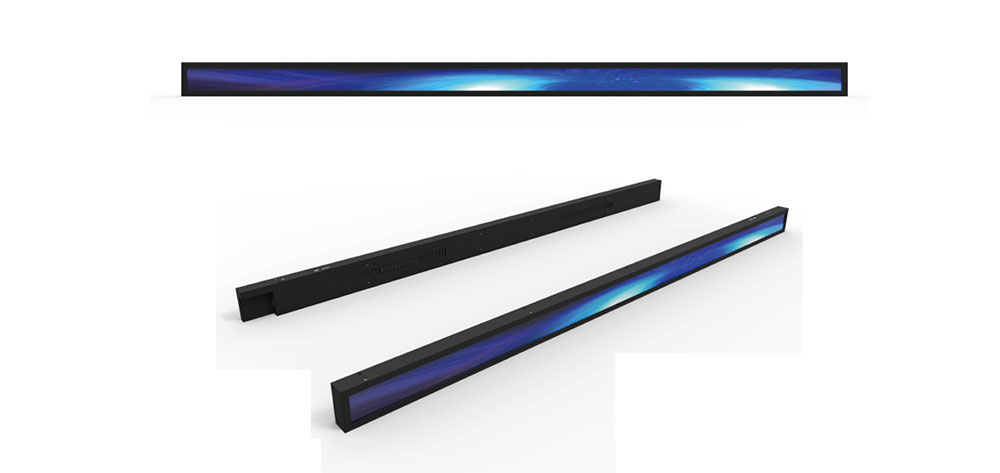
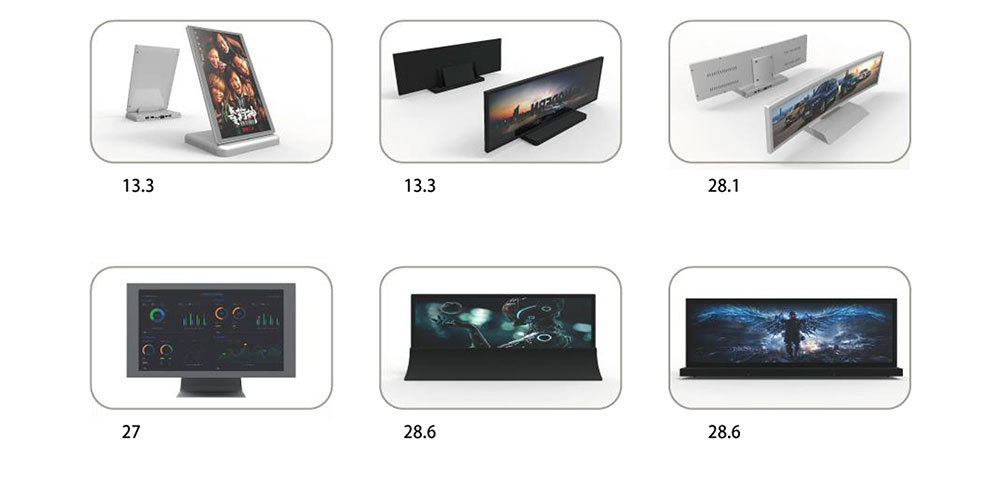
A bar LCD (also called a stretched, banner, strip or ultra-wide display) is a thin-film-transistor panel whose aspect ratio is deliberately non-standard. Instead of 4:3 or 16:9, these panels run from roughly 3:1 up to 16:1. They exist because a wide, shallow window suits a single line of information better than a square one, and because the mechanical envelope behind a rack fascia, an ATM topper or a vending door is shallow and wide.
| Typical diagonal | Typical resolution | Aspect ratio | Classic British application |
|---|---|---|---|
| 6.2 in | 640 × 240 | 8:3 | Legacy machine-tool pendant, weigh head |
| 8.8 in | 1920 × 480 | 4:1 | Shelf-edge rail, bus interior next-stop |
| 12.3 in | 1920 × 720 | 8:3 | Train saloon information, medical rack |
| 16.4 in | 1366 × 256 | 16:3 | Platform indicator, kiosk marquee |
| 28 in to 38.5 in | 1920 × 360 to 1920 × 540 | 4:1 to 16:3 | Station concourse, retail fascia, drive-through |
| 47 in to 49 in | 1920 × 540 to 3840 × 540 | 16:4.5 | Depot control room, airport pier signage |
The awkward truth is that bar panels are produced in far smaller volumes than mainstream 16:9 panels. A fab allocates capacity to the highest-yield, highest-demand geometry. Bar formats sit at the wrong end of that queue, so when a generation of fabs moves to a larger glass substrate, the bar SKUs are the first to receive a product-discontinuance notice — and the last to be re-tooled.
The five replacement routes, ranked by disruption
Route 1 — Form-fit-function drop-in
Where a current bar panel matches the original on active-area dimensions, mounting-hole pattern, connector type and pin-out, driver timing and backlight rail, the change is almost administrative. In practice a true drop-in exists for perhaps one legacy part in four. The windows that do match are usually the 8.8-inch 1920×480, 12.3-inch 1920×720 and 28-inch 1920×360 families, which have accumulated enough industrial demand to sustain a persistent supply base.
Route 2 — Mechanical re-engineering with an adapter frame
If the active area matches but the bezel, screw bosses, FPC exit direction or connector differ, a machined or moulded adapter bracket restores the original footprint. Good practice here is to design the adapter as a drop-in sub-assembly that carries the new panel, its backlight driver and, if needed, a small interface board, so that a field technician swaps one module rather than a kit of loose parts. Allow 0.3 mm to 0.5 mm of clearance all round, and specify the bracket in a material that survives the enclosure's cleaning regime — anodised aluminium for washdown areas, powder-coated steel or flame-retardant PC/ABS for cabinetry.
Route 3 — Signal-chain conversion
This is where most legacy retrofits actually succeed or fail. Older British-built equipment speaks a dialect: parallel RGB TTL on a 41-pin Hirose-style connector, VGA from an embedded SBC, composite video from a 1990s annunciator, DVI from a first-generation industrial PC, or a proprietary serial bus driving a display controller that no longer exists.
- TTL to LVDS: a transmitter board converts the parallel RGB stream to a single or dual LVDS link, with the pixel clock and DE/HS/VS timing preserved. Strip the original panel's timing table from its datasheet and confirm that the new panel accepts the same clock range before you commit.
- VGA, DVI or HDMI to LVDS/eDP:KEYWORDS: Bar LCD Display Alternatives for Discontinued Industrial Equipment in Britain