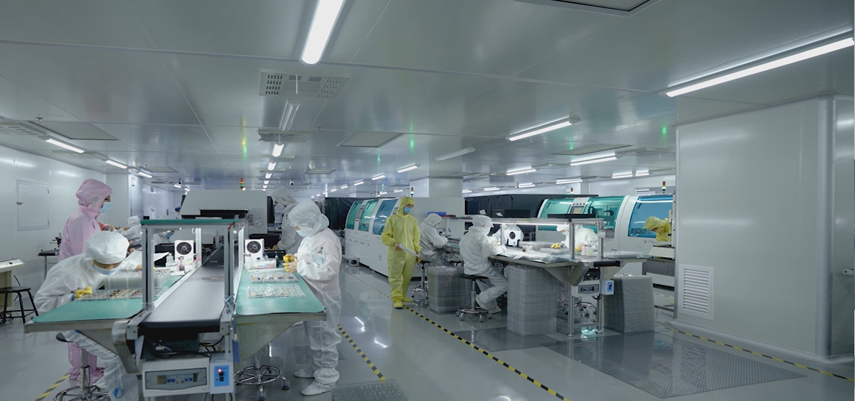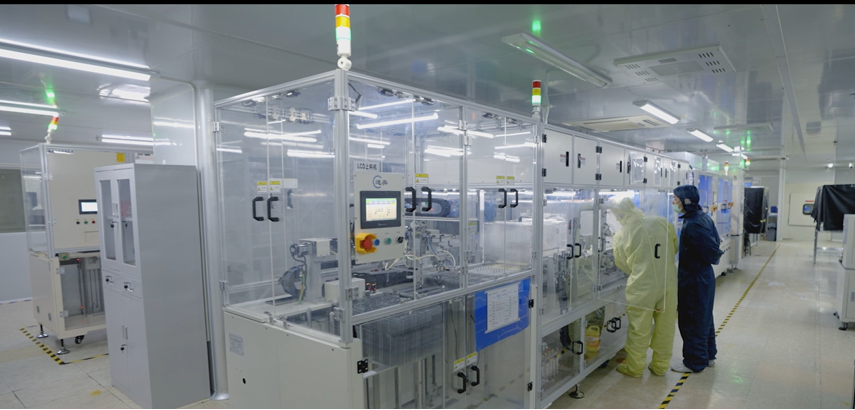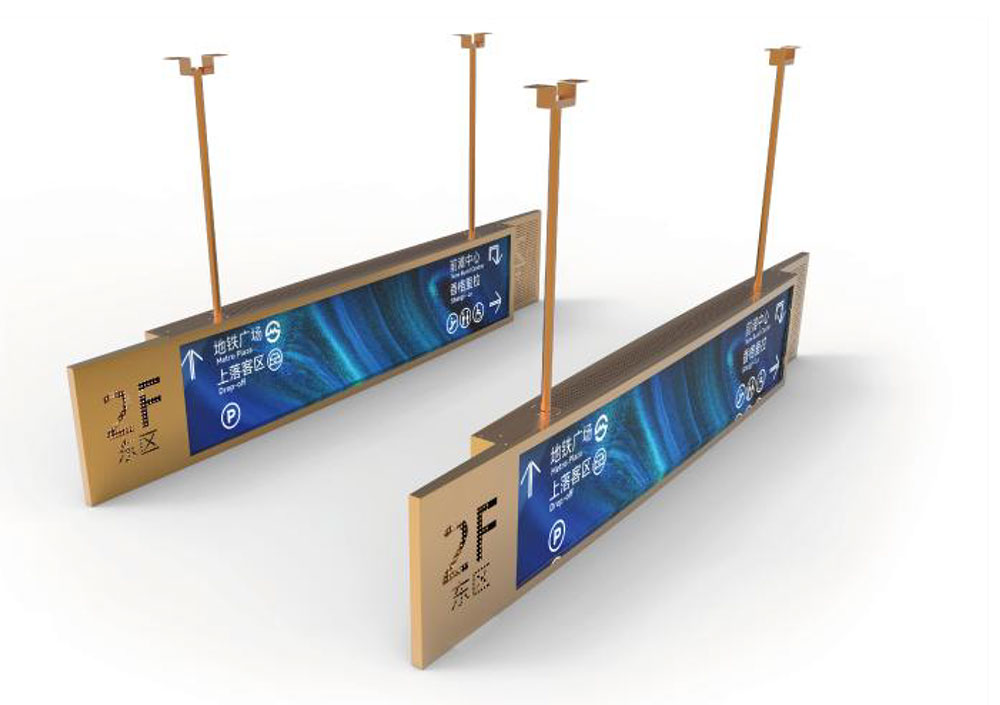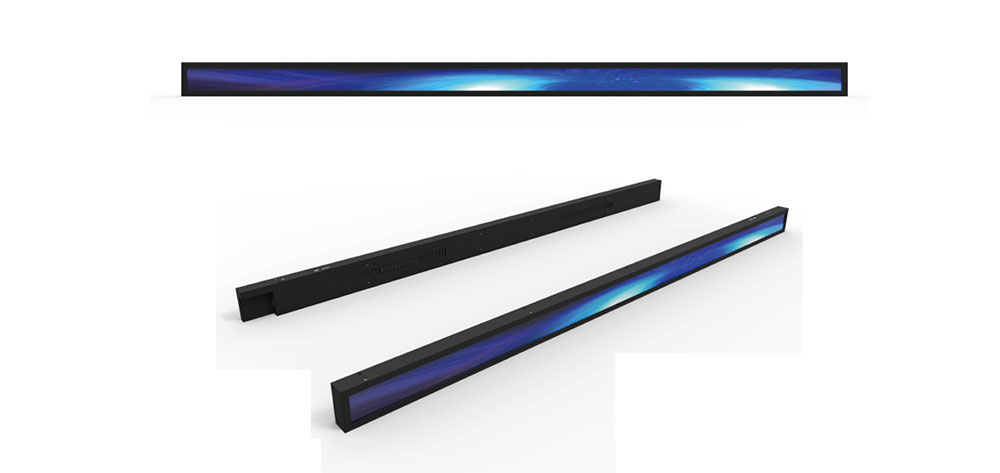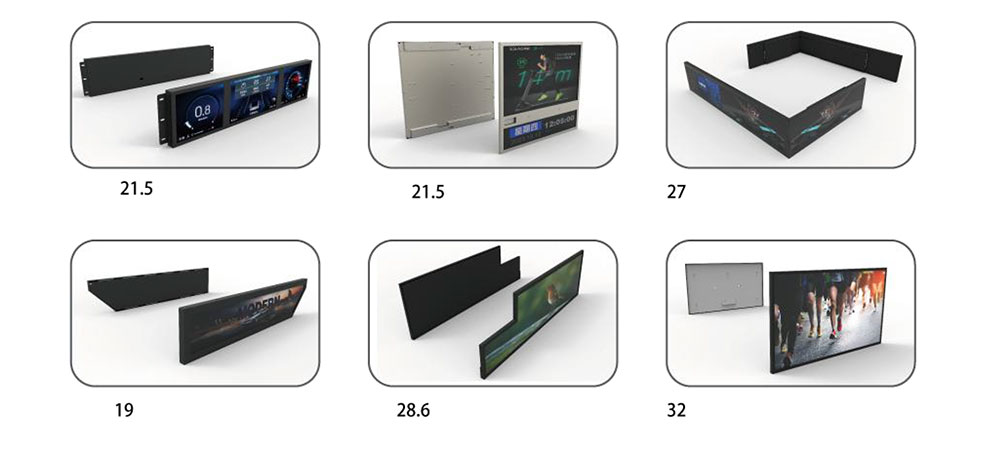
A bar LCD is not simply a standard panel cropped down. It is a display whose active area has been deliberately re-proportioned into an elongated rectangle — typically between 2:1 and 30:1 — so that it fits a strip of front panel, a shelf lip, a vending fascia or a machine bezel where a 16:9 rectangle would waste vertical space or foul moving parts. For a British equipment manufacturer, that geometric constraint arrives early in the design cycle and rarely changes: the machine's housing, the door thickness, the internal cable routing and the CE/UKCA risk assessment are usually settled before the display is chosen. The display has to be designed around the machine, not the other way round. That is the whole case for custom bar LCDs.
What Makes a Bar LCD Custom
Off-the-shelf bar panels exist in useful formats — 1920 x 480, 2800 x 1424, 800 x 320, 3840 x 1080 — but they cover only a handful of active-area sizes and one or two brightness classes. Anything outside that band becomes a custom programme, and the customisation can be assembled from several independent layers:
- Active area, outline dimensions and the position of the mounting bosses, defined to the nearest 0.1 mm against the host enclosure.
- Brightness class, from a 350 cd/m² indoor panel through 1000 cd/m² for shopfront-facing machines to 1500-2500 cd/m² where direct sunlight or high ambient contrast is unavoidable.
- Backlight architecture: edge-lit light guide, direct-lit LED array, number of LED strings and local dimming zones, all of which set the thermal load as much as the optical output.
- Interface and pin-out: LVDS, eDP, MIPI DSI or parallel RGB on an FPC, with a connector position and exit direction chosen for the machine's cable path.
- Cover glass, touch sensor, optical bonding and surface treatment, which together decide readability, durability and cleanability.
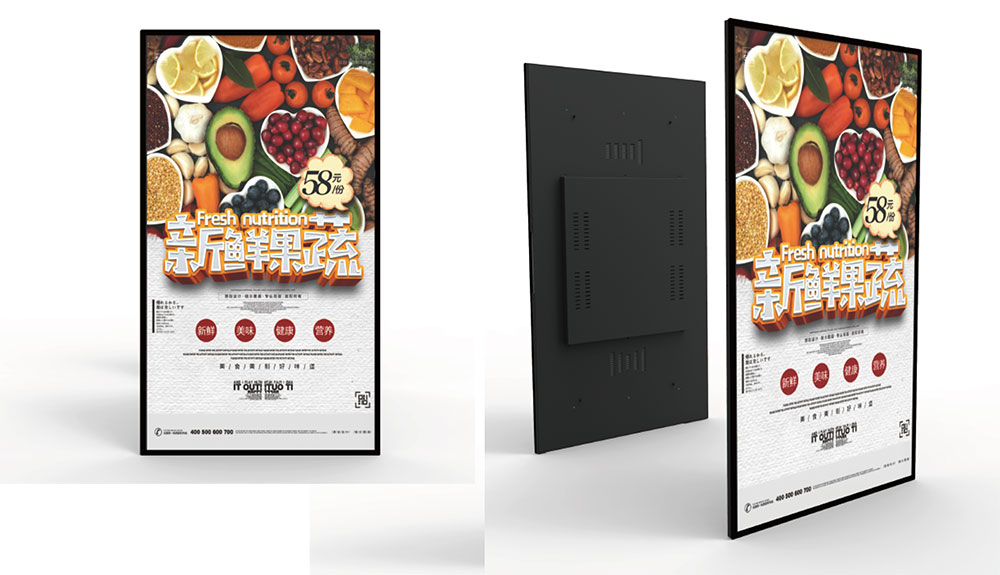
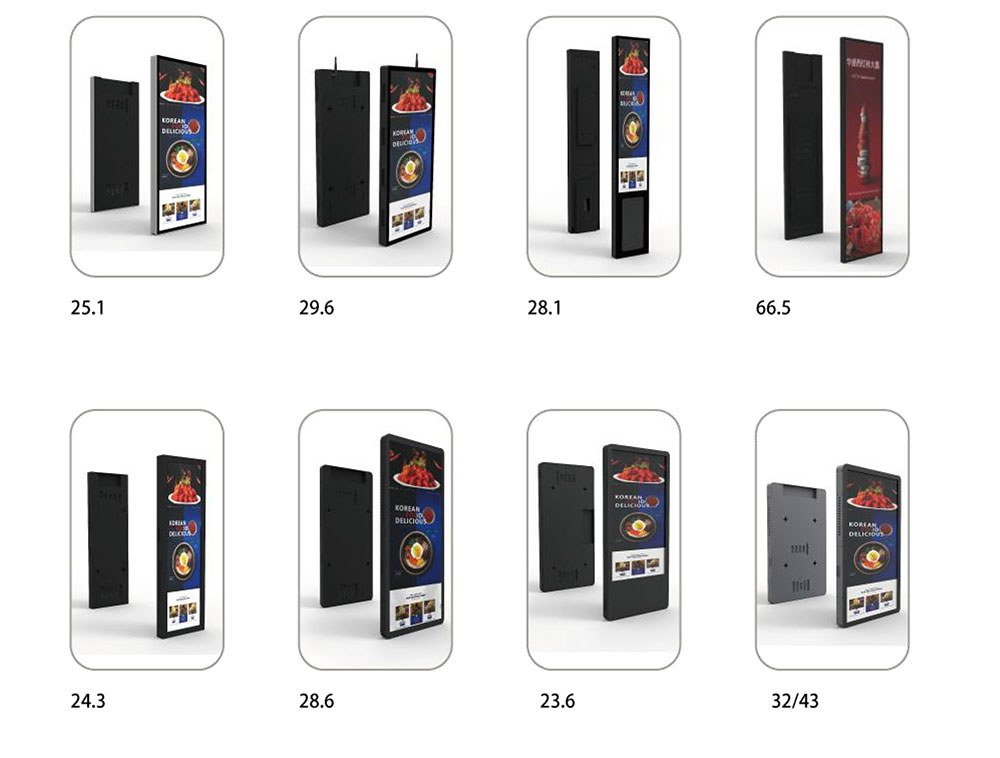
In practice most custom bar programmes change two or three of these parameters while keeping the cell architecture and driver IC common with a base panel. That is what keeps tooling cost and lead time reasonable.
Aspect Ratio and Resolution: Choosing Against the Mechanics
The aspect ratio follows from the machine. A double-height vending fascia, a supermarket shelf rail and a betting terminal's top screen each impose a different envelope, and the resolution has to be high enough to render the actual content at the actual viewing distance without visible pixel structure.
| Typical format | Diagonal | Where it earns its place |
|---|---|---|
| 1920 x 480 (4:1) | 19-29 in | Vending and ticketing fascias, transit information strips |
| 1920 x 720 (8:3) | 24-32 in | Self-checkout headers, kiosk secondary screens |
| 2800 x 1424 (approx. 2:1) | 12-16 in | POS terminals, compact HMI where the panel must stay short |
| 3840 x 1080 (32:9) | 35-49 in | Shelf-edge and menu-board strips read at several metres |
| Custom to fit | 4-15 in | Coffee machines, dispensers, laboratory and medical instruments |
Two rules save rework. First, fix the active area to the enclosure aperture and let the resolution follow, rather than fixing resolution and stretching the mechanics. Second, check the pixel density against the closest realistic viewing distance — for a brew-group panel inspected at 300 mm, anything under about 200 ppi will show its grid on a plain background.
Brightness, Heat and Readability in British Installations
Britain rarely offers the desert sunlight that forces 2500 cd/m², but it offers the harder problem: low sun angles. In winter, a low, direct sun can strike a shopfront-facing panel almost horizontally while the operator stands in shadow, and a matte panel at 400 cd/m² will simply be lost. The answer is usually not brute brightness alone but a combination of a genuinely high-bright backlight, an anti-reflective and anti-glare surface treatment, an optical bond that removes the internal reflections of an air gap, and a fixed or sensor-driven brightness curve that lifts output in daylight and drops it at night so the machine does not become a nuisance or waste energy.
Heat is the price of that brightness. LED backlights convert a significant fraction of their input into heat at the light guide edge, and in a sealed machine — a vending cabinet, a betting terminal, a wash-down food dispenser — there is nowhere for it to go. Bar formats are especially exposed because the panel is long and thin and often tucked behind a narrow bezel, so the thermal path to the chassis is limited. Three measures matter here: derating the LED drive current so the backlight runs below its absolute maximum at the highest specified ambient, using an aluminium back frame that can be heat-sunk to the machine's own steelwork, and validating at the worst case — a machine in an unshaded place in July, with the door closed and the internal fans at their slowest setting.
Interface, Control Electronics and Signal Integrity
Long, narrow panels mean long, narrow flexes, and that is where signal integrity problems live. LVDS over a 300 mm FPC at 1920 x 480 is manageable if the pairs are properly referenced and the connector is mechanically restrained; pushing higher lane counts down a thin flex, or routing MIPI DSI across a hinge, is where intermittent flicker and random line artefacts come from. Fixture the FPC, keep the impedance controlled, and specify a connector that survives the machine's lifetime of door openings rather than only its bench test.
Most commercial equipment does not want a bare panel. It wants a panel plus a driver board that accepts HDMI or DisplayPort and produces a stable, deterministic image at power-on. That board should scale with a defined policy, lock EDID so the host does not negotiate an unexpected mode, drive the backlight with a PWM frequency high enough to avoid visible flicker in video and to stay clear of camera-shutter artefacts, and expose a brightness control over I2C, PWM or a simple potentiometer input so the machine's own controller remains in charge.
Touch, Cover Glass and Hygiene
A bar display on a public machine is a human interface as much as an output device. Projected-capacitive touch in a very wide format is not a scaled-up version of a standard sensor: the electrode pattern has to be designed for the aspect ratio to keep linearity across the long axis, and controller channel counts rise accordingly. Design the sensor with the bar geometry from the start rather than tiling standard modules, or the edges of the strip will lose accuracy exactly where users press thumbnails and icons.
Cover glass thickness then trades off against sensitivity. A 3 mm chemically strengthened cover glass survives impact and vandalism but attenuates the field, so the controller and sensor must be specified as a pair. Optical bonding between cover glass and panel removes the air gap that otherwise collects condensation in a wash-down environment and creates the double-reflection that ruins legibility under bright light. On food and beverage equipment, the same bond line has to tolerate daily cleaning agents, and the glass edge should be sealed to its frame with a gasket that does not degrade under the kind of alcohol-based sanitisers used across British catering premises.
Environmental Specification and UK Compliance
Machines built in Britain are often exported, so the specification should satisfy the strictest of the target markets and the UK. For the domestic market the relevant package is UKCA marking, with the electrical safety case typically assessed to BS EN IEC 62368-1, EMC to the EN 55032 emission and EN 55035 immunity standards, and materials restrictions to RoHS and REACH. Where the machine goes outdoors — vehicle chargers, roadside kiosks, forecourt equipment — ingress protection and condensation management become part of the safety and reliability case rather than a cosmetic choice, and cold-start performance at the lowest expected ambient deserves a real test rather than an assumption.
Accessibility is a commercial requirement too. The Equality Act 2010 obligations that fall on service providers in Britain mean that a self-service terminal used to pay for goods should be operable by people with reduced vision or dexterity: sufficient contrast between text and background, touch targets sized for a fingertip rather than a stylus, and audible or non-visual confirmation of a completed action where the machine itself takes payment.
Where Bar Displays Are Being Designed In
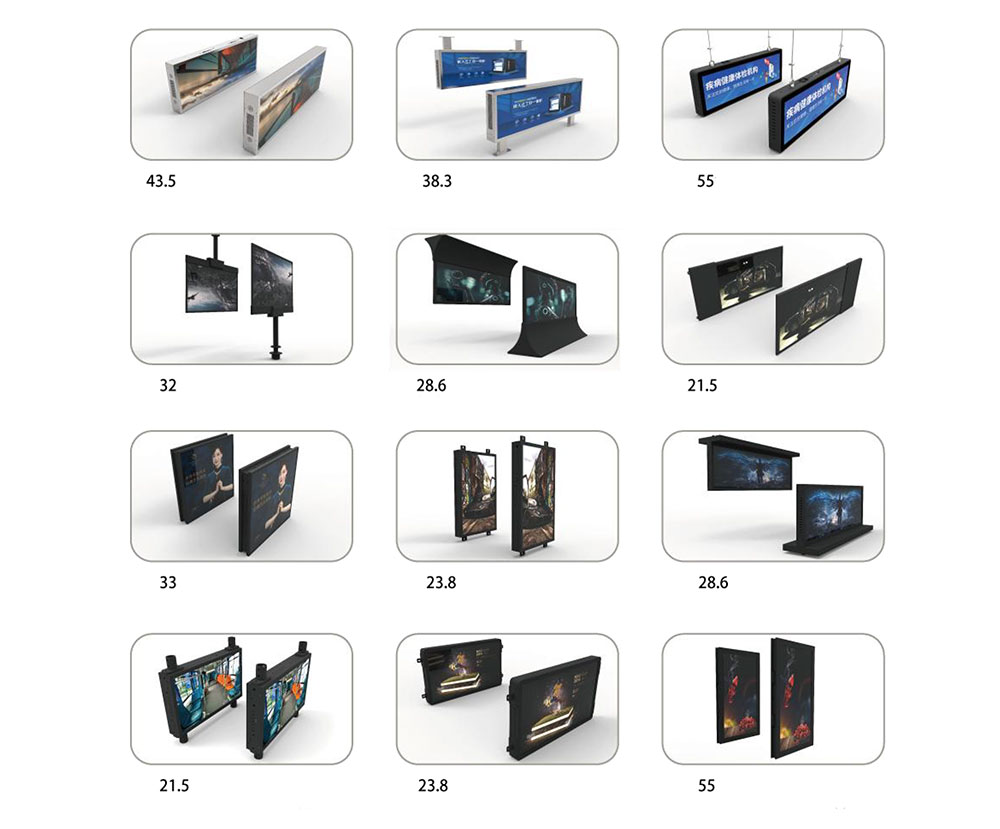
The pattern across British equipment makers is consistent. Vending and unattended retail use bar panels as the primary fascia where a full-format screen would make the machine unnecessarily deep. Self-service checkouts and kiosks use them as header and guidance strips that carry branding, basket totals and instructions at eye level without occupying the transaction screen. Shelf-edge and menu boards use high-resolution ultra-wide panels where a single strip replaces a row of small displays and simplifies the installation. Coffee and catering machines use small, bright bar panels behind or above the dispense area, where the aperture is wide and short. Betting, gaming and amusement terminals use them for information, jackpot and status lines, subject to the display-readable requirements attached to licensed premises. Vehicle charging, rail ticket machines, laboratory instruments and agricultural control heads round out the list.
Running a Custom Bar Programme Without Slipping the Schedule
The failure mode of custom display projects is rarely the technology and almost always the sequence. Freeze the active area and outline drawing first, and get the machine's mechanical engineer to sign it, because those two numbers are the ones that require tooling. Decide brightness and touch before you decide the backlight driver, since both change the thermal budget. Build in a mechanical sample stage: a bare display with the correct flex, connector and cover glass, fitted into a mocked-up bezel so that reflections, viewing angle and cable routing can be seen before any production tooling is cut.
Then plan for the long tail. Commercial equipment lives for eight to fifteen years, far longer than a consumer panel's market life, so a display programme should carry a written supply commitment, an end-of-life notice period measured in years rather than months, and a documented second source or drop-in alternative for the cell. Tooling amortisation, minimum order quantities and the split between one-off engineering charges and unit price should all be settled at the start, along with who holds the drawings and who is responsible for the UKCA technical file that references the display's own safety and EMC evidence.
The practical advantage of working with a supplier oriented to the British market is not price alone. It is the ability to get a real engineer on a call during the working day, to receive samples and REACH declarations without a two-week shipping delay, and to have a partner who understands that a display strip in a machine has to keep working for a decade on a forecourt, in a canteen or on a station concourse — not merely pass an incoming inspection.
KEYWORDS: custom bar LCD displays, bar type LCD panel UK, high brightness bar display, ultra wide LCD display manufacturer, commercial equipment displays