Why the Bar Format Is Its Own Design Problem
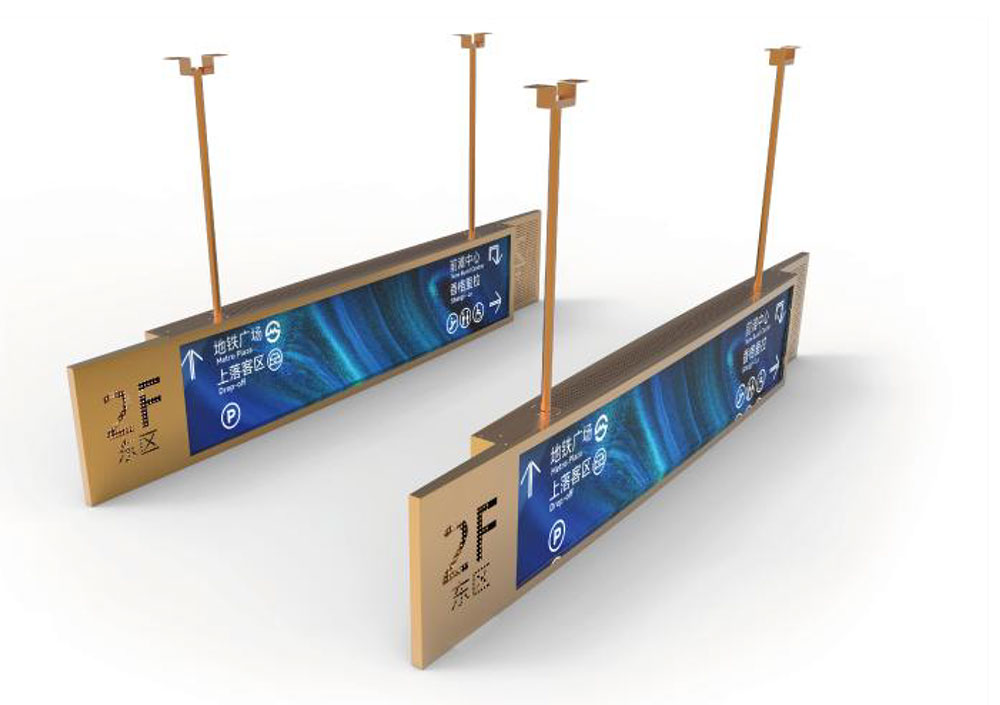
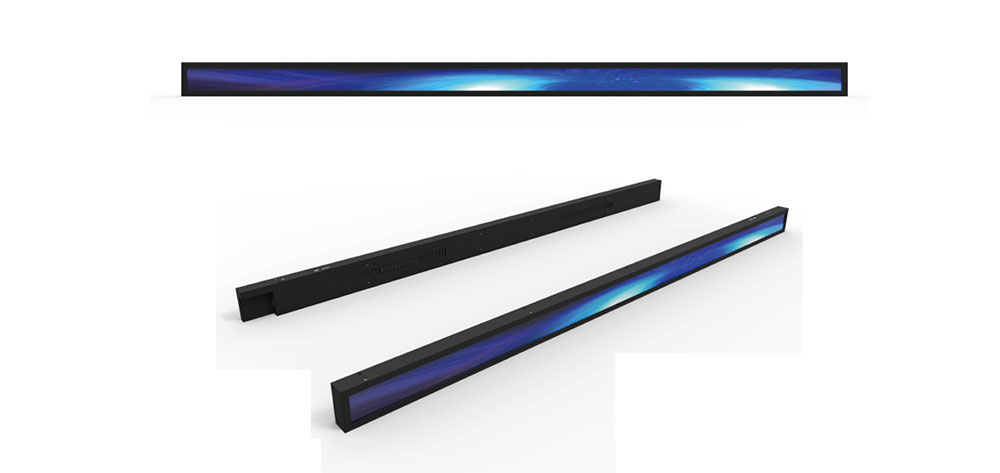
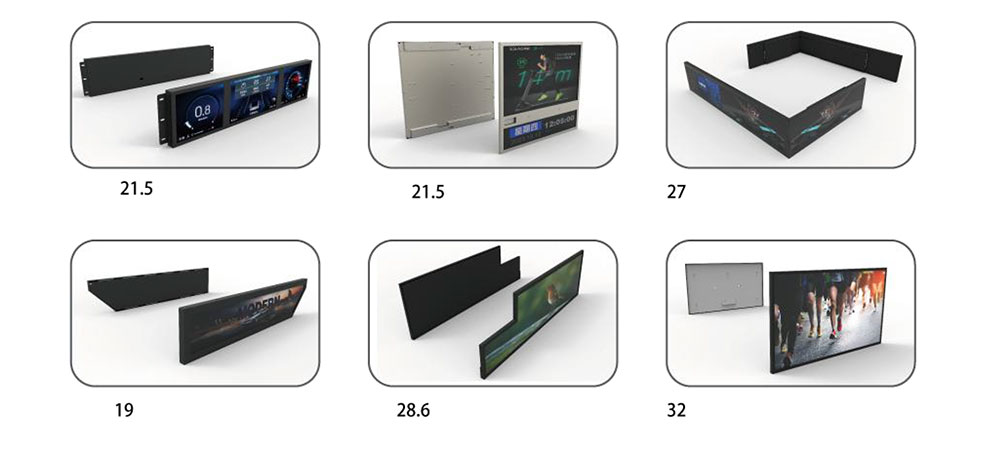
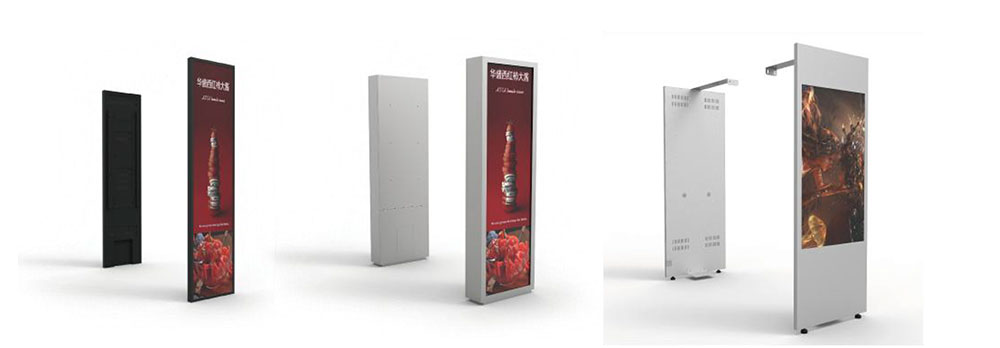
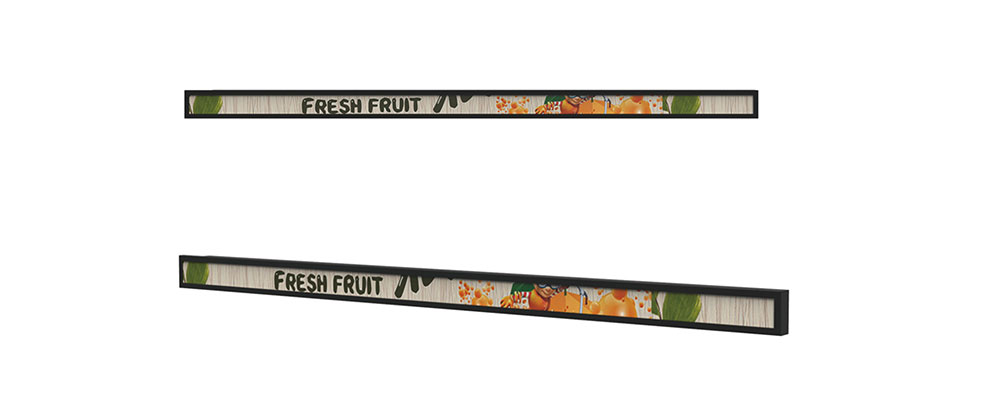
A bar LCD is not simply a widescreen panel cut down. Stretched formats typically run from about 16:4 to 37:9, with active areas in the 280 × 48 mm to 1000 × 130 mm range. Panel makers build them on dedicated mother glass lines, so the number of standard sizes is small, the availability of any given size is volatile, and the electrical and mechanical tolerances differ from those of a 16:9 module. Anyone designing a UK-built machine around a bar display is therefore making a long-term supply decision at the same moment as an engineering decision. Getting the specification right first time matters more here than in almost any other display category.
Step 1: Define the Job, Not the Panel
Before comparing datasheets, write down what the display has to do in the finished machine:
- Viewing distance and angle. A shelf-edge strip viewed at 400 mm from below has different optical requirements from a 4 m platform indicator viewed head-on.
- Ambient light. A dim control cabinet needs 300–500 cd/m². A shop window in direct summer sun needs 1000–1500 cd/m² with a matte or bonded surface, or the image disappears into reflected glare.
- Duty cycle. Signage that runs 24/7 for five years is a different specification from an operator panel used intermittently.
- Content type. Static text and icons tolerate lower contrast ratio than colour photography or animated graphics.
- Lifecycle. If the equipment is CE/UKCA-approved for a ten-year service life, the display must be available for that period, with a form-fit-function replacement path.
These five answers eliminate most candidate panels before you ever contact a supplier.
Step 2: Mechanical Fit — Active Area Versus Outline
Bar panels are usually specified by active area, but the outline and the rear profile are what actually fit into your enclosure. Confirm in writing:
- Active area and its position relative to the outline (asymmetrical borders are common and are frequently misread from dimension drawings).
- Overall depth including the FPC tail, the backlight diffuser stack and any stiffener plate.
- Mounting hole positions, thread type and the maximum recommended screw torque — bar panels are slender and distort easily if the frame is over-torqued.
- Corner radius and whether the module can tolerate being clamped rather than screwed.
A common UK failure mode is a panel that fits the aperture perfectly but leaves no room for the driver board, the LVDS harness bend radius, or the ingress sealing gasket. Design the cavity for the harness first and the glass second.
Step 3: Brightness, Contrast and the UK Light Environment
Brightness is the specification buyers fixate on and the one most often misapplied. The figures that matter are the on-site luminance after the cover glass, the bonding layer and any polariser losses — typically 8–15 % of the panel's rated output is lost in a bonded stack.
| Environment | Typical requirement | Practical notes |
|---|---|---|
| Indoor cabinet, controlled lighting | 300–500 cd/m² | Standard backlight, no bonding needed |
| Retail / shop window, indirect sun | 700–1000 cd/m² | Matte AG surface, high contrast ratio |
| Direct sunlight, semi-outdoor | 1000–1500 cd/m² | Optical bonding, AR coating, thermal management |
| Full outdoor, all seasons | 1500 cd/m²+, dimmable | Bonded + AR, automatic brightness control, IP-rated enclosure |
Contrast ratio deserves equal attention. A 1000 cd/m² panel with a weak black level will look washed out and grey next to a 700 cd/m² panel with a genuine 3000:1 contrast. If your machine displays dark interfaces, contrast ratio and black uniformity matter more than raw nits.
Uniformity is the third leg. Ask for a nine-point luminance uniformity figure. Below 75 % the eye reads the display as patchy, which is far more damaging in a thin bar format than in a conventional panel because the eye can scan the whole width in one glance.
Step 4: Backlight Architecture and Thermal Reality
High-brightness bar panels achieve their output either with edge-lit LED strips plus a light-guide plate, or with direct-lit arrays behind a diffuser. Both have consequences:
- Edge-lit is thinner and cheaper, but light uniformity degrades with length, and long bar panels can show banding near the ends.
- Direct-lit gives better uniformity and higher peak brightness, at the cost of 10–20 mm of extra depth and more heat concentrated in a small area.
Heat is the single biggest cause of premature display failure in UK-built industrial equipment, and it is worse in a bar format because the surface-area-to-volume ratio is poor. Specify operating temperature from −20 °C to +70 °C if the equipment is used in unheated warehouses, cold stores or outdoor housings, and demand the supplier state the measured panel temperature rise at maximum brightness in still air. Local dimming or a brightness-limit setting can cut dissipation substantially while remaining invisible to the user in indoor conditions.
Step 5: Electrical Interface and Controller Compatibility
Bar panels rarely use the plain RGB/TTL interface found on small modules. Expect one of:
- LVDS — the workhorse for industrial formats; robust, well supported by third-party controller boards.
- eDP — common on newer high-resolution bars; needs a source that supports the correct lane count and link rate.
- MIPI DSI — increasingly typical on tablet-derived panels, but short cable runs and limited board-level support.
Check that your existing controller, single-board computer or FPGA actually drives the panel's native resolution and timing. Non-standard resolutions common in bar formats (for example 1920 × 540 or 2880 × 640) frequently require a custom timing table or a scaler. Confirm the connector type, pinout, FPC length and whether the cable can be routed without exceeding the interface's skew limits. A 300 mm LVDS run is safe; a 300 mm MIPI run is usually not.
Step 6: Mechanical Integration and Ingress Protection
For equipment sold into food processing, marine, agricultural or outdoor environments, sealing decides the design:
- Front-IP65 or IP67 is normally achieved with a bonded cover glass and a compressed gasket, not with a bare panel.
- Optical bonding (liquid or OCA) removes the internal air gap, boosting contrast and eliminating condensation — a genuine issue in UK coastal and cold-store installations.
- Anti-glare, anti-reflective or anti-fingerprint surface treatments should be chosen against the viewing environment, not by default.
- If the enclosure is metal, bond the display's frame to chassis earth and keep the LVDS pair away from motor drive cabling; EMC problems in compact bar-display machines are almost always cable-routing problems.
Step 7: Touch, Cover Glass and Optical Stack
If the display is interactive, choose the touch technology against the use case: projected capacitive for multi-touch and gloved-hand operation with adjustable sensitivity, resistive only where cost dominates and a stylus is expected. Toughened or chemically strengthened cover glass, printed borders and logo printing are all straightforward customisations, but each adds tooling lead time. Ask for the touch controller's EMC and ESD test data at the same time as the display's, since the combined stack is what gets tested in the finished machine.
Step 8: Compliance for the UK Market
Equipment placed on the UK market needs UKCA marking; equipment also sold in the EU needs CE. The display itself is a component, but its properties drive your finished-product conformity, so collect the evidence early:
- EMC — EN 55032 (emissions) and EN 55035 (immunity) test reports for the module and, ideally, your integrated assembly.
- Safety — EN/IEC 62368-1 for the finished unit; the display's own fire and flammability ratings support this.
- Materials — RoHS 2011/65/EU as amended, plus UK RoHS, and REACH SVHC declarations.
- Waste — WEEE producer obligations for the finished product, and information on display recyclability.
- Environmental — IEC 60068 test evidence for vibration, shock, damp heat and thermal cycling if the equipment is mobile or outdoor.
A supplier who cannot produce declarations of conformity, SVHC statements and dated test reports is a risk to your own declaration, not just to your schedule.
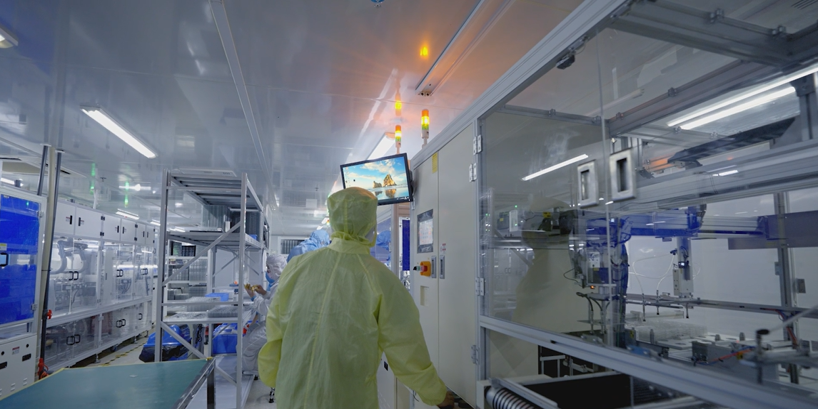
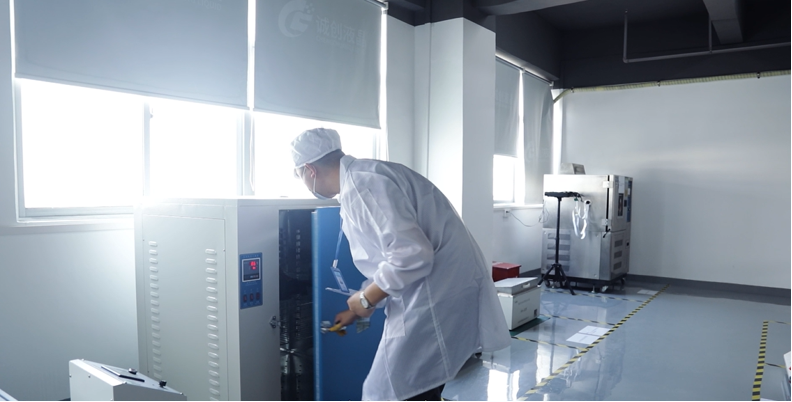
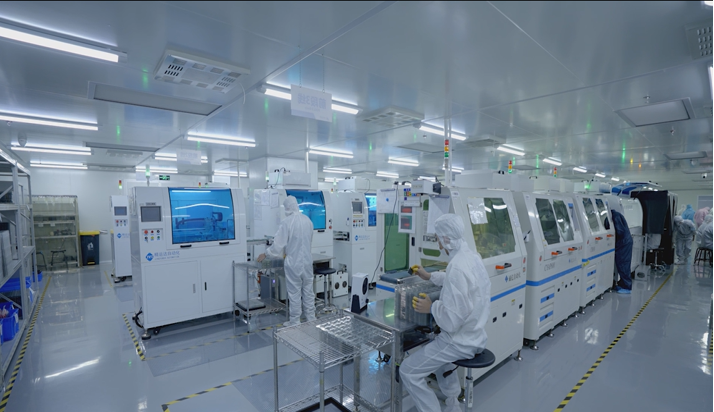
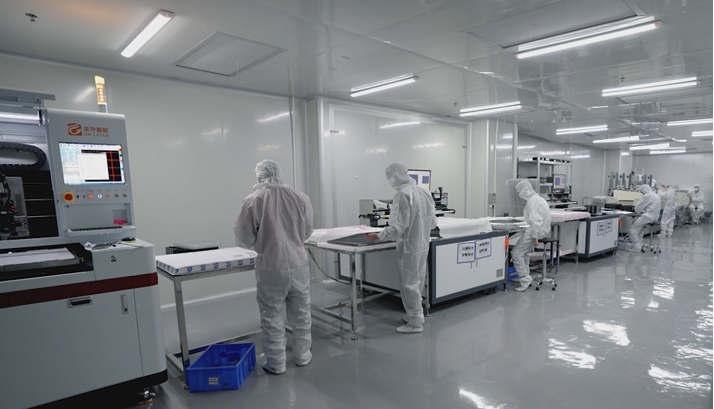
Step 9: Test Documentation Is Available — Insist on Seeing It
Every serious display manufacturer says its product is tested. The difference is whether the data travels with the goods. Before you release a purchase order, request:
- Optical test report: luminance, contrast ratio, uniformity, chromaticity and colour gamut, measured on the delivered configuration, not the bare panel.
- Environmental report: high- and low-temperature storage and operating, thermal shock, damp heat, and — where relevant — salt spray.
- Reliability data: LED backlight lifetime curve, MTBF calculation basis, and burn-in screening results.
- Incoming inspection criteria: the dead-pixel and defect acceptance standard you are buying to, expressed numerically, with the panel grade stated (A-grade rather than a vague "industrial grade").
- Traceability: batch or serial number linked to the test record, so a field failure five years from now can be traced to its production lot.
- Change control: a written notification process for any change to panel source, driver IC, LED bin or firmware, with a defined last-time-buy window.
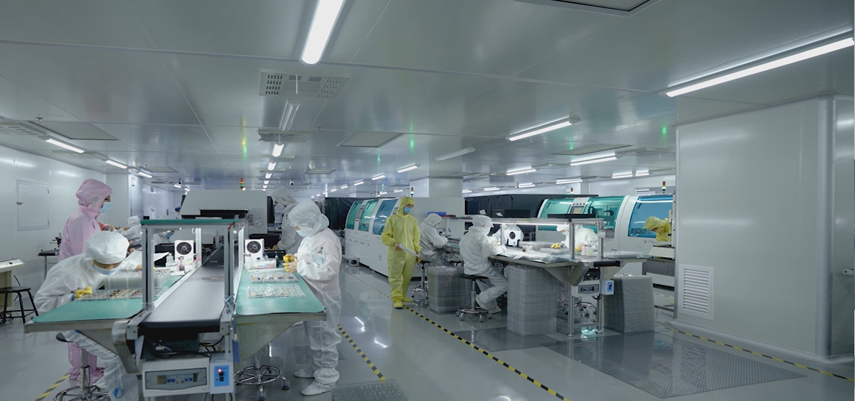
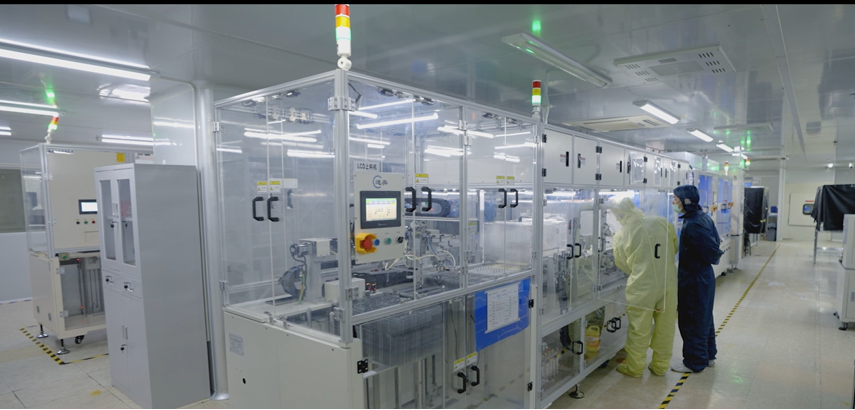
These documents are what convert a component purchase into a defensible engineering decision. They are also the fastest way to distinguish a manufacturer from a trader.
Step 10: Customisation, Tooling and Lead Time
Most bar-display projects do not need a new panel design. They need a standard panel adapted: custom FPC KEYWORDS: How to Choose a Custom Bar LCD Display for Your UK-Made Equipment