Why Stretched Bar LCDs Have Become a Standard Format in the UK Market
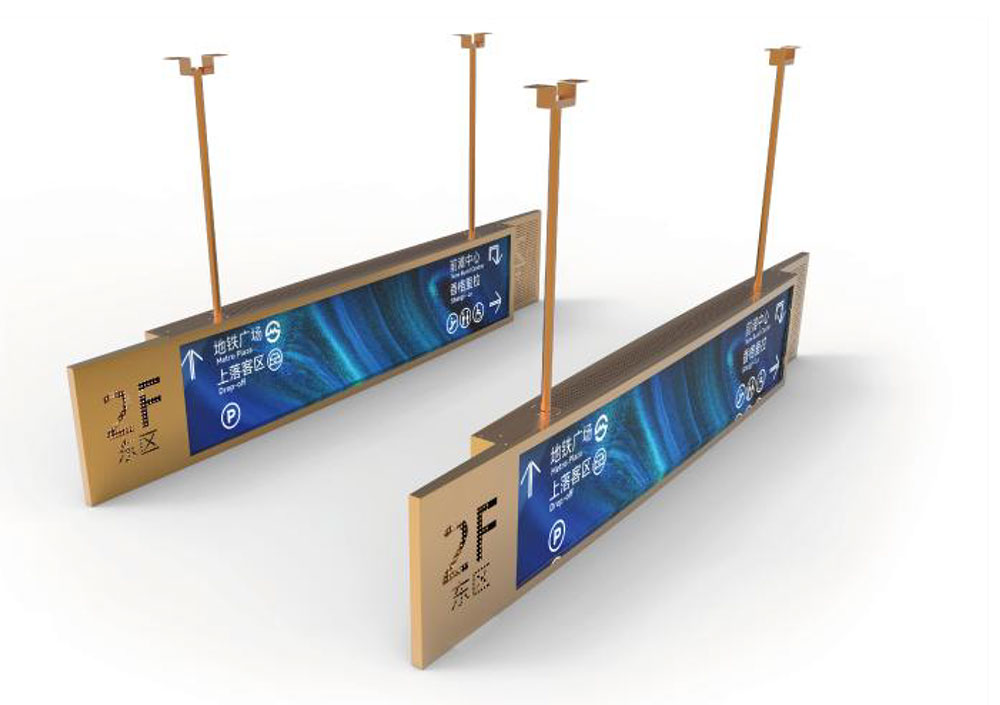
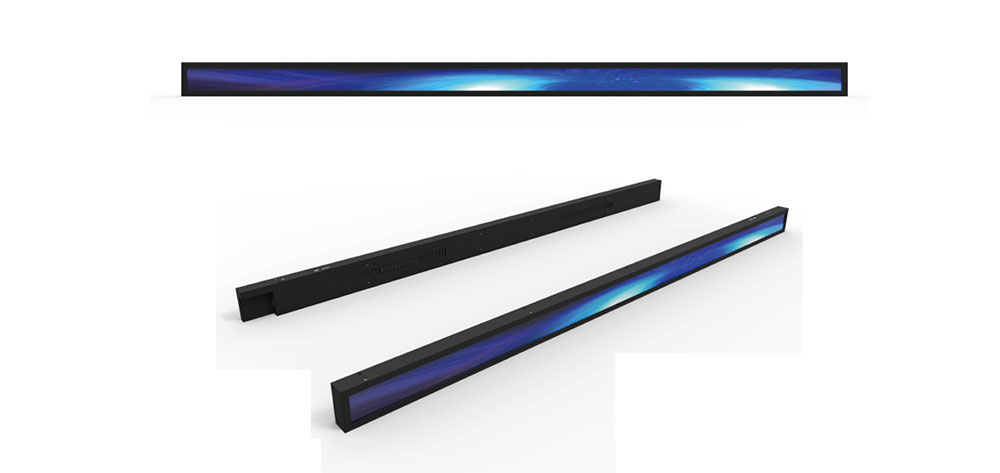
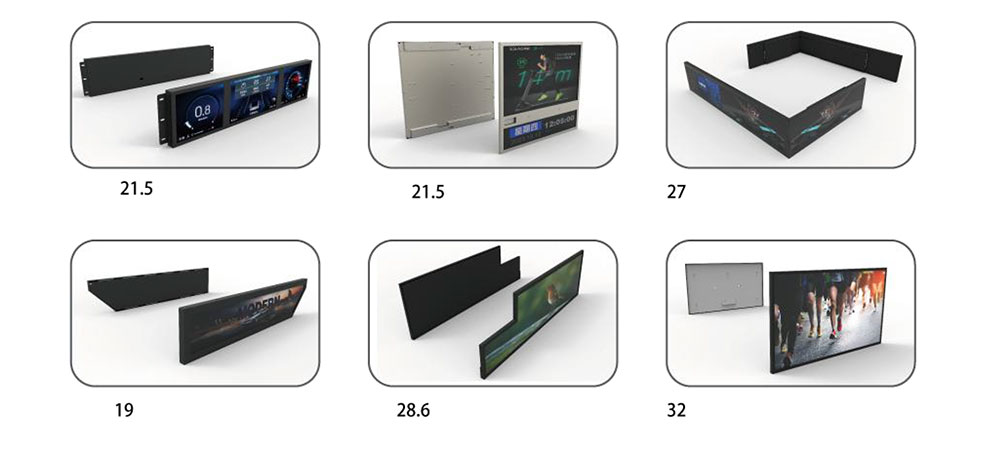
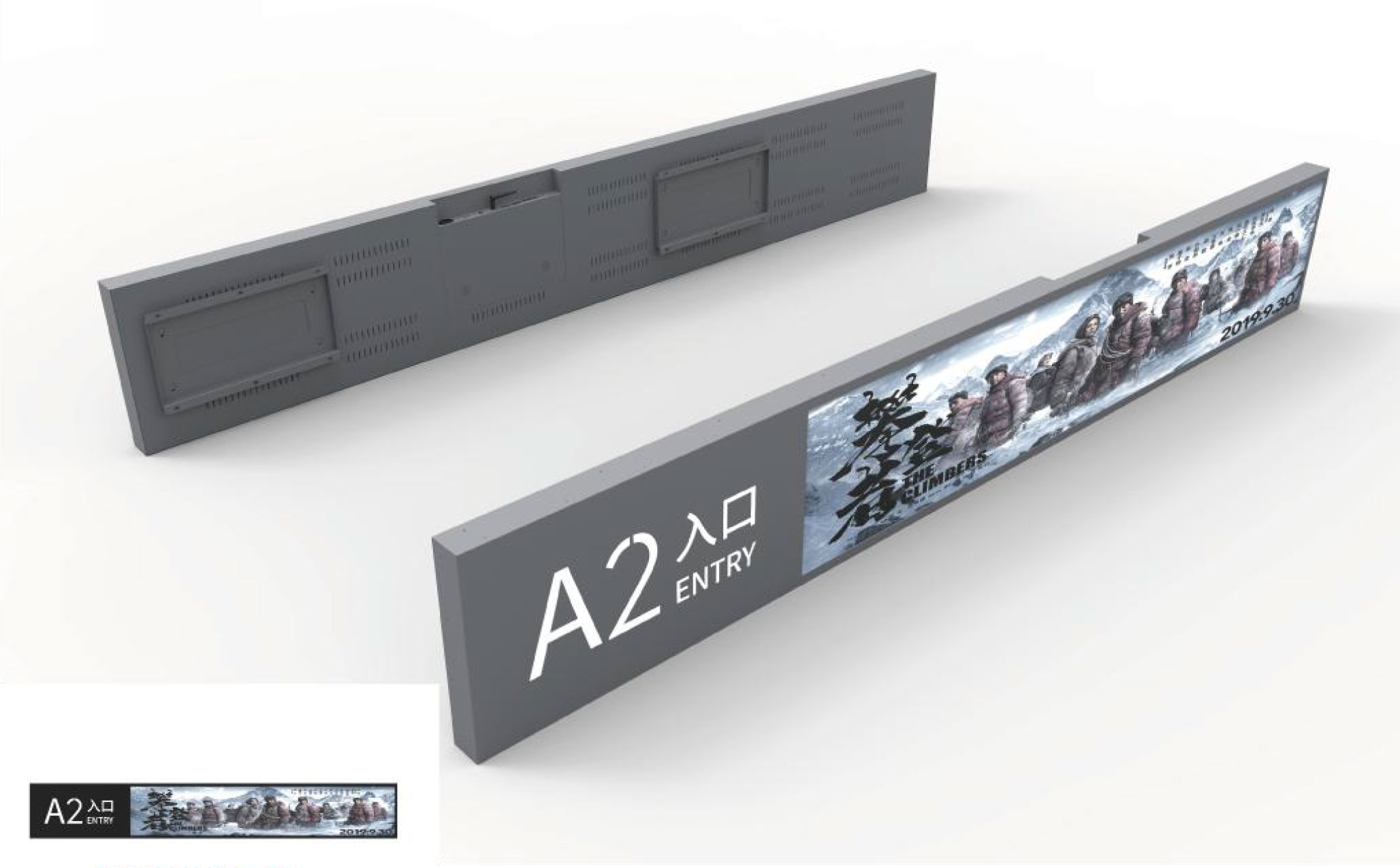
A stretched bar LCD is a flat panel display built around an intentionally extreme aspect ratio — typically between 16:1 and 3:1 — rather than the 16:9 geometry of a conventional monitor. Where a standard 21.5-inch screen stands roughly 300 mm tall, a comparable stretched panel may measure only 60 to 120 mm in height while retaining the same width. That single dimensional change is what allows a display to occupy the dead space in the built environment: the strip beneath a supermarket shelf, the header of an elevator panel, the destination board above a bus door, the menu rail above a quick-service counter, the fascia of a vending machine, or the thin vertical column beside a retail window.
For UK OEM and ODM customers, the value of a stretched bar display is not the panel itself but what it enables. System integrators, signage brands, kiosk builders and transport equipment manufacturers rarely buy a panel in isolation; they buy a display module that has to fit an existing mechanical envelope, survive the operating environment, pass UK conformity assessment, and remain purchasable for five to seven years. This article sets out the engineering, compliance and supply-chain factors that determine whether a bar LCD project succeeds in the UK, written from the perspective of a manufacturer that builds both OEM and ODM variants of these modules.
Panel Geometry and the Aspect Ratios That Matter
The first decision in any bar LCD project is the active area. Aspect ratio is not a cosmetic choice — it dictates resolution options, driver IC availability, backlight layout and the cost of the finished module. The most commonly specified configurations in UK projects are:
| Diagonal | Typical Aspect Ratio | Common Resolutions | Typical UK Applications |
|---|---|---|---|
| 6.8" – 8.8" | 16:3 to 16:4 | 480×128, 800×160, 1280×240 | Elevator car panels, appliance HMIs, handheld instruments |
| 12.3" – 14.9" | 8:1 to 16:3 | 1280×240, 1920×360, 1920×540 | Shelf-edge retail displays, vending fascia, medical equipment |
| 19" – 24" | 16:4 to 16:5 | 1920×360, 1920×400, 1920×540 | Bus and coach passenger information, banking queue displays |
| 28" – 28.6" | 32:9 to 16:4 | 1920×540, 2880×1080, 3840×1080 | Rail platform indicators, QSR menu rails, casino signage |
| 34" – 37" | 3:1 to 32:9 | 2880×1080, 3840×1080, 3840×600 | Retail window banners, stadium ribbons, gaming cabinets |
| 43" – 48.5" | 3:1 to 4:1 | 3840×1080, 5120×1440, 7680×2160 | Large format ribbon signage, transport interchanges, expos |
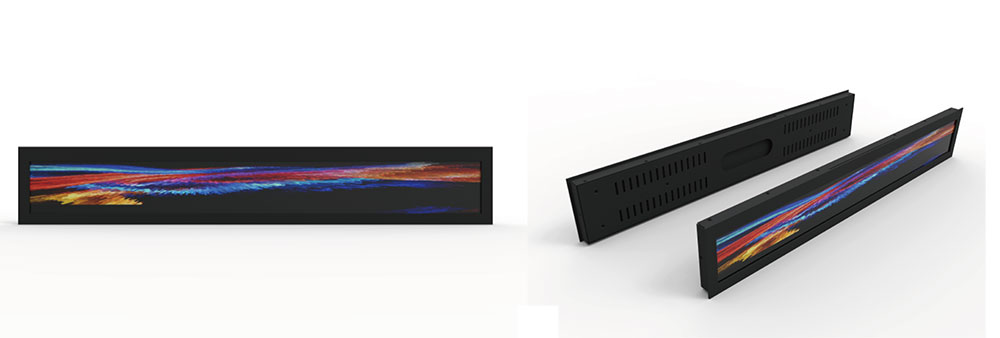
Two practical constraints sit behind these numbers. First, the pixel pitch: a 1920×360 panel at 24 inches gives a coarse pitch that is acceptable at three metres but visibly grainy at one metre, so viewing distance determines resolution far more than physical size does. Second, panel availability: bar LCDs are produced in far smaller volumes than mainstream 16:9 panels, and cell cut efficiency means some geometries are inherently cheaper than others. When a UK customer specifies a non-standard active area, we normally quote both a nearest-standard alternative and a custom-cut option so the cost difference is visible before commitment.
Optical Performance: Brightness, Contrast and the Daylight Problem
Bar displays in the UK frequently sit in the worst possible optical positions — behind glass in a shop window facing south, under a shelf lit by 1000 lux of overhead LED track lighting, or mounted on the external face of a bus. Transmissive TFT panels lose the brightness battle quickly in these conditions, so the backlight specification is usually the single largest cost driver after the panel itself.
- Indoor private-mode displays (300 – 500 nits): Suitable for elevator interiors, meeting-room signage and controlled retail aisles.
- High-brightness indoor (700 – 1000 nits): The workhorse specification for shelf-edge and QSR applications where ambient light is high but direct solar gain is absent.
- Sunlight readable (1500 – 3000 nits): Required for window-facing and semi-outdoor installations. At these levels, anti-reflective treatment and contrast ratio matter as much as raw luminance, because a 2500-nit panel with a glossy cover glass can be less legible than a 1000-nit panel with a properly bonded low-reflection stack.
Three techniques are combined to reach high brightness without unacceptable power draw or heat. Optical bonding (OCA or liquid OCR) eliminates the internal air gap between panel and cover glass, removing two reflective interfaces and improving contrast by a factor of three to five. Anti-glare or anti-reflective coatings reduce specular reflections from shop lighting and window frames. Local dimming or selectable brightness modes let the module drop to 30 percent output at night, which matters for UK installations subject to light-pollution planning conditions and for Energy Related Products considerations discussed below.
Photobiological and Optical Safety
High-brightness LED backlights warrant attention to photobiological safety. For UK and EU markets, BS EN 62471 assessment of the lamp or LED array, together with IEC/TR 62778 for blue light hazard evaluation of the finished luminaire, is standard practice on modules above roughly 1000 nits or those intended for close viewing. Where a display sits within arm's reach of the public — vending machines, ATM surrounds, self-checkout — we recommend an assessment at design stage rather than after tooling.
Touch, Cover Glass and Mechanical Integration
Roughly half of the stretched bar projects we build for UK customers include some form of user interaction. The options, in ascending order of cost and complexity:
- No touch, protective glass only: Purely informational signage.
- Projected capacitive (PCAP) touch: The default for interactive retail and kiosk use. Multi-touch controllers from mainstream IC vendors support 2 to 10 points and operate through 2 to 6 mm of cover glass.
- PCAP with optically bonded cover glass and printed black border: Gives a flush, vandal-resistant front face with the graphics aperture printed to match the active area precisely.
- Infrared or capacitive frame touch: Occasionally used on very large ribbons where PCAP lamination over a 48-inch bar panel becomes mechanically difficult.
Chemically strengthened glass (typically 3 to 6 mm, with edge polishing and optionally AG etching) is the norm for public-facing installations. For transport applications, cover glass selection also has to consider impact resistance testing and, for rail, material fire performance under EN 45545-2. Housing design should be treated as part of the display specification, not an afterthought: the bezel width, the depth available behind the fascia, the mounting pattern (VESA or custom), the cable exit direction and the service access requirement all constrain the panel and driver board choice. Our ODM chassis range covers several standard depths, and OEM tooling is available where a customer's enclosure is fixed.
Interfaces, Driver Boards and System Architecture
Panel-level interfaces on stretched bar TFTs are dominated by LVDS and eDP, with MIPI DSI appearing on the smaller handheld formats and V-by-One HS used where bandwidth demands it on 4K ribbons. From the customer's perspective, the more relevant question is what the module presents at its external connector, and there are three common architectures:
- Bare panel plus cable: The customer's own SoC or media player drives the panel directly. Lowest cost, but places panel timing, gamma and power sequencing responsibility on the integrator.
- Panel plus AD board: Our driver board accepts HDMI, DisplayPort or USB-C and handles scaling, colour management and backlight control. This is the most common ODM configuration because it decouples the display from the host platform.
- Panel plus embedded media player board: An integrated Android or Linux board with network connectivity, local storage and content management agent support. Suitable where the customer wants a self-contained signage endpoint rather than a monitor.
Interface choice interacts with UK regulatory scope. A module containing Wi-Fi or Bluetooth falls under the Radio Equipment Regulations 2017 rather than the EMC Regulations alone, and any connectable product placed on the UK consumer market after 29 April 2024 must also satisfy the Product Security and Telecommunications Infrastructure regime — unique per-device passwords, a published vulnerability disclosure route, and a defined minimum security update period. Building network connectivity into an ODM board without planning for those obligations creates a compliance gap that is expensive to close after launch.
UK Conformity, Marking and Product Compliance
Compliance is where OEM and ODM projects most often lose schedule. The list below reflects the obligations that apply to an electronic display module placed on the UK market; the exact set depends on power source, connectivity and end use.
- Electrical safety: Modules operating above the low-voltage thresholds fall under the Electrical Equipment (Safety) Regulations 2016. Most bar LCDs run from 12 V or 24 V DC and therefore sit outside that scope — but the accompanying AC/DC adaptor does not, and safety of the assembly is still demonstrated against BS EN 62368-1.
- EMC: The Electromagnetic Compatibility Regulations 2016 apply regardless of voltage. BS EN 55032 for emissions and BS EN 55035 for immunity are the usual test standards for multimedia equipment, with BS EN 61000-3-2 and -3-3 for harmonic and flicker limits where mains-powered.
- UKCA marking: Required for most goods placed on the Great Britain market, with CE marking accepted indefinitely for a broad range of product areas under the 2023 easement. We supply both marking variants and the supporting technical file.
- RoHS, REACH and POPs: UK RoHS restricts the same ten substances as the EU directive; UK REACH imposes substance notification and SVHC communication duties; persistent organic pollutant limits apply to certain flame retardants.
- WEEE: Producer registration and take-back obligations fall on the UK importer or brand owner, not the overseas manufacturer KEYWORDS: Stretched Bar LCD Display Manufacturer for UK OEM and ODM Projects