Stretched Bar LCD Displays: The Engineering Behind Ultra-Wide Screens for Retail, Transit, and Digital Signage
Walk down the aisle of a modern European hypermarket or ride a metro line in any major U.S. city, and you'll likely pass a screen unlike the ones in your living room: long, narrow, and built to fit a space no standard monitor was ever designed for. These are stretched bar LCD displays — a specialized category of commercial display technology engineered around a constraint that conventional screens ignore entirely: the physical envelope of the installation site, not the convenience of an off-the-shelf panel.
For brand owners, system integrators, and procurement teams sourcing display hardware for retail, transportation, or large-format signage networks, understanding how these panels are actually built — and where the real differences between suppliers lie — matters more than the language on a product page. This guide walks through the engineering fundamentals, the trade-offs that separate reliable deployments from problematic ones, and the questions worth asking before a purchase order is signed.
What a Stretched Bar LCD Display Actually Is
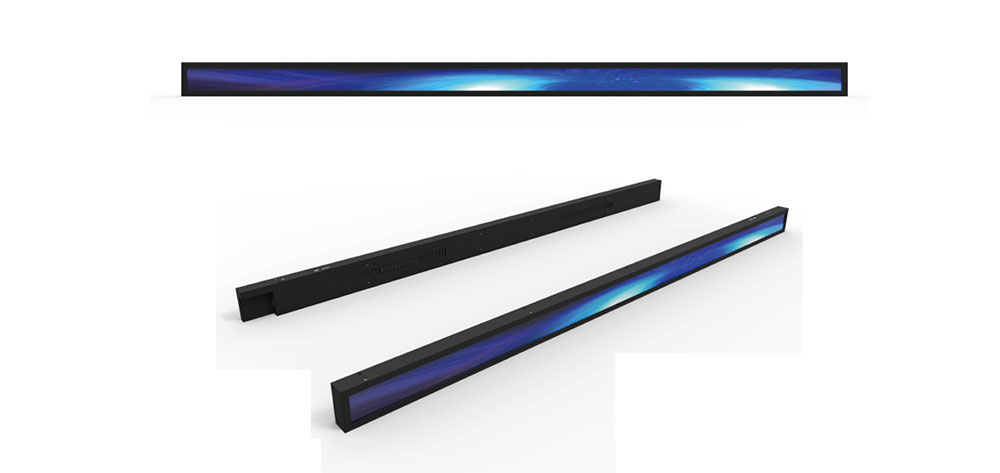
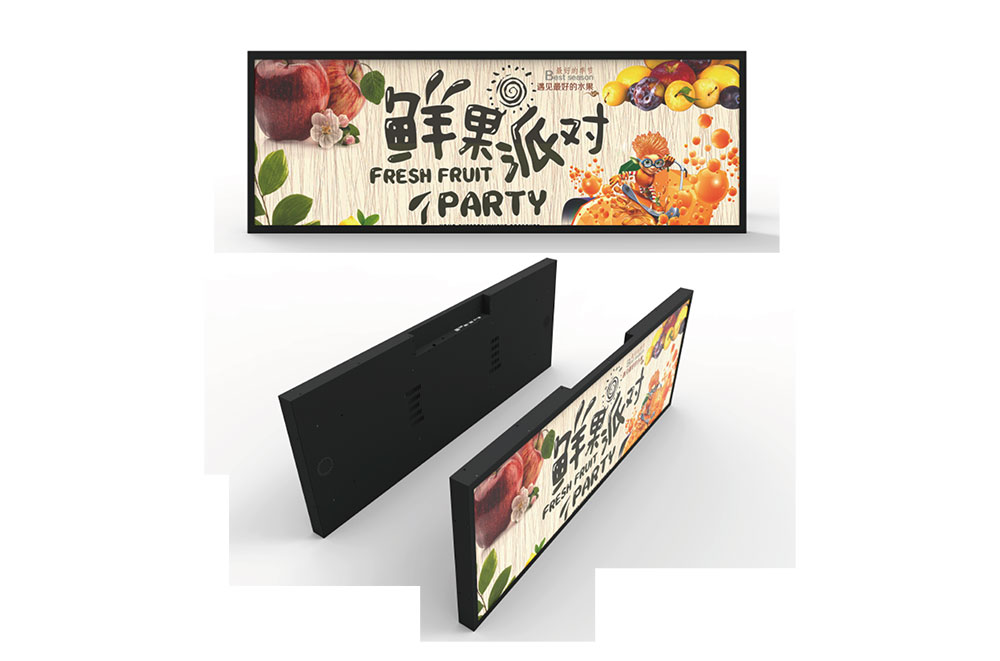
A stretched bar LCD display is a TFT-LCD panel manufactured or processed to an aspect ratio far beyond the 16:9 standard found in consumer electronics — typically somewhere between roughly 8:1 and 32:9, depending on the application. Where a typical commercial monitor is wide enough to pass for a television, a bar display is unmistakably architectural: built to run along a shelf edge, sit above a doorway, line an elevator cab, or stretch the length of a transit car interior.
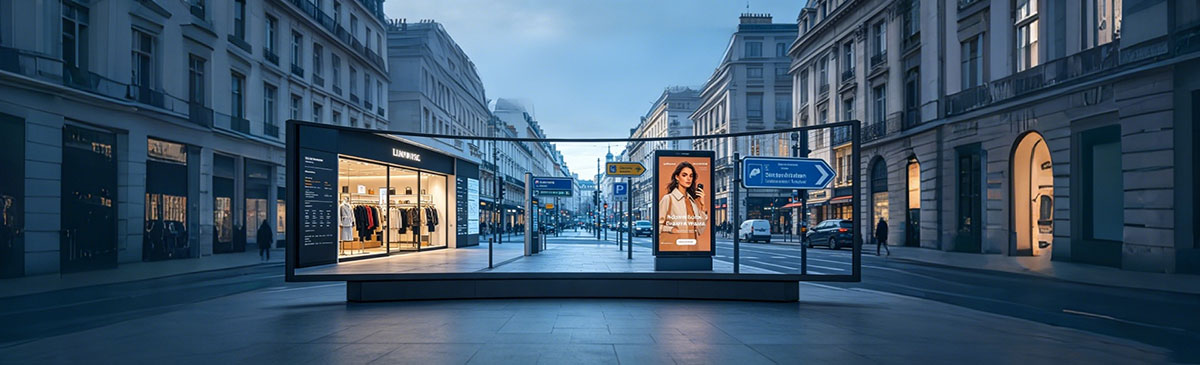
The category exists for a simple reason. Most physical retail and transit environments were never designed around screens. A supermarket shelf rail, a subway car's overhead panel, or a lobby directory wall has fixed dimensions that a standard 16:9 or 21:9 monitor simply cannot occupy without wasted space or an awkward visual mismatch. Stretched bar displays solve this by treating the installation envelope as the starting design constraint rather than an afterthought.
Native Stretched Panels vs. Cut Panels: The Distinction That Actually Matters
This is arguably the single most important technical distinction in the category, and one that gets glossed over in a lot of supplier literature. There are two fundamentally different ways to produce an ultra-wide bar panel.
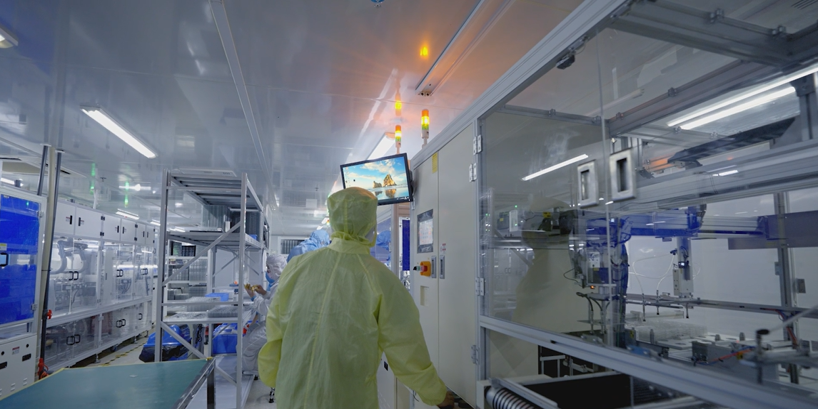
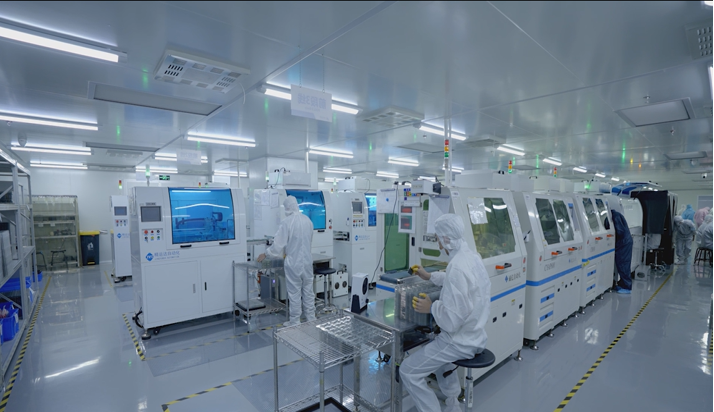
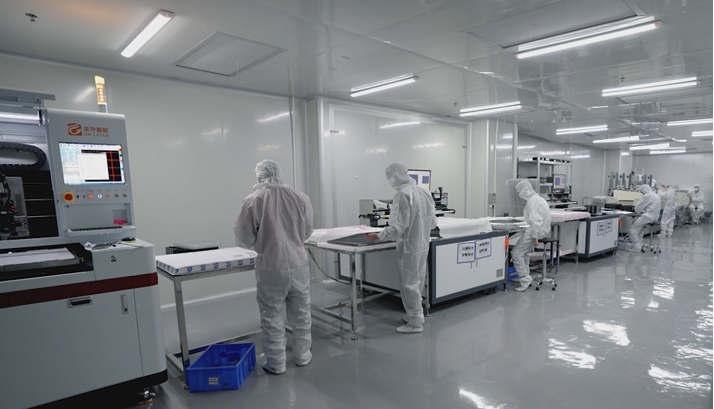
The first method — cutting and resizing — starts from a standard mother-glass panel, say a 32-inch or 49-inch 16:9 unit, and physically cuts it down to the target bar shape, discarding the unused glass. The second method — native stretched manufacturing — builds the panel from the outset at the final aspect ratio, with cell structure, polarizer lamination, and edge sealing all engineered for that geometry from the first production step.
The practical consequence is real and not just theoretical. Cutting through a finished LCD cell can introduce micro-cracks along the new edge, compromise the factory seal protecting the liquid crystal layer, and create localized light leakage at the border that shows up as uneven brightness once the backlight is switched on. These defects don't always surface in initial quality checks — they tend to appear months into a deployment, after thermal cycling and ordinary vibration have had time to work on a weakened edge. Native stretched panels, sourced as a purpose-built product from fabs such as BOE, LG Display, AUO, or Innolux, avoid this failure mode because the seal and cell structure were never compromised to begin with.
For a buyer, this means one of the first qualifying questions for any supplier shouldn't be about price — it should be whether the panel is native stretched or cut-and-resized, and which fab it originates from. A manufacturer with genuine engineering depth in this product line will answer that without hesitation.
Aspect Ratio and Size: Matching the Panel to the Application
Bar displays aren't sold in one standard ratio the way 16:9 monitors are. Sizing is driven by the installation itself, and the category spans a wide range — roughly 8 inches at the small end up to 80–90 inches for large-format installations, with ratios commonly described as 16:3, 16:4, 16:4.5, or 16:6, or expressed more simply as 8:1, 10:1, or 20:1.
In practice, the range clusters into a few functional bands:
Small-format bars (roughly 8"–14") are the workhorse of shelf-edge retail signage — compact enough to mount directly on a shelf rail beside the product, used for pricing, promotions, and short video loops.
Mid-format bars (roughly 19"–36") cover shelf headers, end-caps, and doorway or short hallway signage where more content real estate is needed without occupying a full wall.
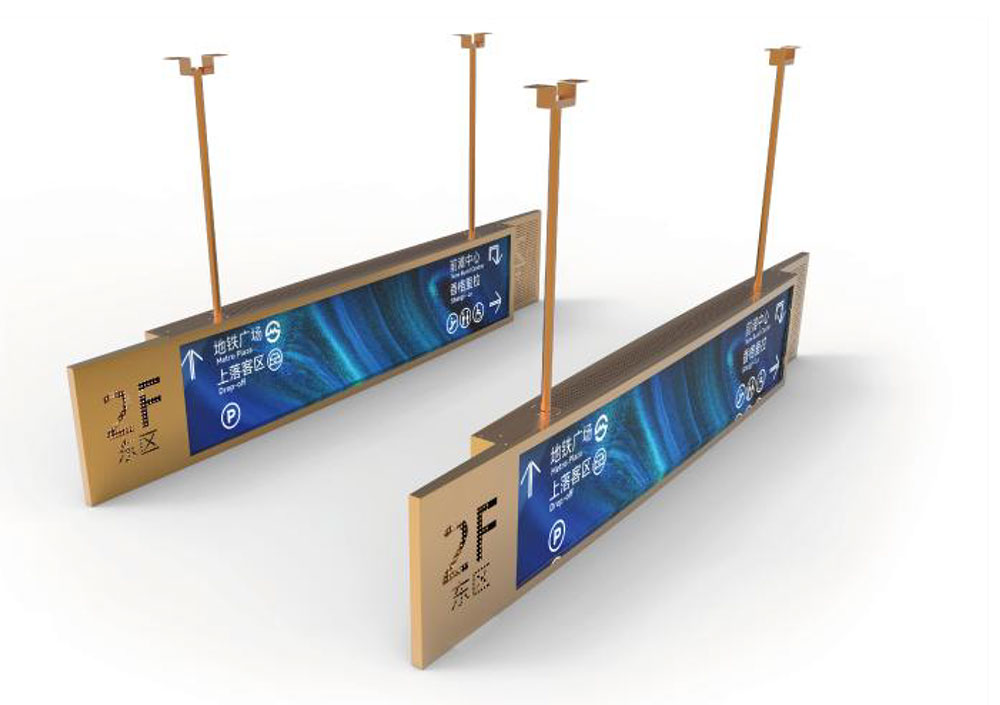
Large-format bars (roughly 43"–88") serve building lobby directories, transit platform information strips, and architectural installations where the screen becomes part of the space's design language rather than an addition to it.
The resolution paired with each ratio is non-standard by definition — a 28-inch bar panel might run at 3840×540, for instance, rather than anything resembling a typical monitor's native resolution. This catches less experienced buyers off guard, because standard media players, GPUs, and even some content management platforms assume a roughly 16:9 canvas. Content built for a normal monitor doesn't simply "fit" a bar display; it has to be authored — or at minimum re-laid-out — specifically for the target ratio. Any serious supplier conversation should cover content authoring guidance, not just hardware specifications.
Backlight, Brightness, and Optical Engineering
Driving uniform brightness across a panel that might be two meters long and only fifteen centimeters tall is a genuinely different engineering problem than backlighting a square monitor. Light has to travel much farther from the LED source to reach the panel's midpoint without falling off at the edges, which is why backlight design — LED placement, light-guide plate engineering, and diffusion layer tuning — has a disproportionate effect on perceived quality in this category. A poorly engineered bar panel shows visible hot spots or dimming toward the center; a well-engineered one doesn't.
Brightness specifications across the category typically span from around 500 cd/m² for indoor, shaded retail environments up to 1,500–3,000 cd/m² for sunlight-readable or window-facing installations — a meaningful jump that should be matched to the actual installation site rather than over-specified by default, since higher-brightness backlights cost more, draw more power, and generate more heat to dissipate. Viewing angle is typically rated around 178 degrees, which matters less for a screen mounted overhead than it does for a shelf-edge display viewed at a sharp angle by a shopper walking past — another reason the application, not the spec sheet alone, should drive the selection.
For installations exposed to dust, moisture, or physical contact — outdoor advertising, transit interiors, interactive kiosks — optical bonding (laminating the cover glass directly to the LCD cell rather than leaving an air gap) improves contrast and readability while sealing out moisture and reducing the risk of internal condensation. It also adds mechanical rigidity, which matters wherever a touch overlay is involved. Anti-glare coating is a related but distinct spec, and the two are often confused: anti-glare addresses surface reflection, optical bonding addresses internal air-gap effects, and a demanding installation may need both.
Mechanical Design, Durability, and Certification
An elongated chassis introduces structural problems a standard monitor housing never has to solve. A frame spanning one to two meters has to resist warping under its own weight, accommodate thermal expansion along its length without stressing the panel edges, and dissipate heat evenly rather than concentrating it at one end. Mounting hardware also needs to support several installation methods — recessed into a shelf rail or cabinet, surface or wall mounted, ceiling-hung, or freestanding within a kiosk — and a manufacturer with real field experience typically offers all of these as configurable options rather than a single fixed bracket design.
Because most bar displays run unattended on 24/7 duty cycles, component-level reliability matters more than it would for a consumer device. Backlight LEDs rated for 50,000+ operating hours, industrial-grade capacitors rated for continuous operation, and a sealed or semi-sealed chassis with an appropriate IP rating for semi-outdoor or transit use are baseline expectations rather than premium upgrades. For market entry into Europe and North America specifically, expect to verify CE and RoHS/REACH compliance for the EU, FCC compliance for the U.S., and increasingly UL or ETL listing where retailers or transit authorities require it for code or insurance reasons. A credible supplier should be able to produce test reports on request rather than pointing to a logo on a spec sheet.
Built-in Smart System vs. Open Monitor Architecture
Buyers generally choose between two system architectures. The first is a self-contained smart display, typically running an embedded Android system-on-chip with onboard storage and Wi-Fi or Ethernet connectivity, paired with a cloud or app-based content management system that supports remote scheduling, fleet-wide content push, and basic playback reporting without any external hardware. This suits retailers and signage operators who want a low-maintenance deployment across many sites.
The second is an open "monitor-only" architecture, accepting HDMI, VGA, or LVDS input from an external media player or an existing enterprise CMS. This suits system integrators who already run a content platform and simply need the display to function as a screen within that existing software stack — an important distinction when evaluating hardware against software the organization has already standardized on. Touch capability, where interactive wayfinding or product lookup is required, is generally added as a projected-capacitive (PCAP) or infrared overlay bonded to either architecture, and should be specified early, since it affects both the optical stack and the bezel design.
Where the Format Earns Its Place
The clearest use case remains retail shelf-edge and shelf-header signage — replacing static paper price tags and printed header cards with dynamic pricing, promotions, and short-form product video, often synchronized with electronic shelf labels or point-of-sale systems for real-time price updates. Beyond retail, the format shows up wherever architecture, not content, defines the screen's dimensions: elevator cab and lobby advertising, transit vehicle interiors and platform information strips, bank and queue-management displays, museum and gallery installations, corporate lobby directories, and outdoor or semi-outdoor advertising panels where high-brightness, weather-resistant configurations are specified.
Evaluating a Manufacturing Partner
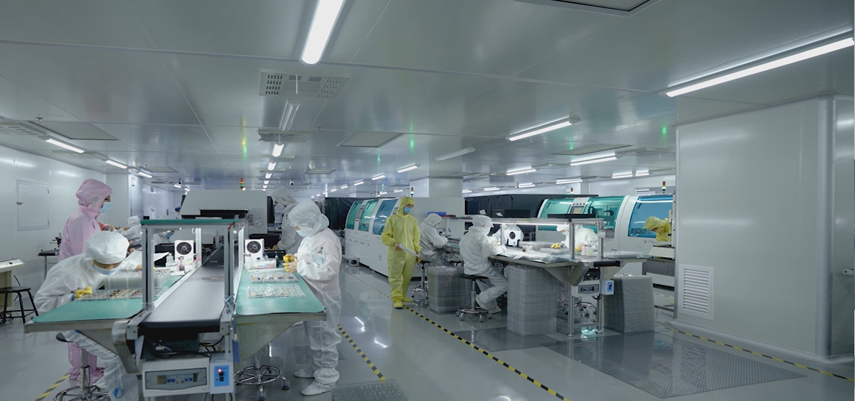
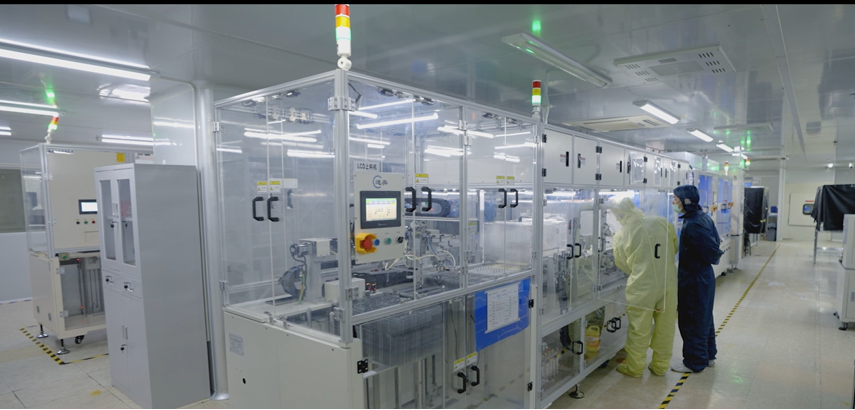
Given how much of this category's reliability comes down to manufacturing decisions invisible on a spec sheet, a few direct questions tend to separate experienced suppliers from resellers assembling generic components:
Is the panel native stretched or cut-and-resized, and from which fab — BOE, LG Display, AUO, Innolux, or another source?
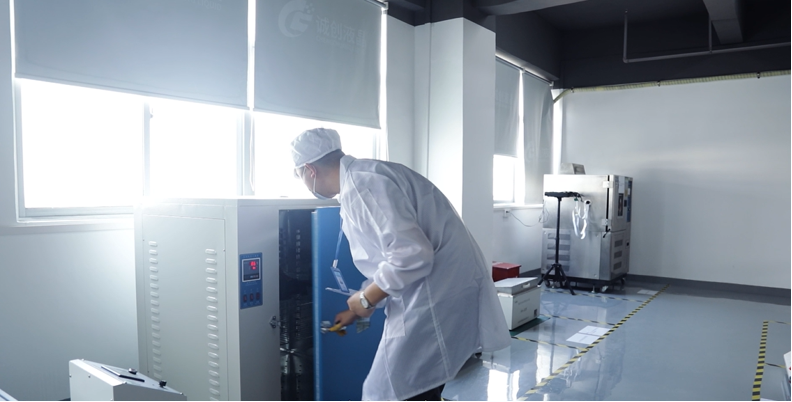
What burn-in, thermal cycling, and ESD testing does each unit or production batch undergo before shipment, and can test reports be provided?
What is the actual warranty period, and what's the process for sourcing replacement units or spare parts across a multi-site fleet rather than a single unit?
Can the firmware or CMS support the buyer's specific content workflow — including non-standard resolutions and remote OTA updates — without manual reformatting?
What is the realistic lead time and minimum order quantity for a custom size or branding requirement, versus an off-the-shelf configuration?
None of these questions are unusual to ask, and a manufacturer with genuine engineering depth in this category will have specific, ready answers rather than generic reassurances.
Looking Ahead
As retail media networks, transit advertising, and experiential signage continue to expand across European and North American markets, the stretched bar format is increasingly treated less as a novelty shape and more as standard infrastructure for spaces that were never built around rectangles. The suppliers that hold up under real deployment conditions are consistently the ones that treat panel sourcing, optical engineering, and mechanical design with the same rigor their marketing language implies — and that level of scrutiny is worth applying well before any purchase order is signed.
KEYWORDS: