Why Bar-Type LCDs Belong on the Factory Floor
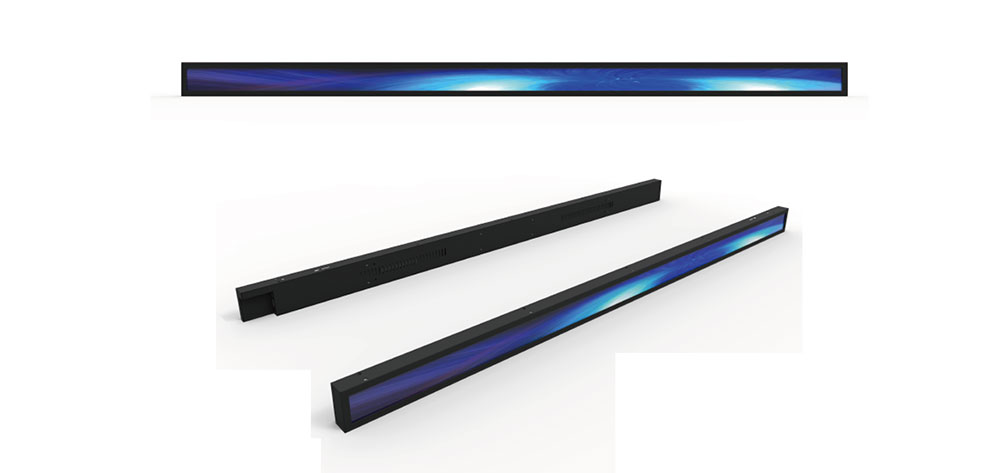
Industrial control panels and machine interfaces rarely fit the aspect ratios of consumer displays. Operators need information arranged along a narrow horizontal or vertical strip: a status ribbon above a row of physical buttons, a side rail of diagnostics next to a conveyor, or a slim readout embedded in the bezel of a CNC enclosure. Standard 16:9 panels waste space and force awkward mechanical compromises. A bar LCD, also called a stretched or bar-type display, is engineered for exactly these layouts, delivering ultra-wide or ultra-tall active areas that map cleanly onto the geometry of real machinery.
At HITULCD we design custom bar LCDs around the constraints that define industrial environments: high ambient brightness, wide temperature swings, continuous 24/7 duty cycles, and mechanical packaging that was decided long before the display was specified. This article walks through the engineering decisions that make a bar LCD dependable inside a control panel or machine interface.
Understanding the Bar LCD Form Factor
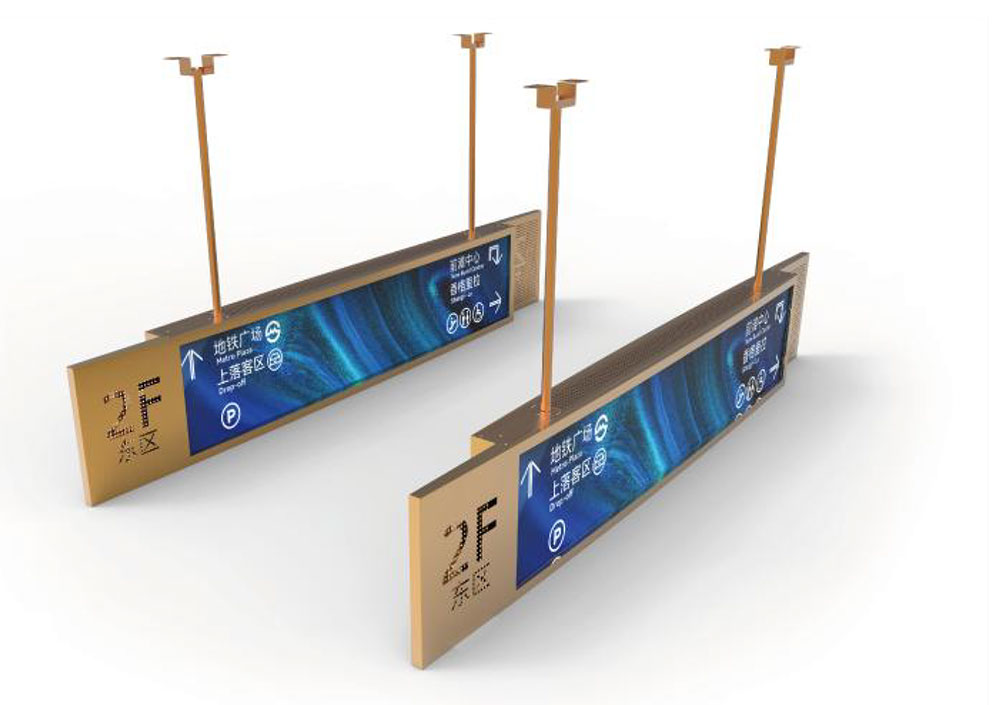
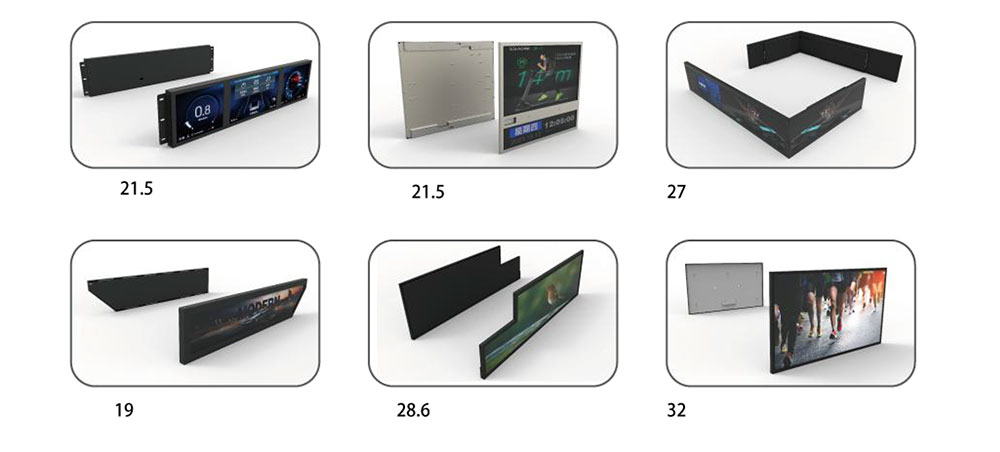
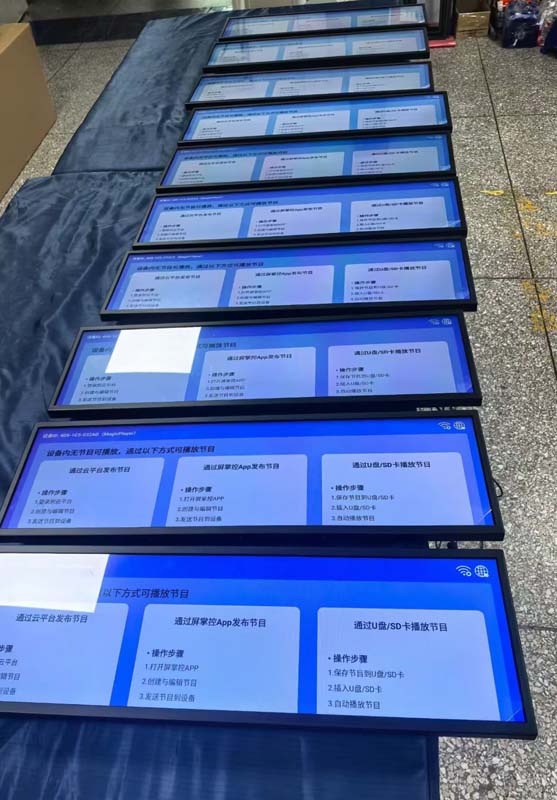
A bar LCD is defined by an elongated aspect ratio, typically ranging from 16:3 to 32:9 and beyond, achieved either through a natively cut panel or by trimming and re-bonding a parent glass. The result is a display that might measure, for example, 23 inches wide but only a few inches tall. For machine interfaces this shape is an advantage rather than a limitation: a single bar can present a tool-path progress bar, spindle load, temperature zones, and alarm states in one continuous glance line that follows the operator's natural reading path.
Two production approaches are common. Natively manufactured bar panels offer the best optical uniformity and mechanical integrity because the TFT array and backlight were designed for that outline. Cut-and-rebond panels adapt a mainstream parent size, which can shorten lead times and lower tooling cost for lower volumes, at the expense of tighter engineering around the cut edge and backlight light guide. Choosing between them depends on volume, durability targets, and how much of the panel's original border can be sacrificed.
High Brightness as a Baseline, Not an Option
Control panels sit under factory high-bay lighting, near windows, or outdoors on mobile equipment. A display that reads well at an office-grade 250 to 350 nits becomes unreadable under those conditions. For industrial bar displays we specify brightness in tiers:
- Indoor industrial (700 to 1000 nits): suitable for enclosed control rooms and shaded plant floors.
- Semi-outdoor (1000 to 1500 nits): for loading docks, covered gantries, and areas with mixed daylight.
- Full sunlight (1500 to 2500+ nits): for mobile machinery, agricultural equipment, and exposed outdoor panels.
Raw luminance is only part of the story. Sunlight readability depends on contrast under ambient light, which is why we pair high-output LED backlights with optical bonding and anti-reflection or anti-glare surface treatments. Optical bonding fills the air gap between the cover glass and the LCD with a clear resin, eliminating internal reflections, reducing parallax for touch, and preventing condensation inside the gap during thermal cycling. The combination can make a 1000-nit bonded display outperform a 1500-nit air-gap display in effective readability.
Thermal Management and Backlight Longevity
Pushing a backlight to 2000 nits generates heat, and heat is the primary enemy of LED lifetime and liquid-crystal stability. Inside a sealed control panel, that heat has nowhere to go. Our thermal strategy for bar displays combines several measures: binned high-efficiency LEDs that produce more light per watt, a metal backlight chassis that acts as a heat spreader, and, where ambient conditions demand it, an automatic brightness control loop driven by an ambient light sensor. Dimming the backlight when surroundings are dark not only improves operator comfort at night but also dramatically extends LED service life and reduces panel internal temperature.
For wide-temperature deployments we specify liquid crystal fluid rated for the expected range and add backlight heaters for sub-zero start-up. A typical industrial bar LCD operates across roughly minus 30 to plus 80 degrees Celsius with appropriate fluid and heater selection, though the exact window is defined per project against the target duty environment.
Interface and Integration Engineering
A machine interface display is only useful if it connects cleanly to the controller driving it. Bar LCDs from HITULCD support the signaling that industrial systems actually use: LVDS and eDP for direct connection to embedded SBCs and SoMs, and MIPI-DSI for compact ARM-based controllers. For legacy panels we can integrate an interface board that accepts HDMI or VGA, simplifying retrofits where the host system was never designed for a raw panel interface.
Touch is frequently required at the machine. Projected capacitive (PCAP) touch is the modern default, and we tune the sensor stack for industrial reality: thick cover glass up to several millimeters, glove-touch operation, and rejection of water droplets and conductive coolant mist that would otherwise trigger false touches. Where an operator must wear heavy gloves or the surface is routinely wet, we validate the touch controller firmware against those exact conditions rather than assuming a consumer-grade configuration will cope.
Mechanical Ruggedization and Sealing
Vibration from nearby motors, coolant spray, dust, and wash-down cleaning all attack a display's weak points, namely the edges, the flex cables, and the cover glass bond. For industrial bar LCDs we strengthen the flex-to-board connections, apply conformal coating where moisture ingress is a risk, and design the bezel and gasket so the front surface can meet a specified ingress protection rating once installed in the customer's enclosure. It is worth noting that an ingress rating applies to the complete sealed assembly, so we work from the customer's panel cutout and gasket design rather than claiming a rating for a bare panel.
Cover glass selection balances optical clarity, impact resistance, and scratch hardness. Chemically strengthened glass with a hardness suitable for frequent contact is the usual choice for touch machine interfaces, with printed borders and icons applied to the underside so legends never wear off under abrasive cleaning.
Compliance and Documentation
Industrial equipment must satisfy the electromagnetic compatibility, safety, and environmental requirements of the markets it ships into. Rather than attaching a list of logos, our practice is to provide a documented compliance package specific to each project: test reports, declarations, and material disclosures that correspond to the standards the customer's end product must meet. This keeps every certification claim tied to an approved, traceable source and avoids the ambiguity of generic marketing badges. During the design phase we align backlight driver layout, cable shielding, and grounding with the EMC targets up front, because retrofitting compliance after a failed emissions scan is far more expensive than designing for it.
Designing a Custom Bar LCD: The Process
A successful custom display starts with the mechanical and optical envelope, not the glass. We begin by capturing the panel cutout, viewing distance, worst-case ambient brightness, operating temperature range, expected lifetime, and the host controller's available interface. From there we recommend a resolution and aspect ratio that keep pixel density appropriate for the viewing distance, so text and bar graphs stay crisp without over-specifying cost.
Prototyping follows with functional samples that the customer integrates into a real enclosure, because issues like reflection from a specific overhead light or heat build-up behind a particular gasket only appear in context. We then validate brightness uniformity, touch performance under the intended contaminants, and thermal behavior at full brightness before releasing the design for production. This staged approach shortens the path from concept to a display that survives the plant floor for years.
Conclusion
Bar LCDs solve a real geometric problem in industrial control panels and machine interfaces: information that belongs in a line, not a rectangle. When that form factor is combined with high brightness engineered for ambient conditions, disciplined thermal management, rugged mechanical sealing, the right interface, and compliance documentation tied to verifiable sources, the result is a human-machine interface that operators can trust in any light and any shift. HITULCD designs each custom bar display around the environment it will actually work in, so the display becomes the most reliable part of the panel rather than its weakest link.
KEYWORDS: custom bar LCD, industrial control panel display, high brightness LCD, machine interface display, sunlight readable LCD