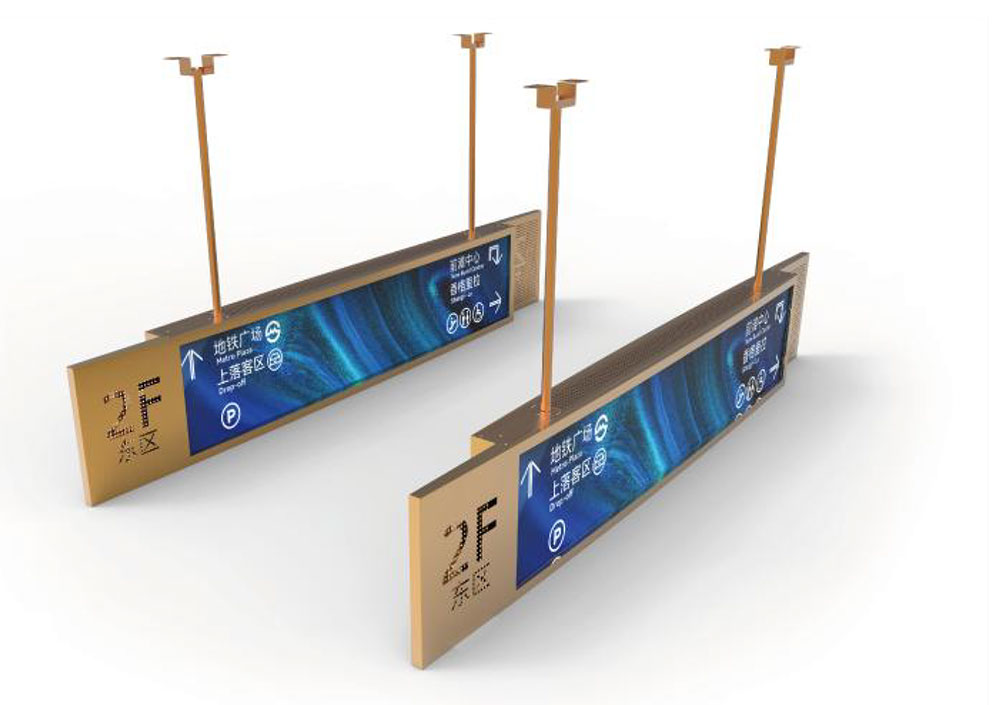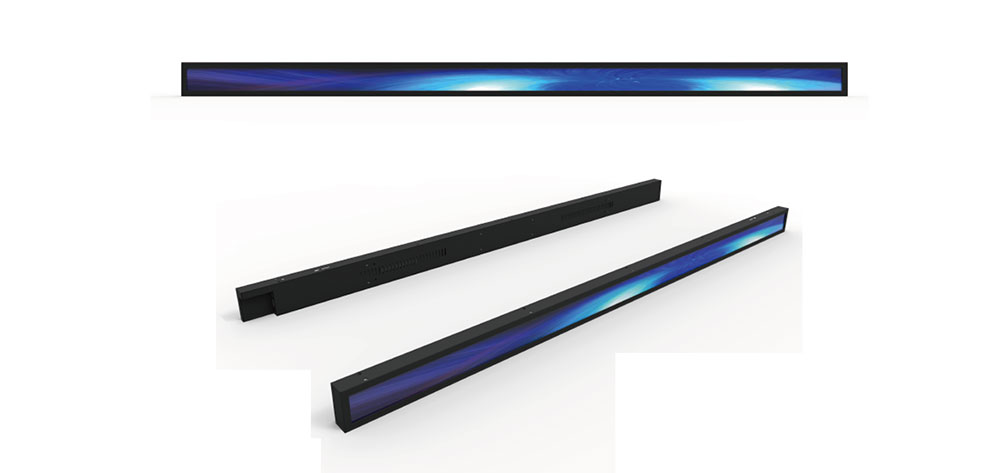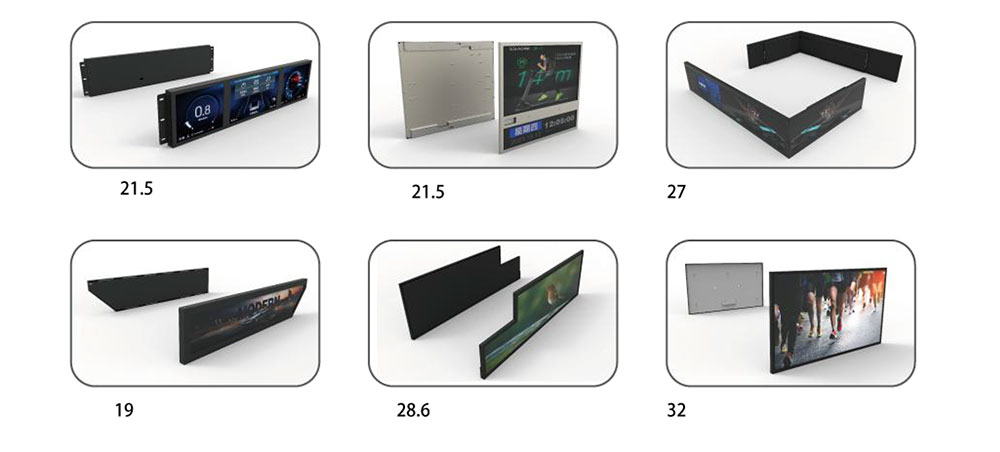
Bar type LCD displays, also called stretched or ultra-wide bar LCDs, have become a core component in modern retail equipment. Their elongated aspect ratios (such as 16:3, 16:4.5, and 24:9) fit shelf edges, checkout lanes, vending fronts, and smart lockers where a standard panel simply will not fit. This article walks through the practical engineering steps for integrating bar type LCDs into retail hardware, from panel selection through mechanical mounting, electrical interfacing, thermal management, and validation testing.
1. Choose the Right Bar Type Panel for the Application
Start by matching the panel to the retail environment rather than the other way around. The three variables that drive most integration decisions are brightness, aspect ratio, and operating temperature.
- Brightness: Shelf-edge and window-facing displays compete with ambient and direct sunlight. Indoor shaded locations work at 500–700 cd/m², shelf edges under bright store lighting need 1000 cd/m², and window-facing or outdoor-adjacent units require 1500–2500 cd/m² high-brightness panels with anti-reflective treatment.
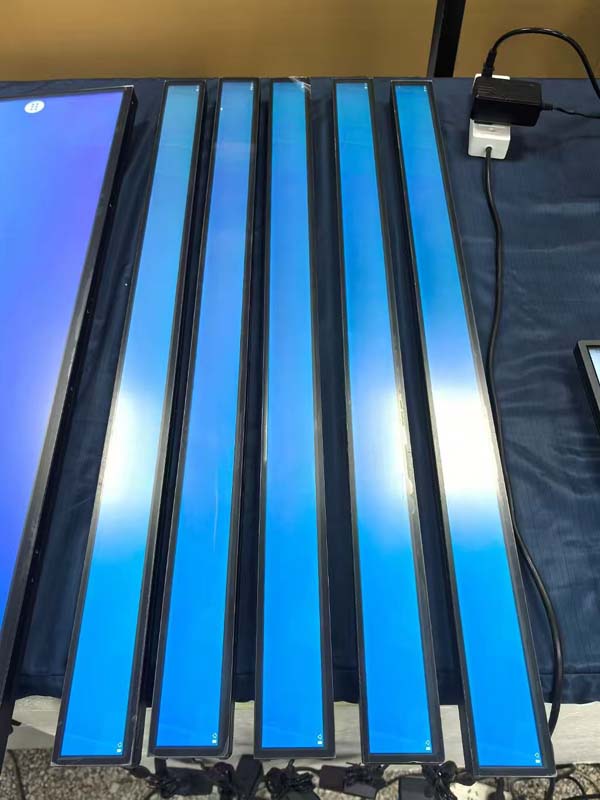
- Aspect ratio and size: Confirm the active area dimensions against the mechanical opening before committing. Bar panels are specified by physical width and height, not only by diagonal, because the diagonal is misleading for ultra-wide formats.
- Temperature range: Equipment near refrigeration, in unconditioned stockrooms, or behind glass must use panels rated for the real worst-case range, typically -20°C to +70°C for demanding sites.
2. Plan the Mechanical Integration
Bar type panels are long and thin, which makes them more sensitive to bending stress and uneven mounting pressure than square panels. A few rules prevent most field failures:
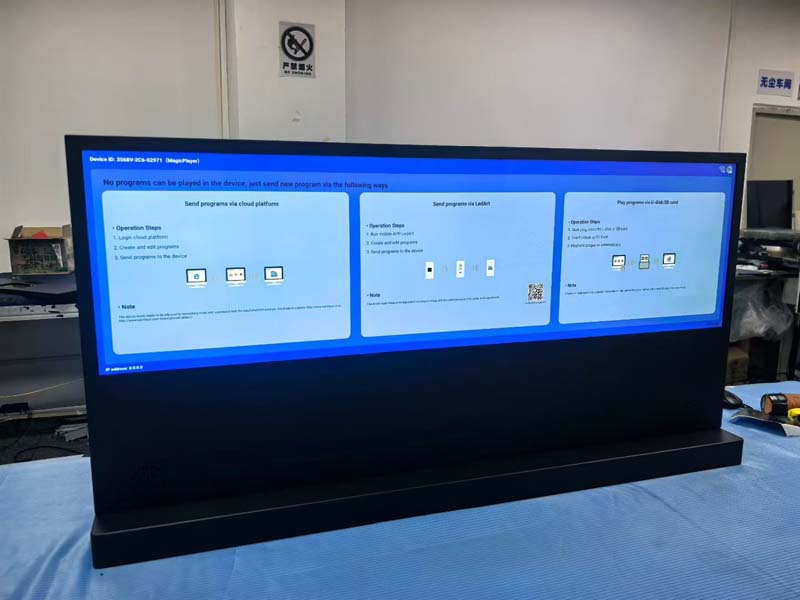
- Support the panel along its full length. Use a continuous frame or at least three mounting zones so the glass does not flex under transport vibration.
- Leave a controlled air gap or use optical bonding between the cover glass and the panel. Optical bonding improves readability and ruggedness but raises cost and complicates rework.
- Account for the flexible printed circuit (FPC) and driver board location. On bar panels these are usually on one long edge, so your enclosure must reserve clearance there for cables and heat.
- Do not clamp directly on the active area or the polarizer. Use the bezel or the glass edge only.
3. Design the Electrical Interface
Most bar type LCDs use LVDS or eDP signaling from the timing controller to the panel. The integration work is in the driver board and the host connection.
- Driver board selection: Pick a board that natively supports the panel's native resolution and refresh rate. For retail you often need HDMI or USB-C input from a media player or a built-in Android system-on-module.
- Backlight control: High-brightness bar panels draw significant current through the LED backlight. Verify the power supply headroom and include PWM or analog dimming so the display can reduce brightness at night or when the store closes.
- Power budget: Size the supply for peak backlight plus the host electronics, with at least 20% margin. Undersized supplies cause flicker and premature failure.
- EMC: Keep LVDS pairs short and matched, ground the shield properly, and route the backlight supply away from signal lines to pass retail EMC requirements.
4. Manage Heat in High-Brightness Builds
Brightness and heat are directly related. A 2500 cd/m² bar panel in a sealed enclosure can push the liquid crystal past its clearing point, causing a dark "blackening" blob on screen. Thermal management is therefore not optional for sunlight-readable retail units.
- Use an aluminum back plate or heat spreader in contact with the panel's metal frame.
- Provide vents or a sealed-but-conductive path for enclosures exposed to sun.
- Add a temperature sensor and automatic brightness reduction above a set threshold to protect the panel.
- For the coldest sites, specify a panel with an integrated heater and allow warm-up time before full brightness.
5. Integrate Touch and Content Control
Many retail bar displays add projected capacitive (PCAP) touch for wayfinding and self-service. Match the touch sensor size and controller to the panel, and tune the controller for the cover glass thickness. For content, decide early between an external media player and an all-in-one board with onboard storage and network, since that choice affects cabling, power, and enclosure depth.
6. Validate Before Mass Production
Treat the first integrated unit as an engineering sample and put it through a structured validation plan. Representative checks, tested according to the relevant IEC and manufacturer specifications, include:
- Optical: Brightness and uniformity measured at nine points, tested according to standard luminance measurement methods, confirming the panel meets its rated cd/m² across the long axis.
- Thermal: High-temperature operating soak and cold start, tested according to IEC 60068-2-2 and IEC 60068-2-1, to confirm no blackening at the top rated temperature and correct startup at the lowest.
- Vibration and shock: Transport simulation, tested according to IEC 60068-2-6 and IEC 60068-2-27, to confirm the long panel and its mounting survive shipping.
- Electrical and EMC: Power cycling, voltage margin, and emissions, tested according to the applicable CISPR and IEC 61000 standards for the destination market.
- Lifetime: Extended burn-in at target brightness to project backlight half-life and spot any early uniformity drift.
Conclusion
Integrating bar type LCD displays into retail equipment succeeds when brightness, mechanics, electronics, and thermal design are planned together rather than solved one at a time. Select a panel rated for the real environment, support its long body properly, give the backlight enough power and cooling, and prove the design with a structured test plan. Done this way, a bar type display turns an awkward shelf edge or checkout lane into a reliable, high-impact point of sale. HITULCD supports this process with high-brightness bar panels and integration guidance tailored to retail hardware.
KEYWORDS: bar type LCD displays, retail equipment integration, high-brightness LCD, stretched bar LCD, LCD driver board