LCD Backlight Off While Display Remains Active: Industrial Applications for Marine, Machinery and Transportation Equipment
Meta Description: Discover how LCD backlight control allows the display panel to remain active while illumination is switched off. Explore applications in marine equipment, industrial machinery and transportation systems.
SEO Keywords: LCD backlight control, industrial LCD display, LCD backlight off, marine LCD display, custom LCD module
Introduction
In industrial equipment, an LCD display is often required to operate under different environmental conditions and equipment operating states.
A display installed in a marine control panel, industrial machine or transportation system may need to remain electrically active even when its backlight is no longer required.
For equipment manufacturers, this creates a specific display integration requirement: the LCD panel must continue operating while the backlight is switched off.
This is different from turning off the entire LCD module.
When the backlight is disabled, the LCD panel can remain powered, continue receiving image signals and maintain its display operation. The backlight simply stops providing illumination.
This operating condition allows equipment designers to control display illumination independently of the LCD panel.
For applications involving marine equipment, industrial machinery, transportation systems and embedded control interfaces, independent backlight control can provide additional flexibility when designing equipment operating modes.
HITULCD provides industrial LCD display solutions for OEM and ODM applications where display functionality, electrical interfaces and operating requirements need to be evaluated together.
This article explains how LCD backlight-off operation works, why industrial equipment manufacturers may need it, and what engineers should consider when integrating this function into their products.
1. Understanding LCD Backlight-Off Operation
A conventional transmissive TFT LCD module uses two primary functional elements to produce a visible image: the LCD panel and the backlight.
The LCD panel controls the transmission of light through its pixels.
The backlight provides the illumination required to make the displayed image visible under normal viewing conditions.
Although these components work together during normal display operation, they perform different functions.
This distinction becomes important when the equipment requires the backlight to be switched off without stopping the LCD panel.
LCD Panel and Backlight Perform Different Functions
The LCD panel receives image information and controls the optical state of its pixels.
The backlight supplies illumination behind the panel.
During normal operation, light from the backlight passes through the LCD panel and its optical layers to produce the displayed image.
When the backlight is disabled, the LCD panel does not necessarily stop operating.
Depending on the module's electrical design, the panel can remain powered and continue receiving image data.
The display content can therefore continue to be maintained or updated even though the backlight is no longer illuminating the panel.
This is the fundamental operating principle behind independent LCD backlight control.
Backlight OFF Does Not Mean LCD Panel OFF
For industrial equipment manufacturers, the difference between these operating states should be clearly understood.
| Display condition | LCD panel | Image signal | Backlight |
|---|---|---|---|
| Normal operation | Active | Received | ON |
| Backlight-off operation | Active | Received | OFF |
| Complete display shutdown | Depends on shutdown design | May stop | OFF or inactive |
The second condition is the focus of this article.
In this operating state, the LCD panel remains active while the backlight is disabled.
The module does not necessarily enter a complete shutdown state.
The actual behavior depends on the LCD module, backlight driver and system control implementation.
For OEM projects, these operating conditions should be specified separately rather than treating backlight control and display power control as the same function.
What Happens to the Displayed Image?
When the backlight is switched off, the LCD panel can continue receiving image signals.
The displayed content may remain maintained or continue updating according to the panel's operating state and the incoming image data.
However, the absence of backlight illumination changes the visibility of the image.
A conventional transmissive LCD does not generate its own light.
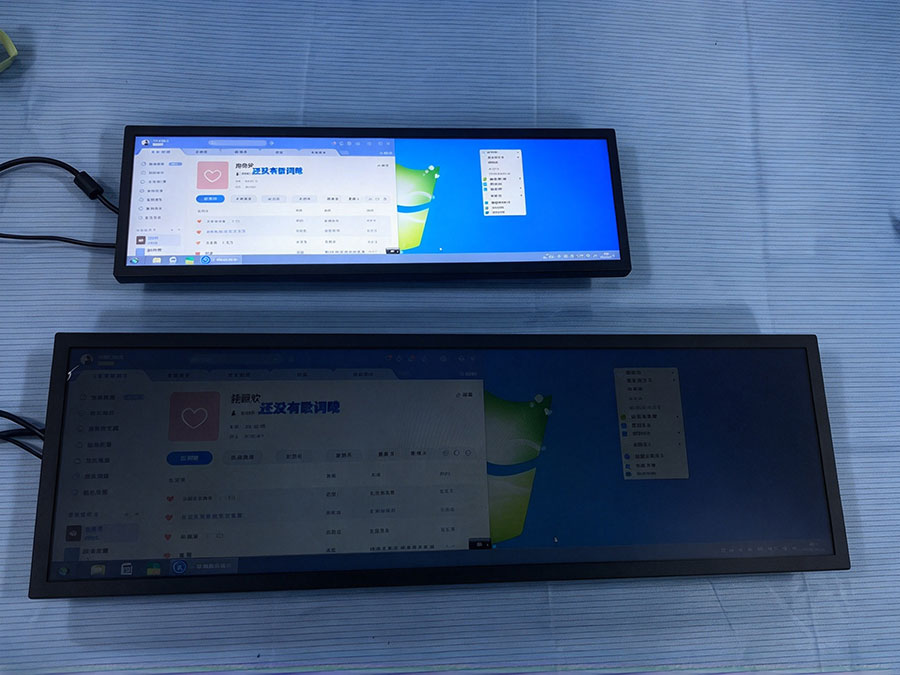
With the backlight disabled, the image may become difficult or impossible to see in a dark environment.
Ambient light may still interact with the panel, but visibility depends on the panel's optical characteristics and surrounding illumination.
Therefore, maintaining LCD panel operation is not the same as maintaining normal visual readability.
This distinction is important when designing display functions for industrial equipment.
2. Why Industrial Equipment Needs Independent Backlight Control
Industrial LCD displays are frequently integrated into equipment that operates continuously or under changing environmental conditions.
The display may remain part of the equipment's operating system even when the operator does not require continuous backlight illumination.
In these situations, independent backlight control can provide additional flexibility.
Separating Display Operation from Illumination
In a conventional display operating mode, the backlight remains active whenever the display is being used.
However, some equipment designs require the LCD panel to remain active while the backlight is disabled.
For example, an equipment controller may need to maintain the display's operating state while entering a condition where illumination is unnecessary.
With independent backlight control, the equipment manufacturer can define the backlight state separately from the LCD panel's operating state.
This allows the display behavior to be integrated into the equipment's control logic.
Supporting Different Equipment Operating Modes
Industrial equipment may have several operating modes.
Examples include:
Normal operation
Standby
Maintenance
Equipment monitoring
System-controlled display states
The required display behavior may differ between these modes.
During normal operation, the backlight may remain enabled.
During a defined standby condition, the equipment may disable the backlight while keeping the LCD panel active.
When illumination is required again, the equipment controller can restore the backlight according to the module's supported control sequence.
The exact implementation depends on the display hardware and the equipment's operating requirements.
Maintaining the LCD Panel's Operating State
Some equipment applications require the LCD panel to remain active while the backlight is disabled.
This may be necessary when the equipment's display control architecture separates panel operation from illumination control.
The LCD panel can continue receiving image information while the backlight remains off.
For equipment manufacturers, this provides an additional operating state that can be considered during system design.
The function should be verified at the module level to confirm that the required panel operation is maintained during backlight shutdown.
3. Applications in Marine Equipment
Marine equipment is one of the application areas where flexible display control may be useful.
Ships and marine systems contain various control panels, monitoring interfaces and embedded display systems.
These displays may operate under changing ambient lighting conditions and may remain powered during different equipment operating states.
Independent backlight control can help marine equipment manufacturers define how display illumination behaves within their systems.
Marine Control Panels
Marine control panels may use LCD displays for equipment monitoring, system status and operator interaction.
Depending on the installation, displays may be integrated into:
Machinery control panels
Electrical equipment monitoring systems
Auxiliary equipment interfaces
Pump and engine monitoring systems
Embedded marine control terminals
The display requirements depend on the function of the equipment and its operating environment.
In some applications, the equipment may need to maintain its LCD panel operation while disabling the backlight.
This can be useful when the display remains part of the equipment's operating system but continuous illumination is not required.
The equipment controller can manage the backlight independently, provided that the LCD module supports the required operating condition.
Marine Equipment Operating at Night
Marine equipment may be used in environments where ambient lighting changes significantly.
During nighttime operation, equipment manufacturers may need to coordinate the illumination of multiple displays within the same control area.
A display that remains illuminated when its information is not required may contribute unnecessary light to the operating environment.
Independent backlight control allows the equipment designer to define a backlight-off condition without necessarily shutting down the LCD panel.
For applications where the display must remain visible, the appropriate brightness level should be determined separately.
The backlight-off function should only be used when the equipment's operating requirements allow the display illumination to be disabled.
Marine Display Integration Requirements
For marine applications, backlight control should be evaluated alongside the complete display specification.
Engineers should consider:
LCD panel size
Resolution
Display brightness
Backlight control interface
Power supply requirements
Operating temperature
Mechanical installation
Vibration requirements
Environmental protection
Applicable marine equipment standards
A display's ability to switch off its backlight does not automatically establish suitability for marine use.
The complete display configuration must be evaluated against the intended installation and equipment requirements.
4. Applications in Industrial Machinery
Industrial machinery is another important application for LCD modules with independent backlight control.
Machine manufacturers frequently integrate LCD displays into operator interfaces, monitoring systems and embedded control panels.
These displays may remain part of the equipment's operating architecture even when the operator does not need continuous illumination.
Industrial HMI Displays
Human-machine interfaces allow operators to interact with equipment and review system information.
An industrial HMI display may present:
Machine operating parameters
Equipment status
Production information
Control menus
Maintenance information
Alarm and monitoring data
The display may be required to remain active throughout the equipment's operating cycle.
However, the backlight does not necessarily need to remain illuminated under every operating condition.
Independent backlight control allows the equipment manufacturer to separate illumination management from LCD panel operation.
This can be useful when designing equipment operating modes that require the display panel to remain active while backlight illumination is disabled.
Machine Standby and Monitoring
Consider an industrial machine that remains powered during a production break.
The equipment controller may continue monitoring system conditions while the operator is not actively interacting with the display.
In this situation, the manufacturer may want to disable the backlight without shutting down the LCD panel.
The panel can continue receiving image data while the backlight remains off, provided that the module supports this operating state.
This allows the equipment's display behavior to be managed according to its operating requirements.
The function should be verified during system integration to confirm that the LCD panel remains active and that the backlight can be restored correctly.
Industrial Equipment with Multiple Displays
Some machines use several LCD displays for different monitoring or control functions.
The equipment manufacturer may need to manage each display according to its role.
For example, one display may remain illuminated for operator interaction while another display has its backlight disabled.
Independent backlight control can support this type of equipment-level display management.
The actual implementation depends on the control architecture and the backlight interface available on each LCD module.
For OEM projects, the display supplier should confirm whether the required control signals are supported.
5. Applications in Transportation Equipment
Transportation equipment may also require LCD displays with independently controlled backlight operation.
Depending on the equipment, displays may be used for monitoring, operating information, system status or embedded control functions.
The display's illumination requirements can vary according to the equipment's operating conditions.
Transportation Control Interfaces
Transportation equipment may incorporate LCD displays into:
Equipment control panels
Operator interfaces
Auxiliary system monitoring
Embedded transportation electronics
Equipment status displays
These applications may require the display to remain active while the backlight is disabled.
For example, an equipment manufacturer may design a control state in which the LCD panel continues receiving image information while the display illumination is switched off.
The function can be incorporated into the equipment's display control architecture.
However, the appropriate operating state depends on the display's purpose.
A display used for critical operator information may require continuous visibility.
In such cases, the equipment manufacturer must determine whether backlight-off operation is appropriate for the application.
Transportation Equipment Standby
Some transportation systems remain powered when specific displays are not actively required.
The equipment manufacturer may need to define which display functions remain active during these conditions.
Independent backlight control can provide an additional option for managing illumination.
The LCD panel may continue operating while the backlight is disabled.
When the equipment returns to a state requiring illumination, the backlight can be restored according to the module's control implementation.
For transportation applications, engineers should also evaluate electrical compatibility, temperature requirements, vibration and the relevant equipment standards.
Backlight control should be considered as part of the complete display integration process.
6. Engineering Requirements for Independent LCD Backlight Control
Independent backlight control depends on the LCD module's electrical architecture.
The module must support the required backlight-off condition while maintaining the LCD panel's operating state.
For OEM equipment manufacturers, several technical points should be confirmed before selecting a display.
Backlight Driver and Control Method
The backlight driver determines how the illumination system is powered and controlled.
Depending on the module design, brightness adjustment may use:
PWM control
Analog brightness control
A dedicated backlight enable signal
Other supported driver control methods
The actual control method depends on the LCD module.
A minimum brightness setting should not automatically be treated as a complete backlight-off condition.
Engineers should confirm whether the module supports a separate backlight disable function and whether the LCD panel remains active during that condition.
Independent Backlight Shutdown
For the application described in this article, the required operating condition is:
The LCD panel remains powered and active, image information continues to be received, and only the backlight illumination is disabled.
This requirement should be clearly communicated to the display supplier.
The supplier should confirm:
Whether the LCD panel remains powered
Whether image signals continue to be received
Whether display content remains maintained or updated
Whether the backlight is independently controlled
Whether the backlight can be restored without stopping the panel
Whether any specific control sequence is required
These details determine whether the module is suitable for the equipment's intended operation.
Image Signal Continuity
Maintaining image signal reception is an important part of the required operating state.
When the backlight is disabled, the LCD panel should continue receiving the image signal according to the specified system behavior.
For equipment applications that require continuous image updates, engineers should verify that the image data remains active during backlight-off operation.
The exact behavior depends on the module's interface and system configuration.
For example, the equipment controller may continue sending image data while the backlight is disabled.
This should be verified through the actual display integration process rather than assumed from a general brightness specification.
Backlight Restoration
When the backlight is restored, the display should return to its illuminated operating condition according to the module's design.
For OEM projects, engineers should evaluate the transition between backlight-off and backlight-on states.
Relevant considerations include:
Backlight enable timing
Display initialization requirements
Image signal continuity
Backlight restoration behavior
Equipment operating sequence
The module's electrical documentation should define the required control behavior.
System-level testing can confirm whether the display returns to normal operation under the equipment's intended conditions.
Power Consumption
Switching off the backlight removes the illumination output.
However, the LCD panel and associated electronics may continue consuming power.
The actual power reduction depends on the backlight configuration and the remaining active circuitry.
Therefore, backlight-off operation should not be described as complete LCD module shutdown or zero power consumption.
If the equipment has a defined power requirement, the complete module should be evaluated under the intended operating conditions.
7. What OEM Engineers Should Confirm Before Integration
For industrial LCD projects, the backlight control requirement should be defined before the module is finalized.
The following points help establish whether the display is suitable.
Display Operating State
The OEM should specify whether the LCD panel must remain active when the backlight is disabled.
The requirement should identify whether image signals continue to be received and whether the displayed content must remain updated.
Backlight Control Interface
The equipment manufacturer should confirm which control method is available.
The required interface may involve PWM, analog control, a backlight enable signal or another supported method.
The control method should be compatible with the equipment's host controller.
Electrical Compatibility
The LCD module's power supply and control interfaces should be evaluated against the equipment design.
Engineers should confirm the applicable voltage requirements, control signals and operating sequence.
Mechanical and Environmental Requirements
The display should also be evaluated for:
Installation dimensions
Mounting requirements
Operating temperature
Vibration
Environmental protection
Connector configuration
These requirements are particularly important for marine, transportation and industrial machinery applications.
System-Level Verification
The final display configuration should be tested under the intended operating conditions.
The verification process should confirm that:
The LCD panel remains active.
Image signals continue to be received.
The backlight can be disabled independently.
The required panel operating state is maintained.
The backlight can be restored according to the module's control requirements.
This helps ensure that the selected LCD module supports the equipment's actual operating requirements.
8. Independent Backlight Control for Custom LCD Projects
Industrial equipment manufacturers often require LCD modules that match their specific mechanical, electrical and operating requirements.
A standard display specification may not fully describe the required operating behavior.
For example, an OEM project may require a particular panel size, resolution, interface and backlight control function.
The equipment may also require the LCD panel to remain active while the backlight is disabled.
In this situation, the display selection process should consider the complete operating requirement rather than focusing only on panel size or brightness.
The LCD module must support the required control behavior.
The equipment controller must also be able to manage the backlight independently from the LCD panel.
For custom LCD projects, the following information helps establish the appropriate configuration:
Required display size
Resolution
Normal operating brightness
Backlight control method
Required backlight-off behavior
Display interface
Power supply
Mechanical dimensions
Operating temperature
Equipment application
Providing these details allows the display supplier to evaluate the module against the project's technical requirements.
9. HITULCD Industrial LCD Display Solutions
HITULCD provides industrial LCD display solutions for equipment manufacturers, system integrators and OEM/ODM projects.
For applications requiring independent backlight control, the most important step is to define the required display operating state.
The customer should clarify whether the requirement involves ordinary brightness adjustment or complete backlight shutdown while the LCD panel remains active.
This distinction affects the module's control interface and electrical configuration.
For marine equipment, industrial machinery and transportation applications, HITULCD can evaluate display requirements including:
LCD panel size
Resolution
Brightness
Display interface
Backlight control
Mechanical integration
Operating temperature
Application-specific requirements
The appropriate display configuration depends on the selected module and the equipment's operating conditions.
For projects requiring the LCD panel to remain active while the backlight is switched off, the backlight control implementation should be confirmed during technical evaluation.
This helps equipment manufacturers determine whether the display supports the required operating behavior before proceeding with integration.
Custom LCD Module Evaluation
When requesting a display for an industrial project, customers should provide the required operating conditions and technical specifications.
HITULCD can use this information to evaluate the display requirements and discuss a suitable LCD module configuration.
The evaluation should include the required backlight control behavior, panel operation, interface compatibility and mechanical requirements.
For applications involving marine equipment, machinery or transportation systems, the complete display specification should be reviewed against the intended installation.
The objective is to identify a display configuration that matches the equipment's actual operating requirements.
Conclusion
Independent LCD backlight control allows the backlight illumination to be switched off while the LCD panel remains active.
In this operating condition, the LCD panel can continue receiving image signals and maintaining or updating display content, while the backlight provides no illumination.
This function is different from shutting down the entire LCD module.
For marine equipment, industrial machinery and transportation systems, independent backlight control can provide additional flexibility when designing display operating modes.
However, the function must be evaluated according to the LCD module's electrical design and the equipment's requirements.
Engineers should confirm the backlight control method, panel operating state, image signal continuity and backlight restoration behavior before integrating the display.
For OEM and ODM projects, defining these requirements early helps establish the correct display configuration.
HITULCD supports industrial LCD display evaluation for OEM equipment manufacturers requiring specific display interfaces, backlight control functions and application-oriented integration.
Contact HITULCD to discuss your LCD panel specifications, backlight control requirements and industrial equipment application.
Engineering Note
The operating behavior described in this article applies to the confirmed display function: the LCD panel remains active and continues receiving image signals while only the backlight is switched off.
The panel's continued operation does not mean that the displayed image remains normally visible without illumination.
Actual control interfaces, electrical characteristics, backlight restoration behavior and environmental performance should be confirmed for the selected LCD module and equipment configuration.
KEYWORDS: