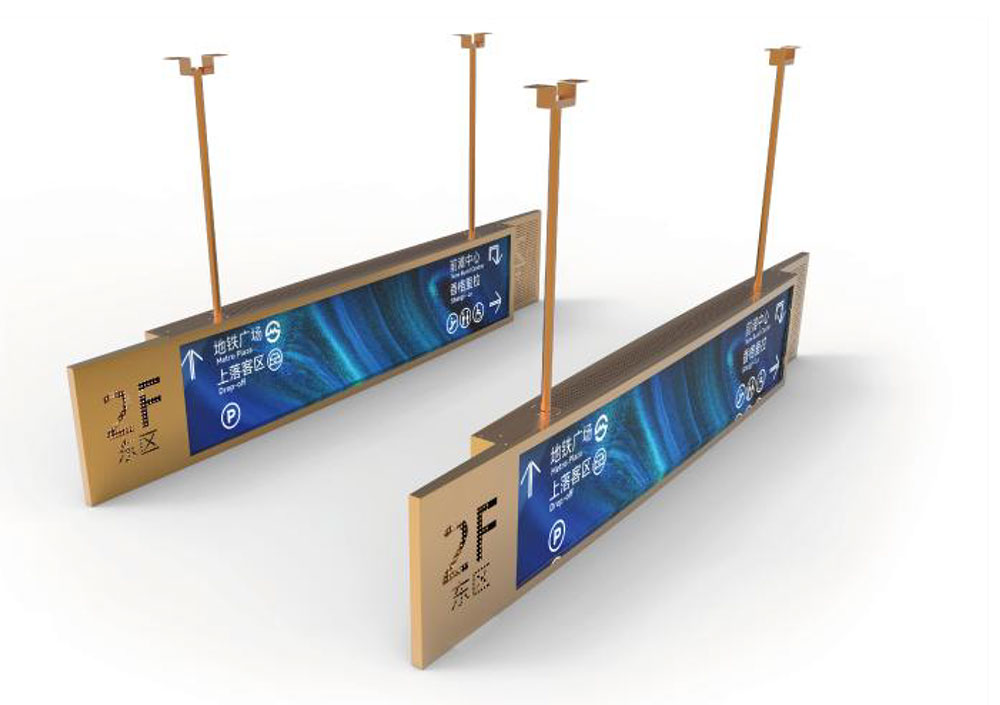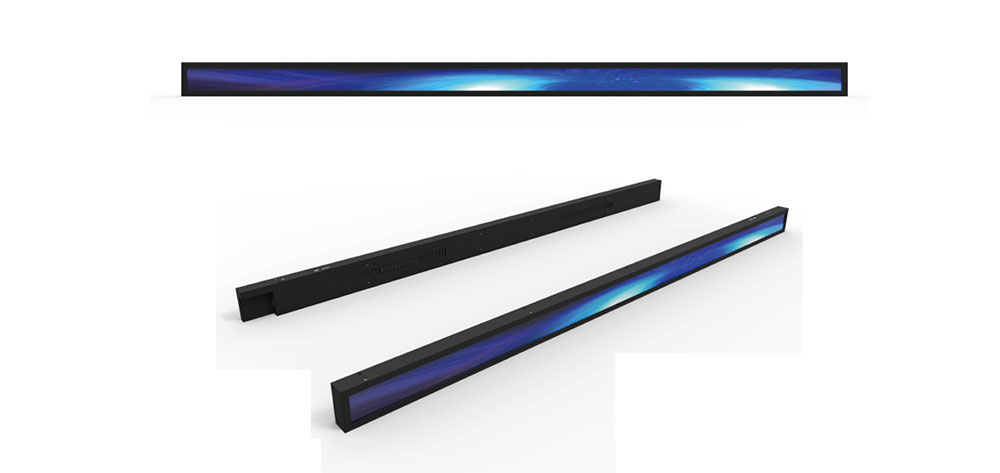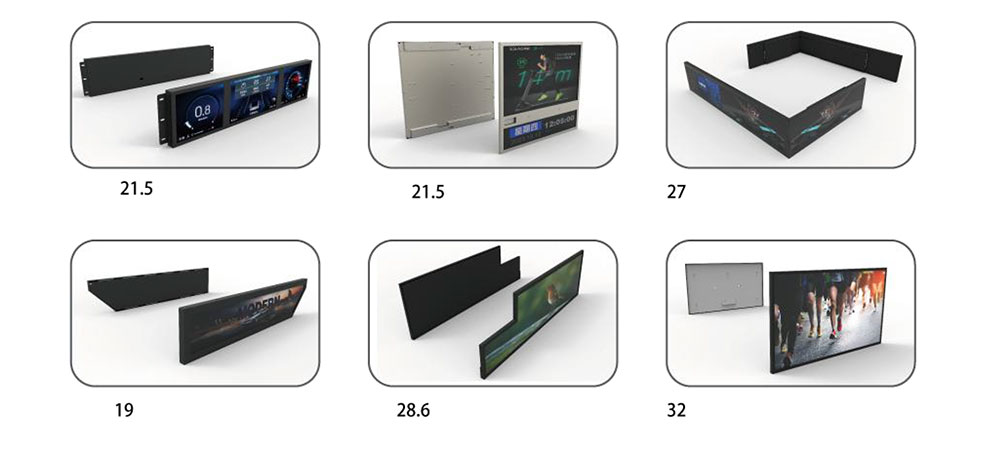
Shopping mall main aisles present a unique visual engineering challenge: they are long, narrow, high-traffic corridors flooded with ambient light from skylights and storefronts. Conventional 16:9 displays waste vertical space and lose legibility under high illuminance. Stretched bar screens (also called ultra-wide bar LCDs) solve this by matching the aspect ratio of the architecture itself. When combined into multi-screen splicing arrays, they transform ceiling soffits, pillar wraps, and overhead beams into continuous digital signage ribbons. This white paper examines the six leading stretched bar screen configurations HITULCD recommends for mall main aisle deployments, with a focus on high-brightness performance, splicing continuity, and long-duty reliability.
Why Stretched Bar Screens Suit Mall Aisles
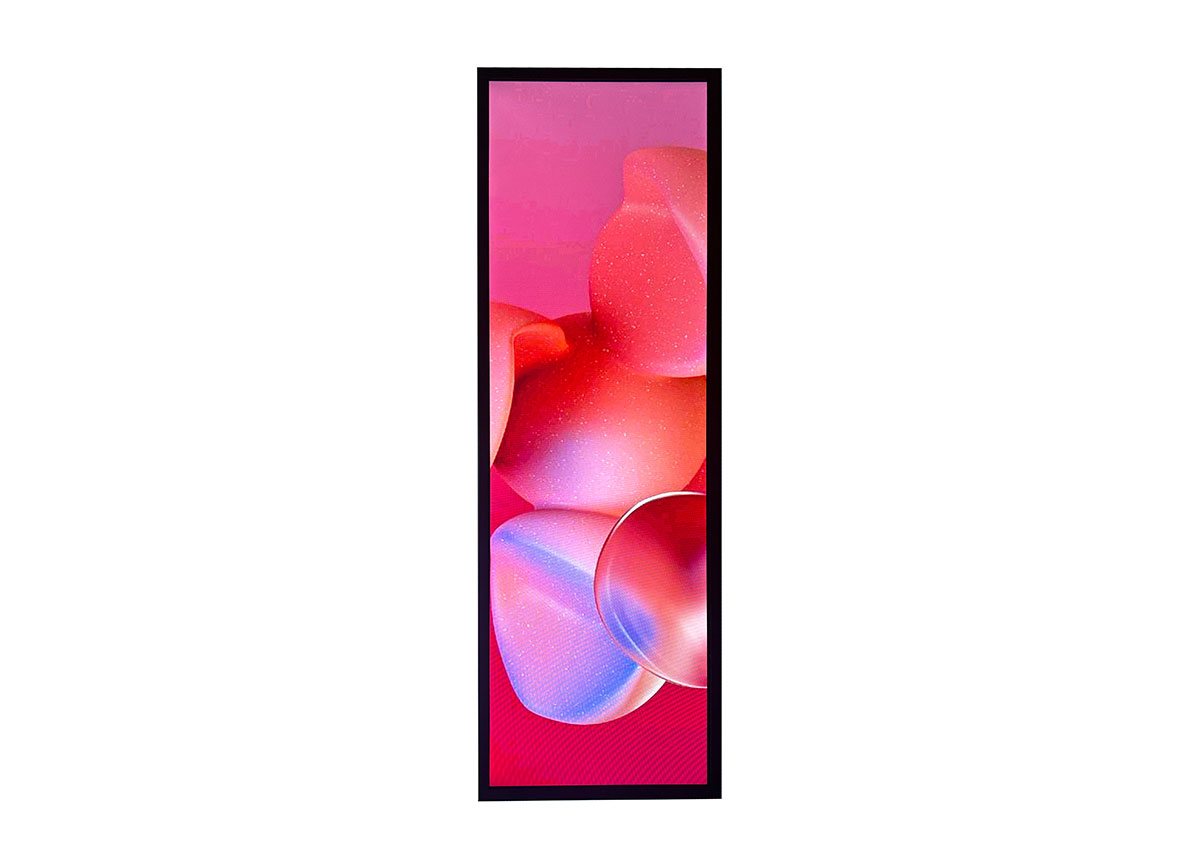
Main aisles are engineered for pedestrian flow, not fixed dwell viewing. Shoppers glance at overhead signage while walking, so content must be readable at a distance and at oblique viewing angles. Stretched bar screens with aspect ratios such as 58:9, 32:9, and 24:9 deliver a wide horizontal canvas ideal for scrolling promotions, wayfinding arrows, and brand animations. Because mall interiors frequently exceed 800–1500 lux under daylight harvesting and LED architectural lighting, standard 350–450 nit panels appear washed out. High-brightness variants at 1000–2500 nits maintain contrast and color saturation in these conditions.
Splicing Technology Fundamentals
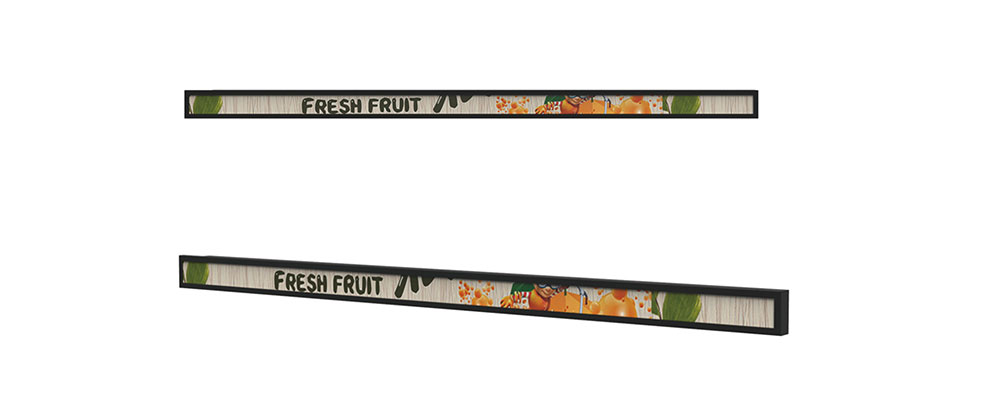
Multi-screen splicing joins several bar units into one logical display using either hardware video walls controllers or daisy-chained signal distribution. Two parameters dominate the buyer's decision: bezel width (the physical gap between adjacent active areas) and color/brightness uniformity across units. For aisle applications where content spans multiple panels, a combined bezel under 3.5 mm preserves the illusion of a single ribbon. HITULCD units use LED backlight zoning and factory gamma calibration so that spliced arrays hold ΔE color variance below 3 across the wall.
Top 6 Configurations
1. 37.3-inch 58:9 Ceiling Ribbon Array
The 37.3-inch 58:9 stretched bar is the workhorse for overhead soffit runs. At 1920×310 native resolution and 1000 nit brightness, a horizontal splice of four to eight units creates a seamless promotional ribbon along the aisle spine. Its shallow depth (under 60 mm) fits recessed ceiling channels without protruding into the fire-egress envelope. Recommended for malls with long straight main corridors exceeding 40 meters.
2. 28-inch 32:9 Pillar-Wrap Cluster
Structural pillars anchor most mall aisles and offer natural mounting real estate. The 28-inch 32:9 unit at 700 nits wraps two or three panels around a square column using mitered corner brackets. Portrait or landscape orientation is field-selectable. This configuration excels at eye-level brand messaging and directory content where shoppers pause at circulation nodes.
3. 43.8-inch 24:9 High-Brightness Storefront Header
For aisles bordered by open-front tenancies, the 43.8-inch 24:9 bar at 2500 nits sits above shop entrances. Its elevated brightness competes directly with adjacent retail lighting and glazing reflections. Spliced in pairs above wide storefronts, it doubles as a tenant co-branding surface and a mall-controlled advertising slot.
4. 23.1-inch 16:5 Escalator-Transition Strip
Vertical circulation points where aisles meet escalators demand compact, glanceable units. The 23.1-inch 16:5 bar at 1000 nits mounts on balustrade returns and landing headers. A three-unit horizontal splice guides directional flow and displays floor-level wayfinding as shoppers transition between levels.
5. 35-inch 32:9 Curved Aisle Follower
Modern malls increasingly feature curved or radial aisle geometries. The 35-inch 32:9 unit supports segmented arc splicing, where multiple flat bars are angled through adjustable articulating brackets to follow a curved ceiling line. At 1500 nits, it maintains legibility across the wider viewing spread that curved layouts create.
6. 47-inch 58:9 Anchor-Court Feature Wall
At aisle intersections and anchor-store courts, a large-format statement display draws footfall. The 47-inch 58:9 bar at 2000 nits stacks in a two-row, multi-column matrix to form a bold feature wall. Combined ultra-narrow bezels keep spliced content coherent for full-motion brand campaigns and seasonal events.
Environmental and Reliability Considerations
Mall signage operates 12–18 hours daily, often 363 days a year. HITULCD high-brightness bar screens use industrial-grade IPS panels rated for 24/7 duty, with automatic brightness sensing to reduce power draw and thermal load during low-ambient night hours. Active or passive thermal management keeps junction temperatures within spec, extending backlight half-life beyond 50,000 hours. For enclosed ceiling channels, verify that heat dissipation clearance meets the panel's thermal derating curve to avoid brightness roll-off.
Regional Deployment Notes
Selection should account for local electrical standards (100–240 V auto-ranging power supplies simplify multi-market rollouts), regional content-management protocols, and building fire codes governing overhead-mounted electronics in public egress routes. In markets with intense daytime interior daylighting, prioritize the 1500–2500 nit tiers; in enclosed or artificially lit malls, 700–1000 nit units offer better energy efficiency without sacrificing legibility.
Conclusion
Matching screen geometry to aisle architecture is the core principle behind effective mall signage. Stretched bar screens with multi-screen splicing turn otherwise unused overhead and pillar surfaces into high-impact, high-brightness communication channels. The six configurations above cover the full range of main aisle scenarios, from long ceiling ribbons to anchor-court feature walls. Correct brightness tiering, sub-3.5 mm combined bezels, and factory color calibration together determine whether a spliced array reads as a unified ribbon or a set of disjointed panels.