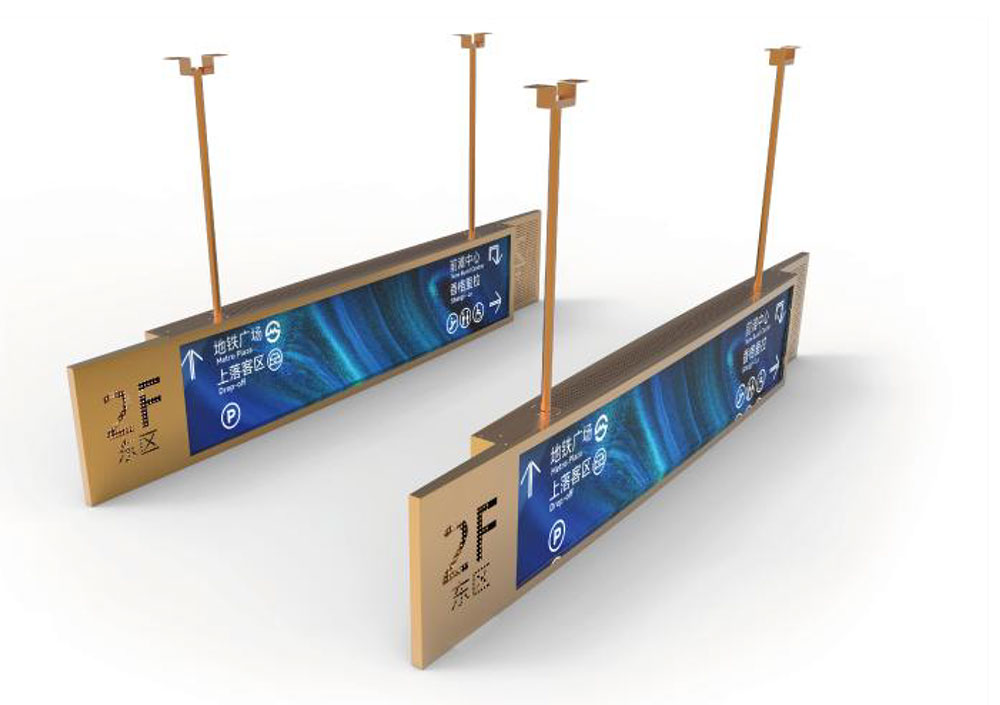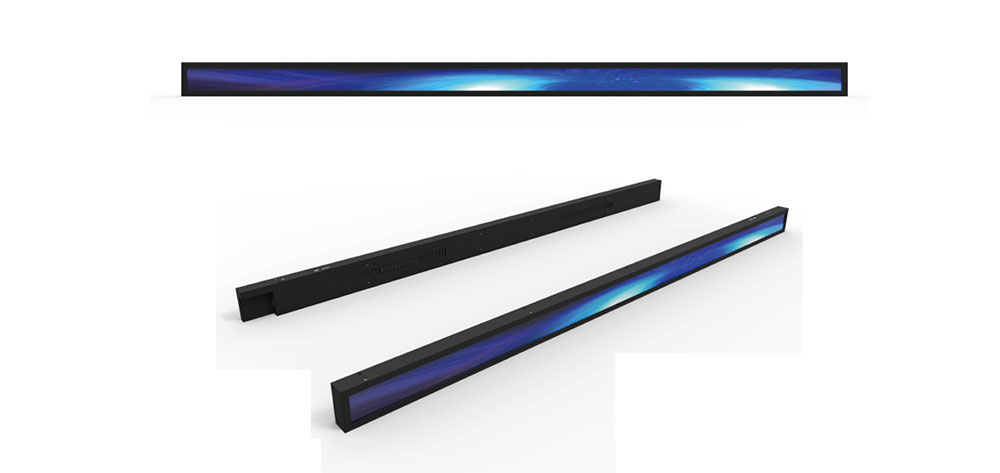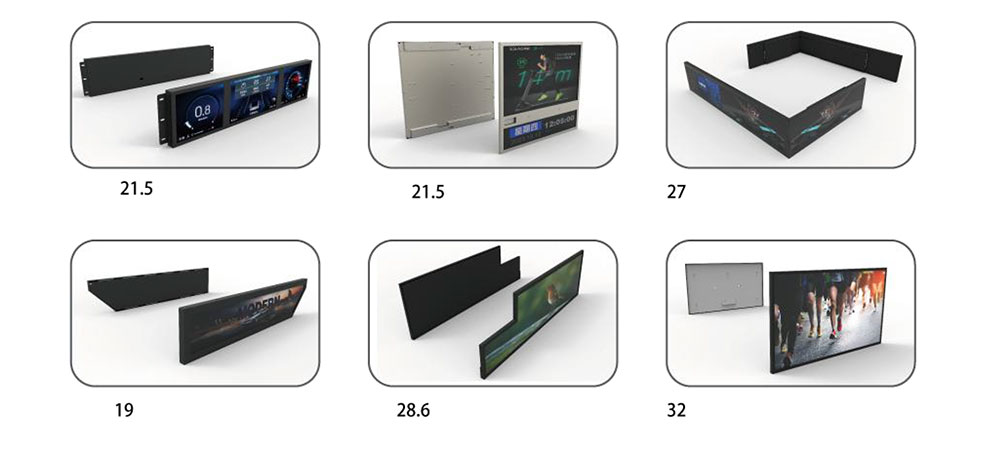
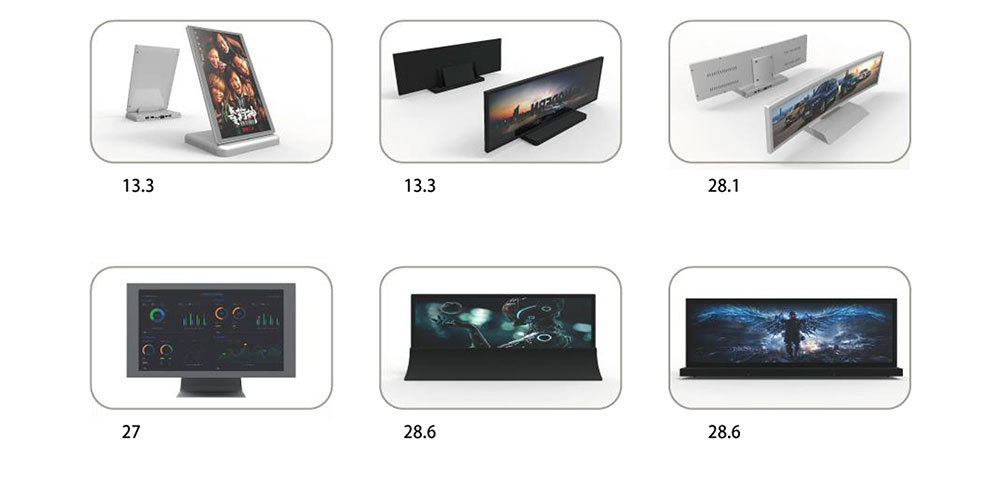
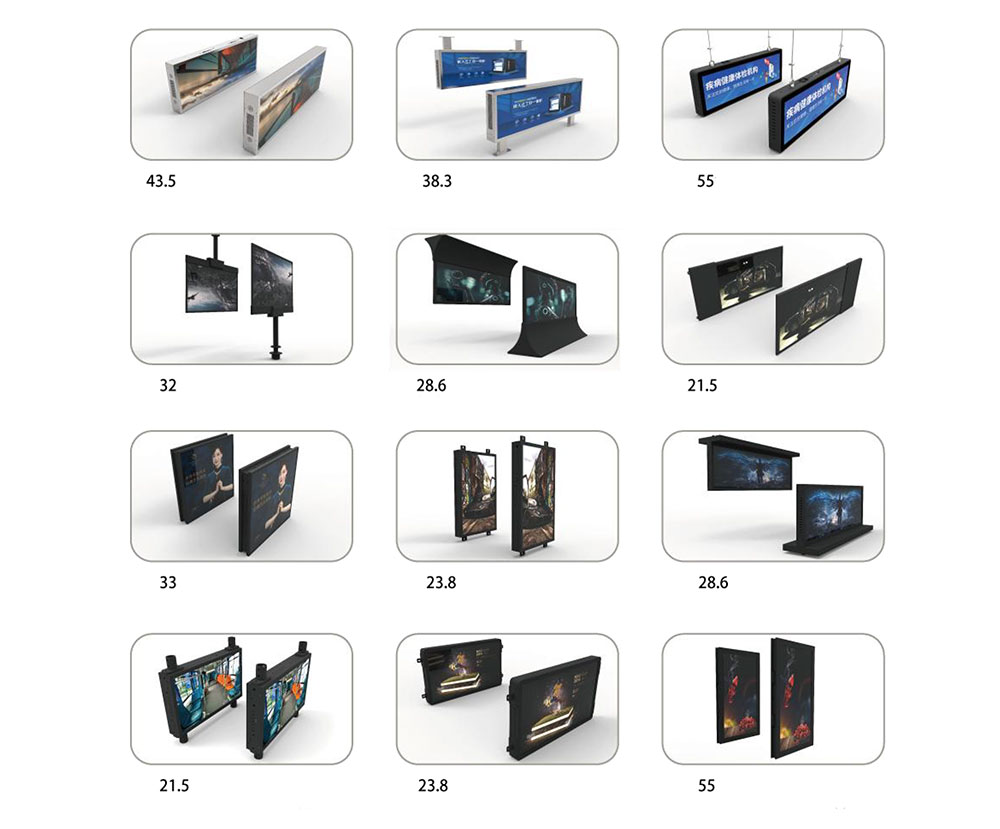
Stretched bar displays have become the signage format of choice for shelf edges, checkout lanes, transit hubs, and window-facing retail installations. Their elongated aspect ratios fit spaces where a conventional 16:9 panel simply cannot. But when these displays are deployed in strong sunlight retail zones—storefront windows, open-air malls, drive-through menu boards, and sun-exposed concourses—two engineering problems dominate: raw luminance and surface reflection. This white paper examines why matte panel construction paired with high-brightness backlighting is the decisive factor, and evaluates five HITULCD stretched bar displays engineered for these demanding environments.
The Sunlight Readability Problem
Ambient illuminance in a shaded interior sits around 300 to 500 lux. A retail window facing direct sun can exceed 50,000 lux, and reflected light off polished floors and glass adds further glare. Under these conditions, a standard 350–500 nit consumer panel washes out completely. Content becomes invisible not only because the display is dimmer than its surroundings, but because a glossy front surface acts as a mirror, superimposing reflections of the street, passersby, and the sun itself onto the image.
Two independent variables govern legibility here. The first is luminance headroom: the display must overpower ambient light, which in practice means 1,500 nits as a working minimum and 2,500 nits or higher for direct-sun exposure. The second is surface reflectance. A glossy panel reflects roughly 4.5% of incident light specularly, producing sharp mirror images. An anti-glare (AG) matte treatment scatters that reflection diffusely, dropping specular reflectance to around 1% or lower and eliminating the mirror effect. High brightness solves visibility; the matte surface solves glare. You need both.
Why Matte Panels Matter for Stretched Bar Formats
Stretched bar displays are frequently mounted at eye level or below, on shelf edges and counters, where viewers stand close and off-axis. This geometry maximizes the chance that a light source lands within the reflection cone of a glossy surface. The matte anti-glare layer, applied as a hard-coat film or etched directly onto the polarizer, breaks up incoming light so that no single hotspot dominates. The tradeoff is a slight reduction in perceived contrast and a marginal softening of fine text, which is why panel selection and haze value tuning matter. HITULCD specifies haze levels between 25% and 44% depending on application, balancing glare suppression against image sharpness.
The Top 5 HITULCD Stretched Bar Displays
1. HITULCD SB-2300 — 23.1" Ultra-Wide Shelf Edge Display
The SB-2300 delivers 2,500 nits across a 32:9 matte IPS panel, purpose-built for shelf-edge promotional messaging in bright supermarket and pharmacy aisles. Its anti-glare hard coat (haze 28%) keeps overhead LED lighting and window spill from forming hotspots. A wide 178° viewing angle preserves color and legibility for shoppers passing at oblique angles. The panel carries an operating temperature range of -20°C to 70°C and an optically bonded cover glass that removes the internal air gap, cutting parallax reflection and improving contrast in bright conditions.
2. HITULCD SB-3800 — 37.6" Window-Facing Bar Display
Engineered for storefront windows, the SB-3800 pushes 3,000 nits with an automatic ambient light sensor that scales luminance to conditions, conserving power at night while maintaining daytime readability. The matte polarizer (haze 44%) is tuned for the harshest direct-sun placements. A thermal management system with internal air circulation and a wide-band operating range prevents the isotropic blackening that afflicts standard LCDs above 65°C—a real failure mode for window-mounted panels behind south-facing glass.
3. HITULCD SB-2800 — 28" Checkout Lane Bar Display
The SB-2800 targets checkout and queue zones where mixed daylight and artificial light coexist. At 2,000 nits with a matte AG finish (haze 25%), it favors text sharpness for pricing and promotional content while still controlling glare. Its slim depth suits counter and rail mounting, and the 700:1 usable contrast under 20,000 lux keeps content crisp where consumer panels collapse.
4. HITULCD SB-4300 — 43" Concourse Stretched Display
For open-air malls and transit concourses, the SB-4300 combines 2,500 nits, a matte anti-glare surface, and an IP54-rated front bezel to resist dust and incidental moisture. The 24/7-rated panel and industrial-grade backlight are specified for 50,000-hour half-life, addressing the duty-cycle demands of continuously operating public retail signage.
5. HITULCD SB-1900 — 19" Compact Sunlight Bar Display
The SB-1900 serves fuel-station forecourts, drive-through menu rails, and kiosk fascias. Compact and rugged, it offers 2,500 nits, a matte hard-coat surface, and an extended -30°C to 80°C operating range for outdoor-adjacent placements. Optical bonding and a low-reflectance stack make it legible even at the acute viewing angles typical of drive-up interactions.
Selection Criteria for Buyers
When specifying a stretched bar display for a sunlight-exposed retail zone, weigh five parameters together: peak luminance rated against your measured ambient lux; surface haze value matched to how close and off-axis viewers stand; optical bonding to suppress internal reflection; thermal rating to survive behind glass; and duty cycle for continuous operation. A high nit count alone does not guarantee readability—without a matte surface, that brightness competes against its own reflections.
Conclusion
Strong sunlight retail zones punish underspecified displays. The combination of high luminance and a matte anti-glare panel is not a luxury but a functional requirement for content that must be read. Each of the five HITULCD stretched bar displays above pairs the brightness to overpower ambient light with the surface engineering to defeat glare, giving retailers signage that performs from open to close, in the window as reliably as in the aisle.