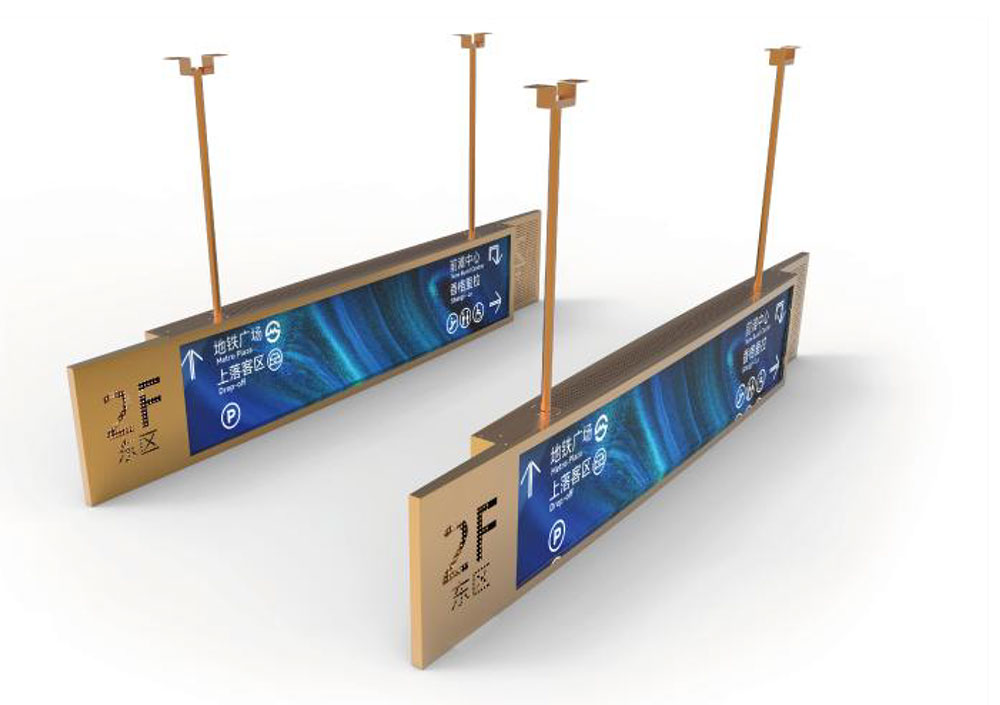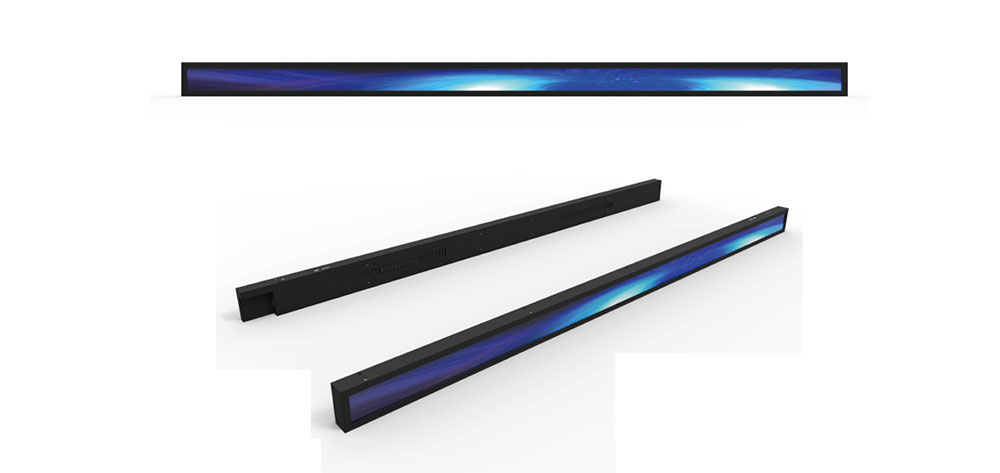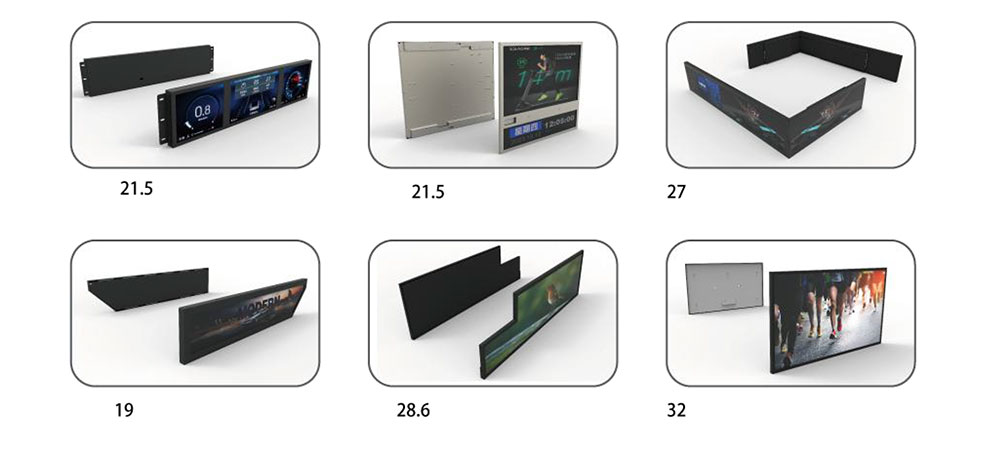
Industrial bar type LCDs—often called stretched, ultra-wide, or bar-shaped displays—have quietly become one of the most important visual components in modern industrial and commercial systems. You find them in shelf-edge retail signage, transit information boards, factory line indicators, elevator displays, smart appliances, medical instrumentation, and countless embedded control panels. Their unusual aspect ratios (16:3, 16:4, 24:9, and other elongated formats) let engineers place a display where a conventional rectangular panel simply would not fit.
Yet precisely because these panels are specialized, sourcing them in the United States is full of traps that catch even experienced procurement teams. Lead times slip, specifications drift, certifications turn out to be missing, and the "identical replacement" quietly stops matching after a silent revision. At HITULCD, we have spent years helping US-based OEMs, integrators, and product teams navigate these hazards. This guide distills the most common pitfalls and shows you how to avoid them, so your next bar type LCD project ships on time, on budget, and without unpleasant surprises.
Why Bar Type LCDs Deserve Special Sourcing Attention
It is tempting to treat a bar type LCD like any other component on the bill of materials. That assumption is the root of most sourcing failures. Standard rectangular panels benefit from enormous economies of scale, deep second-source availability, and mature supply chains. Bar type displays are a niche within a niche. Fewer glass fabs cut them, fewer distributors stock them, and the volumes per SKU are often measured in thousands rather than millions.
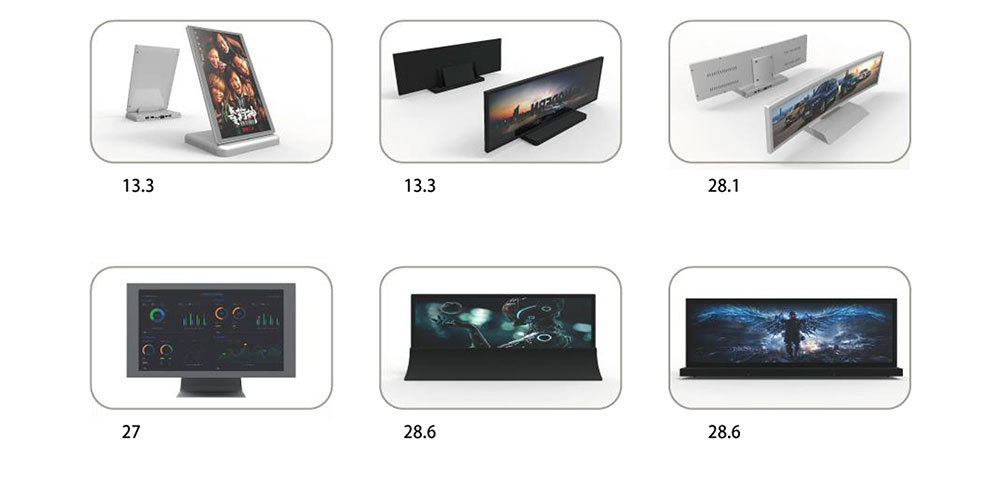
This scarcity has three practical consequences. First, availability is genuinely fragile—a single fab line change can strand an entire product family. Second, prices are less transparent, because there are fewer comparable offers to benchmark against. Third, technical support matters far more, because you cannot simply swap in a nearly identical part from another vendor if something goes wrong. Recognizing that bar type LCDs live in a specialized supply niche is the mental shift that prevents most downstream problems.
Pitfall 1: Confusing Consumer-Grade Panels with True Industrial Panels
The single most expensive mistake buyers make is accepting a display marketed as "industrial" that is actually a repurposed consumer or commercial panel. The word "industrial" is not regulated. A supplier can print it on a datasheet with no obligation to meet any particular standard.
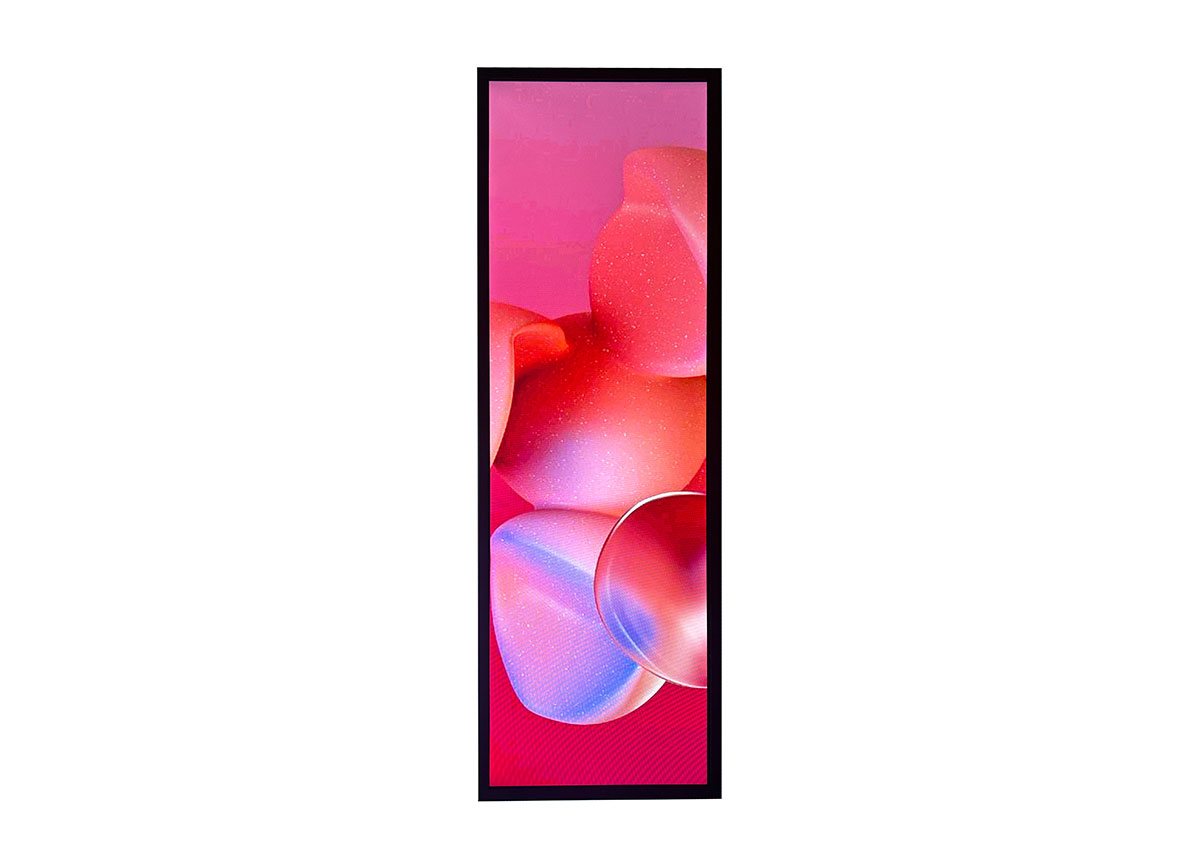
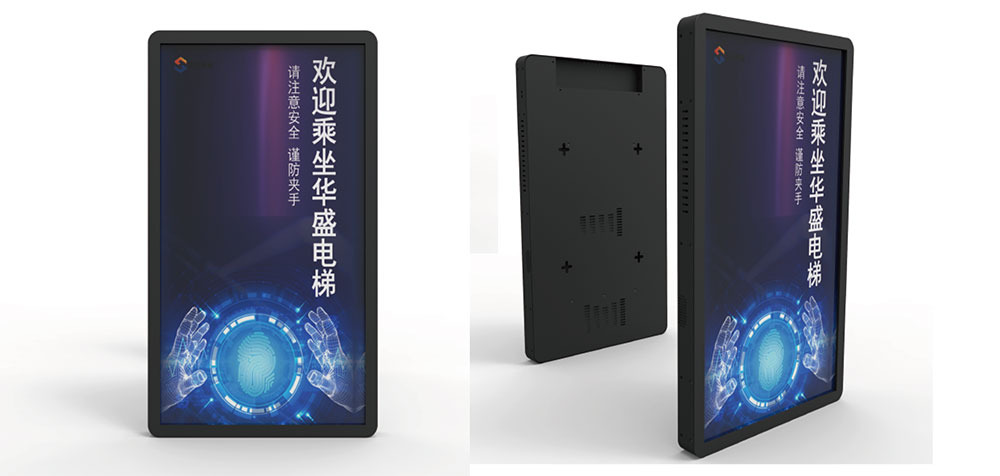
A genuine industrial bar type LCD should demonstrate concrete, measurable characteristics rather than marketing language:
- Wide operating temperature range. True industrial panels typically operate from -20°C to +70°C, and some extend further. Consumer panels commonly stop at 0°C to +50°C, which fails in outdoor kiosks, cold-storage facilities, or unconditioned factory floors.
- High brightness with sunlight readability. Look for 700 to 1500 nits or higher for outdoor and semi-outdoor use, not the 250–350 nits typical of indoor consumer screens.
- Extended availability and longevity commitment. Industrial panels should carry a documented lifecycle plan—often five to seven years or more—rather than being subject to the six-to-twelve-month churn of consumer product lines.
- Robust mechanical construction. Reinforced mounting, wide humidity tolerance, and resistance to vibration and shock.
How to avoid it: Demand the full electro-optical specification and the reliability test report. If a supplier cannot produce a temperature-cycling report, a vibration test result, or a brightness-degradation curve, treat the "industrial" label as unverified. HITULCD provides these documents up front precisely because we know serious buyers will ask.
Pitfall 2: Ignoring the Long-Term Availability and EOL Risk
Nothing derails a hardware program like an unexpected end-of-life (EOL) notice on a display you designed around. Because bar type panels are low-volume, individual SKUs are discontinued more readily than mainstream sizes. A design that is perfect today can become unbuildable in eighteen months if the panel disappears and no drop-in replacement exists.
The pitfall deepens when the elongated aspect ratio is nonstandard. Replacing a 1920×360 panel with a 1920×480 panel is not a swap—it changes your enclosure, your mounting, and often your firmware scaling. So EOL on a bar type LCD is rarely painless.
How to avoid it:
- Ask for a written longevity or lifecycle statement before you commit. It should state the expected production horizon and the notification period for changes.
- Confirm the supplier's EOL notification policy—ideally six to twelve months of advance warning plus a last-time-buy window.
- Identify a second source or a defined migration path during the design phase, not after the discontinuation email arrives.
- For long-lifecycle products, negotiate a strategic inventory buffer or a framework agreement that guarantees continuity.
Pitfall 3: Underestimating US-Specific Compliance and Certification
Sourcing a display into the US market carries regulatory obligations that a purely technical evaluation can miss. Skipping this early creates the worst kind of pitfall: a fully validated product that cannot legally ship or that fails a customer's incoming inspection.
Depending on your application, relevant considerations include:
- FCC Part 15. Electronic assemblies containing displays and their driver electronics must meet US electromagnetic emissions limits. The panel itself contributes to the EMI profile.
- UL / recognized safety marks. Many industrial and commercial deployments require UL-recognized components or systems, especially where the display integrates with power supplies and backlight inverters.
- RoHS and REACH. Even though REACH is an EU framework, many US OEMs enforce it contractually across their supply chain, and RoHS compliance is a near-universal expectation.
- Conflict minerals and country-of-origin documentation. Required by many enterprise and government buyers.
How to avoid it: Build a compliance checklist tied to your specific end market and require documentary evidence for each item—actual certificates and test reports, not verbal assurances. Clarify who owns each certification: the panel maker, the module integrator, or you as the final product manufacturer. HITULCD supplies the component-level documentation US teams need to fold into their own certification effort.
Pitfall 4: Vague or Incomplete Specifications
A shockingly high number of sourcing disputes trace back to a specification that was never fully pinned down. With bar type LCDs, the temptation to "just get the size and resolution" is strong, but the elongated format multiplies the number of parameters that actually matter.
A complete bar type LCD specification should nail down at least the following:
- Exact active area and outline dimensions, not just the nominal diagonal—because diagonal measurement is misleading for extreme aspect ratios.
- Resolution and pixel arrangement, including whether the panel uses a standard RGB stripe or an unusual subpixel layout.
- Interface type: LVDS, MIPI-DSI, eDP, or parallel RGB. The interface dictates your controller board and cabling.
- Brightness, contrast ratio, and viewing angles, specified with the measurement conditions.
- Backlight type and rated lifetime, typically expressed in hours to half-brightness.
- Touch integration, if any—capacitive, resistive, cover glass thickness, and controller compatibility.
- Operating and storage temperature and humidity ranges.
How to avoid it: Insist on a signed engineering drawing and a formal datasheet as contractual attachments, and require an approval sample that you validate against them before the production release. A specification that lives only in emails is a specification you cannot enforce.
Pitfall 5: Overlooking Interface and Driver Board Compatibility
The panel is only half the story. Bar type LCDs frequently need a matching timing controller or driver board, and the elongated resolution can be poorly supported by generic, off-the-shelf boards designed for mainstream panels. Buyers sometimes secure a great price on the glass, then discover that no readily available controller drives the unusual timing correctly, or that the required board is custom, expensive, and long-lead.
How to avoid it: Treat the panel and its driving solution as a single system during evaluation. Confirm that a compatible, available controller exists—whether the supplier provides an integrated driver board, a reference design, or verified compatibility with a controller you already use. Ask specifically about EDID/timing files, firmware, and whether the driver board is itself subject to EOL risk. At HITULCD we validate the full panel-plus-driver chain so customers are not left holding a display they cannot light up.
Pitfall 6: Trusting Price Over Total Cost of Ownership
Bar type LCDs invite price shopping precisely because comparable offers are scarce, which makes a low quote look like a win. But the headline unit price is a small part of the real cost. A cheaper panel that arrives with a 20% higher field-failure rate, or that triggers a redesign when it goes EOL, will cost far more than the money saved on the purchase order.
Consider the full picture:
- Yield and defect rate at incoming inspection and in the field.
- Warranty terms and the practical process for handling returns across an international supply line.
- Engineering support cost if you must debug integration problems without vendor help.
- Logistics, duties, and inventory carrying cost, which are significant for US buyers importing specialized panels.
- Redesign risk tied to availability and revision stability.
How to avoid it: Build a simple total-cost-of-ownership model and score suppliers on it, not on unit price alone. The right partner is usually not the cheapest quote; it is the one whose panels quietly work for years.
Pitfall 7: Poor Communication and Time-Zone Friction
Many bar type LCD makers are located in Asia, while your engineering and procurement teams are in the US. The resulting time-zone gap and language barrier can turn a two-day question into a two-week delay. During a production ramp or a field escalation, that latency is corrosive.
How to avoid it: Evaluate responsiveness before you place a large order—use the quoting phase as a live test of how quickly and clearly a supplier answers technical questions. Prefer partners who offer US-friendly support hours, English-fluent engineers, and a named point of contact rather than a generic inbox. HITULCD structures its support around US customer needs specifically to close this gap, so an urgent question does not sit overnight before anyone reads it.
Pitfall 8: Skipping Sample Validation and Quality Auditing
Approving a panel from a datasheet alone is a gamble. Datasheets describe the ideal; production reality can differ, and with low-volume bar type lines the batch-to-batch variation can be larger than for mainstream panels. Teams that skip sample validation to save a few weeks routinely lose far more time later chasing an issue that a sample would have caught.
How to avoid it:
- Always evaluate engineering samples in your actual enclosure, under your real operating conditions—temperature, orientation, backlight duty cycle, and viewing distance.
- Test at the extremes of your temperature and brightness envelope, not just at room temperature.
- Request the supplier's quality control process: incoming material inspection, in-line testing, and outgoing AOI or functional test.
- For meaningful volumes, ask about first-article inspection reports and ongoing process controls.
- Establish clear defect criteria for dead pixels, mura, and backlight uniformity before production, so acceptance is objective rather than a negotiation after the fact.
Pitfall 9: Ignoring Silent Revisions and Change Control
One of the most insidious problems in display sourcing is the silent revision: a supplier changes the backlight LED, the polarizer, the driver IC, or even the glass source, keeps the same part number, and never tells you. Your "identical" reorder now behaves differently—colors shift, brightness drops, or the timing no longer matches your controller.
How to avoid it: Require a formal Product Change Notification (PCN) agreement. It should obligate the supplier to notify you before any form, fit, function, or material change, with enough lead time to requalify or place a last-time buy. Lock the approved revision to a specific drawing number and require that any change trigger a new sample approval cycle. A supplier who resists a basic change-control commitment is telling you something important.
Pitfall 10: Weak Logistics and Inventory Planning
Even a perfect panel from a reliable maker can sink a program if logistics are an afterthought. Ocean freight variability, customs clearance, and the low stocking depth of specialized bar type SKUs all conspire to create shortages at the worst moment. US buyers who plan inventory as if these were commodity parts get caught flat.
How to avoid it:
- Understand the true replenishment lead time, including production, transit, and customs—then plan buffer stock against it.
- Discuss whether the supplier can hold safety stock or operate a buffer/consignment arrangement.
- Consider a blanket order with scheduled releases to smooth production and protect pricing.
- Clarify Incoterms explicitly so responsibility for freight, insurance, and duties is unambiguous.
A Practical Sourcing Checklist
Pulling the guidance together, here is a condensed checklist to run against any bar type LCD supplier before you commit:
- Full electro-optical datasheet and signed mechanical drawing provided.
- Reliability and environmental test reports available on request.
- Written lifecycle/longevity statement and a defined EOL notification and PCN policy.
- Relevant US compliance documentation (FCC, UL, RoHS, REACH) identified and owned.
- Compatible, available driver/controller solution confirmed.
- Engineering samples validated in your real environment and at your temperature extremes.
- Documented quality control process and objective defect acceptance criteria.
- Responsive, US-friendly technical support with a named contact.
- Total-cost-of-ownership model, not just unit price, driving the decision.
- Logistics, Incoterms, lead times, and inventory buffer agreed in writing.
Why the Right Partner Matters More Than the Right Panel
If there is one theme running through every pitfall above, it is this: in the specialized world of industrial bar type LCDs, the relationship with your supplier matters as much as the specification of any single panel. Because these displays are low-volume and hard to second-source, you are not buying a commodity—you are entering a multi-year partnership that must survive revisions, ramps, escalations, and eventual transitions.
A good partner absorbs risk on your behalf: they warn you before an EOL, they hold buffer stock, they answer engineering questions in your time zone, they honor change control, and they stand behind their reliability claims with real data. A poor partner externalizes all of that risk back onto you, usually at the least convenient moment.
HITULCD built its industrial bar type LCD business around exactly these needs. We specialize in stretched and ultra-wide formats, supply the full documentation US buyers require for their own compliance, validate the complete panel-and-driver system, and structure support around US working hours and long product lifecycles. The goal is simple: to make a specialized, historically risky component behave like a dependable one.
Conclusion
Sourcing industrial bar type LCDs in the US is not inherently dangerous—but it is unforgiving of shortcuts. The pitfalls are predictable: mislabeled consumer panels, hidden EOL risk, missing certifications, vague specifications, incompatible drivers, price-first thinking, communication gaps, skipped validation, silent revisions, and weak logistics. Every one of them is avoidable with disciplined evaluation and the right partner.
Use the checklist in this guide as a gate that every candidate supplier must pass. Demand documentation, validate samples in the real world, insist on change control and lifecycle commitments, and evaluate total cost rather than headline price. Do that, and your bar type LCD stops being a source of program risk and becomes what it should be: a reliable, distinctive component that lets your product fit where nothing else could. When you are ready to source with confidence, HITULCD is prepared to be that partner.
KEYWORDS: Guide to avoiding pitfalls when sourcing industrial bar type LCDs in the US