Introduction: Why Aspect Ratio Is No Longer a Constraint
For decades, display design followed a narrow set of standard aspect ratios: 4:3, 16:9, and later 16:10. These proportions were dictated by broadcast television and desktop computing, not by the physical spaces where displays actually needed to live. Today, a growing class of specialized applications demands something the conventional catalog never offered: displays that are dramatically longer than they are tall. At HITULCD, we design and manufacture long narrow LCD screens (often called bar-type, stretched, or ultra-wide strip displays) engineered specifically for environments where space, sightlines, and information density do not conform to television norms.
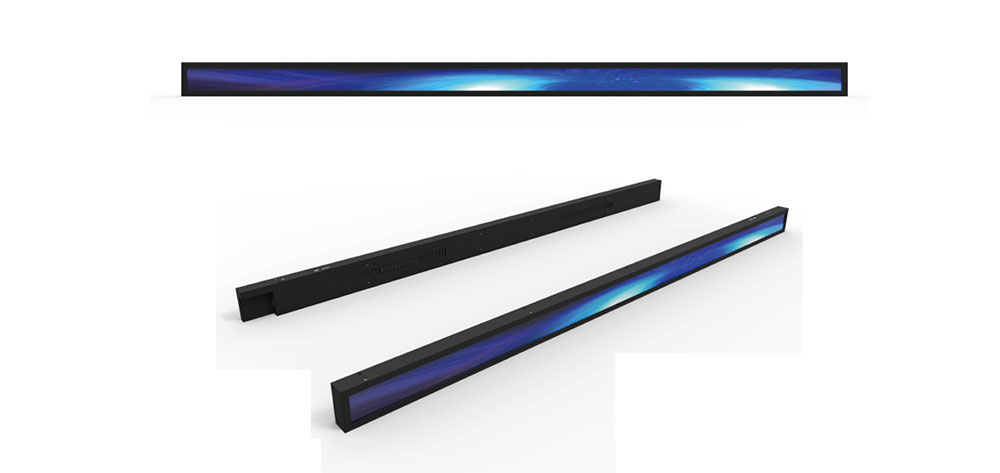
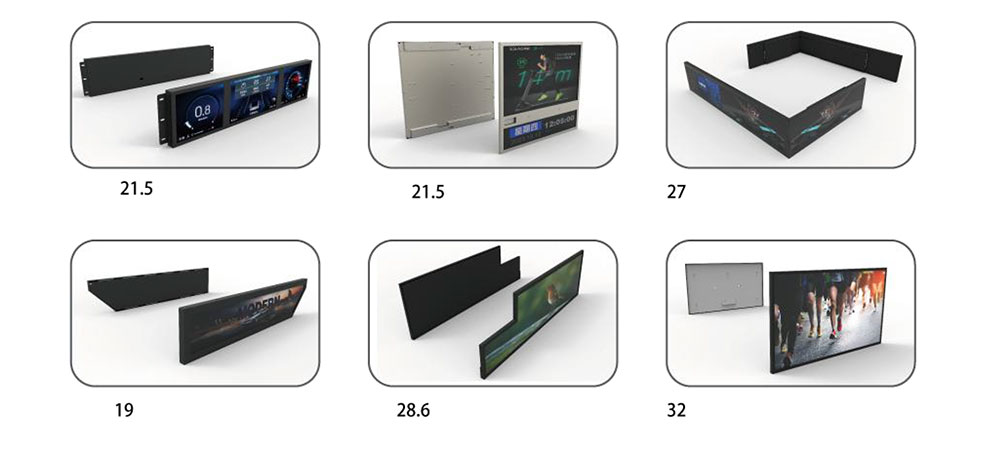
A long narrow LCD is defined less by a single fixed ratio and more by an intent: to fit a physically constrained horizontal or vertical channel while delivering legible, high-brightness content. Common ratios include 16:4.5, 24:9, 32:9, and extreme formats reaching 58:9 or beyond. This white paper examines the engineering behind these panels, the applications that drive demand, and the design decisions that separate a reliable industrial-grade stretched display from a repurposed consumer part.
Defining the Long Narrow Form Factor
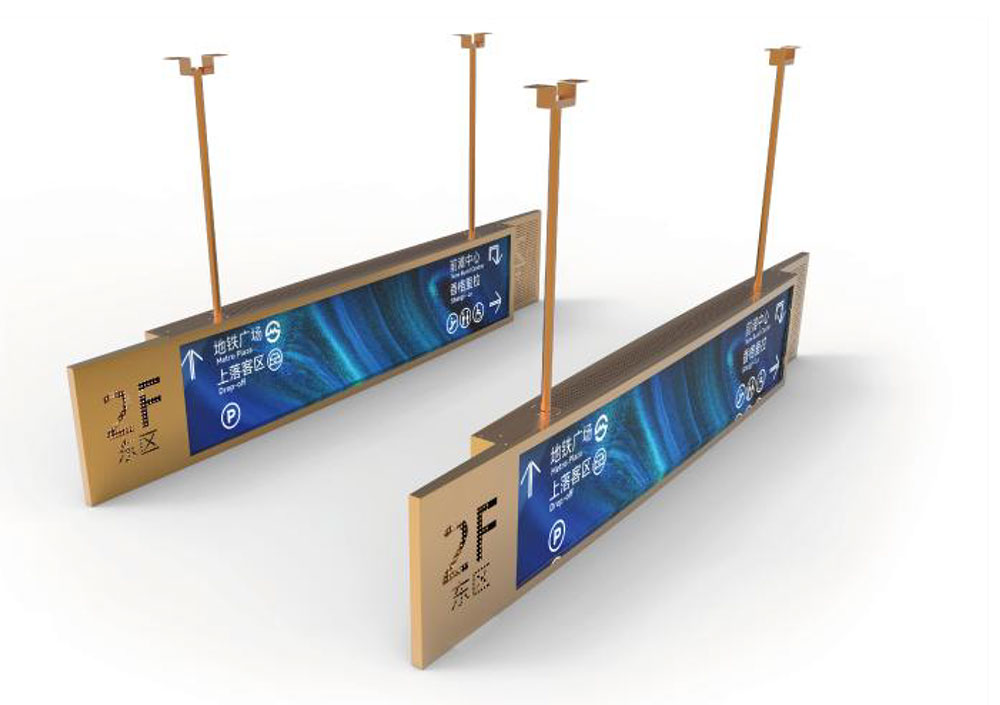
The industry uses several overlapping terms. A "bar LCD" typically refers to a horizontally oriented strip mounted above a doorway, on a shelf edge, or across the top of a display case. A "stretched LCD" describes a panel that has been physically cut from a larger mother glass to achieve an elongated ratio. A "column display" is the same technology rotated into portrait, creating a tall, thin vertical bar. Regardless of the label, the shared characteristic is an aspect ratio that departs significantly from 16:9.
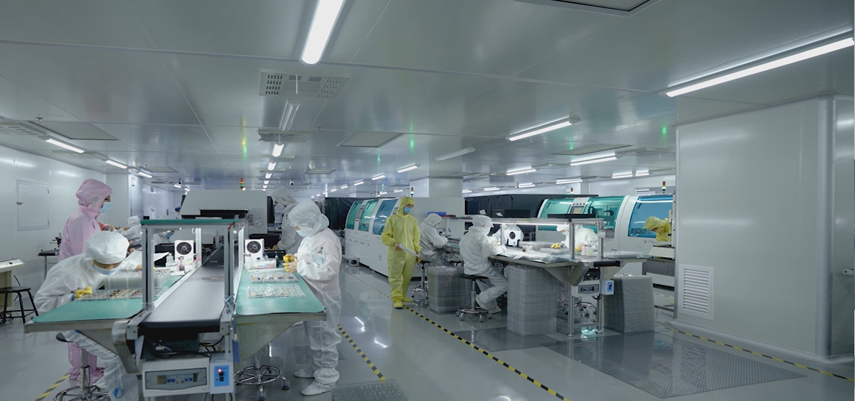
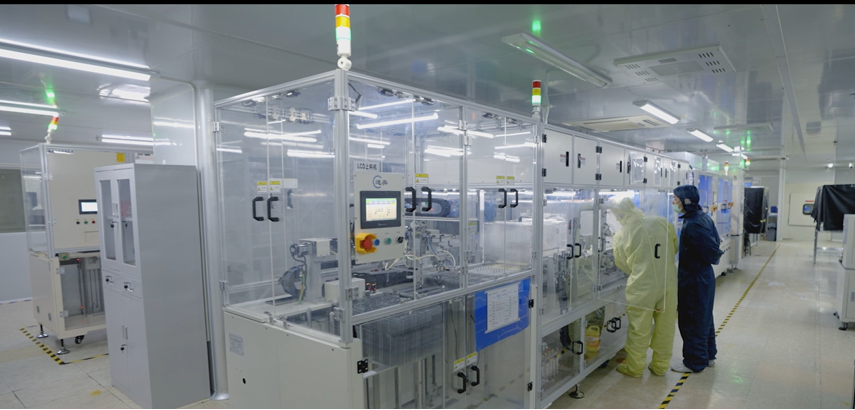
Two manufacturing routes exist. The first uses purpose-designed mother glass, where the panel is engineered from the outset in its final dimensions. The second, more common for niche runs, cuts a standard panel and re-terminates the driver circuitry along the new edge. Cutting is cost-effective at low volume but introduces engineering constraints: the display driver ICs, backlight distribution, and edge sealing must all be relocated or redesigned. Understanding which route a supplier uses is essential, because it determines long-term availability, uniformity, and reliability.
Core Engineering Challenges
Backlight Uniformity Across an Extreme Ratio
The longer and thinner a panel becomes, the harder it is to distribute light evenly. A 16:9 panel can rely on a symmetrical edge-lit arrangement with LEDs on two or four sides. A 32:9 or 58:9 strip has a light-guide plate that must carry photons across a long span while the short dimension offers little room for optical mixing. Poorly engineered stretched displays exhibit visible hotspots near the LED injection points and dimming toward the center.
HITULCD addresses this with segmented LED arrays and precisely tuned light-guide microstructures. By placing LED strings along the long edge and grading the density of the extraction dots across the guide, we hold luminance uniformity above 80 percent even on extreme ratios. For applications requiring the highest consistency, a direct-lit backlight with local zones can be specified, at the cost of additional depth.
High Brightness for Semi-Outdoor and Public Environments
Long narrow displays are frequently deployed in shop windows, transit stations, and building facades where ambient light is intense. A consumer panel rated at 250 to 400 nits washes out completely behind glass in direct sun. Our specialized bar displays are available from 700 nits for indoor retail up to 2,500 nits for storefront and semi-outdoor use, with sunlight-readable variants reaching 3,000 nits and above. Higher brightness generates more heat in a confined enclosure, so thermal management is inseparable from the brightness specification.
Thermal Management in a Constrained Enclosure
A tall, thin chassis has a small internal volume relative to its surface area, which is both a challenge and an opportunity. High-brightness backlights concentrate heat, and if that heat pools it accelerates liquid-crystal degradation and shortens LED life. Our designs use aluminum rear housings that double as heat spreaders, combined with strategically placed vents or, for sealed IP-rated units, conduction paths to the mounting surface. Where a display will run continuously at maximum brightness, we integrate temperature sensors that trigger automatic dimming to protect the panel, preserving lifespan without manual intervention.
Structural Integrity and Mounting
An elongated glass panel is mechanically more vulnerable to flex and vibration than a compact one. A 1,000 mm wide strip that is only 200 mm tall will bow under its own weight if supported only at the ends. HITULCD reinforces long narrow assemblies with a continuous backing frame and specifies multi-point mounting to distribute load. For transit and industrial deployments subject to vibration, we validate against relevant shock profiles during qualification.
Specialized Applications
Retail Shelf-Edge and Digital Signage
The most visible use of long narrow LCDs is at the point of sale. Shelf-edge strips replace paper price tags with dynamic content, letting a retailer change pricing and promotions across an entire aisle instantly. The narrow profile fits the physical shelf rail, and high brightness ensures legibility under harsh retail lighting. Above freezer and cooler doors, stretched bars display product information without obstructing the merchandise.
Transportation and Passenger Information
Buses, trains, and metro platforms rely on long horizontal displays for route maps, next-stop information, and service alerts. The linear format mirrors the geometry of a transit line itself, making a stretched display the natural canvas for a route diagram. These deployments demand wide operating temperature ranges, high brightness for daylight platforms, and long service life, since replacement in a vehicle or station is costly.
Broadcast, Financial, and Data Environments
Trading floors, newsrooms, and operations centers use column and bar displays to present continuous data streams: stock tickers, scrolling headlines, and system status. The elongated format matches the nature of the data, which flows linearly and benefits from a wide viewing angle so that staff across a room can read it simultaneously.
Industrial HMI and Instrumentation
Machinery control panels often have narrow horizontal or vertical slots where a standard display simply will not fit. A long narrow LCD integrated into a machine's fascia can present process values, alarms, and touch controls in exactly the space the equipment provides. Here, ruggedization, optical bonding to resist vibration and moisture, and a wide temperature range are decisive.
Elevators, Kiosks, and Architectural Integration
Vertical column displays inside elevator cabs and beside kiosk touchpoints deliver wayfinding and advertising in slim architectural gaps. Because these installations are close to the viewer and often permanent, wide viewing angles and consistent color are prioritized alongside a housing that blends with the built environment.
Selecting the Right Long Narrow Display
Specifying a stretched display well means matching the panel to the environment rather than to a spec-sheet headline. Consider the ambient light: a storefront behind glass may require 2,500 nits, while an interior shelf edge needs only 700. Consider orientation and mounting span, which drive the structural design. Consider the duty cycle: a display running sixteen hours a day at full brightness needs different thermal headroom than one used intermittently. Finally, consider longevity and supply. A cut-panel solution may be attractive for a pilot, but a purpose-built panel offers better uniformity and a more secure supply chain for a rollout of thousands of units.
Optical bonding deserves particular attention in public and industrial settings. Bonding the cover glass directly to the LCD eliminates the internal air gap, which reduces reflections, improves contrast in bright light, and prevents dust and condensation from forming between layers. For any semi-outdoor or high-touch application, we recommend it as standard.
Conclusion
Long narrow LCD screens are not a novelty; they are a precise engineering response to spaces and information flows that standard displays cannot serve. Their value comes from getting the fundamentals right: uniform backlighting across an extreme ratio, brightness matched to real ambient conditions, thermal design that protects the panel, and mechanical reinforcement that keeps an elongated glass assembly stable for years. At HITULCD, our focus on high-brightness, industrial-grade construction lets these displays perform reliably in retail, transit, industrial, and architectural environments where a conventional screen would either fail to fit or fail to be seen. When the application defines an unusual shape, the display should meet it rather than compromise it.
KEYWORDS: long narrow LCD, stretched bar display, high brightness LCD, ultra-wide LCD screen, industrial signage display