Machine builders design equipment to last a decade or more, often in environments where dust, vibration, temperature swings, and ambient sunlight all conspire against reliable operation. The human-machine interface (HMI) sits at the center of this challenge. When an operator cannot read the screen, cannot see a fault code, or cannot confirm a setpoint at a glance, productivity and safety both suffer. Wide screen display modules solve a specific and growing set of problems for machine builders: they present more process information in a single view, match the physical proportions of modern control panels, and, when specified with high-brightness backlighting, remain legible under conditions that defeat conventional office-grade panels.
This white paper examines wide screen display modules from the perspective of the engineer who has to integrate them, qualify them, and support them in the field. It covers aspect ratio and layout, optical performance, mechanical and electrical integration, environmental robustness, and long-term supply considerations. Throughout, the emphasis is practical: how to select and deploy a module that will still be readable and available years after the first machine ships.
Why Wide Screen Formats Matter for Industrial Machines
For much of the industrial display era, 4:3 and 5:4 panels dominated. These formats echoed the CRT monitors and early flat panels found in offices. As consumer and automotive markets shifted decisively toward 16:9, 16:10, and ultra-wide 24:9 and 32:9 formats, the economics and availability of wide screen glass improved dramatically. Machine builders now benefit from that scale while gaining genuine functional advantages.
More Actionable Information in One View
A wide screen module lets the HMI designer place a live process schematic on one side and a trend graph, alarm banner, or numeric readout on the other, without forcing the operator to page between screens. On a packaging line, a woodworking CNC, or a printing press, the ability to see upstream and downstream status simultaneously reduces reaction time. The reduced need to navigate menus also lowers training burden and the chance of operator error during a fault condition.
A Natural Fit for Panel and Enclosure Geometry
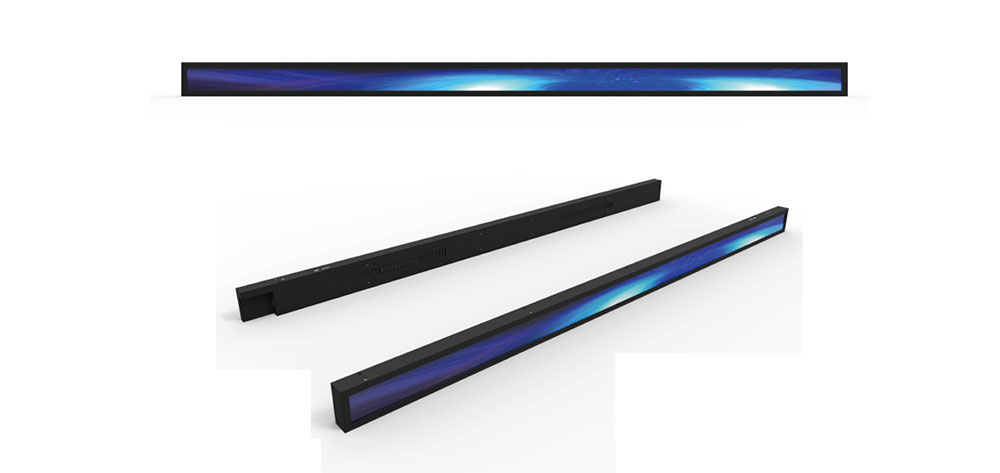
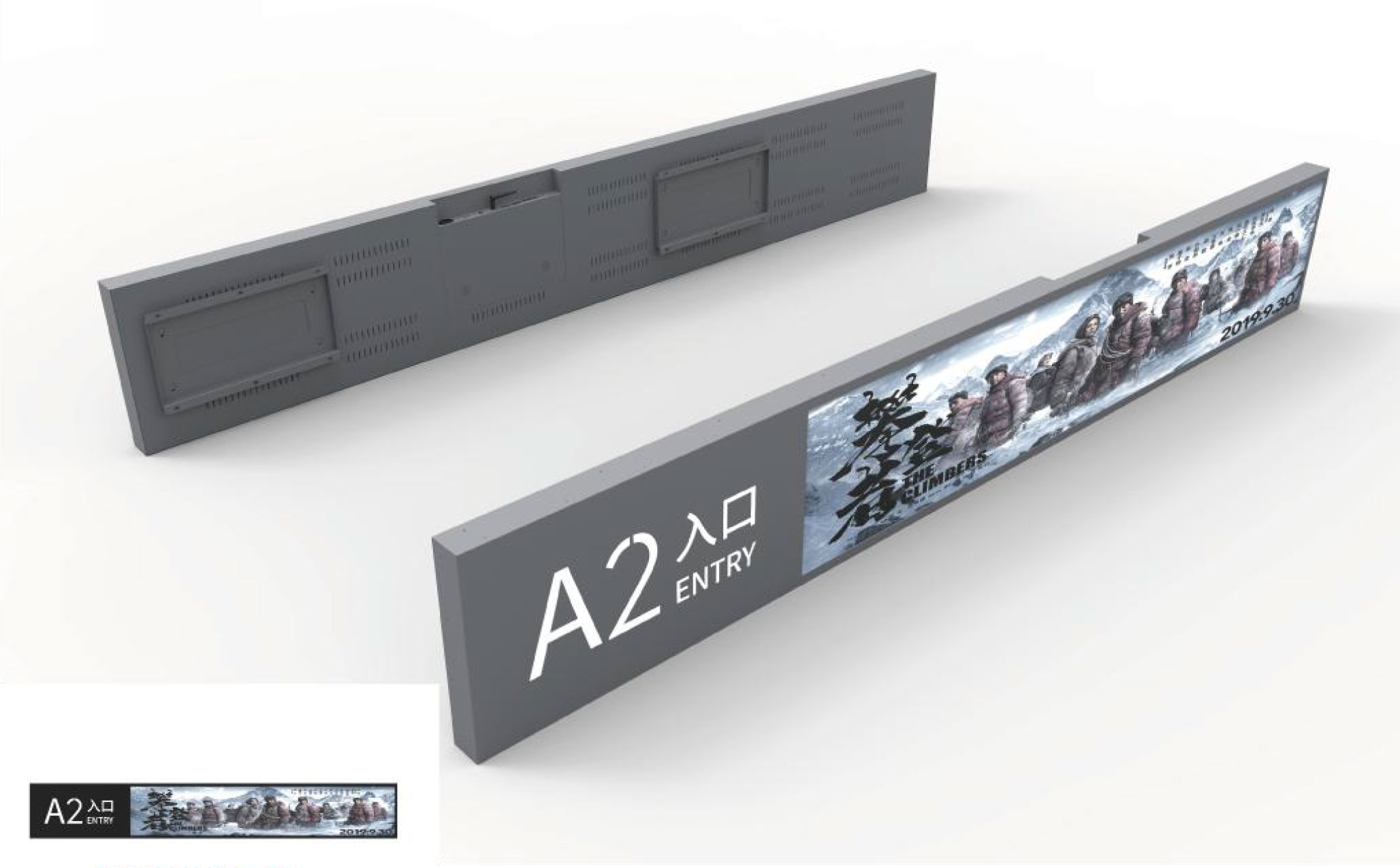
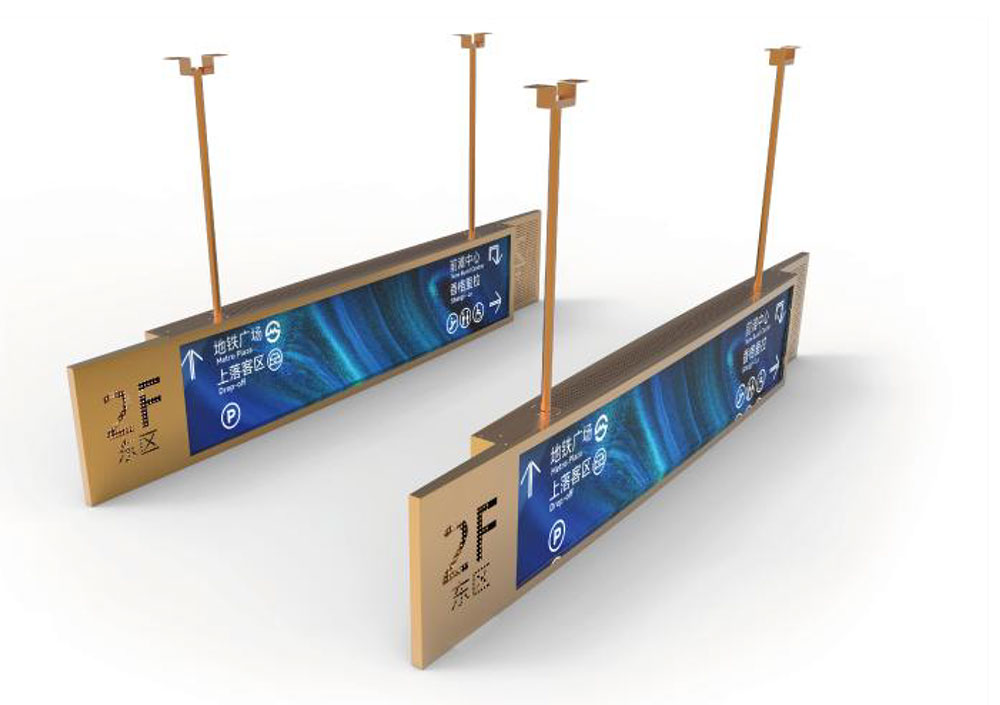
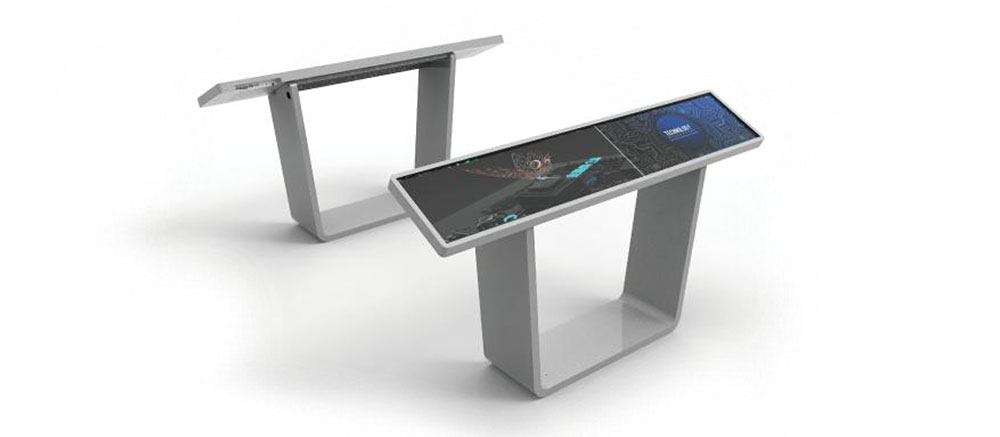
Control cabinets and pendant arms tend to be wider than they are tall, especially when a keypad, E-stop, or selector switches share the front face. A wide format uses that available width efficiently. Stretched bar-type displays, in particular, suit conveyor status boards, overhead line indicators, and instrument clusters mounted above a work area.
Optical Performance: Brightness, Contrast, and Legibility
Optical specification is where machine-grade displays diverge most sharply from consumer parts. A television is viewed in a controlled living room; a machine display may face a factory skylight, a welding arc nearby, or full outdoor sun on mobile equipment.
Brightness and Sunlight Readability
Standard displays deliver roughly 250 to 400 nits, which washes out under direct light. High-brightness modules of 1000 to 2500 nits maintain contrast and readability where it matters. The relevant metric is not brightness alone but the contrast ratio the operator actually perceives after ambient reflection, sometimes called the effective or daylight contrast ratio. A module combining high luminance with an optically bonded, anti-reflection front surface will outperform a brighter panel that suffers heavy surface glare.
Optical Bonding
Optical bonding fills the air gap between the cover glass and the LCD cell with a clear resin or gel. This reduces internal reflections, improves contrast in bright environments, eliminates condensation between layers, and stiffens the assembly against vibration and impact. For any machine that operates near windows, outdoors, or under intense task lighting, optical bonding is one of the highest-value options a builder can specify.
Viewing Angle and Color Stability
Operators rarely stand square to a display. IPS and equivalent wide-viewing-angle technologies hold color and contrast across roughly 170 degrees, so a fault indicator reads the same from the side of the machine as it does head-on. On safety-critical HMIs, consistent color rendering matters because status is often communicated through color coding.
Mechanical Integration for Machine Builders
Mounting and Bezel Options
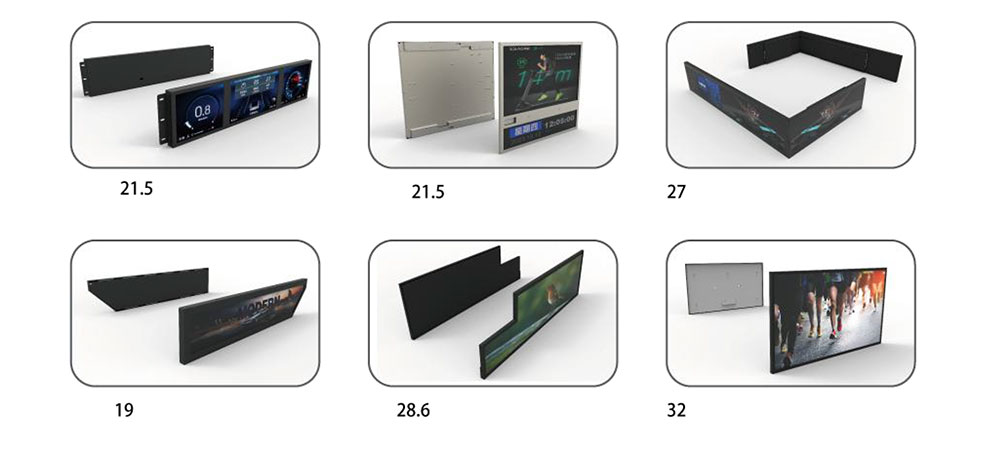
Wide screen modules ship with several mounting strategies: rear studs or brackets for panel-mount HMIs, VESA patterns for arm-mounted pendants, and open-frame kits for OEM enclosures where the machine builder supplies the outer housing. Selecting a module family with consistent mounting geometry across multiple diagonals lets a builder standardize the enclosure design and swap sizes without reworking the sheet metal.
Cover Glass and Touch Integration
Projected capacitive (PCAP) touch has become the industrial standard because it supports glove operation, survives washdown, and presents a flat, sealable front surface. For machines exposed to conductive contaminants, water film, or heavy gloves, PCAP tuning matters: the controller firmware should be configurable for glove and water-rejection modes. Where touch is not required, a plain hardened cover glass reduces cost and eliminates a failure mode.
Thermal Management
High-brightness backlights generate heat, and enclosed cabinets trap it. A robust module specifies its operating and storage temperature range and often includes a light sensor that dims the backlight when ambient light drops, which both saves power and extends LED life. Machine builders should confirm that the module's rated temperature range covers the worst-case internal cabinet temperature, not just the room the machine sits in.
Electrical and Signal Interfaces
Video Interfaces
At the module level, LVDS remains common, with eDP increasingly used at higher resolutions. When the display is delivered as a complete monitor rather than a bare panel, HDMI, DisplayPort, and DVI are typical inputs. Machine builders integrating a bare module directly with an embedded controller should confirm the LVDS mapping (VESA versus JEIDA) and color depth (6-bit, 8-bit, or 10-bit) to avoid mismatched or dithered output.
Power and Backlight Control
A well-behaved industrial module accepts a wide DC input, protects against reverse polarity and transients, and exposes backlight control through PWM or a digital command. Dimming to near-zero for night shifts and boosting for direct sun should be under host control, not fixed at the factory.
Environmental Robustness and Compliance
Machines endure conditions no consumer product is designed for. Specifying to the right standards up front prevents costly field failures.
Ingress Protection
Front-face IP65 or IP66 sealing protects against dust and washdown. The rating applies to the front bezel when panel-mounted; the enclosure behind must complete the seal.
Vibration and Shock
Mobile equipment, presses, and rotating machinery transmit continuous vibration. Optically bonded assemblies and mechanically reinforced mounting resist the delamination and connector fatigue that plague unbonded panels.
Regulatory Marking
Depending on market and application, the finished machine may require CE, UKCA, FCC, or UL recognition. Choosing a display module that already carries the relevant component certifications shortens the machine's own compliance path.
Longevity and Supply Continuity
This is the consideration machine builders raise most often and consumer vendors address least. A machine designed today may ship for eight to twelve years, and each unit needs service parts long after that. Consumer panels have product lifecycles measured in months. Long-lifecycle industrial modules, backed by end-of-life notification and last-time-buy programs, are essential to avoid a costly redesign triggered by a discontinued part. When evaluating a supplier, ask specifically about guaranteed availability windows, replacement compatibility, and the pin-for-pin roadmap across a display family.
Selecting the Right Wide Screen Module: A Practical Checklist
Before committing to a display for a machine platform, confirm the following against the actual operating environment rather than a datasheet ideal:
- Ambient light: measure worst-case illumination and choose brightness and anti-reflection treatment accordingly.
- Viewing geometry: confirm operator distance and angle, then match diagonal, resolution, and viewing-angle technology.
- Environment: define temperature, ingress, and vibration requirements and specify optical bonding where warranted.
- Interface: verify video, touch, and power interfaces against the host controller.
- Lifecycle: secure written commitments on availability and end-of-life support.
Conclusion
Wide screen display modules give machine builders a legible, information-dense, and mechanically efficient interface that fits modern control architectures. The value is realized only when brightness, optical treatment, mechanical robustness, and supply continuity are all specified against the real operating environment. HITULCD engineers wide screen high-brightness modules for exactly these demands: sunlight-readable luminance, optical bonding for contrast and durability, industrial interfaces, wide temperature operation, and long-lifecycle availability. Matching those attributes to your machine's environment is the difference between an HMI that fails in the field and one that stays readable and serviceable for the life of the equipment.
KEYWORDS: wide screen display modules, high brightness LCD, machine builder HMI, sunlight readable display, industrial LCD modules