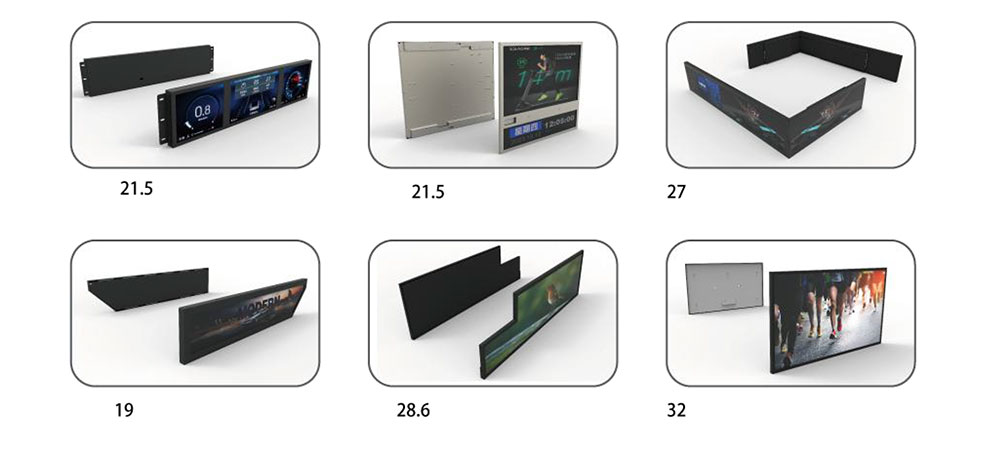
Industrial equipment rarely conforms to the design assumptions that shaped consumer display standards. A control panel embedded in the fascia of a CNC machine, a status bar mounted along the door of a smart locker, or a diagnostic readout wrapped into the handle of a portable instrument seldom offers the rectangular real estate that a 16:9 or 4:3 panel expects. When designers force a standard-ratio LCD into these enclosures, they surrender usable panel area, complicate the industrial design, and often inflate the bill of materials. Non-standard ratio LCD displays, also called bar-type, square, ultra-wide, or custom aspect-ratio panels, resolve this mismatch by aligning the active display area with the mechanical envelope of the device. This white paper examines the engineering rationale, selection criteria, and integration practices for deploying non-standard ratio LCDs in demanding industrial environments, with particular attention to the high-brightness requirements that define HITULCD's product focus.
1. Defining the Non-Standard Ratio Category
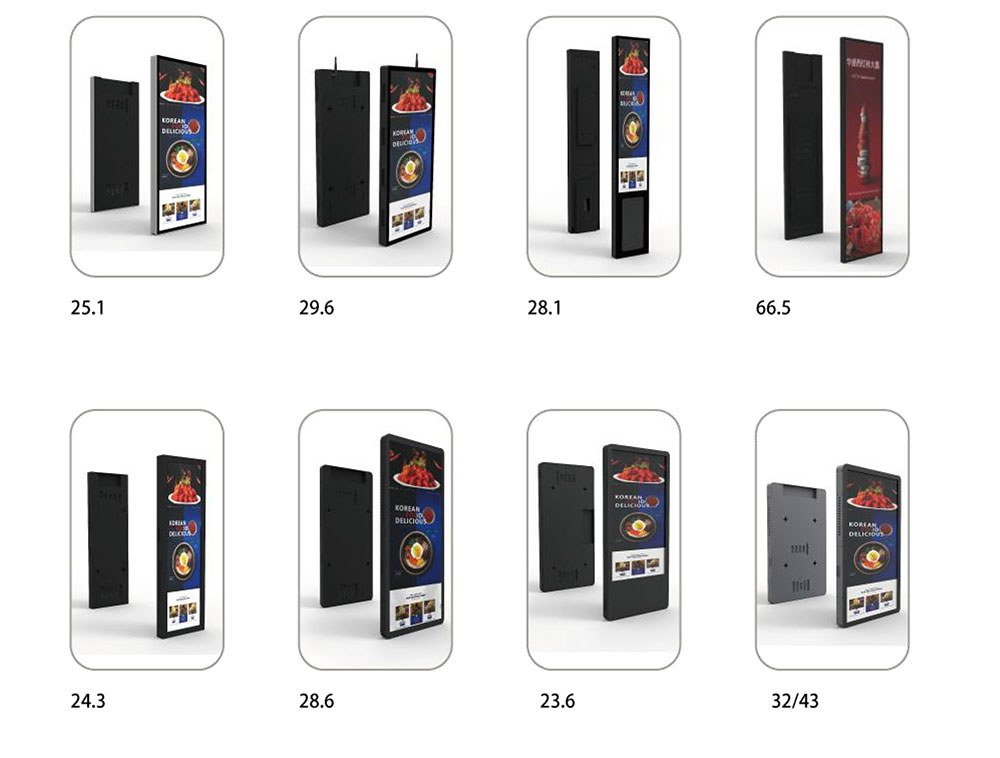
The consumer display market has converged on a handful of aspect ratios: 16:9 for televisions and monitors, 16:10 for some laptops, and legacy 4:3 for older equipment. A non-standard ratio panel is any display whose width-to-height relationship falls outside this convention. In industrial practice, the most common families include:
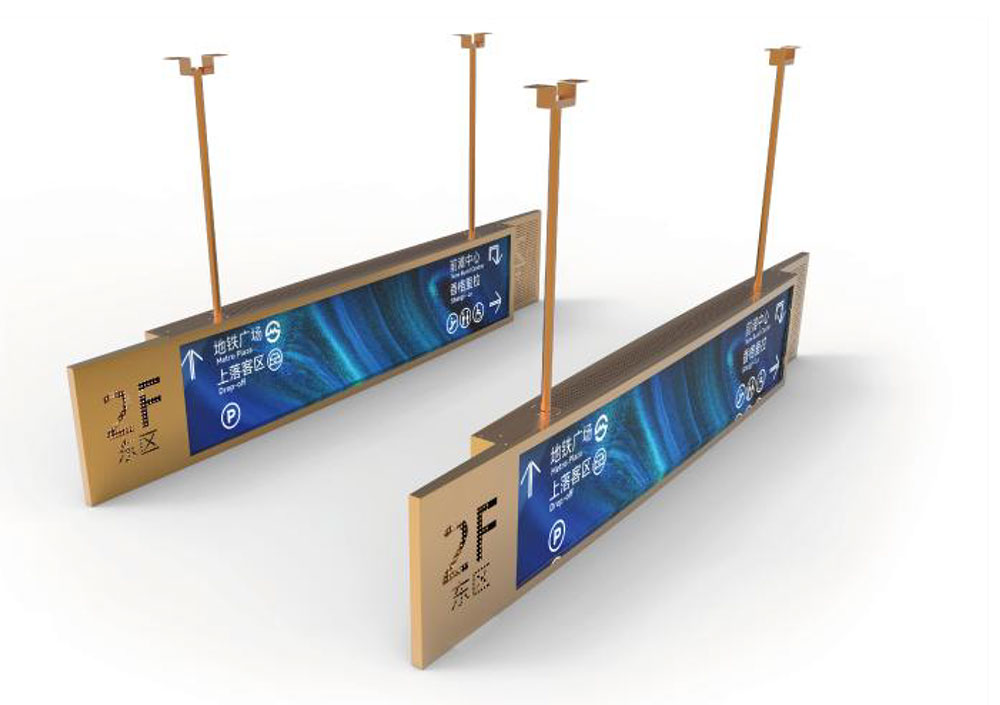
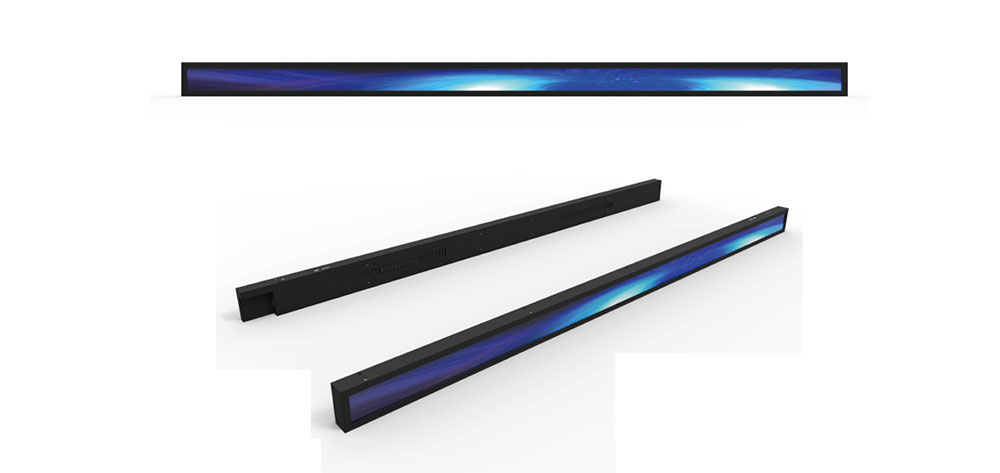
- Bar-type (stretched) displays with ratios such as 8:3, 16:3, 24:9, or extreme long strips exceeding 30:9, used for shelf-edge signage, elevator indicators, and instrument banners.
- Square and near-square displays around 1:1 or 5:4, favored by round-then-cropped wearables, HMI dials, and compact control terminals.
- Portrait-native panels engineered so the driver and gate orientation suit vertical mounting without image rotation overhead.
- Fully custom cuts where the glass, backlight, and active area are specified to a unique dimension set for a single product line.
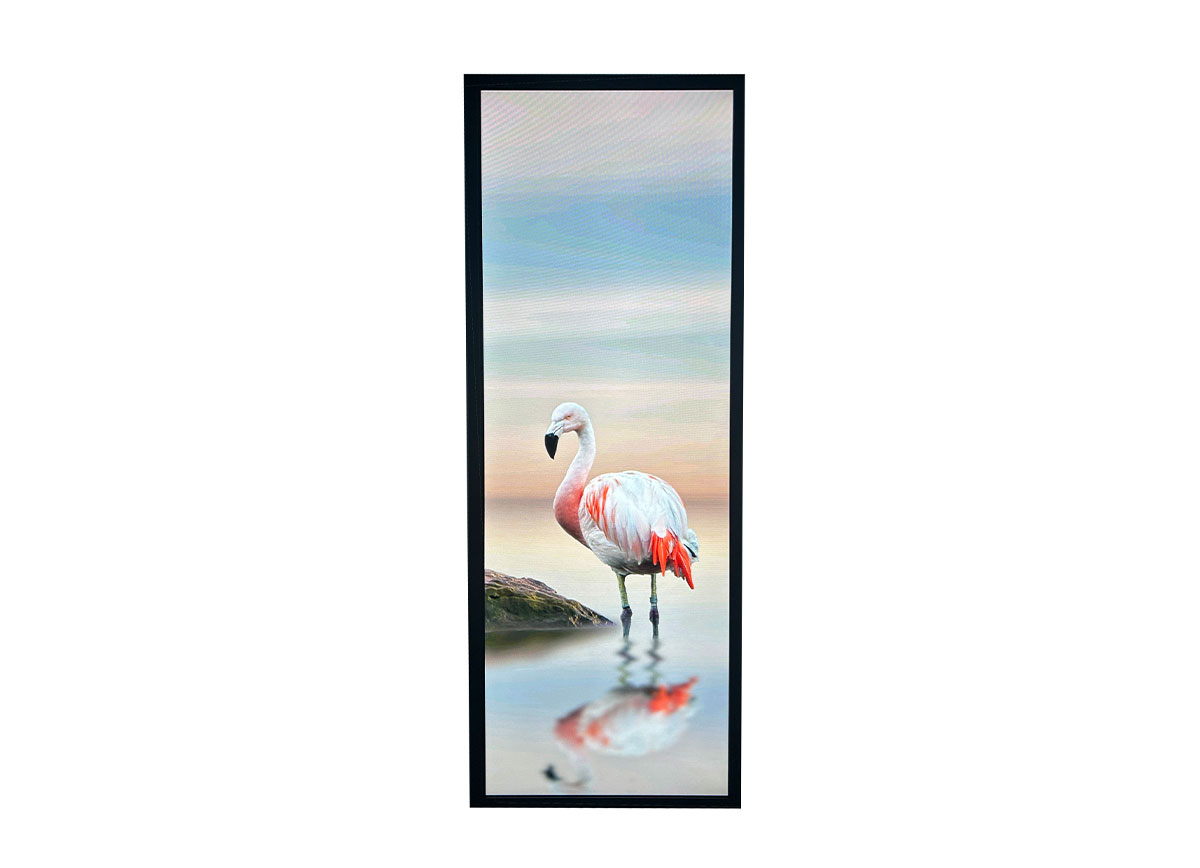
The distinction matters because a non-standard ratio is not merely a cropped standard panel. True non-standard displays carry a purpose-built TFT array, a matched backlight geometry, and a driver IC configuration that addresses only the active pixels present. This yields better optical uniformity, lower power draw, and a cleaner mechanical fit than masking down a larger stock panel.
2. Why Industrial Devices Demand Custom Aspect Ratios
2.1 Mechanical Envelope Constraints
Industrial enclosures are shaped by function first. A flow meter, a barcode gate, or a machine-tool pendant defines its cutout based on airflow, structural ribs, connector placement, and grip ergonomics. The display must adapt to that cutout, not the reverse. A bar-type panel measuring, for example, 1000 by 320 pixels can occupy a slim horizontal channel that a 16:9 panel could never fill without wasting adjacent space or forcing a larger, heavier housing.
2.2 Information Architecture
Many industrial interfaces present a single linear stream of data: a temperature trend, a queue position, a scrolling alarm log, or a progress bar. A stretched display maps naturally to this one-dimensional information flow, letting operators read at a glance without scanning a wide-and-tall grid. Square panels, conversely, suit radial gauges and rotary HMIs where symmetry aids comprehension.
2.3 Cost and Yield Over the Product Lifecycle
Choosing the correct active area reduces glass consumption per unit and eliminates the dead margin that masking creates. Over a production run of tens of thousands of units, an efficient panel cut lowers module cost and shrinks inventory of oversized components. It also simplifies bezels and optical bonding, since the cover lens is designed to the true display outline.
3. The High-Brightness Imperative
Industrial devices frequently operate in lighting conditions that defeat consumer-grade panels. Factory floors under skylights, outdoor kiosks, transportation terminals, and equipment installed near loading bays all subject the display to strong ambient light. A panel that measures a comfortable 250 to 350 nits on a desk becomes unreadable when washed out by direct sun or high-bay lighting.
HITULCD specifies high-brightness backlights in the 1000 to 2500 nit range for non-standard ratio modules destined for these settings. Achieving sustained high luminance in a custom geometry introduces specific engineering challenges:
- LED distribution. A long, narrow bar-type panel cannot rely on a single edge-lit bar without hotspots. Multi-zone edge lighting or a tuned direct-lit array preserves uniformity across the extended axis, with target uniformity above 80 percent.
- Thermal management. High-brightness LEDs generate heat that a slim enclosure struggles to dissipate. Aluminum backplates, thermal pads, and current derating curves keep junction temperatures within rated limits and protect the liquid crystal from clearing-point degradation.
- Optical film stacks. Enhanced prism and diffuser films, together with reflective polarizers, raise on-axis brightness without proportionally increasing power, which matters for battery-powered instruments.
- Automatic brightness control. An integrated ambient light sensor and PWM or analog dimming loop allow the panel to scale from full sun output down to night-shift levels, extending LED life and reducing glare.
4. Optical and Environmental Performance
4.1 Contrast and Sunlight Readability
Brightness alone does not guarantee readability. Sunlight readability is a system property combining high luminance, low surface reflectance, and preserved contrast under ambient load. Optical bonding, which fills the air gap between the cover lens and the LCD with an index-matched adhesive, is the single most effective measure. It suppresses internal reflections, raises effective contrast in bright light, and reinforces the assembly against shock and moisture ingress. Anti-reflective and anti-glare surface treatments on the cover lens further reduce specular washout.
4.2 Wide Temperature Operation
Industrial deployments span cold storage warehouses, unheated outdoor cabinets, and hot machinery enclosures. HITULCD non-standard modules are available in wide-temperature grades, typically minus 30 to plus 80 degrees Celsius operating, using low-temperature-tolerant liquid crystal fluids and, where required, integrated film or ITO heaters to accelerate cold-start response. Slow response and image smearing at low temperature is a known limitation of untreated panels, so verifying the response-time curve across the full range is essential during qualification.
4.3 Viewing Angle and Polarizer Orientation
Operators approach industrial panels from unpredictable angles. IPS-class technology provides near-symmetric wide viewing angles that keep the image legible off-axis. For devices used with polarized sunglasses, such as outdoor and vehicle-mounted equipment, the polarizer transmission axis should be oriented so the display remains visible regardless of head tilt, or a compensating layer added.
5. Interface, Driver, and Integration Considerations
Non-standard resolutions demand careful attention to the timing and interface layer. Common signaling options include MIPI-DSI for compact and battery-powered devices, LVDS for mid-size modules, and eDP or RGB parallel for specific controller pairings. Because the resolution is unconventional, the host system's graphics stack must be configured with an explicit custom timing definition rather than relying on standard EDID profiles. HITULCD supplies the initialization sequences, timing parameters, and reference schematics needed to bring up the panel cleanly.
Where the host cannot generate a non-standard timing directly, an interface conversion or timing controller board bridges the gap, accepting a standard input and remapping it to the panel's native geometry. Designers should confirm that any scaling introduced by such a board does not blur fine text, which is common on high-resolution instrument readouts.
6. Reliability, Compliance, and Longevity
Industrial products are qualified against a stricter regime than consumer goods. A non-standard ratio module intended for this market should demonstrate:
- Mechanical robustness validated by vibration and shock testing consistent with the device's mounting environment, for example on mobile machinery or transport platforms.
- Ingress protection at the module and bonded-lens level, supporting IP65 or higher front-face ratings when paired with an appropriate gasket and bezel.
- EMC compliance so the high-brightness backlight driver does not radiate interference into sensitive measurement circuits.
- Long-lifecycle availability. Industrial platforms remain in service for a decade or more. Committing to a long production horizon and controlled end-of-life notification protects customers from costly redesigns triggered by a discontinued panel.
- Backlight lifetime rated at the operating brightness, typically 50,000 hours or more to half-luminance, with realistic derating for continuous high-output use.
7. Application Scenarios
The versatility of non-standard ratio displays is best understood through representative deployments:
- Smart lockers and parcel terminals use tall portrait or bar-type strips to guide users through pickup steps in bright lobbies and outdoor courtyards.
- Industrial HMIs and machine pendants adopt square or custom-cut panels that align with control-knob layouts and fit tight bezels.
- Retail and transit signage relies on ultra-wide bars for pricing, wayfinding, and arrival information visible across a concourse.
- Medical and laboratory instruments employ compact custom panels where every millimeter of the chassis is allocated and readability under clinical lighting is mandatory.
- Vehicle and fleet equipment integrates high-brightness stretched displays into dashboards and telematics units, where sunlight readability and wide-temperature tolerance are non-negotiable.
8. A Practical Selection Framework
To specify a non-standard ratio module correctly, designers should proceed through a disciplined sequence:
- Fix the mechanical envelope and derive the target active area and outline dimensions from the enclosure cutout.
- Determine the worst-case ambient illuminance and set a minimum brightness with margin, then decide whether optical bonding and anti-reflective treatment are required.
- Confirm the operating and storage temperature range and select the appropriate LC grade and heater option.
- Match the interface to the host controller and validate the custom timing path early in development.
- Define the reliability, ingress, and compliance targets that the end product must meet.
- Verify lifecycle and supply commitments against the expected product lifespan.
Engaging the display manufacturer during the concept phase, rather than after the enclosure is frozen, gives the greatest freedom to optimize the panel cut and backlight design together with the mechanical team.
9. Conclusion
Non-standard ratio LCD displays are not a niche curiosity but a core enabling technology for well-engineered industrial devices. By aligning the active display area with the mechanical and informational demands of the equipment, they recover wasted space, improve legibility, and reduce lifecycle cost. When combined with the high-brightness backlighting, optical bonding, wide-temperature operation, and long-lifecycle support that industrial applications require, custom aspect-ratio panels let designers build products that perform reliably in sunlight, cold, vibration, and continuous duty. HITULCD's engineering approach treats the panel geometry, luminance, thermal design, and interface as one integrated system, ensuring that a non-standard ratio becomes a deliberate advantage rather than a compromise.
KEYWORDS: non-standard ratio LCD, high-brightness industrial display, bar-type LCD, custom aspect ratio panel, sunlight readable display