Introduction: The Integration Challenge Behind Every Display Choice
When engineers design modern equipment—whether an industrial control panel, a shelf-edge retail display, a transit information board, or a medical diagnostic console—the display is rarely a stand-alone component. It must fit a defined mechanical envelope, survive the operating environment, connect cleanly to the host system, and deliver the right information at the right brightness. This is where the choice between a stretched bar LCD and a standard LCD becomes a genuine engineering decision rather than a matter of preference.
At HITULCD, we build high-brightness LCDs for both form factors, and we see the same question from integrators every week: which one is actually better for my equipment? The honest answer is that neither is universally superior. The right choice depends on your aspect ratio, your available depth, your ambient light conditions, and your thermal budget. This white paper breaks down the technical differences so you can match the display to the mechanical and optical reality of your product.
Defining the Two Form Factors
Standard LCD
A standard LCD uses a conventional aspect ratio—typically 4:3, 5:4, or 16:9/16:10. These panels are mass-produced for monitors, tablets, laptops, and general-purpose equipment, which gives them broad availability, mature supply chains, and competitive pricing. For any application that displays full graphical content, video, or a conventional user interface, a standard LCD is the default starting point.
Stretched Bar LCD
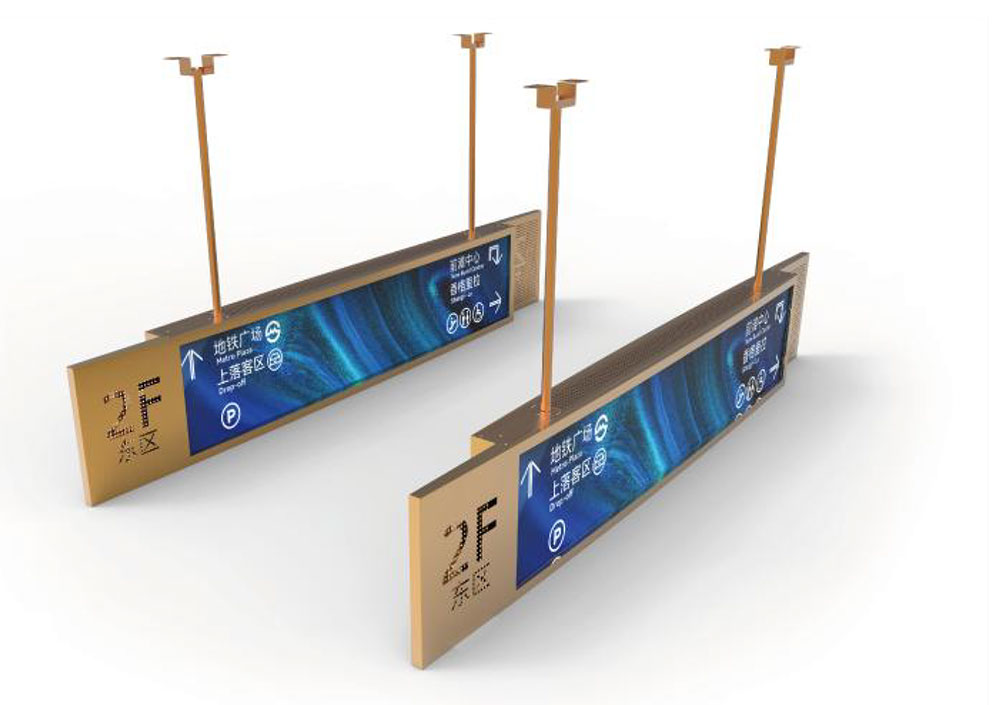
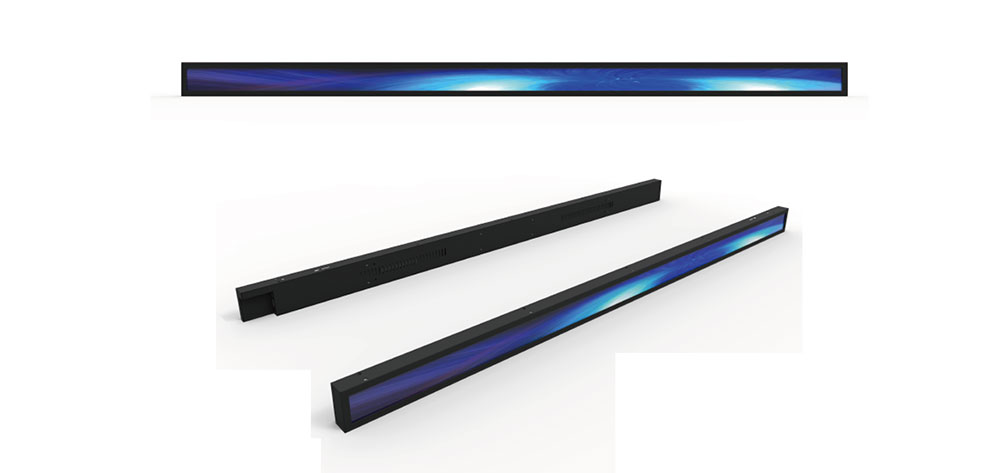
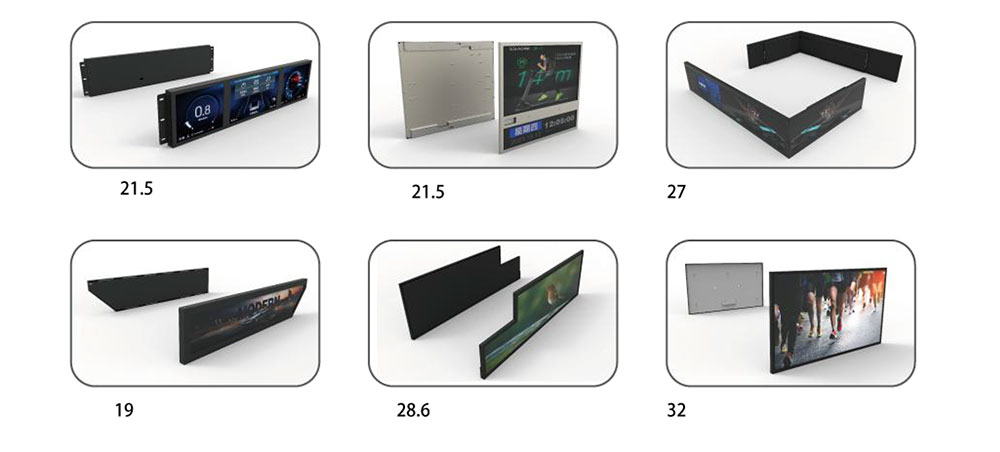
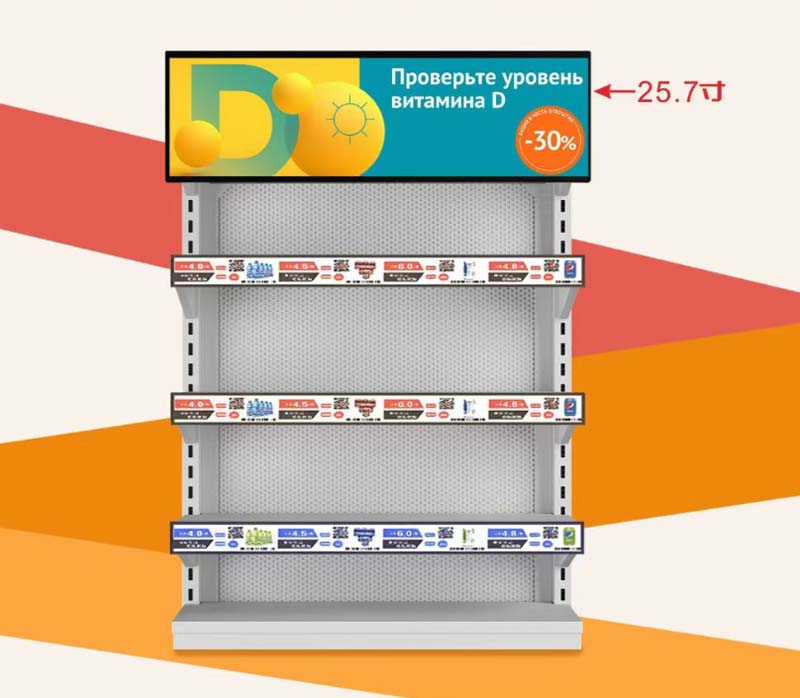
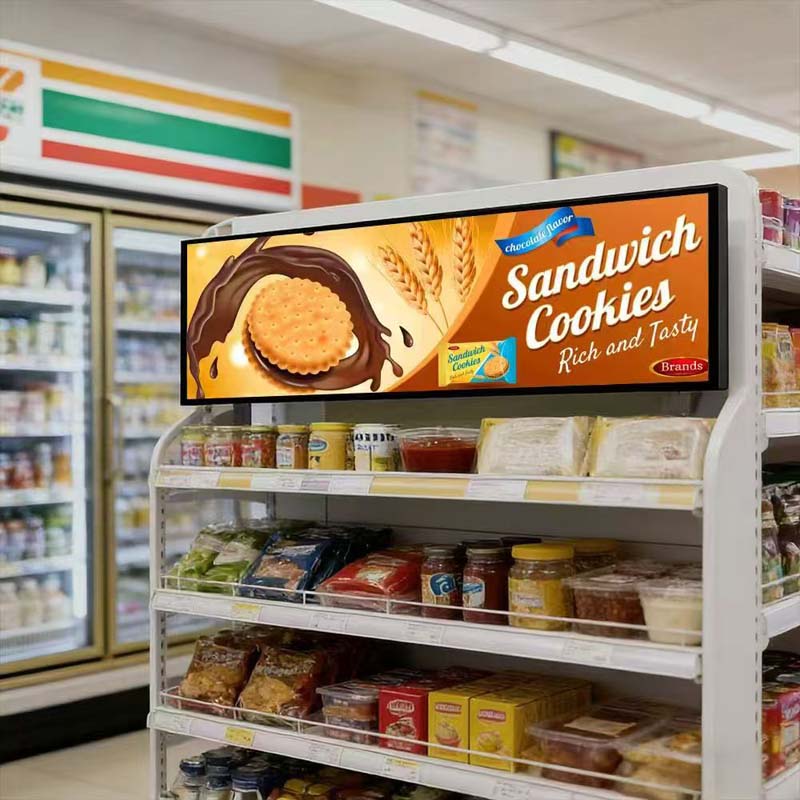
A stretched bar LCD (also called a bar-type, ultra-wide, or signage stretch display) uses an elongated aspect ratio such as 16:3, 16:4.5, 24:9, or similar. Physically, most stretched bars are produced by taking a standard "mother glass" panel and cutting it down to an elongated active area, then rebuilding the backlight, driver, and timing electronics around that cut. The result is a long, narrow display ideal for spaces where a conventional rectangle simply will not fit—shelf edges, overhead transit strips, elevator frames, machine fascia strips, and the narrow bezels of modern equipment housings.
Mechanical Integration: Fit, Depth, and Mounting
Mechanical fit is where the two form factors diverge most sharply.
- Envelope matching: If your equipment has a long, thin opening—imagine a 1000 mm wide by 180 mm tall slot on a kiosk fascia—a standard 16:9 panel forces you to either waste vertical space or add a second display. A stretched bar fills that envelope natively, eliminating dead area and simplifying the bezel design.
- Mounting rigidity: Long bar panels have a high length-to-width ratio, which makes them more susceptible to flex and vibration-induced stress. For equipment integration, HITULCD recommends a continuous rear support frame or multiple mounting bosses along the long axis rather than corner-only mounting. Standard panels, being closer to square, distribute mechanical load more evenly and tolerate simpler four-corner mounting.
- Depth budget: Both form factors can be engineered for shallow-depth integration, but high-brightness variants of either type carry a thicker backlight and, often, a heat sink. We will return to this under thermal design.
Optical Performance and High-Brightness Considerations
For equipment that operates near windows, outdoors, or under intense facility lighting, brightness is the deciding optical parameter. HITULCD produces both standard and stretched bar panels in high-brightness grades from 700 nits up to 2500 nits and beyond.
A key integration point is uniformity. Because a stretched bar has a very long backlight cavity, maintaining even luminance across the full length requires careful LED binning, a tuned light-guide plate, and well-designed local dimming zones. A poorly engineered bar display shows visible hot spots or a brightness gradient from end to end. A standard panel's more compact backlight is inherently easier to make uniform. When you specify a stretched bar, confirm with your supplier that luminance uniformity is held to a tight tolerance (HITULCD targets ≥80% across the active area on high-brightness bars).
Both form factors benefit from the same high-brightness enabling technologies: optical bonding to eliminate internal reflections, anti-glare or anti-reflective surface treatments, and automatic brightness control via an ambient light sensor to manage power and readability.
Thermal Management: The Hidden Integration Cost
High brightness means high backlight power, and high backlight power means heat. This is true for both form factors, but the geometry changes how you dissipate it.
- Stretched bar: Heat is spread along a long, thin path. This can be an advantage—there is a large surface area for a rear heat-spreader—but it also means you must ensure airflow or conductive cooling reaches the entire length. A thermal dead zone in the middle of a long bar will cause localized clearing point issues and accelerated aging.
- Standard LCD: Heat concentrates in a more compact area, which simplifies the design of a single heat sink or fan but can create a higher peak temperature if cooling is undersized.
In both cases, specify the display's maximum operating temperature and verify that your enclosure keeps the panel's clearing point margin intact. For sealed, fanless equipment, HITULCD can provide conductive-cooled variants that move heat to the chassis.
Electrical and Signal Integration
Standard LCDs enjoy the widest range of off-the-shelf interface options: LVDS, eDP, MIPI, and HDMI/DisplayPort via common controller boards. Driving them is straightforward because the timing and resolution are industry-standard.
Stretched bars require more attention. Their non-standard resolutions (for example, 1920×360 or 3840×1100) may not be recognized by generic graphics outputs, so you often need a scaler or timing controller board that supports custom EDID. HITULCD supplies matched controller boards for our bar panels precisely to remove this integration risk. Confirm that your media player or SoC can output the native bar resolution, or budget for a scaler in your bill of materials.
Reliability and Lifecycle
Because stretched bars are cut from standard mother glass, their lifecycle is tied to the availability of the parent panel. When a panel maker discontinues a generation of glass, the derived bar can disappear too. For equipment with a long production life, this is a real supply-continuity risk. Standard panels generally offer longer and more predictable availability, and industrial-grade standard panels are specifically guaranteed for multi-year longevity. At HITULCD we mitigate bar discontinuity risk by maintaining long-life industrial glass sources and offering last-time-buy support.
Cost Comparison in Context
Per unit of active area, stretched bars often cost more than standard panels because of the cutting, backlight rebuild, and lower production volumes. However, the right comparison is not price per square centimeter—it is total integrated cost. If a stretched bar lets you use one display and one simple enclosure where a standard panel would require a custom cut, a larger housing, or two displays, the bar can be the cheaper complete solution. Always evaluate cost at the system level.
Decision Framework: Which One for Your Equipment?
Use this quick framework when specifying your display:
- Choose a stretched bar LCD if: your mechanical opening is long and narrow; your content is strip-format (tickers, status bars, shelf pricing, transit lines, machine-state indicators); you want to avoid wasted bezel area; and you can accept a custom controller and tighter supply planning.
- Choose a standard LCD if: you display conventional graphical UIs or video; you need the widest interface compatibility and easiest driving; you require the longest guaranteed supply life; or you are optimizing for lowest component cost with simple mounting and cooling.
Conclusion
The stretched bar versus standard LCD question is ultimately about matching the display to the physical and optical reality of your equipment. A stretched bar wins when geometry and content favor a long, narrow format and you are prepared to manage custom signaling, uniformity, and supply planning. A standard LCD wins on compatibility, uniformity simplicity, supply continuity, and cost for conventional content. In high-brightness applications, both form factors demand disciplined thermal design and quality optical treatment to perform in the field. HITULCD engineers both, and the best path is to share your envelope dimensions, ambient brightness target, and interface before committing—so the display fits your equipment on the first revision, not the third.
KEYWORDS: stretched bar LCD, standard LCD, high-brightness LCD, equipment integration, bar type display