A Technical Buyer's Guide for Engineers, Project Managers, and Procurement Teams
Display selection is rarely a cosmetic decision. In digital signage, industrial control panels, transportation systems, and embedded equipment, the wrong aspect ratio or form factor can force a full redesign of the enclosure, waste usable mounting space, or compromise the operator's ability to read critical data at a glance. Choosing between a stretched (ultra-wide, bar-type) LCD and a standard LCD is one of the most consequential — and most frequently underestimated — decisions in an equipment design cycle.
This guide breaks down the technical, commercial, and integration factors that matter most when specifying a display for OEM and industrial applications.
1. Defining the Two Categories
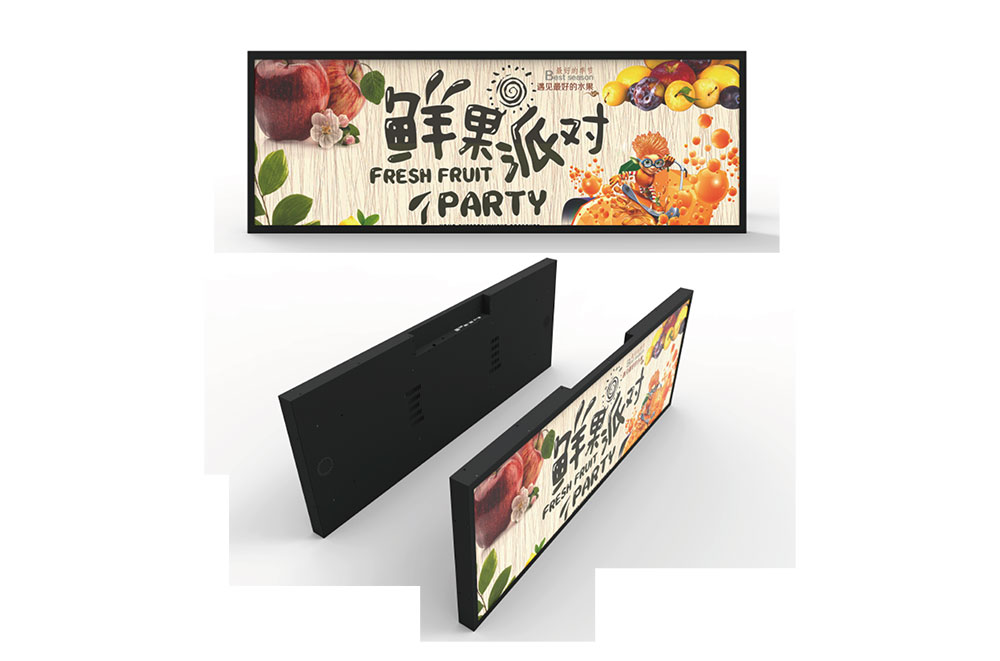
Standard LCD panels use conventional aspect ratios — typically 4:3, 16:9, or 16:10 — and are manufactured at high volume for consumer electronics, monitors, and TVs. This scale drives cost efficiency, broad availability, and a deep, mature supply chain.
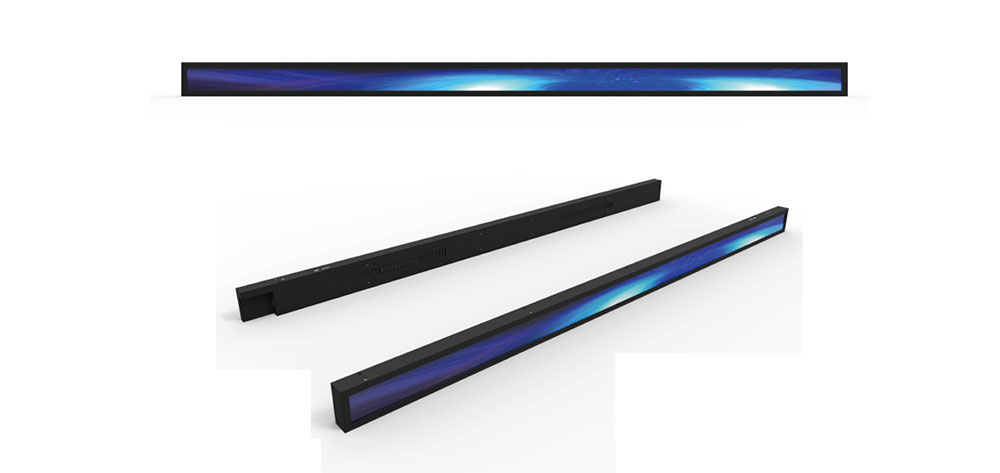
Stretched LCDs (also called bar-type, ultra-wide, or elongated displays) use aspect ratios ranging from roughly 8:3 up to 32:9 or beyond. Rather than being optically stretched from a standard panel, true stretched LCDs are manufactured on purpose-built cell structures, preserving native resolution and pixel geometry without image distortion.
The distinction matters because it determines everything downstream: mechanical integration, viewing ergonomics, sourcing lead time, and total lifecycle cost.
2. Mechanical and Enclosure Integration
For engineers working within a fixed chassis — vending machines, elevator indicators, kiosks, shelf-edge signage, control room consoles, or narrow instrument panels — physical geometry is often the deciding constraint before any electrical spec is considered.
Standard LCDs require a housing depth and width proportioned to a 4:3 or 16:9 frame. In narrow or panoramic enclosures, this typically means oversized bezels, wasted internal volume, or a complete rethink of the mechanical layout.
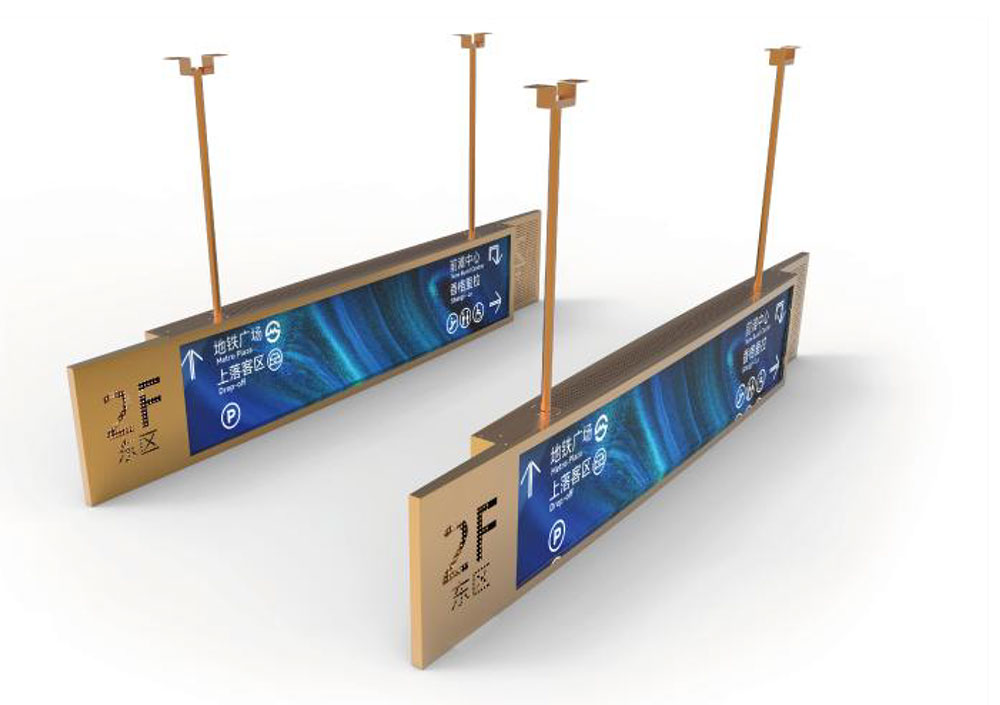
Stretched LCDs are engineered to fit long, narrow, or panoramic spaces natively — door panels, horizontal instrument strips, vertical signage columns — without cropping, letterboxing, or mechanical compromise.
For project managers managing enclosure tooling costs, this is not a minor consideration. Retrofitting a standard-ratio display into a non-standard housing frequently drives custom bracket fabrication, additional NRE (non-recurring engineering) cost, and schedule risk.
3. Optical Performance and Operator Ergonomics
Readability under real operating conditions — not showroom lighting — is the metric that determines whether a display specification actually holds up in the field.
| Factor | Standard LCD | Stretched LCD |
|---|---|---|
| Viewing geometry | Optimized for centered, close-range viewing | Optimized for horizontal scan lines, peripheral viewing, or long-distance readability |
| Best-fit use case | Dashboards, HMIs, control consoles | Signage strips, transit indicators, elevator/door panels, shelf displays |
| Content layout | Full-frame graphics, multi-window UI | Linear data (text tickers, single-line metrics, status bars) |
| Distortion risk | None (native format) | None on true stretched panels; risk only with software-stretched substitutes |
A critical due-diligence point for engineering teams: some suppliers market "stretched" displays that are simply standard panels with content scaled or cropped in software. This produces geometric distortion, reduced effective resolution, and inconsistent color reproduction at the edges. Specification documents should explicitly require native bar-type panel construction, not a software-stretched substitute, and this should be confirmed with a datasheet showing true panel dimensions and native pixel pitch — not an assumption based on price.
4. Sourcing, Lead Time, and Total Cost of Ownership
Procurement teams evaluating these two categories should weigh short-term unit cost against long-term program risk.
Standard LCD advantages:
Larger supplier base and multi-source availability
Lower unit cost at comparable volumes due to economies of scale
Shorter lead times for common sizes and resolutions
Easier second-source qualification if a supplier exits the market
Stretched LCD considerations:
Narrower supplier base, often requiring earlier engagement with specialized panel manufacturers
Higher per-unit cost at low-to-mid volumes, offset by eliminating custom mechanical work elsewhere in the BOM
Longer typical lead times, particularly for non-catalog aspect ratios — early RFQ engagement is strongly recommended for programs with fixed launch dates
Fewer, but more specialized, suppliers capable of guaranteeing long-term production continuity (a key requirement for industrial and transportation programs with 7–10 year lifecycle commitments)
For procurement and program managers, the practical guidance is straightforward: if the equipment design already assumes a standard-ratio display, standard LCD is almost always the lower-risk, lower-cost path. If the enclosure geometry is fixed and non-standard — which is common in retrofit programs, transportation, and space-constrained industrial equipment — a stretched LCD sourced from a manufacturer with demonstrated bar-type panel experience will typically cost less over the program lifecycle than forcing a standard panel into an incompatible form factor.
5. A Decision Framework
| Choose Standard LCD when: | Choose Stretched LCD when: |
|---|---|
| The application is a conventional dashboard, HMI, or monitor | The mounting space is inherently narrow, elongated, or panoramic |
| Volume and cost efficiency are the primary drivers | Content is linear (status text, single-metric readouts, tickers) |
| Multi-source supply and short lead times are required | The design is a retrofit into an existing non-standard enclosure |
| The design is flexible enough to accommodate a standard aspect ratio | Long-term aesthetic and brand differentiation is a project requirement |
6. Specification Checklist Before RFQ
Before issuing a request for quotation, engineering and procurement teams should confirm the following with any candidate supplier:
Native panel construction (true stretched cell vs. software-scaled)
Resolution and pixel pitch at the specified aspect ratio
Brightness (nits) and contrast ratio rated for the actual ambient light conditions of deployment
Operating temperature range appropriate to the equipment environment (indoor, outdoor, refrigerated, industrial)
Interface compatibility (LVDS, eDP, HDMI) with existing control boards
Minimum order quantity, lead time, and long-term supply commitment (critical for industrial and transportation contracts)
Certifications relevant to the target market (CE, FCC, RoHS, and application-specific standards)
Conclusion
Neither format is universally superior — the correct choice is determined by the equipment's physical constraints, the operating environment, and the program's cost and lifecycle requirements. Engineers should start from enclosure geometry and viewing ergonomics; procurement teams should weigh unit cost against supply continuity and total program risk; project managers should factor lead time into the schedule from the earliest design phase, particularly for non-standard aspect ratios.
Engaging a display partner with proven manufacturing experience in both standard and true bar-type stretched LCD panels — and requesting verifiable datasheets rather than marketing claims — is the most reliable way to de-risk this decision before it becomes a costly late-stage design change.