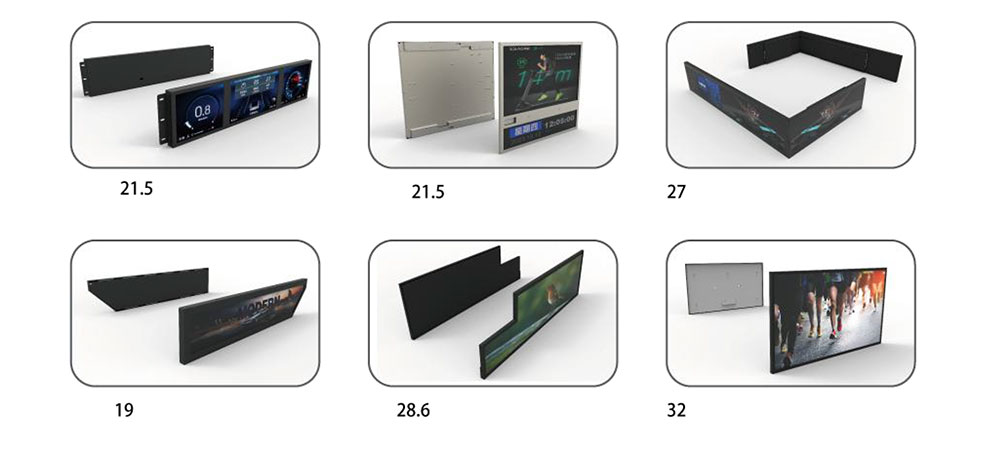
Outdoor bar type LCDs have become one of the fastest growing display categories in North American commercial signage. These elongated, high-aspect-ratio panels are engineered for spaces where a conventional 16:9 screen simply does not fit: shelf edges, transit platforms, drive-through menu rails, stadium concourses, and building facades. When these displays must also survive direct sunlight, wide temperature swings, and years of continuous operation, the engineering bar rises sharply. At HITULCD, we work with integrators and OEMs across the United States who demand both the physical durability and the optical performance to make outdoor bar type LCDs readable at high noon. This guide explains what defines a high brightness outdoor bar type LCD, why sourcing decisions matter, and how US-facing manufacturing and supply models influence the reliability of the finished product.
What Is a High Brightness Outdoor Bar Type LCD?
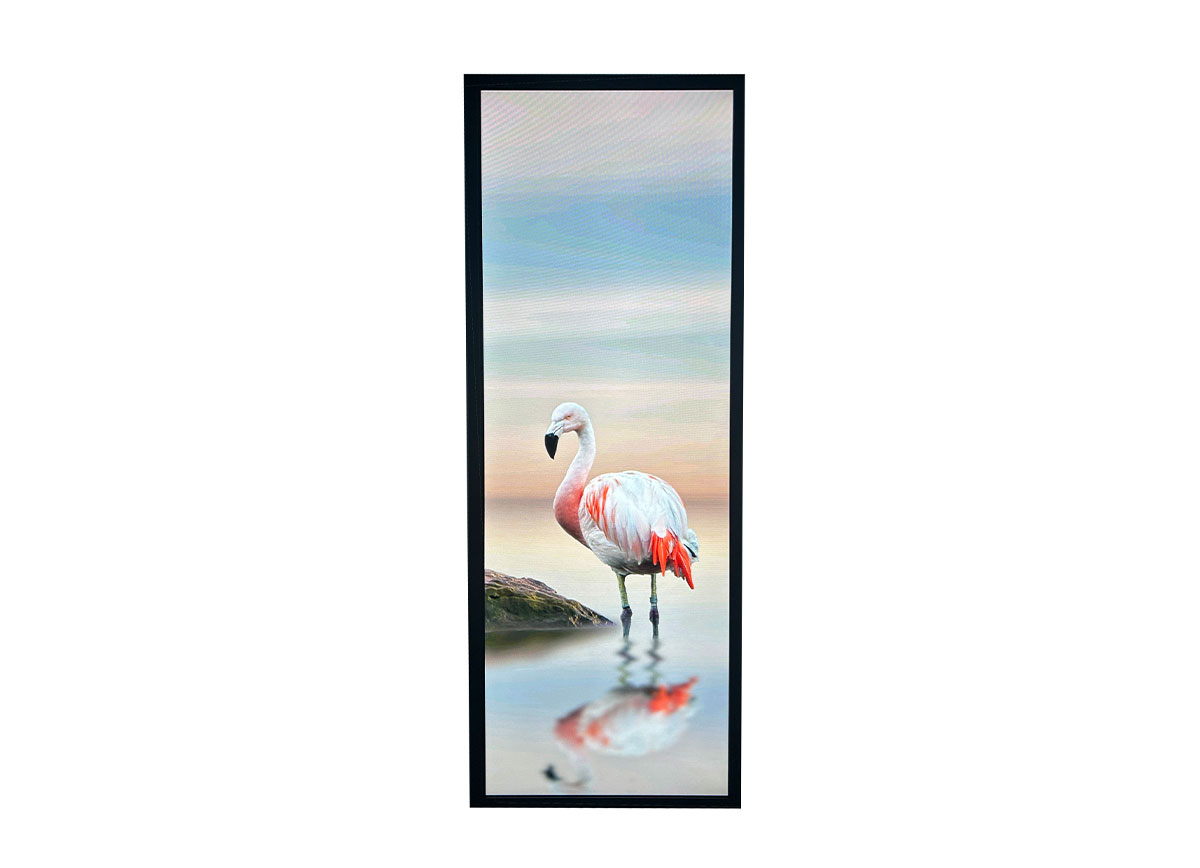
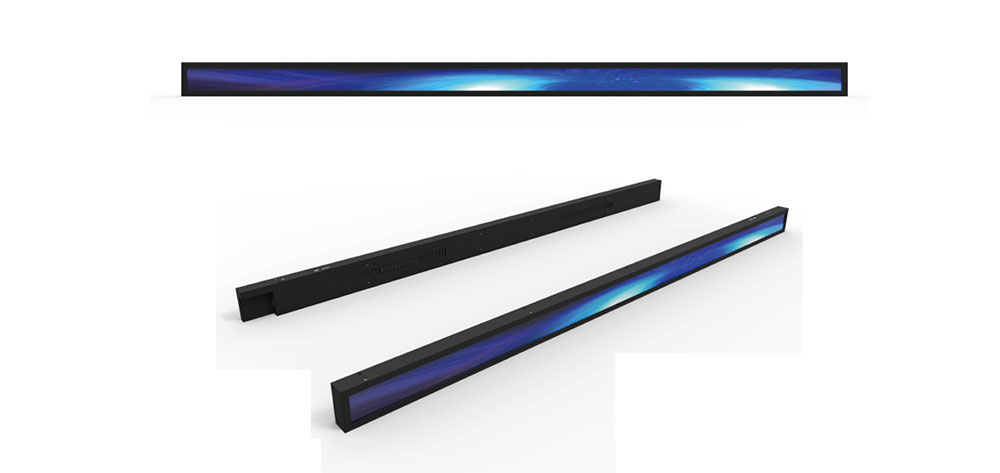
A bar type LCD, sometimes called a stretched or ultra-wide display, uses a panel geometry with an unusually long aspect ratio such as 16:4.5, 24:9, or even narrower. Instead of the familiar rectangular screen, the active area is a long horizontal or vertical strip. This shape is not a novelty. It solves real architectural problems by fitting content into narrow mounting envelopes where traditional displays waste space or cannot be installed at all.
The "high brightness" qualifier refers to luminance output measured in candelas per square meter, or nits. Indoor commercial displays typically run between 350 and 700 nits. A high brightness outdoor bar type LCD from HITULCD generally targets 1,500 to 3,000 nits, and in extreme direct-sun applications we specify panels up to 5,000 nits. The reason is straightforward: ambient sunlight can exceed 10,000 lux, and a display that looks vivid indoors becomes a mirror outdoors. Without sufficient luminance, content washes out and the investment fails at the one moment it needs to perform.
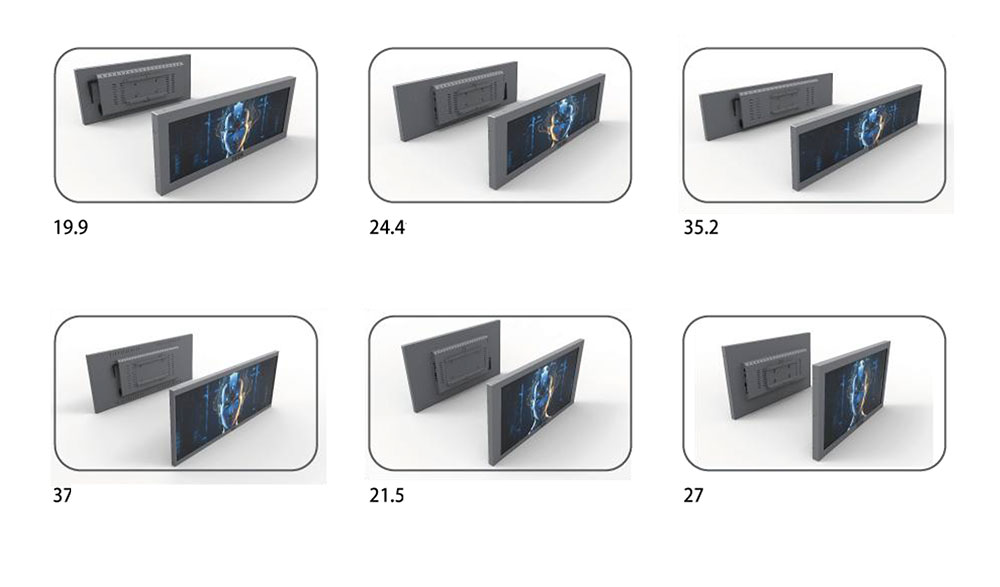
The "outdoor" designation adds a third layer of requirements. The display must resist moisture, dust, ultraviolet degradation, and thermal stress. These environmental factors drive design choices in the backlight, the optical bonding, the enclosure, and the thermal management system. A true outdoor bar type LCD is a complete system, not merely a bright panel behind glass.
Why the "US Manufacturer" Question Matters
Buyers searching for US manufacturers of high brightness outdoor bar type LCDs are usually weighing several practical concerns: lead time, warranty support, technical service in the same time zone, and supply chain resilience. It is worth being precise about how the display industry actually works. The vast majority of TFT-LCD glass in the world is fabricated at large panel fabs concentrated in East Asia, because a single fab represents billions of dollars of capital investment. Very few, if any, companies fabricate raw LCD glass at scale within the United States.
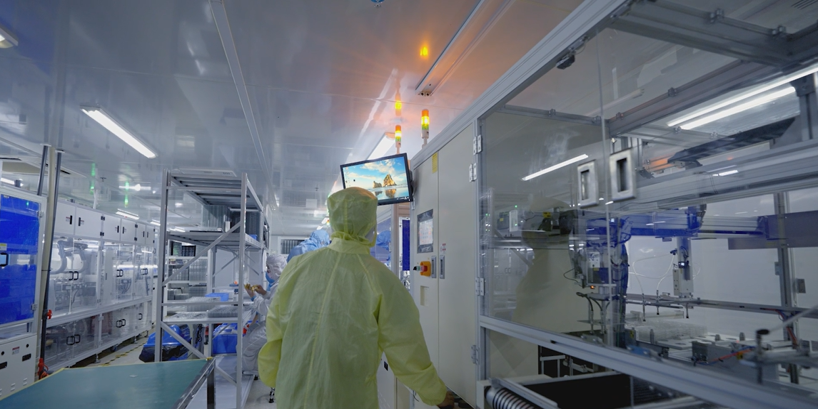
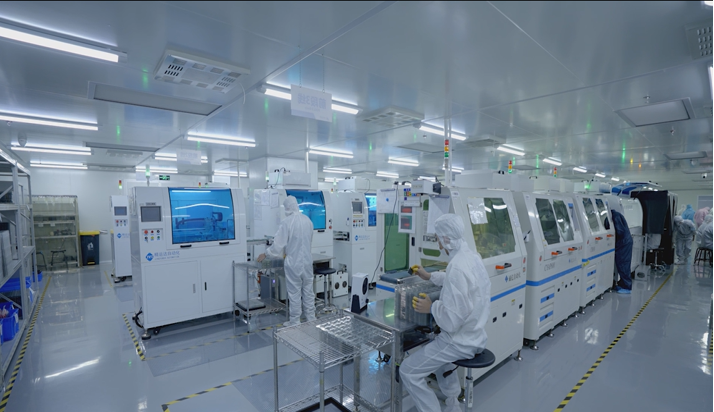
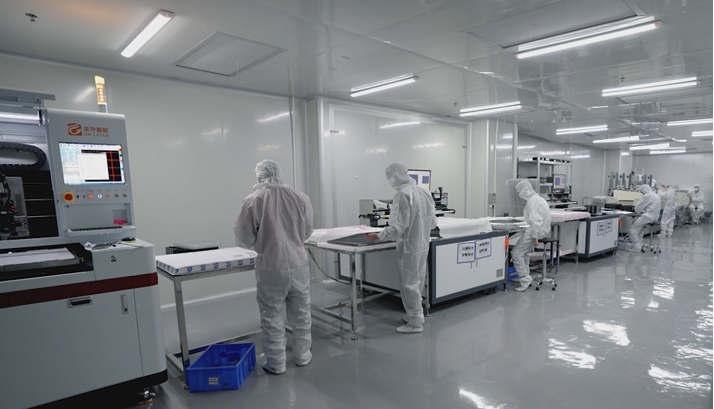
What genuinely happens in the US market, and where the "US manufacturer" label carries real weight, is at the module, system integration, and value-added engineering stage. This is where HITULCD focuses our North American engagement. High brightness conversion, optical bonding, cover glass lamination, controller board design, enclosure fabrication, environmental sealing, quality validation, and final assembly can all be performed or coordinated to serve US customers with domestic support. When you evaluate a vendor, the meaningful questions are not only "where is the glass cut" but "who owns the optical stack design, who validates the thermal performance, and who stands behind the warranty."
HITULCD structures its US-facing operations to shorten the distance between the customer and the engineering team. That means responsive design-in support, sample availability, and the ability to customize the bar type form factor without waiting through long international revision cycles.
The Optical Engineering Behind Sunlight Readability
Achieving readability in direct sunlight is the defining challenge of an outdoor bar type LCD, and it is far more nuanced than turning up the backlight. HITULCD approaches sunlight readability through a combination of techniques that work together.
High-Output LED Backlight
The foundation is a redesigned backlight. Standard commercial panels use LED arrays tuned for indoor luminance. For outdoor bar type displays we specify high-efficiency LED banks capable of sustained high output. Because a long, narrow panel has unusual thermal geometry, the LED distribution must be engineered so that luminance is uniform across the entire stretched active area. Uneven backlighting is immediately visible in bar type formats because the eye scans the full length of the strip.
Optical Bonding
Optical bonding fills the air gap between the LCD cell and the protective cover glass with a clear optical adhesive whose refractive index is matched to the glass. This eliminates the internal reflections that occur at air-to-glass interfaces. The benefit is twofold: contrast improves dramatically in bright ambient light, and the display gains mechanical strength and resistance to condensation forming inside the gap. For outdoor bar type LCDs, optical bonding is not optional. It is the single most important step for maintaining a high contrast ratio under sunlight.
Anti-Reflective and Anti-Glare Treatments
Even with optical bonding, the outermost surface reflects ambient light. HITULCD applies anti-reflective coatings that reduce surface reflection to a small fraction of untreated glass, and in some applications an anti-glare etch that diffuses reflected light. The choice between anti-reflective and anti-glare depends on the viewing environment and the content type. Sharp text and fine graphics favor anti-reflective clarity, while environments with harsh point-source lighting may benefit from anti-glare diffusion.
Contrast and Color Management
A high nit count means little if the black level rises with it. HITULCD tunes the driver electronics and, where appropriate, uses local dimming or enhanced polarizers to preserve deep blacks so that the effective contrast ratio remains high in real outdoor conditions. Color calibration ensures that brand colors remain accurate at full brightness, which matters greatly for advertising and wayfinding applications.
Surviving the Environment: Thermal and Ingress Protection
Brightness generates heat, and outdoor deployment adds solar heat load on top of that. A high brightness outdoor bar type LCD can face internal temperatures well above what a consumer display ever experiences. HITULCD addresses this with a layered thermal strategy.
First, the enclosure incorporates engineered airflow or sealed convection paths that move heat away from the panel and driver electronics. In fully sealed designs where no outside air can enter, we use closed-loop heat exchangers or thermally conductive pathways to the enclosure exterior. Second, temperature sensors allow the controller to modulate backlight output intelligently, protecting the panel during peak heat while maximizing brightness when conditions allow. Third, the LCD itself is specified as a wide-temperature panel with a liquid crystal formulation rated for operation across a broad range, preventing the sluggish response or dark clouding that afflicts standard panels in cold or hot extremes.
Ingress protection is equally critical. Outdoor displays are rated on the IP scale for resistance to dust and water. HITULCD outdoor bar type LCD systems are designed with sealed enclosures, gasketed seams, and protected cable entries to meet demanding ingress standards. This protects against rain, washdown cleaning, humidity, and airborne particulates. For coastal and industrial US installations, we also address corrosion resistance in the enclosure materials and hardware.
Why the Bar Type Form Factor Is Growing in the US Market
The commercial rationale for bar type displays is compelling across many American verticals, and demand has accelerated as content management systems have matured.
- Retail shelf edges: Ultra-wide strips mounted along shelving deliver pricing, promotions, and product information exactly where shoppers look, without consuming valuable shelf depth.
- Quick-service restaurants: Drive-through menu rails and order-confirmation strips benefit from the horizontal geometry, and outdoor brightness is mandatory since these face the parking lot and daylight.
- Transit and transportation: Train platforms, bus shelters, and airport corridors use bar type displays for arrival information and advertising in spaces where a square screen would be awkward.
- Stadiums and venues: Concourse ribbons and fascia displays wrap around architecture using the stretched format, and open-air venues require high brightness.
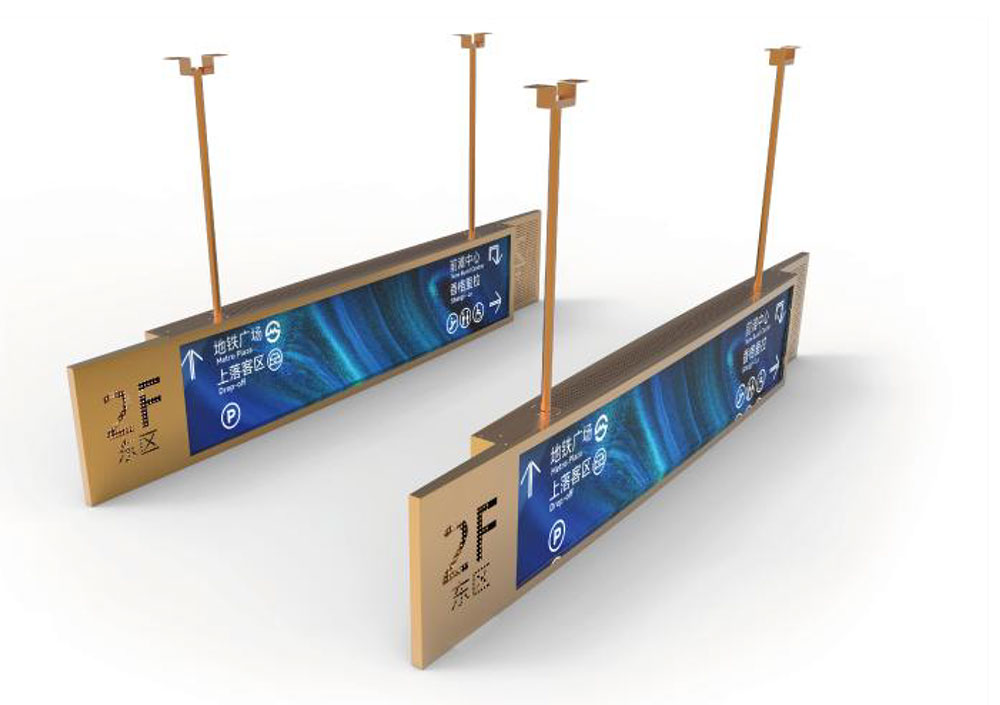
- Building integration and wayfinding: Architects favor the slim profile because it integrates into columns, doorways, and facades without dominating the design.
In each case the outdoor and semi-outdoor variants require the full engineering package described above. This is precisely the intersection HITULCD serves: the demanding combination of an unusual form factor with genuine outdoor performance.
How to Evaluate a Supplier of Outdoor Bar Type LCDs
When sourcing high brightness outdoor bar type LCDs for a US project, a rigorous evaluation protects the investment. HITULCD encourages buyers to ask the following.
- Verified luminance under real conditions: Request the sustained brightness specification, not just the peak, and confirm it is measured after optical bonding and cover glass, since these layers reduce transmitted light.
- Optical stack ownership: Ask whether the vendor performs optical bonding and coating in-house or controls it directly. This determines quality consistency and repair capability.
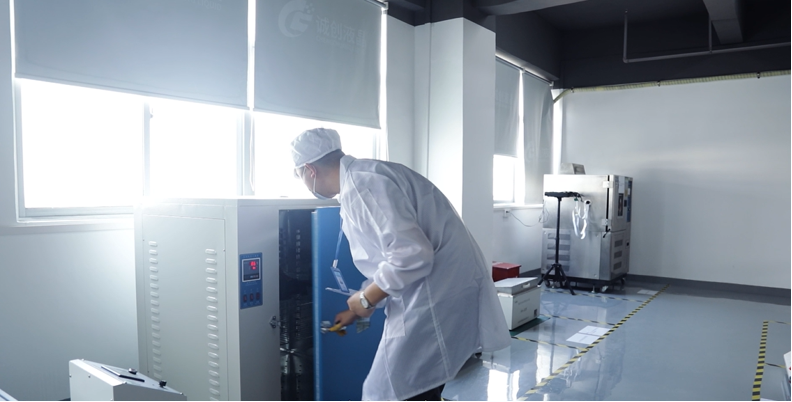
- Thermal validation data: Legitimate outdoor products come with thermal testing across the specified operating range, including solar loading scenarios.
- Ingress and durability ratings: Confirm the IP rating for both the front and rear of the enclosure, and ask about salt-fog or UV aging test results for the target environment.
- Custom form factor capability: Bar type projects frequently need non-standard dimensions. Confirm the minimum order quantity and lead time for custom cuts and brightness levels.
- US-based support and warranty: Establish who provides technical support, what the response time is, and how warranty claims and spares are handled domestically.
- Lifecycle and availability: Long-life industrial panels reduce the risk of a redesign midway through a rollout. Confirm the expected production lifecycle of the panel.
These questions separate a true engineering partner from a reseller. HITULCD positions itself as the former, providing documentation and sample validation so that integrators can specify with confidence.
Integration Considerations for Installers
Even a superbly engineered outdoor bar type LCD depends on correct integration. HITULCD works with installers on several practical factors. Mounting orientation affects thermal behavior, so vertical bar installations require different airflow planning than horizontal ones. Cable management must preserve the ingress seal while allowing serviceability. Content design should respect the extreme aspect ratio; text and graphics scaled for a standard screen become unreadable or distorted on a stretched panel, so the media player and CMS must output the correct native resolution. Finally, power budgeting matters because high brightness backlights draw significantly more current than indoor displays, and the installation circuit must accommodate peak demand.
HITULCD provides mechanical drawings, mounting recommendations, and resolution guidance so that these details are resolved before hardware arrives on site. This design-in support is often what determines whether a rollout across dozens or hundreds of US locations goes smoothly.
The HITULCD Approach
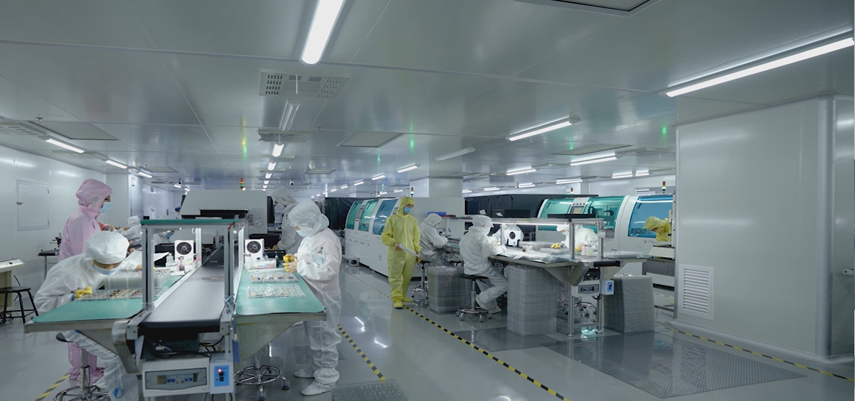
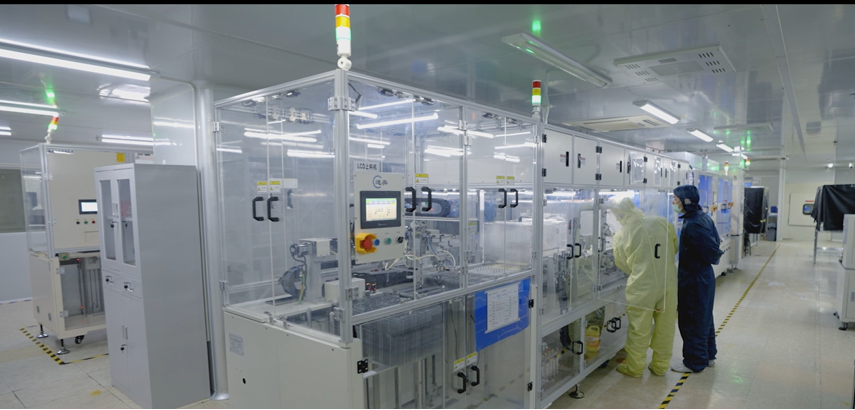
HITULCD specializes in high brightness display systems, with the outdoor bar type LCD as a core competency rather than an afterthought. Our engagement model for the US market emphasizes engineering-led customization: we begin with the customer's environment, brightness target, dimensions, and mounting constraints, then specify the panel, backlight conversion, optical stack, enclosure, and controller as an integrated system. Because bar type formats are inherently custom, this consultative approach avoids the compromises that come from forcing a standard product into a non-standard space.
We validate every configuration for luminance uniformity, contrast under high ambient light, thermal stability, and ingress protection before it ships. For US customers this translates into displays that perform on day one and continue performing through years of outdoor exposure, backed by responsive support that understands both the product and the application.
Conclusion
The search for US manufacturers of high brightness outdoor bar type LCDs is really a search for engineering credibility and dependable support close to home. While raw LCD glass is fabricated in a small number of global fabs, the decisive value in an outdoor bar type display lives in the high brightness conversion, optical bonding, thermal engineering, environmental sealing, and system integration that turn a panel into a product capable of surviving American parking lots, transit platforms, and building facades. HITULCD delivers that value with a focus on the stretched form factor and true sunlight readability, supporting integrators and OEMs from specification through deployment. For any project where an ultra-wide display must stay brilliant in full sun and reliable in harsh weather, the right partner is defined by depth of engineering, not just brightness on a datasheet.