What Large Format Displays Offer the Best Value for Transit Stations?
Specifying displays for a transit station is not the same as specifying them for a retail store or a boardroom. A station runs 18 to 24 hours a day, sits next to platform-edge air movement and brake dust, takes direct sun in one zone and near darkness in another, and has to stay readable while thousands of people hurry past. The unit price on a quotation tells you very little about whether a display will still be working, and still legible, in year five.
This article looks at value the way an operator's engineering and maintenance teams measure it: cost per operating hour, readability under real lighting, and how much service labor the installation will demand.
Start with the Zone, Not the Screen Size
A station is several environments with different demands. Matching one display class to one zone usually costs less than buying a single "premium" model for everything.
Concourse and Ticket Hall (Indoor, Controlled Lighting)
Ambient light is mostly artificial, with some spill from entrances. Standard-brightness commercial displays in the 350 to 500 cd/m² range are adequate here. Panels should be rated for 24/7 operation and installed in a well-ventilated enclosure or on a proper wall mount. Sizes of 55 to 75 inches suit passenger information and advertising. Paying for high-brightness panels in this zone adds power draw and heat and gives no readability benefit.
Platforms (Semi-Outdoor)
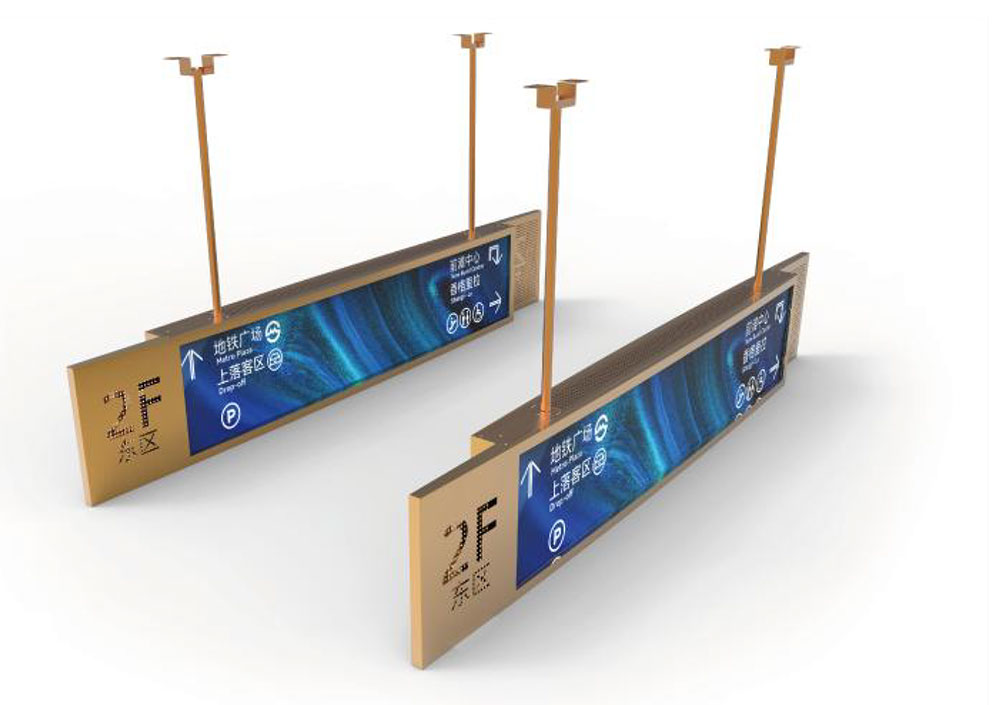
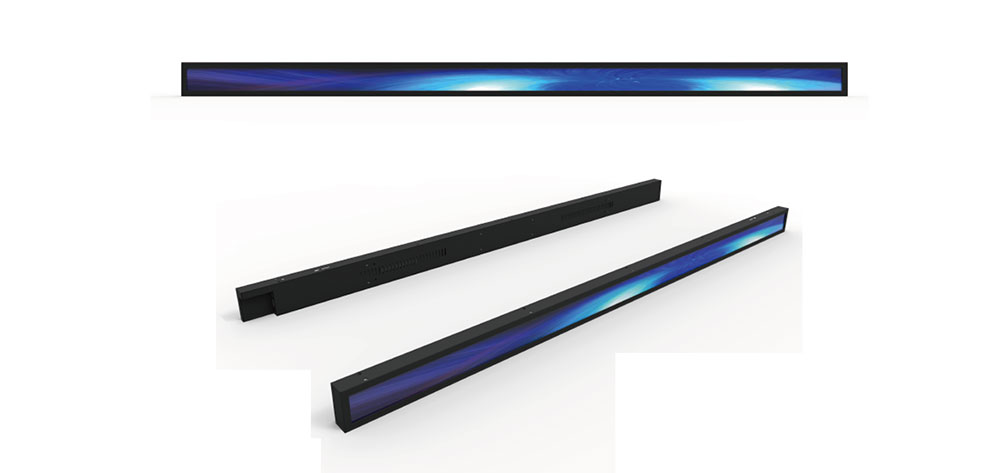
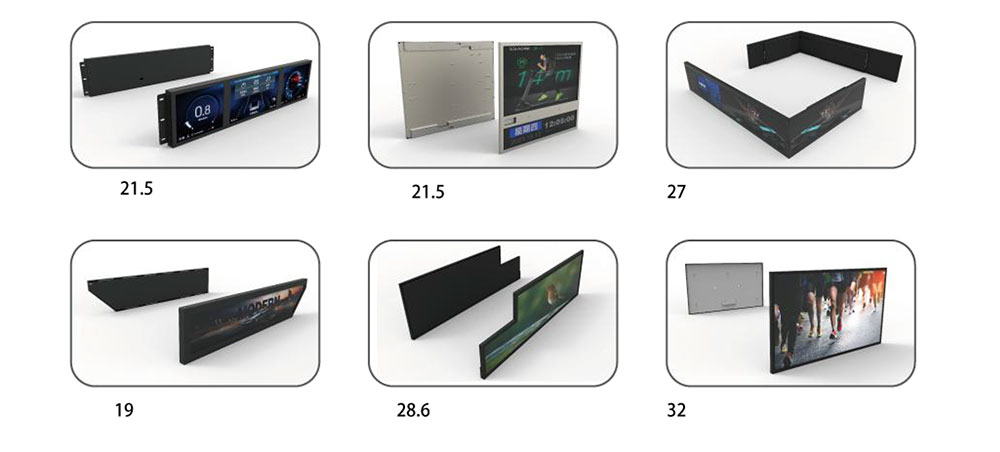
These are the most demanding indoor-style locations. Platforms see wide temperature swings, airflow from arriving trains, brake and track dust, and often daylight from open ends or skylights. Displays here need 700 to 1,500 cd/m² depending on exposure, a sealed or dust-resistant front, and a thermal design that does not rely on filters that clog. Stretched bar-type displays and 43 to 55 inch landscape units are common for next-train information, mounted at or above platform-edge sightlines.
Entrances, Bus Interchanges and Open-Air Platforms (Sunlight Exposure)
Here brightness has to compete with direct or reflected sun. Practical specifications start around 2,500 cd/m² and go up to 3,500 cd/m² or more for south-facing installations with no overhead cover. At these levels, the more important questions are how heat is managed and whether the panel can sustain that brightness without throttling.
What Actually Determines Value
1. Sustained Brightness, Not Peak Brightness
A datasheet may quote a figure the panel only reaches briefly. In a hot enclosure, a display can reduce its output to protect the backlight and the liquid crystal layer. Ask for brightness figures measured at operating temperature, and ask what the thermal protection behavior is. A 2,500 nit display that holds 2,500 nits in July is better value than a 3,500 nit display that drops to 2,000 once the housing heats up.
2. Optical Construction
Optical bonding fills the air gap between the cover glass and the LCD with a clear adhesive. In a transit environment this reduces internal reflections, improves contrast under bright ambient light, eliminates condensation and dust ingress between layers, and makes the assembly more resistant to impact and vibration. It raises the unit cost, but in sunlit and humid locations it often pays back in readability and fewer service calls. Anti-glare or anti-reflective treatment on the glass is the other element to check. For platform and outdoor use, tempered glass of adequate thickness is standard.
3. Thermal Design
Fans and filters are the most common failure points in dusty, high-duty installations. Where the environment allows, fanless or sealed designs using heat spreading and controlled airflow reduce maintenance. Where active cooling is needed, look for easily replaceable, tool-free filters and fan modules, and temperature sensors that report back to the management system. Operating temperature range should be taken from the tested rating of the complete unit, not the bare panel.
4. Panel and Component Lifetime
For continuous operation, specify displays with backlights rated for long service life (50,000 hours or higher is a reasonable baseline) and confirm that the panel is intended for 24/7 use rather than a 12 to 16 hour commercial duty cycle. A panel that is cheap per unit but needs backlight replacement at 30,000 hours may cost more over a contract term than one designed for sustained operation.
5. Power Consumption Over the Contract Term
Across hundreds of displays running around the clock, wattage is a real budget line. Compare power at the brightness you will actually run, not the maximum. Ambient light sensors that automatically adjust brightness through the day are one of the most effective ways to cut energy use and extend backlight life, and they are worth specifying on any display that sees variable daylight.
6. Compliance and Environmental Ratings
For transit work, check the certifications that match the installation. Typical references include IEC/EN 62368-1 for product safety, EMC compliance for the region, and IP ratings for dust and moisture protection (IP65 on the front face is common for exposed locations). Impact resistance, commonly expressed as an IK rating, matters in public areas where vandalism or accidental contact is a risk. For equipment installed in rolling stock or trackside, railway-specific standards such as EN 50155 and EN 50121 may apply, and these should be confirmed at the specification stage, not after tender.
7. Remote Management
Operators with large networks save more through remote monitoring than through almost any hardware choice. Look for displays that report status, temperature, brightness and fault conditions to a central system, support remote power control and firmware updates, and expose standard control protocols. Finding a failed screen from a dashboard instead of a patrol saves labor every day of the contract.
A Practical Comparison by Zone
| Zone | Typical Size | Brightness Class | Key Construction Features | Value Priority |
|---|---|---|---|---|
| Concourse / ticket hall | 55–75" | 350–500 cd/m² | 24/7 rated panel, good ventilation | Low power, long panel life |
| Platform (covered) | 43–55", bar types | 700–1,500 cd/m² | Dust-resistant front, robust thermal design | Maintenance interval |
| Platform (open) / entrance | 49–65" | 2,500–3,500 cd/m² | Optical bonding, AR glass, sealed housing | Sustained brightness |
| Digital signage / media walls | 75–98" or video wall | 500–700 cd/m² | Narrow bezel, calibrated color | Uniformity, serviceability |
Procurement Checks That Prevent Expensive Surprises
Request brightness and thermal test data from the supplier, taken at the maximum rated ambient temperature.
Confirm the panel supply commitment. Transit contracts run for years, and you need a supplier who will provide matching replacement units or repair parts for the whole term.
Ask for the MTBF basis and the warranty terms for 24/7 duty, including whether backlight degradation is covered.
Verify that mounting, cabling and service access suit your station layout. A display that takes two technicians and a lift to swap costs more than one that takes one person ten minutes.
Request a sample for a site trial. A few weeks on an actual platform will reveal glare angles, heat behavior and cleaning problems that a datasheet will not.
Where the Best Value Usually Sits
In most station projects, the best value does not come from the lowest unit price or the highest specification. It comes from matching the display class to the zone: standard 24/7 commercial displays for the concourse, ruggedized mid-brightness units for platforms, and high-brightness, optically bonded, sealed displays only where sunlight demands them. Add remote management and a supplier who can support the product for the full contract, and the total cost of ownership drops without compromising what passengers see.
If you are preparing a specification or tender for a station project, send us the site conditions (orientation, exposure, mounting type and operating hours) and we will recommend a display configuration with brightness, thermal and compliance data for your review.
KEYWORDS: