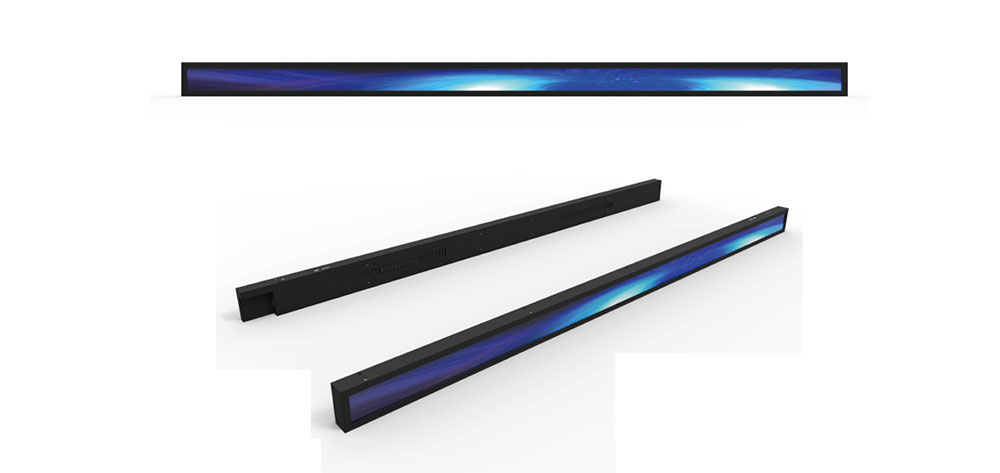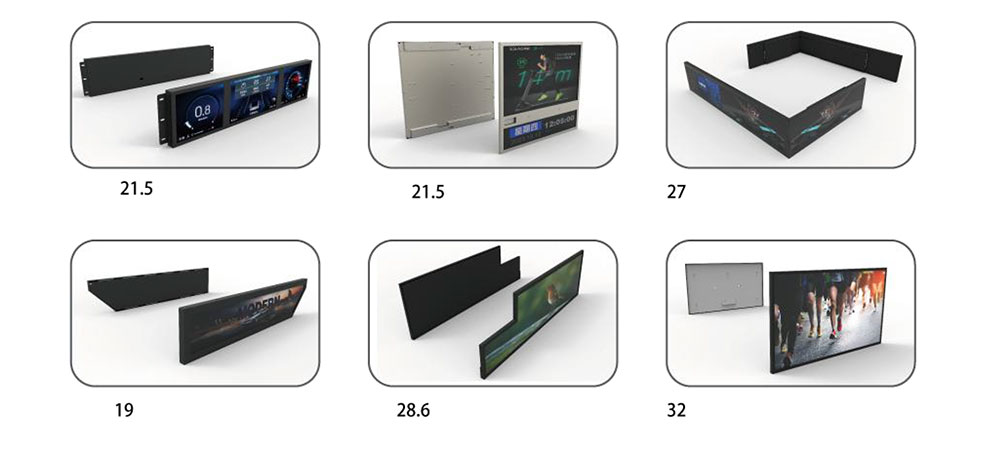
Original equipment manufacturers increasingly design products around display formats that break away from the traditional 4:3 and 5:4 aspect ratios. Wide LCD modules, spanning aspect ratios from 16:9 and 16:6 down to ultra-elongated bar-type formats, have become a structural component in transportation displays, industrial control panels, retail signage, and embedded human-machine interfaces. At HITULCD, our wide-format high-brightness modules are engineered specifically for the constraints OEM integrators face: fixed enclosures, wide operating temperatures, long product lifecycles, and demanding readability targets. This white paper examines the design principles, optical engineering, and integration considerations that make wide LCD modules suitable for OEM deployment.
Why Wide-Format Displays Matter for OEM Design
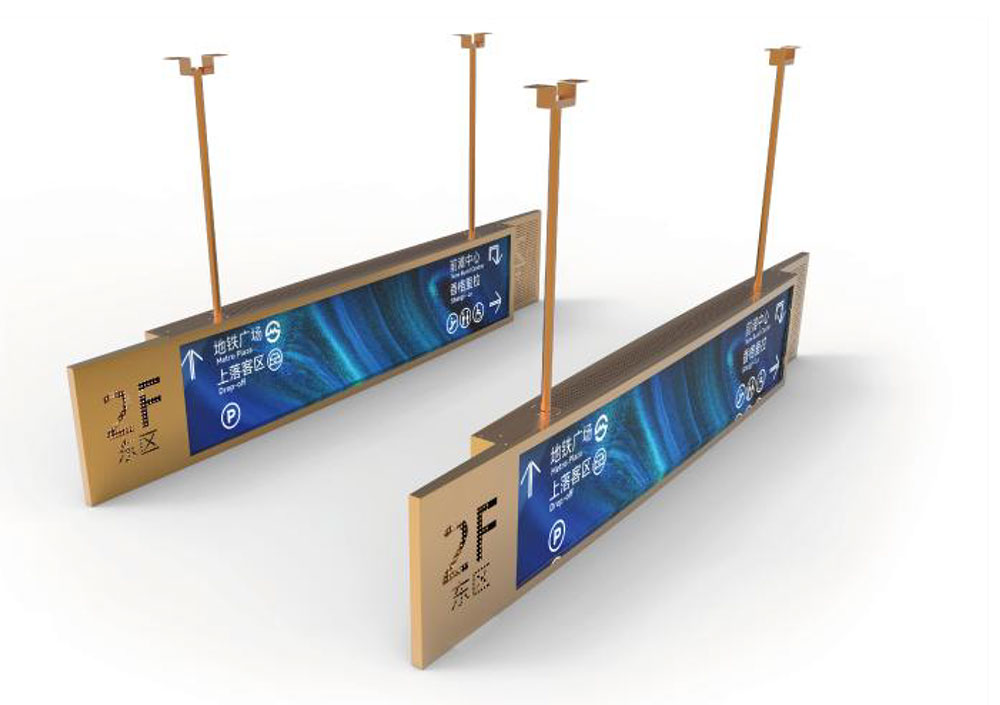
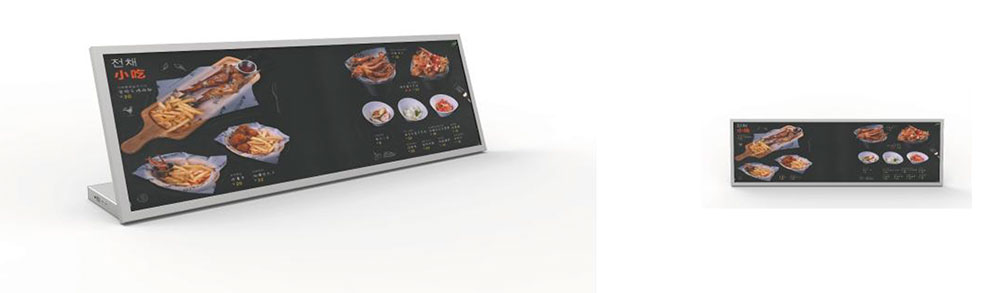
The move toward wide and ultra-wide LCD modules is rarely a cosmetic choice. It reflects how information is presented in a given application. A stretched display suits a dashboard where instrument clusters, navigation, and status indicators sit side by side. In industrial automation, a wide panel lets an operator monitor multiple process parameters on a single continuous surface without scrolling or switching screens. Retail shelf-edge and elevator signage rely on bar-type formats because the physical mounting space is inherently narrow and long.
For an OEM, the display defines the industrial design of the entire product. Choosing a wide module early lets the mechanical, thermal, and electrical teams design around a known outline, cover glass footprint, and interface. This is why HITULCD treats the wide LCD module not as a commodity part but as a co-engineered subsystem.
Optical Engineering for High-Brightness Wide Modules
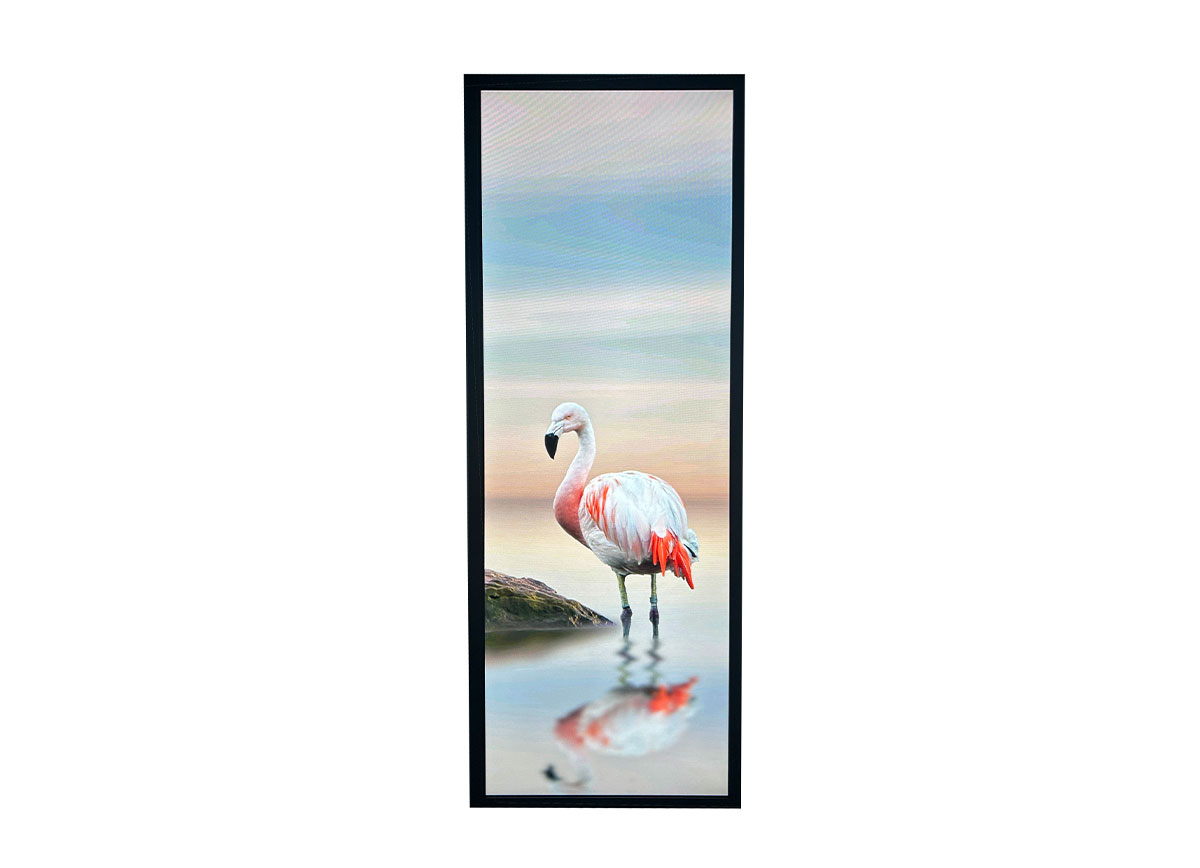
Wide-format panels present a specific optical challenge: as the active area elongates, maintaining uniform luminance across the full surface becomes harder. A standard edge-lit backlight designed for a compact panel does not scale linearly to a long, narrow one. HITULCD addresses this with backlight architectures tuned to the aspect ratio.
Backlight Design and Luminance Uniformity
Our high-brightness wide modules use multi-bar LED arrays with engineered light-guide plates that compensate for the longer optical path. Depending on the format, we deploy either dual-edge or direct-lit LED distributions to hold luminance uniformity above 80 percent across the diagonal. For outdoor-readable variants, modules reach 1,000 to 2,500 nits, with select automotive and signage configurations extending to 3,000 nits or more. High brightness alone is not sufficient; the LED binning and current regulation must keep color temperature consistent from one end of a long panel to the other.
Contrast, Sunlight Readability, and Optical Bonding
Readability under direct sunlight depends on the ratio of emitted luminance to reflected ambient light, not on raw brightness. HITULCD combines high-luminance backlights with anti-glare and anti-reflection surface treatments, and offers optical bonding to eliminate the air gap between the cover glass and the LCD cell. Optical bonding reduces internal reflections, improves contrast in bright environments, and adds mechanical rigidity, which is valuable on the long spans typical of wide modules where flex and Newton-ring artifacts are otherwise a risk.
Wide Viewing Angle and Format Considerations
OEM applications rarely guarantee a single fixed viewing position. An operator may stand off-axis, or a passenger may view a transport display from the side. Wide modules therefore benefit from IPS or advanced VA technology delivering viewing angles up to 89 degrees in all four directions with minimal color shift and gamma inversion. For bar-type layouts where users view the extreme ends of the panel at a steep angle, wide-viewing-angle liquid crystal alignment is essential to avoid brightness fall-off and contrast reversal at the edges.
Thermal Management Across Wide Operating Ranges
High-brightness backlights generate heat, and that heat spreads unevenly across an elongated module. Left unmanaged, thermal gradients cause visible luminance variation and accelerate LED aging at hotspots. HITULCD wide modules integrate distributed heat-spreading layers and, where required, active cooling interfaces so that the backlight temperature stays within specification across the panel length.
Our industrial and automotive-grade wide modules operate from -30 degrees Celsius to +85 degrees Celsius, with optional heaters for cold-start scenarios in outdoor kiosks and transport equipment. At low temperatures, liquid crystal response slows and images smear; at high temperatures, backlight efficiency drops and the risk of image sticking rises. Wide-temperature liquid crystal formulations and closed-loop brightness compensation keep performance stable across the full range, which is critical when a single OEM product ships into multiple climates.
Interface and Electrical Integration
Ease of integration is often the deciding factor for an OEM sourcing team. HITULCD wide modules support the interfaces that dominate embedded design: LVDS for mainstream resolutions, eDP for higher-resolution and higher-refresh formats, and MIPI-DSI for compact controller boards. For legacy industrial platforms, TTL/RGB options remain available on smaller wide formats.
We provide modules with integrated LED driver boards and PWM or analog dimming, supporting deep dimming ratios for applications ranging from bright daylight to dark-cabin night modes. Standardized connector pinouts and documented timing parameters shorten the OEM's board bring-up cycle, and optional embedded timing controllers reduce the burden on the host system.
Mechanical Design and Long-Term Availability
Wide modules are more sensitive to mechanical stress than compact panels because of their length-to-width ratio. HITULCD reinforces the module frame and specifies mounting points that distribute clamping force evenly, preventing the display mura that appears when a long panel is stressed at only a few points. Cover glass thickness, bezel geometry, and gasket seating are all defined in the mechanical drawing package delivered to the OEM.
Product lifecycle is a core concern for industrial and instrumentation customers whose platforms remain in production for a decade or more. We commit to long-term availability and controlled change management on our OEM wide module lines, and we provide advance notice for any material or component transition. This stability lets an OEM qualify a display once and rely on it across the product's full production life.
Compliance and Environmental Standards
OEM products must satisfy the regulatory frameworks of their destination markets. HITULCD wide LCD modules are designed to meet the RoHS directive 2002/95/EC on the restriction of hazardous substances, along with subsequent updates, and are supported by REACH declarations. Modules can be supplied with documentation for EMC and safety compliance to support the OEM's system-level certification. Designing to these standards from the outset avoids costly late-stage redesign when a product enters regulated markets.
Customization Options for OEM Programs
Standard catalog parts rarely fit an OEM enclosure perfectly. HITULCD offers customization across the wide module range: adjusted brightness targets, custom cover glass with printed logos or touch integration, projected-capacitive touch panels tuned for gloved operation, tailored flex cable lengths and connector positions, and conformal coating for humid or corrosive environments. Resistive and capacitive touch options extend the same wide formats into interactive control surfaces. Each customization is validated against the same optical and reliability criteria as our standard modules.
Conclusion
Wide LCD modules give OEM designers a display format that matches the physical and informational shape of their products, but only when the module is engineered for the demands of embedded deployment. High-brightness backlights with uniform luminance, wide viewing angles, robust thermal management, flexible interfaces, mechanical stability, regulatory compliance, and long-term availability together determine whether a wide module succeeds in the field. HITULCD builds wide-format high-brightness modules around these requirements, so OEM partners can design confidently, integrate quickly, and ship products that stay readable and reliable throughout their service life.