Why Cold Weather Breaks Ordinary Stretched Displays
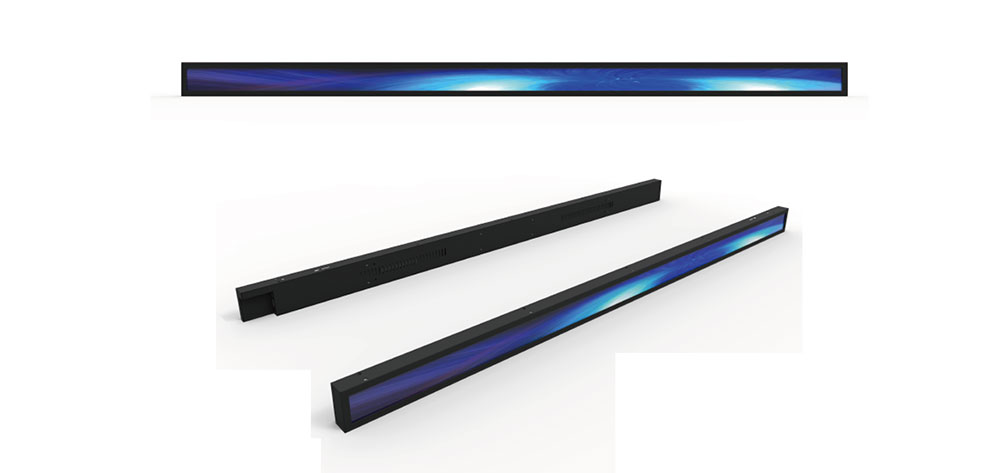
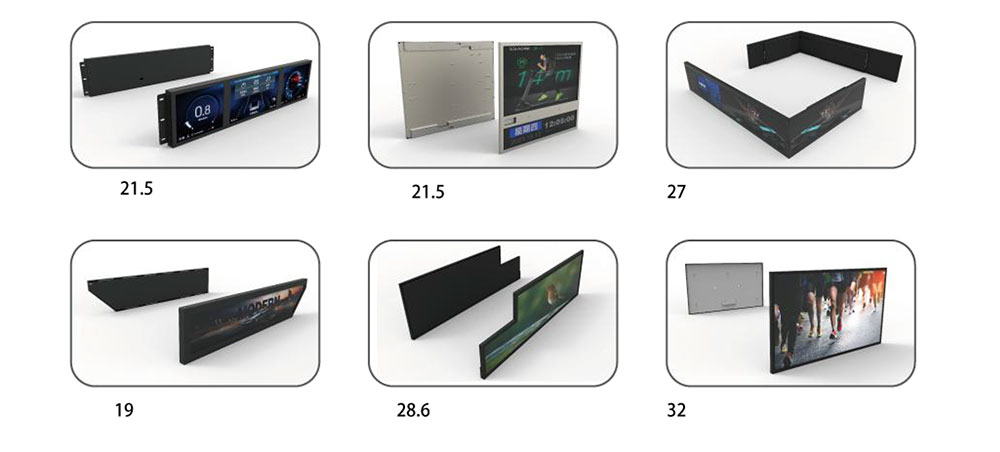
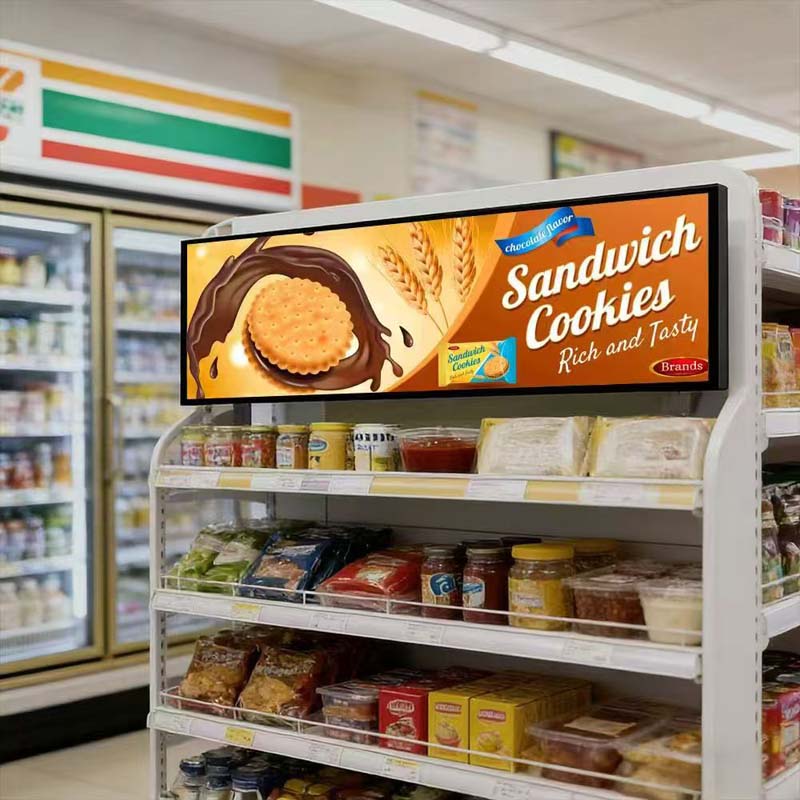
Stretched bar LCDs (ultra-wide aspect ratios such as 16:4.5 or 24:9) are built for shelf edges, transit platforms, drive-through menus, and industrial control strips. These are exactly the places where temperature swings are harshest. A display mounted on an outdoor transit platform in northern Europe or a refrigerated retail aisle may sit at -30°C overnight and then face direct solar load the next afternoon. A standard commercial LCD is typically rated only to 0°C, and below that point three failure modes appear in sequence.
First, the liquid crystal fluid thickens. Liquid crystal is a temperature-sensitive medium, and as it approaches its lower nematic limit its viscosity rises sharply. Molecules rotate more slowly in response to the driving voltage, so pixel transitions lag. On a stretched display showing scrolling transit times or animated menu content, this appears as smearing, ghosting, and visible motion trails. Second, the response time degradation becomes a cold-start failure: below roughly -20°C an unheated panel may show a frozen or barely-updating image until it warms. Third, mechanical stress from differential thermal contraction between the glass, the backlight assembly, and the metal chassis can crack solder joints or delaminate optical films over repeated freeze cycles.
What "Wide Temperature" Actually Means
At HITULCD we define a wide-temperature stretched display by three independent specifications, because a single "operating range" number hides the engineering that matters.
- Operating temperature range: the span over which the display meets its full brightness, contrast, and response-time specs. Our wide-temperature stretched panels target -30°C to +80°C.
- Storage temperature range: the span the unit survives while powered off without permanent damage, typically wider, around -40°C to +90°C.
- Cold start capability: the lowest temperature at which the display can be powered from fully cold and reach a usable image within a defined warm-up window. This is the specification installers most often overlook.
Operating and cold-start limits are not the same number. A panel may run correctly at -30°C once warm yet refuse to start cleanly from a -30°C cold soak without a heater. Specifying both prevents field surprises.
The Core Technologies Behind Cold-Weather Operation
Wide-Temperature Liquid Crystal Formulation
The foundation is the liquid crystal mixture itself. Wide-temperature formulations use blends chosen to keep the nematic phase stable and viscosity manageable across a broad range, pushing the clearing point high enough to resist hot-side wash-out while keeping the crystallization point low enough for cold-side operation. This single material choice does more to protect low-temperature response time than any external accessory.
Integrated Film Heaters
For the coldest deployments, a transparent or edge-mounted film heater is bonded into the display stack. A thermistor reads panel temperature, and a controller energizes the heater below a set threshold (commonly around 0°C to +5°C), bringing the liquid crystal into its comfortable operating band before and during use. Heater power is sized to the enclosure and worst-case ambient; a stretched bar panel's long, narrow geometry needs even heat distribution along its length to avoid a warm center and cold ends.
Low-Temperature Backlight Management
LED backlights are efficient but their driver electronics and the LEDs' optical output shift with temperature. Wide-temperature designs use LED binning and drivers rated for the full cold range, and they manage the inrush behavior so a cold backlight ramps safely rather than stressing the driver at power-on.
Optical Bonding
Optical bonding fills the air gap between the LCD cell and the cover glass with a cured resin or gel. For cold-weather use this delivers two benefits. It removes the internal air gap where condensation and frost can form during freeze-thaw cycles, and it mechanically couples the glass layers so thermal contraction is shared rather than concentrated at vulnerable edges. Bonding also improves sunlight readability, which matters because cold environments and bright winter sun often occur together.
High Brightness and the Cold-Plus-Sun Problem
Cold-weather sites are rarely dim. Snow is one of the most reflective natural surfaces, and low winter sun strikes vertical signage almost head-on. A display that is merely cold-tolerant but dim becomes unreadable under this glare. HITULCD wide-temperature stretched displays pair the low-temperature stack with high-brightness backlights of 1,500 to 2,500 nits, combined with optical bonding and anti-reflection treatment so that the image stays legible in snow glare and direct sun. Brightness and temperature management are designed together: the same thermal controller that protects the liquid crystal also keeps the high-output backlight within its safe junction-temperature window on the hot side.
Condensation, Sealing, and Enclosure Design
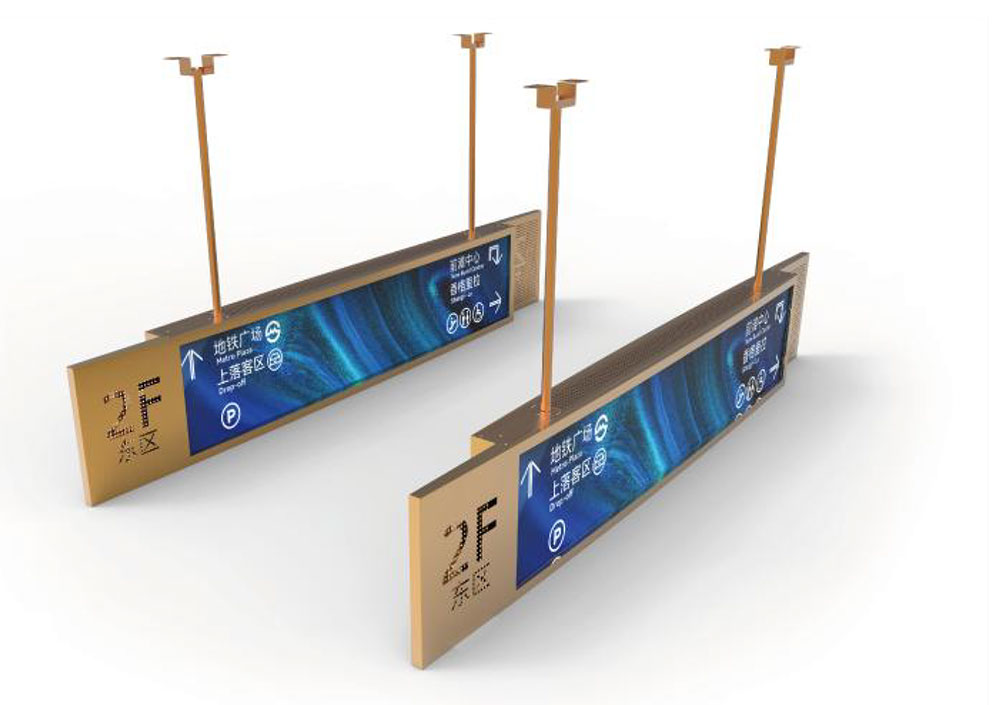
The enemy of electronics in cold climates is not only cold, it is moisture that condenses and then freezes when a warm interior meets cold air. Wide-temperature stretched displays intended for semi-outdoor or outdoor use should be specified with a sealed front surface, an appropriate ingress protection rating for the mounting location, and either a sealed dry cavity or managed airflow to control humidity. Where a stretched panel is set into a totem or a transit enclosure, the enclosure must be treated as part of the thermal system, with the heater, insulation, and venting designed around the panel rather than bolted on afterward.
Deployment Checklist for Cold Weather Projects
- Confirm both the operating range and the separate cold-start temperature against the site's record low.
- Match backlight brightness to the worst-case glare condition, not the average.
- Specify optical bonding for any site that sees freeze-thaw cycling or direct sun.
- Size heater power for the installed enclosure and orientation, and verify even heat along the long axis of the stretched panel.
- Define the ingress protection and condensation strategy for the exact mounting (indoor, semi-outdoor, fully outdoor).
- Plan for warm-up time in the user experience so content does not appear broken during the first minutes of a cold start.
Conclusion
A stretched LCD earns the "wide temperature" label through the combination of a cold-stable liquid crystal formulation, integrated heating with thermistor control, a backlight and driver rated across the full range, and optical bonding that defends against both frost and sunlight. Treated as one engineered system rather than a list of features, these displays deliver clear, responsive, bright images from a -30°C cold start to an +80°C solar load, making the stretched form factor dependable for transit, outdoor retail, cold-chain, and industrial applications where ordinary panels stall.
KEYWORDS: wide temperature stretched LCD, cold weather display, high brightness stretched bar display, low temperature LCD operation, optical bonding display