

Bus Passenger Information Stretched Bar Display Solution
A rugged, ultra-wide stretched bar display solution purpose-built for bus passenger information systems — engineered to fit narrow overhead mounting zones above windshields, aisles, and doorways, with automotive-grade power protection, vibration resistance, and high-brightness sunlight readability. Designed for seamless integration with onboard computers, GPS/AVL, and CAN bus systems, it offers transportation equipment manufacturers, PIS integrators, and digital signage manufacturers a reliable, OEM-ready platform for fleet-wide deployment.
Industry pain points and challenges
Understand the core issues in this application scenario and how we can provide solutions through advanced display technology
core pain point
Unstable Vehicle Electrical Systems and Power Surges
Pain Point: Stretched bar displays mounted above the windshield, over the aisle, or above doorways on transit buses draw power directly from the vehicle's 24V (or 12V/110V for some fleets) electrical bus, which is shared with the engine starter, air compressor, doors, and HVAC. Engine cranking, alternator load dumps, and door-actuator switching generate voltage spikes, drops, and transients that cause commercial-grade displays to reboot, flicker, or suffer permanent power-supply damage — resulting in blank screens exactly when route and stop information is needed most. Technical Requirement: Wide-range DC input (9–36V or 8–160V depending on platform), wide-range input, integrated over-voltage/under-voltage/reverse-polarity/load-dump protection, and compliance with ISO 16750 (Road vehicles — Environmental conditions and testing for electrical/electronic equipment) and ECE R118 (fire behavior of materials used in bus interiors).
Continuous Vibration and Mechanical Shock from Road Operation
Pain Point: Buses operate on uneven urban roads, speed bumps, and long-haul routes for 16–20 hours a day, subjecting overhead-mounted displays to sustained low-frequency vibration and sudden shock from potholes and hard braking. Consumer and even some industrial panels loosen internal connectors, suffer cracked solder joints, and experience premature backlight and panel failure — driving up warranty claims and roadside service calls for fleet operators and OEMs. Technical Requirement: Reinforced metal chassis, vibration-dampened internal mounting, fully bonded (not air-gapped) display stack-up, and validated shock/vibration performance to IEC 61373 (Category 1, Class B) or equivalent automotive random-vibration profiles.
Ultra-Wide, Low-Profile Mounting Above Windshields and Doorways
Pain Point: The only available mounting real estate on most buses — above the front windshield, along the ceiling rail above the aisle, or above the rear doors — is long, narrow, and shallow, with limited headroom and existing HVAC ducting or grab-rail structures nearby. Standard 16:9 monitors cannot fit these zones without obstructing driver sightlines or passenger headroom, forcing manufacturers into bulky housings or non-standard tiled builds that introduce seams and inconsistent brightness. Technical Requirement: Native ultra-wide aspect-ratio bar panels (from 8:1 up to 20:1), slim depth for ceiling and header-panel integration, and support for custom bracket geometry that matches existing bus interior trim and cable routing without structural modification.
Readability Under Direct Sunlight and Reflective Glass
Pain Point: Windshield-mounted and aisle-mounted displays face intense, constantly shifting sunlight through large glazed surfaces, combined with interior reflections off the windshield and side windows. Low-brightness commercial panels wash out completely at midday, leaving passengers unable to read next-stop, route number, or transfer information — a common source of missed stops and passenger complaints. Technical Requirement: High-brightness panel (typically 700–1500 nits), optical bonding to eliminate internal reflection, and anti-glare / anti-reflective coating validated for direct sunlight readability at any viewing angle inside the cabin.
Integration Across Multiple Onboard Systems and Bus OEM Platforms
Pain Point: A bus passenger information display rarely operates alone — it must synchronize with the onboard computer / mobile data terminal (MDT), GPS/GNSS positioning, 4G/5G or Wi-Fi communication modules, CAN-bus vehicle data (door status, next-stop triggers, odometer pulses), and the fleet's central AVL/PIS dispatch platform. System integrators and equipment manufacturers building for multiple bus OEMs and multiple transit authorities need displays that interface cleanly across varied hardware generations without custom engineering for every project. Technical Requirement: Support for standard video interfaces (HDMI, LVDS) and industrial communication protocols (CAN bus, RS232/RS485, Ethernet), open integration documentation, and configurable firmware/mounting options to standardize deployment across different bus models and fleet platforms.
Volume Consistency Across Fleet-Wide Rollouts and OEM Production Lines
Pain Point: Transportation equipment manufacturers and digital signage manufacturers building for bus OEMs or transit agencies must supply hundreds to thousands of consistent units across a production run, followed by years of after-sales spare-part support. Panel batch variation, brightness drift between production lots, or premature component discontinuation forces costly rework on the OEM assembly line and complicates long-term fleet maintenance contracts. Technical Requirement: Standardized, quality-controlled manufacturing processes with batch-to-batch consistency, scalable production capacity for OEM-volume orders, and committed long-term component availability with advance end-of-life notice for multi-year fleet contracts.
Our technological advantages
We provide industry-leading display technology and customized solutions to meet the special requirements of this application scenario
Automotive-Grade Wide-Range Power Protection
Highlight: Wide-range DC input with integrated surge, load-dump, reverse-polarity, and under/over-voltage protection circuitry, designed and tested against ISO 16750 electrical environmental standards for road vehicles.
Pain Point Solved: Eliminates reboot cycles, flicker, and power-supply failure caused by engine cranking, alternator transients, and door/HVAC switching loads on the vehicle electrical bus.
Reinforced Shock and Vibration-Resistant Structure
Highlight: Fully bonded display stack-up housed in a reinforced metal chassis with vibration-dampened mounting points, validated to IEC 61373 and automotive random-vibration test profiles.
Pain Point Solved: Prevents connector loosening, solder-joint fatigue, and premature backlight failure caused by continuous road vibration and shock over years of daily service.
Native Ultra-Wide Aspect Ratio Panels for Header and Ceiling Mounting
Highlight: Available in native aspect ratios from 8:1 to 20:1, in slim, low-depth housings engineered for windshield-header, ceiling-rail, and above-door installation, paired with custom mounting brackets to match existing bus interior architecture.
Pain Point Solved: Solves the fit problem in narrow, shallow mounting zones without obstructing driver sightlines or passenger headroom, and without the seams and brightness inconsistency of tiled panel assemblies.
High-Brightness, Anti-Glare Optical Bonding
Highlight: Optically bonded display stack with anti-glare/anti-reflective coating and brightness options up to 1500 nits, engineered for legibility against direct sunlight and reflective cabin glass.
Pain Point Solved: Keeps route, stop, and transfer information clearly readable at any time of day and any seat angle, reducing missed-stop incidents and passenger complaints.
Open Multi-Protocol Vehicle Integration
Highlight: Supports HDMI and LVDS video interfaces alongside CAN bus, RS232/RS485, and Ethernet communication, with open integration documentation for onboard computers, GPS/AVL, and central PIS dispatch platforms.
Pain Point Solved: Streamlines integration for system integrators and bus OEMs working across mixed onboard-hardware generations, reducing custom engineering and commissioning time per vehicle platform.
Wide Operating Temperature and Sealed Enclosure Options
Highlight: Operating temperature range configurable from -20°C to +70°C, with sealed or semi-sealed enclosure options and anti-condensation venting for buses operating across extreme climates and humidity conditions.
Pain Point Solved: Maintains reliable operation in unheated depots, hot climates, and high-humidity regions without condensation-related failure or thermal shutdown.
Fire Safety and Interior Materials Compliance
Highlight: Panel and enclosure materials selectable and configurable to meet ECE R118 fire behavior requirements for materials used in bus interiors.
Pain Point Solved: Supports vehicle homologation and safety certification requirements for bus OEMs and transit authorities, reducing compliance risk during vehicle type-approval.
OEM-Scale Manufacturing Consistency and Long-Term Supply
Highlight: Standardized production lines and quality-control processes ensure batch-to-batch consistency across OEM-volume orders, with scalable capacity to match production schedules and committed long-term availability of core components.
Pain Point Solved: Supports synchronized fleet-wide rollout and multi-year after-sales spare-part programs without batch mismatch or component discontinuation risk.
Customization and Engineering Support
Highlight: Configurable sizing, brightness, aspect ratio, connector layout, and mounting method, with structural drawings and installation engineering support tailored to specific bus models, plus OEM/ODM program support for equipment manufacturers and signage integrators.
Pain Point Solved: Enables transportation equipment manufacturers, PIS integrators, and digital signage manufacturers to adapt a standardized product line across different bus platforms and transit authority requirements, minimizing costly on-site or on-line modification.
Application scenario display
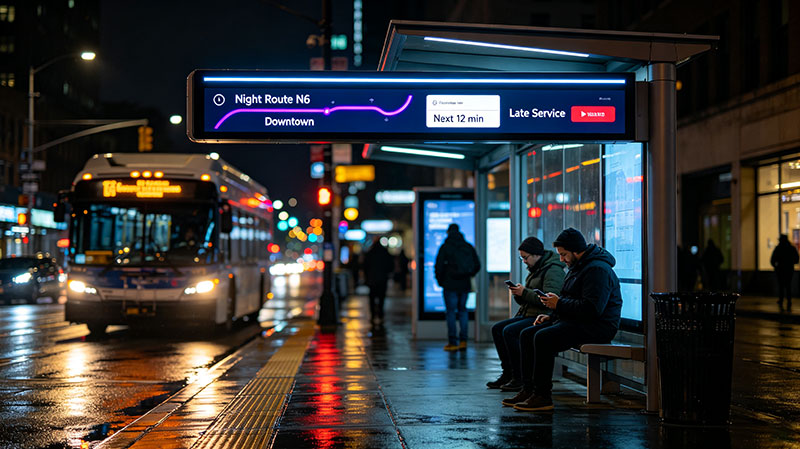
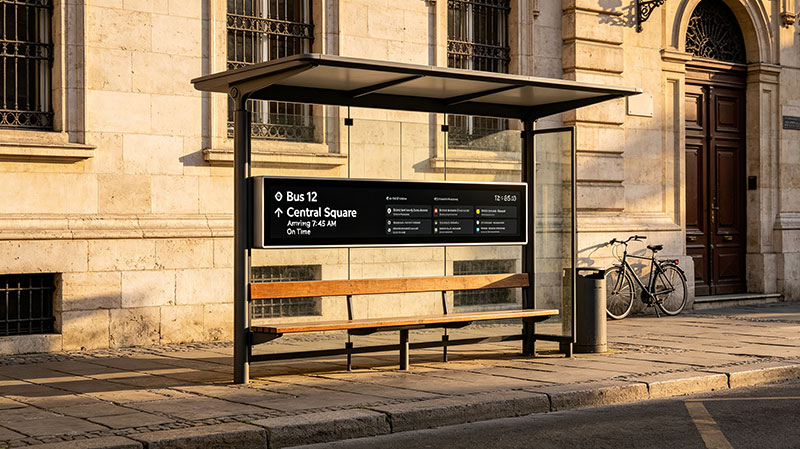
Recommended product model
Selected industrial grade display products for this application scenario have been validated in multiple practical projects
 ">
1000 Nits
">
1000 Nits
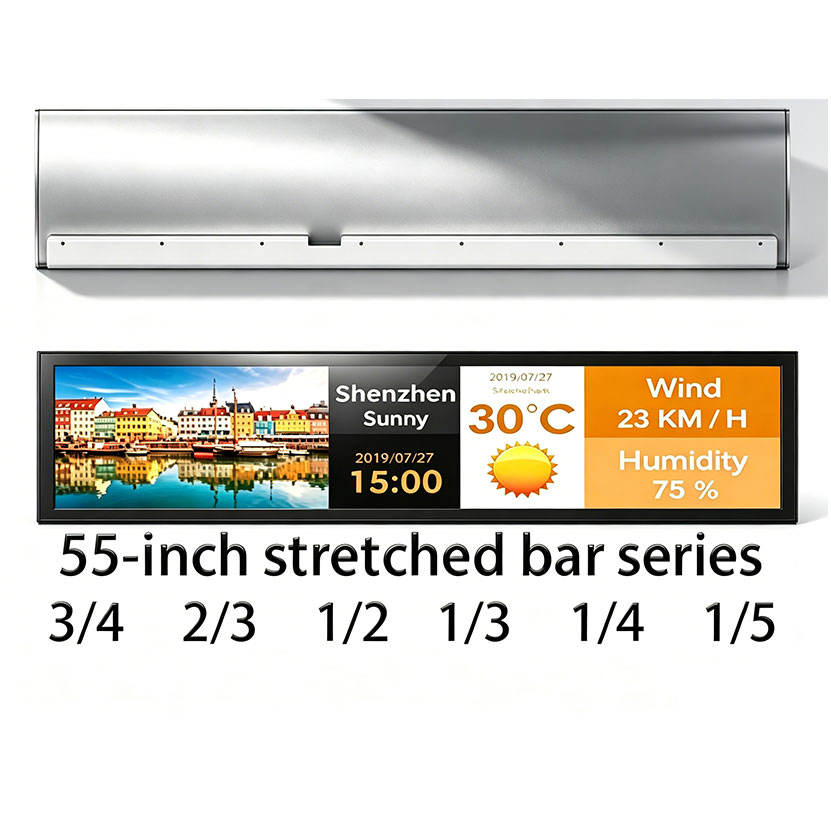
55 Inch 1000nits Stretched Bar LCD Display for OEM Integration
model: HT550HDL-1000
 ">
1000 Nits
">
1000 Nits
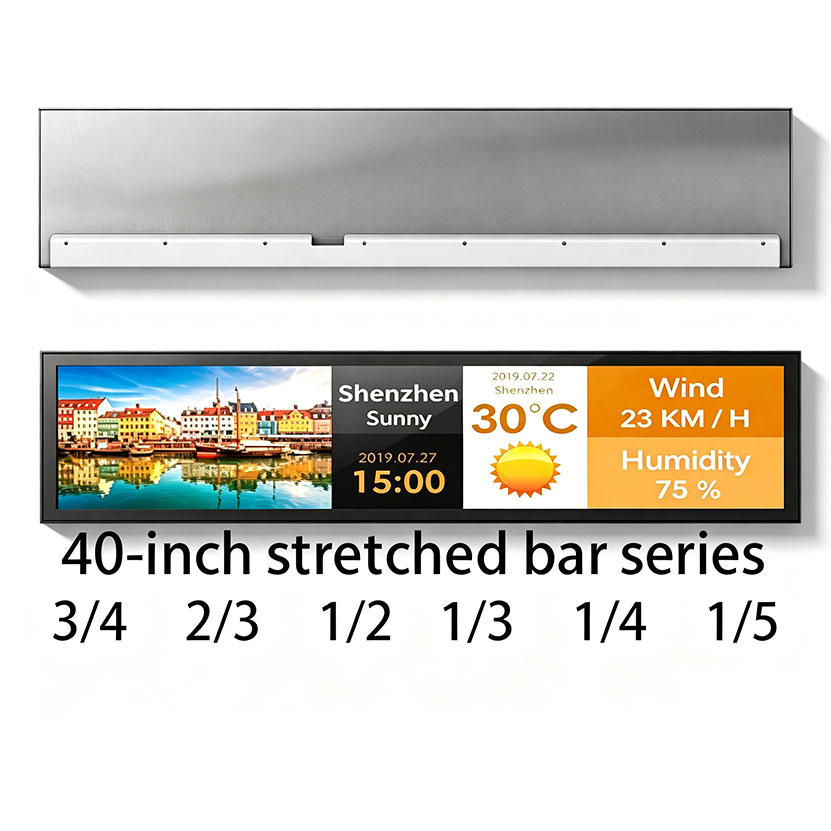
40 Inch Cuttable Stretched Bar LCD for Outdoor OEM | 500-1000nits
model: HT400HDL-1000
 ">
1000 Nits
">
1000 Nits
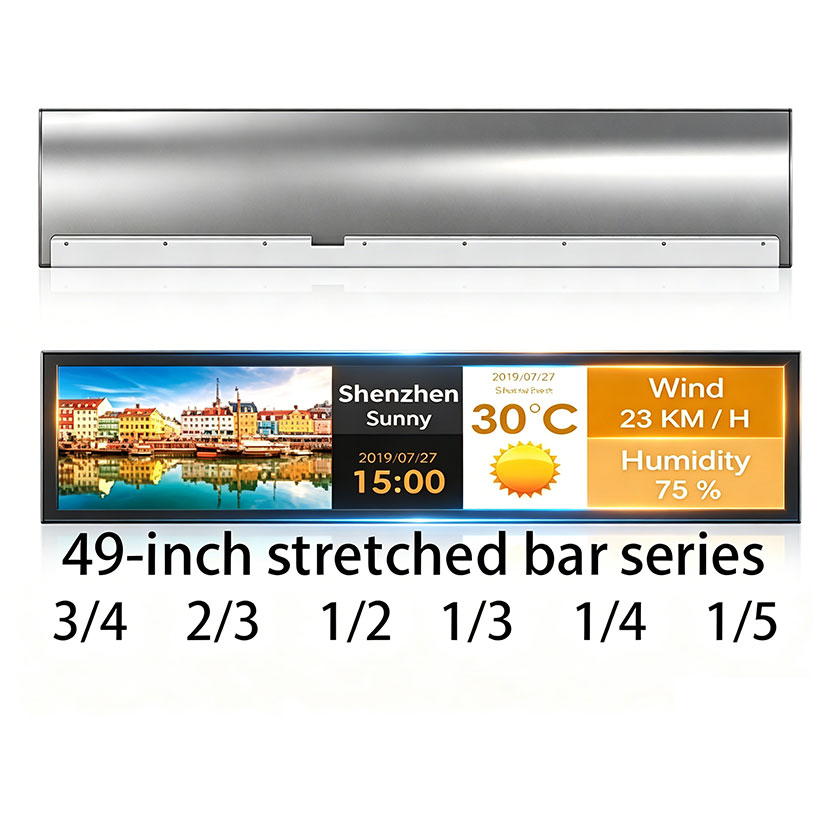
49 Inch 1000nits Stretched LCD Display for Retail | 500-1000nits
model: HT490HDL-1000
Technical document download
Obtain detailed CAD structural drawings and technical specifications
ARE YOU READY TO IMPLEMENT THIS SOLUTION?
Our engineering team is ready to provide you with professional consultation and customized solutions. Whether you are conducting an initial evaluation or preparing for procurement, we can provide comprehensive technical support and flexible business terms.
