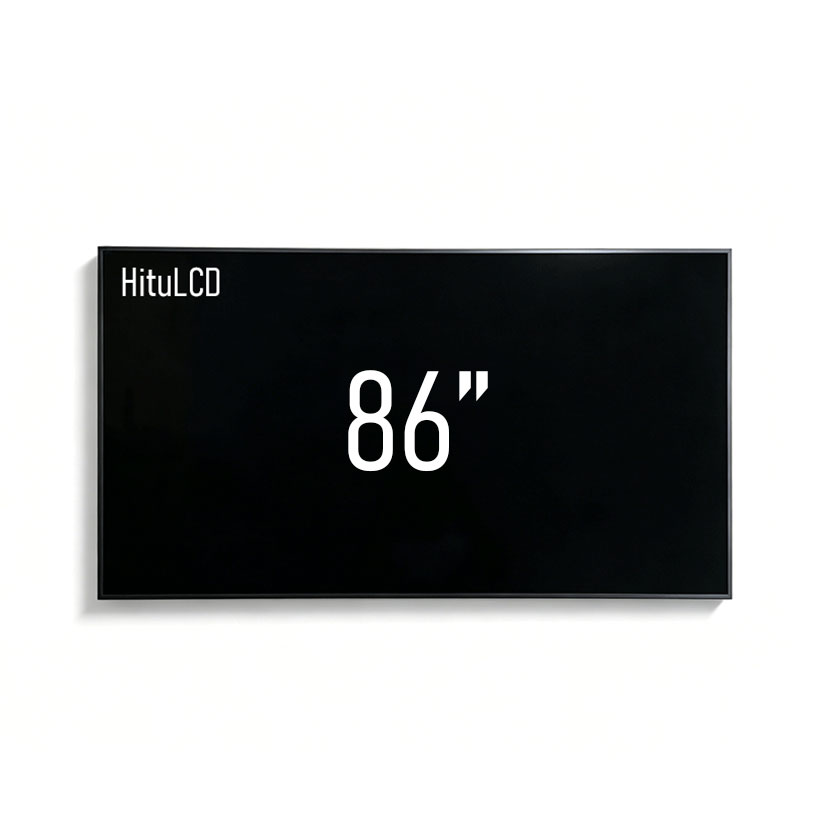
86 Inch 1500nits High Brightness LCD Screen for Outdoor Embedded
MODEL: HT860FHD-D1500
Need customized solution?
Our engineering team is always ready to provide you with professional technical support and flexible customized services.
Understand light customization servicesBuilt by us. Configured for you.
HITULCD supplies LCD modules and display solutions directly from our manufacturing operation, giving OEMs, integrators and distributors direct access to engineering, customization and production.
Supply
Supplier Qualification
VerificationTechnical Specifications
| LCD PANEL PARAMETERS | HDMI/CONTROL BOARD SPECIFICATIONS | ||
|---|---|---|---|
| ITEM | DETAILS | ITEM | DETAILS |
| Description | HANNTU 86" QLED QUANTUM DOT HIGH COLOR GAMUT 350CD | Input Interface | HDMI, VGA,DP |
| Size | 86' | Power Input | AC 100~240V |
| Display area (mm) | 1895.04×1065.96 mm (H×V) | OSD KEYS | 5 KEYS (POWER SWITCH, MENU, +, -, EXIT) |
| Resolution | 3840*2160 | OSD CONTROL | BRIGHTNESS, COLOR, CONTRAST, AUTO ROTATION, H/V POSITION, ETC. |
| Aspect ratio | 16:9 | ||
| Contrast ratio | 1200:1 | ||
| Pixel per inch (PPI) | 51 | ||
| Viewing angle | 178(H),178(V) | ||
| Display Colors | 16.7M, 72% NTSC | ||
| Response time(Typical) | 8ms | ||
| Signal Type | V-by-One 8 lane , 51 pins | ||
| Backlight | WLED, 30K hrs, With LED Driver | ||
| Power consumption | 700W | ||
| Dimensions (mm) | 1917.5x1088.2x20.5(H*V*Dmm) | ||
| Mounting | VESA800x600 | ||
| Bezel size (U/B/L/R) | 6.9/6.9/6.9/6.9 | ||
| Operating temperature | 0℃~+50℃ | ||
| Storage temperature | -20℃~+60℃ | ||
| Weight (Net) | 25KG | ||
OEM/ODM: Any Integration, Any Size — Built Around Your Application, Not Our Catalog
Most display suppliers sell you the closest standard size and ask you to redesign your enclosure around it. HITULCD works the other way: tell us the application — the cutout, the mounting, the environment — and our engineering and production lines are built to cut, bond, and assemble the panel to fit it, not the reverse.
One Application, One Panel — Not a Compromise
Every integration project is different. A fuel dispenser terminal, a transit information pole, a retail window display, and an industrial HMI panel all have completely different footprints, mounting constraints, and viewing conditions — yet they're often forced onto the same handful of standard panel sizes because that's what most factories can offer.
Because we own our cutting, bonding, and assembly lines in-house, HITULCD doesn't work from a fixed size list. We start from your drawing:
Custom outline — straight cuts, notches, corner radii, or irregular profiles cut from our 43–86" (and 32–98" across our full range) direct-lit and edge-lit panel base, engineered around your Gate/Source and array layout, not a generic template
Custom brightness — 350 to 3000 nits, with backlight drive frequency, dimming curve, and operating temperature range specified to match your ambient light and thermal conditions
Custom interface & mounting — touch overlay type, connector/interface selection (HDMI/DP/VGA and others), VESA or bespoke bracket points, and enclosure requirements defined around your existing housing, not the other way around
You're not choosing from what's in stock — you're specifying what the application actually needs, and we build to that spec.
Why We Can Say Yes to Non-Standard Requests
Flexibility on paper means nothing without the equipment and process control to back it up. This is what sits behind our OEM/ODM capability:
In-house laser and mechanical cutting lines for precision custom sizing, including near-array cuts that require tight tolerance and clean, chip-free edges
Automated COG/FOG bonding with micron-level alignment, so custom-cut or custom-interface panels don't lose signal stability or long-term reliability compared to standard product
Full-automatic laminating and gluing production lines for stable mass production once a custom spec is qualified — not a one-off prototype process that falls apart at volume
Industrial-grade qualification on every custom build — wide-temperature operation (−20°C to +70°C standard, wider on select builds), 24/7 duty-cycle rating, and the same environmental testing (high/low temp cycling, humidity soak, structural drop) we run on standard product
The result: a custom-sized, custom-spec panel that performs like a standard part, because it's built on the same qualified process — not bolted together as a special case.
What "Fitting Any Application" Looks Like in Practice
Outdoor & sunlight-readable deployments (kiosks, gas station terminals, digital signage): brightness and thermal design matched to real ambient conditions, not a generic "outdoor" spec
Transportation & embedded systems: panel size and mounting cut to fit an existing chassis or console, rather than requiring a chassis redesign
Retail & window displays: bezel, brightness, and viewing-angle spec tuned to the install environment and viewing distance
Industrial HMI & medical equipment: interface, touch response, and enclosure integration matched to control-panel or device housing constraints
Whatever the integration, the starting question is the same: what's the cutout, what's the environment, and what does the panel need to interface with — then our team works backward from there.
How an OEM/ODM Project Starts
Share your application — target outline (DXF/DWG if you have it), brightness/viewing environment, interface and mounting requirements
Feasibility review — our engineers check cut-line clearance against the array/circuit layout and confirm what's achievable as specified, adjusting only where physically necessary
Written quotation — NRE, sample lead time, expected yield, and MOQ confirmed in writing before any deposit
Sample → qualification → mass production, on the same lines, with certification (CE/FCC/RoHS standard; UL/CCC/EAC available on request)
No agent, no markup — you're working directly with the factory and the engineers who build your panel.
Custom Panel Cutting Service — Technical FAQ for Engineers & Procurement
Reference product: 86" 1500nits High Brightness LCD Screen (Model HT860FHD-D1500), Direct-Lit, 3840×2160, HANNTU QLED panel — see full spec on this page.
If you're evaluating a non-standard glass size for an embedded, kiosk, or signage project, you've probably run into the same wall most engineers do: standard panel sizes (43"/55"/65"/75"/86") rarely match a custom cutout. Below is a straight answer to the questions our engineering team gets asked most often before an RFQ is issued — organized the way a hardware engineer, procurement manager, or project lead actually needs it: technical feasibility, reliability, then cost and timeline.
1. Technical Process & Feasibility
Which cutting method do you recommend — mechanical wheel-cutting or ultrafast laser cutting?It depends on your target tolerance and where the cut line falls relative to the active area. Mechanical wheel-cutting (scribe-and-break) is the lower-cost, faster-turnaround option and is suitable for straight-edge cuts with tolerances in the ±0.3–0.5mm range, well outside the array. Ultrafast (picosecond/femtosecond) laser cutting produces a cleaner, chip-free edge with tighter tolerance (±0.1mm or better) and is required whenever the cut line runs close to the TFT array, involves a curved or notched profile, or the panel will see repeated mechanical stress (transit, vibration, drop). For most direct-lit large-format panels like the 86" HT860FHD-D1500, we default to laser cutting once the margin from the active area drops below ~5mm.
Will the cut interfere with the Gate/Source traces or the TFT array?This is the first thing our engineering team checks before quoting — cutting through, or too close to, the Gate/Source driving lines or the array itself will disable rows/columns or cause immediate failure, and it isn't something that can be corrected after the fact. Before we confirm feasibility we'll need:
The exact target outline (DXF/DWG preferred) with dimensions and datum references
The panel's original active area and pin-out/COF layout (we can supply this once model is confirmed)
Any mounting cutouts, corner radii, or through-holes in the same request, since these interact with the same margin budget
We'll overlay your target dimensions against the panel's Gate/Source/array map and tell you directly whether it's feasible as drawn, or whether the outline needs a small adjustment to clear the circuit — before any cutting starts.
What's the edge finish standard after cutting?Cut edges are ground and polished to remove chipping and micro-cracks, with edge flatness and chip-size limits controlled to industry-standard levels for cover glass (comparable to what you'd see on a CNC-finished cover lens). We inspect edges under magnification before a panel moves to sealing, and can share edge-inspection photos as part of the sample report.
2. Reliability & Edge Sealing
How do you seal the cut edge against moisture and liquid crystal leakage?After cutting, the exposed edge on the cell side is re-sealed with a secondary sealant — typically UV-cure edge sealant applied and cured along the full cut perimeter, sometimes combined with an epoxy reinforcement pass depending on the panel's original seal structure. The goal is to restore the same moisture/liquid-crystal barrier the original factory seal provided, not just glue the edge shut.
Can a cut panel still pass standard reliability testing?Yes — for panels destined for outdoor or embedded 24/7 use, we run them through the same class of environmental testing as our standard product line (industrial-grade, since that's the typical use case for cut panels): double 85 (85°C/85%RH) high-temperature high-humidity soak, high/low temperature cycling (thermal shock), and structural drop testing. We're happy to share test reports and pass/fail data from comparable past cutting projects once we know your target size and environment, so you can benchmark against your own qualification requirements before committing to a sample run.
Does the sealed edge cause light leakage or color shift (Mura) near the border?It can, if the backlight and diffuser layers aren't re-managed at the new edge — this is a common failure point in cheaper cutting shops. Our process re-trims and re-seats the backlight/diffuser stack at the cut edge to keep light leakage and Mura within the panel's normal border spec, and we check this optically under uniform gray/black screens before the panel ships. If your application has a visible bezel-less mounting, flag it early — it changes how tight this margin needs to be.
3. Cost, Yield & Lead Time
What's the NRE cost and sample lead time for a custom cutting project?NRE (engineering setup, tooling/fixture, and process qualification) is quoted per project once we've confirmed the target outline and panel model — it varies with cut complexity (straight edge vs. notched/curved), size, and whether laser or mechanical cutting is used. For a first-article sample run (commonly ~20pcs), typical lead time runs a few weeks from DXF confirmation to shipment; we'll give you a firm date in writing at the quotation stage, the same way we do for standard custom orders.
What yield can we expect at mass production, and what's the MOQ?Yield depends heavily on cut proximity to the array and edge complexity — simple straight cuts with generous margin run close to standard-panel yield; tight margins or complex profiles bring yield down and cost up accordingly. We'll give you a realistic yield estimate based on your specific outline, not a generic number, because a number that isn't tied to your actual drawing isn't useful for your cost model. MOQ for standard specifications starts at 1 unit; custom cutting, brightness, or bezel changes generally raise the MOQ, and the exact figure is confirmed at the quotation stage — before any deposit, not after.
To get an accurate answer on all of the above, send us:
Target outline (DXF/DWG) with tolerances
Base panel size/model of interest (e.g. 86" 1500nits HT860FHD-D1500, or another size in our 43–86" direct-lit range)
Application environment (indoor/outdoor, expected vibration/drop exposure, viewing distance)
Our engineers will review the array/circuit clearance directly and come back with a feasibility call, edge/reliability approach, and a written quotation covering NRE, sample lead time, expected yield, and MOQ — no agent, no markup.
Know The Terms Before You Inquire.
|
01 — Shipping Terms
Incoterms Available
EXW
Ex Works — pick up from our factory
FOB
Free On Board — most common for ocean freight
CIF
Cost, Insurance & Freight — to your port
|
02 — Order Minimum
MOQ: 1 Units
Applies to standard specs. Custom brightness, cutting or bezel may adjust MOQ, confirmed at quotation. Sample units available before bulk order
|
03 — Payment Protection
Multiple Secured Methods
|
A Real Factory. Publicly Verifiable.
|
Legal Company Name
Shenzhen Hantu Jiashi Technology Co., Ltd.
|
Unified Social Credit Code
91440300306068446B
|
|
Legal Representative
YUN CHEN
|
Registered Capital
RMB 2,000,000
|
|
Established
May 23, 2014 (11+ years operation)
|
Business Status
● Active / In Operation
|
|
Registered Factory Address
Building B, Gangshen Innovation Park, Huaning Road, Dalang Sub-district, Longhua District, Shenzhen, Guangdong, China
|
|
Contact HITULCD
We'll respond via email within 24 hours. If you'd like to discuss details over WhatsApp or a call, please leave a preferred time and contact method in your message — we will never call you unannounced.
Related solutions
This product is suitable for the following industry application scenarios
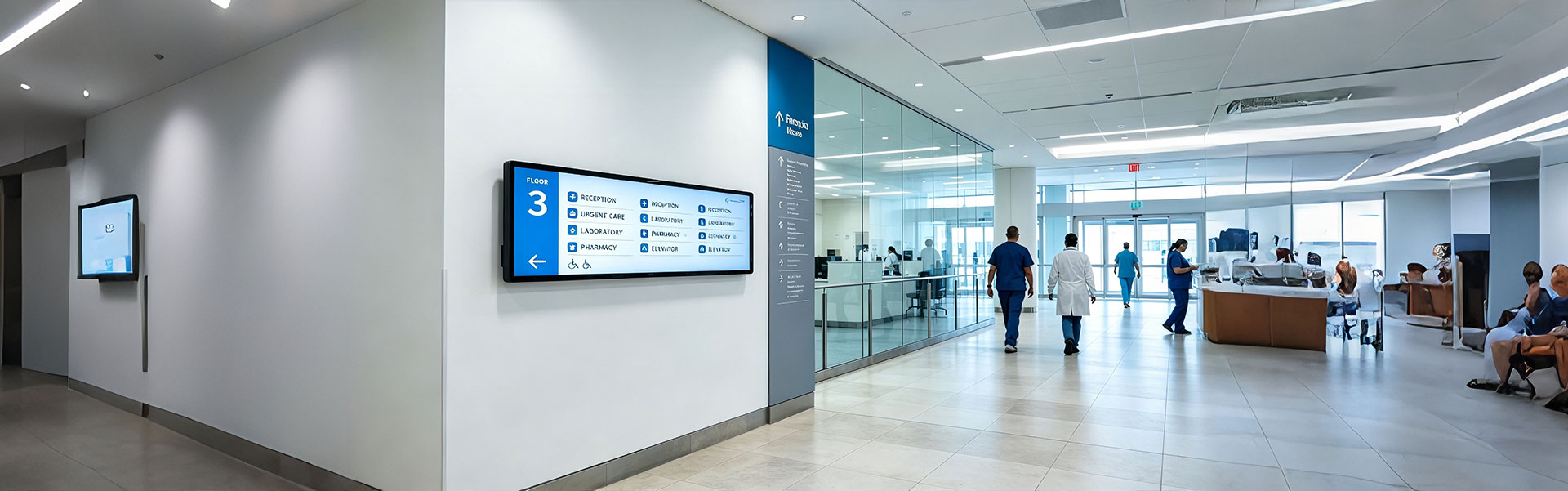
Floor Information Bar LCD Display Solution
Ultra-wide, high-brightness stretched bar LCD disp...
view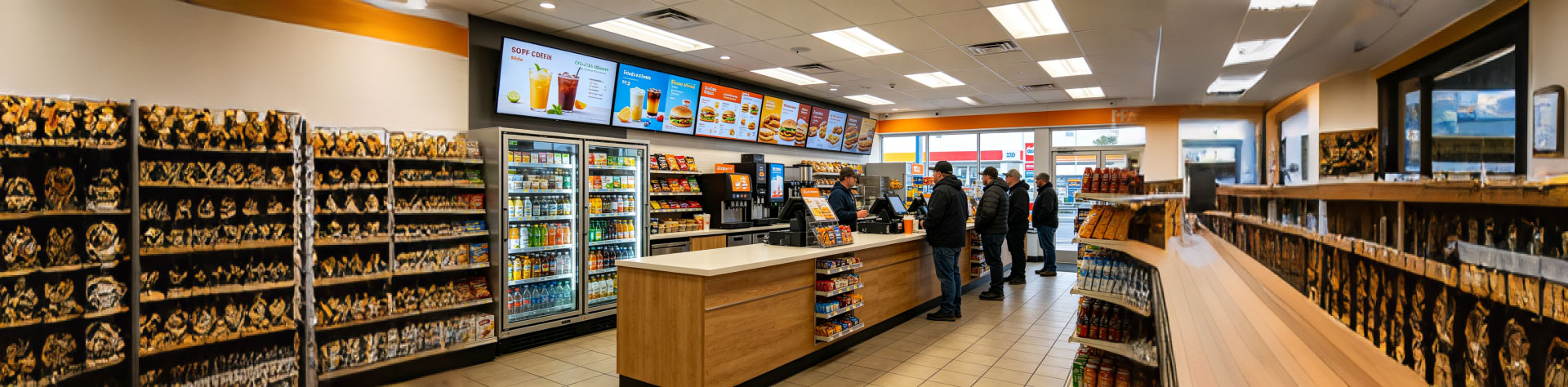
Convenience Store Bar LCD Display Solution
Ultra-slim, high-brightness stretched bar LCD disp...
view
Bus Passenger Information Stretched Bar Display Solution
A rugged, ultra-wide stretched bar display solutio...
viewRelated Products
You may also be interested in the following products
1500 Nits
86 Inch 1500nits High Brightness LCD Screen for Outdoor Embedded
 1500 Nits
75 Inch 1500nits Industrial High Brightness Lcd Panel
 1500 Nits
65 Inch 1500nits High Brightness Direct-Lit LCD Display for Outdoor Kiosks
