Why UK Industrial OEMs Are Rethinking the Display Layer
For original equipment manufacturers across the United Kingdom, the display module is no longer a passive readout. It is a functional interface that must survive harsh factory floors, remain legible under fluctuating light, and integrate cleanly with control electronics that may live in the field for a decade or more. Off-the-shelf panels rarely satisfy all three demands at once. That gap is why custom LCD display modules have become a strategic component decision rather than an afterthought for British industrial equipment builders.
At HITULCD we work with UK OEMs producing machinery for process automation, agricultural equipment, medical instrumentation, transportation systems, and energy infrastructure. The common thread is a need for displays that are engineered to the application, not adapted to it. This article sets out the technical considerations that determine whether a custom module will perform reliably for the full service life of the host equipment.
What "Custom" Actually Means at the Module Level
A custom LCD display module is more than a bespoke outline drawing. Customisation happens across several distinct engineering layers, and understanding them helps OEMs specify the right level of change for their budget and timeline.
- Optical stack customisation: Selecting the polariser type, backlight architecture, and enhancement films to hit a target luminance and contrast under the intended ambient conditions.
- Mechanical customisation: Adjusting the outline dimensions, mounting features, bezel design, and cover glass bonding to fit the equipment enclosure and ingress rating.
- Electrical and interface customisation: Choosing the driver IC, interface protocol (RGB, LVDS, MIPI DSI, SPI, or parallel), and connector type to match the host controller board.
- Firmware and integration customisation: Adding a timing controller, touch controller tuning, or an embedded board that presents a simplified interface to the OEM's system.
Most projects do not require change at every layer. A disciplined specification isolates the parameters that genuinely differentiate the product from those that can safely use standard components, which controls both cost and lead time.
High-Brightness Requirements in UK Operating Environments
Brightness is where many industrial display projects succeed or fail. Standard consumer panels deliver around 250 to 400 cd/m². That is adequate for an office, but insufficient for equipment operated near large windows, under bright factory lighting, or outdoors, conditions common across UK ports, construction sites, and agricultural settings.
High-brightness modules from 800 cd/m² up to 2500 cd/m² restore legibility in these environments. Reaching those figures reliably involves more than a brighter backlight. The design must manage the additional thermal load, protect the liquid crystal from clearing point degradation, and preserve backlight lifetime. At HITULCD we specify LED bins, current regulation, and heat-spreading construction together so that rated luminance is sustainable rather than a peak figure that degrades within months.
Sunlight readability also depends on suppressing reflection. Optical bonding, which fills the air gap between the cover glass and the LCD with an index-matched adhesive, cuts internal reflections and improves perceived contrast far more than raw brightness alone. For UK OEMs shipping equipment used both indoors and outside, optical bonding is frequently the single most cost-effective legibility improvement.
Environmental Durability and Compliance
UK industrial equipment must tolerate a demanding envelope of temperature, humidity, vibration, and dust. Custom modules address this through targeted engineering choices.
- Wide temperature range: Industrial-grade LCDs rated from -30°C to +80°C, with heaters added for cold-start applications and thermal management for high-brightness variants.
- Vibration and shock resistance: Reinforced mounting, bonded cover glass, and secured connectors that survive the mechanical stresses of mobile and heavy machinery.
- Ingress protection: Sealed front surfaces and gasket-ready bezels supporting IP65 and above at the equipment level.
- Optical stability: Anti-UV polarisers and wide-viewing-angle films that resist yellowing and washout over years of exposure.
Compliance matters as much as ruggedness. Modules destined for UK equipment typically require UKCA and CE conformity, RoHS and REACH compliance for materials, and EMC performance that will not compromise the host system's certification. Designing the display with these obligations in view avoids costly redesign late in the OEM's own approval process.
Interface and Integration Considerations
A display is only as good as its integration. UK OEMs increasingly work with a mix of embedded platforms, from established microcontrollers to Linux-based single-board computers. The interface choice should follow the host, not the other way around.
Smaller character and graphic displays commonly use SPI or parallel interfaces driven directly by an MCU. Mid-size TFT panels favour RGB or LVDS. Higher-resolution modules and those requiring long cable runs benefit from LVDS or MIPI DSI. Where the OEM prefers to minimise firmware effort, an integrated module with an onboard timing controller and a simple command interface reduces development time and shifts display complexity to the supplier.
Touch integration adds another decision. Projected capacitive touch offers the modern multi-touch experience but requires tuning to work reliably with gloved operators and through thick cover glass, both routine in industrial use. Resistive touch remains valid where operators wear heavy gloves or where cost dominates. A custom module lets the touch controller be tuned to the exact cover glass thickness and operating conditions of the application.
Managing Lifecycle and Supply Continuity
Industrial equipment is designed for long service, often ten to fifteen years. A display that goes end-of-life after two years forces a redesign the OEM did not budget for. Lifecycle management is therefore a core part of custom module supply.
This means selecting industrial-grade panels with committed long-term availability, controlling the bill of materials so critical components are not subject to sudden obsolescence, and providing advance notice with last-time-buy options when a change is unavoidable. For UK OEMs, having a supply partner that stocks strategically and communicates roadmap changes early is as valuable as the technical specification itself.
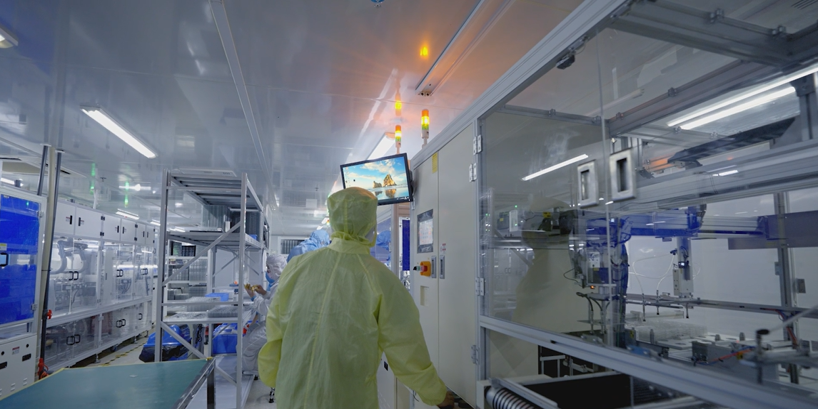
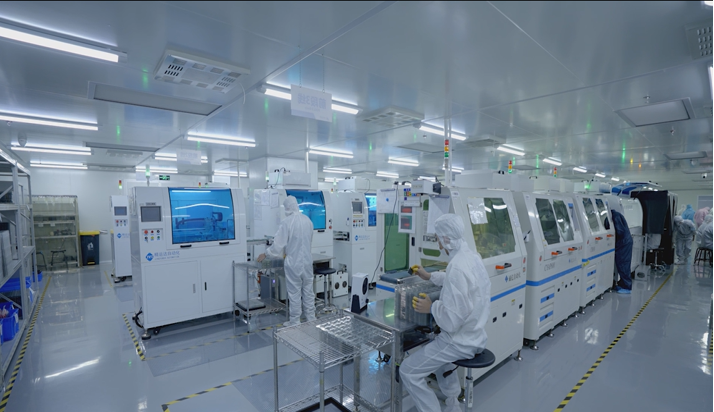
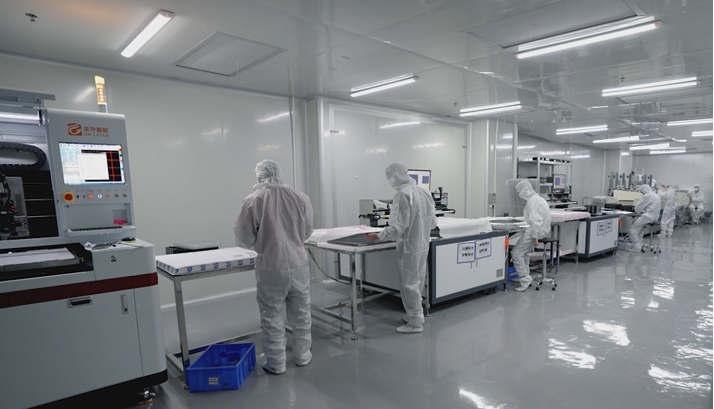
From Specification to Production: The HITULCD Process
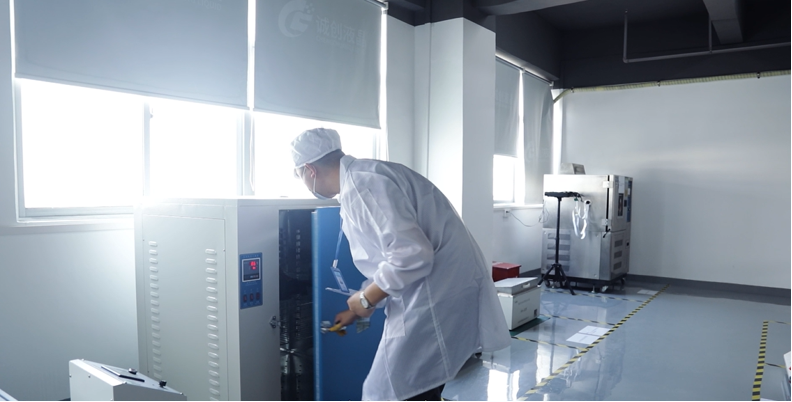
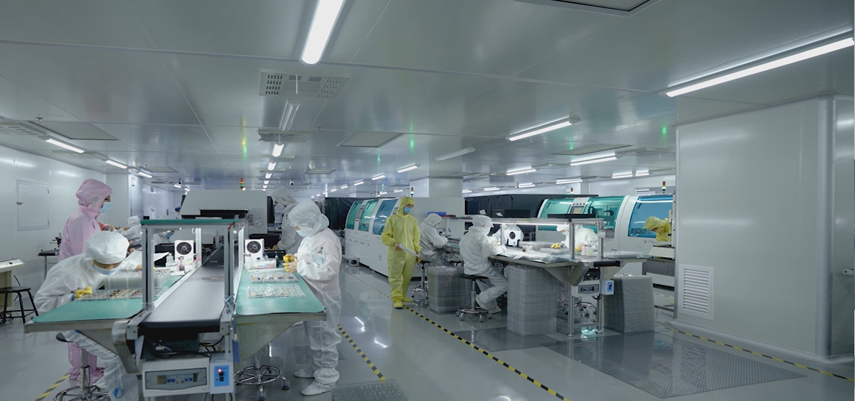
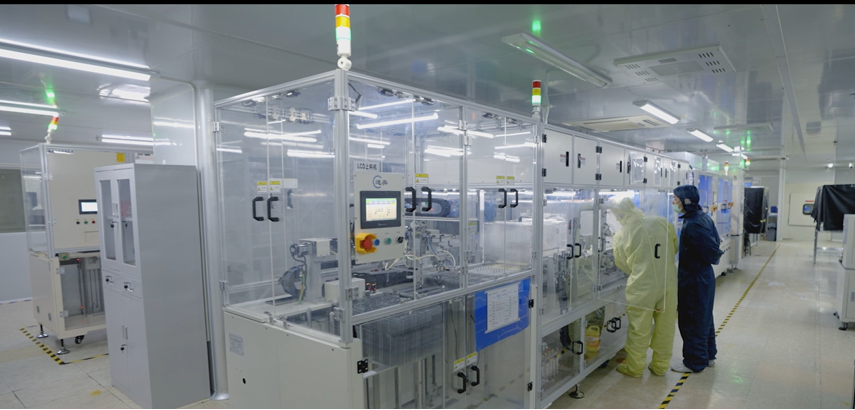
A well-run custom display programme moves through predictable stages. It begins with a requirements review that captures brightness targets, environmental limits, interface, mechanical envelope, and compliance obligations. Engineering samples follow, allowing the OEM to validate fit, legibility, and integration on real hardware. Design verification testing then confirms performance across temperature, vibration, and life-cycle stress before the design is frozen for production.
Throughout, close collaboration shortens the path. When the display engineer understands the host equipment and the OEM's engineer understands the display constraints, the specification converges quickly and avoids the expensive iteration that comes from treating the module as a black box.
Conclusion
For UK industrial equipment OEMs, the display is a durable, safety-relevant interface that must earn its place over the whole life of the product. Custom LCD display modules let manufacturers align brightness, ruggedness, interface, and lifecycle with the exact demands of their equipment rather than compromising around a standard part. With high-brightness optical engineering, environmental hardening, and long-term supply continuity, a well-specified custom module protects both the operator experience and the OEM's development investment. That combination is what turns a display from a bought-in component into a genuine competitive advantage.
KEYWORDS: custom LCD display modules, UK industrial OEM displays, high-brightness LCD, sunlight readable LCD, industrial TFT modules