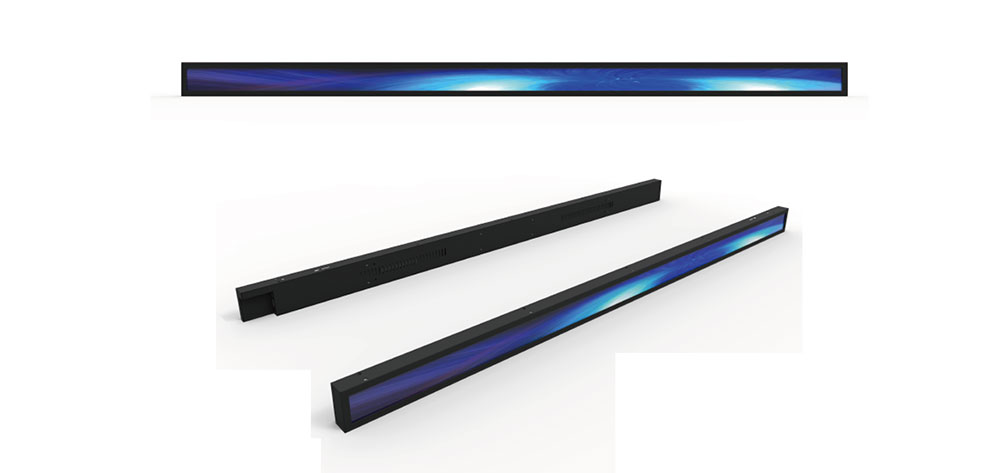
Australia's petroleum sector is one of the harshest environments for electronic displays. Fuel terminals in the Pilbara, LNG plants on the Queensland coast, offshore platforms in the North West Shelf and roadside service stations in the Northern Territory all expose screens to intense sunlight, extreme heat, abrasive dust, salt-laden air and, in many areas, explosive atmospheres. A standard commercial monitor fails quickly in these conditions. This article explains what an industrial display must deliver in Australian petroleum applications, how to specify it, and where the common mistakes occur.
Why Australian Petroleum Sites Are Different
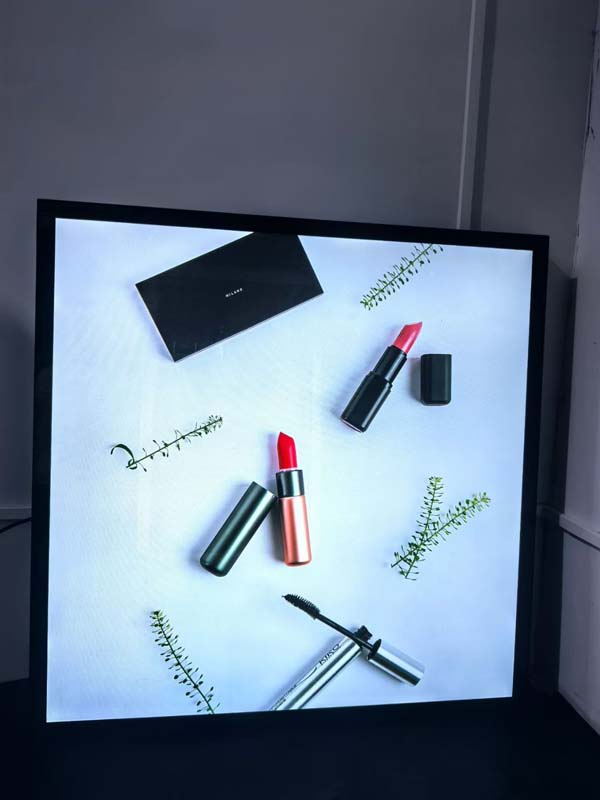
Several environmental factors combine in Australia in ways that are rarely seen elsewhere.
Solar load: UV levels in much of the country are among the highest in the world. A fuel dispenser or tank-farm terminal facing north can receive direct sun for most of the day. Ambient illuminance on a clear day can exceed 100,000 lux, so a 250 to 300 nit office panel becomes unreadable.
Heat: Summer air temperatures in inland Western Australia, South Australia and Queensland regularly exceed 45 °C. Inside a sealed, sun-exposed enclosure, internal temperatures can climb 20 °C or more above ambient. Ordinary LCD liquid crystal materials and polarizers degrade or blacken at these temperatures.
Dust and sand: Mining-adjacent and outback sites generate fine red dust that penetrates poorly sealed housings, clogs vents and scratches unprotected surfaces.
Salt and humidity: Coastal refineries, ports and offshore assets face salt fog, condensation and high humidity, particularly in tropical northern regions during the wet season. Corrosion of connectors, PCB traces and metal frames is a leading cause of field failure.
Cyclones and storms: Wind-driven rain and water ingress are real design considerations for northern installations.
Flammable atmospheres: Refineries, fuel storage, loading gantries and the forecourt zones around dispensers can contain flammable vapour, which brings hazardous-area rules into play.
Key Application Areas
Fuel dispensers and forecourt equipment: Outdoor payment terminals and dispenser displays need excellent sunlight readability, resistance to fuel and cleaning chemicals, and touch operation with gloves or wet fingers.
Tank farms and fuel terminals: Operator HMIs, truck-loading gantry displays and metering panels must withstand the weather and provide reliable readings for custody-transfer operations.
Refineries and gas processing: Field-mounted HMIs, control-room video walls and remote operator stations present process data. Field units often need to be installed inside certified enclosures.
Offshore platforms and FPSOs: Salt corrosion, vibration and limited maintenance access favour fully sealed, conformally coated, long-life displays.
Pipeline and remote pump stations: Solar-powered remote sites need low-power, high-brightness displays with a wide operating temperature range.
Mining and fuel logistics vehicles: Fuel tankers and refuelling vehicles need vibration-resistant displays readable at any angle in direct sunlight.
Core Technical Requirements
1. Brightness and contrast
For direct outdoor use in Australian sunlight, a practical target is 1,000 to 2,500 nits, depending on whether the screen is shaded. A display under a canopy at a service station may be adequate at 1,000 nits. A dispenser or gantry screen in full sun is better served by 1,500 nits or more. Brightness alone is not enough. Reflectance matters just as much, because a bright screen with a highly reflective surface still washes out. Look for:
- Optical bonding, which fills the air gap between the LCD and the cover glass and removes internal reflections.
- Anti-reflective (AR) and anti-glare (AG) coatings on the cover glass.
- Automatic backlight dimming with an ambient light sensor, to save power and extend LED life at night.
2. Sunlight-readable LCD technology
Transmissive TFT LCDs with high-efficiency LED backlights are the dominant solution. In-plane switching (IPS) or advanced wide-viewing-angle panels maintain colour and contrast from the side, which matters for operators who view screens from varying positions, such as truck drivers at a loading arm. Polarizer selection is critical: the display needs a high-temperature polarizer and often a circular polarizer arrangement to cut reflected glare.
3. Thermal design and wide temperature range
A high-brightness backlight produces substantial heat. Specify:
- Operating temperature ranges such as -30 °C to +80 °C for the panel, with storage ranges wider still.
- Liquid crystal formulations with a high clearing point, so the screen does not turn black in a hot enclosure.
- Thermal management: heat spreaders, heat pipes, or fans in the design, plus temperature-controlled backlight current that derates brightness before the panel overheats.
- Heaters for the occasional cold site, such as alpine or desert nights, where a sub-zero start-up can slow liquid crystal response.
Sunlight on a black panel surface produces significant heating, so mechanical and thermal simulations of the finished enclosure in worst-case Australian summer conditions are strongly recommended rather than relying on datasheet figures alone.
4. Ingress protection and mechanical durability
Look for front-panel sealing to IP65 or higher, with IP66 or IP67 for exposed gantries and offshore use. Use chemically strengthened glass or thick tempered cover glass with an impact resistance rating (IK rating) suited to vandalism-prone roadside sites. Marine and coastal sites should use conformally coated PCBs, stainless steel or marine-grade aluminium frames, and corrosion-resistant connectors.
5. Touch technology
Projected capacitive (PCAP) touch is the common choice for modern interfaces, but it must be tuned to work with gloves, rain and moisture. Industrial PCAP controllers with water rejection and glove modes are essential. For harsher or legacy applications, resistive or infrared touch may still be appropriate. Bonded touch stacks also need to retain high light transmission, so choose low-reflectance sensor materials.
6. Power, interfaces and longevity
Petroleum assets have operating lives of 15 to 30 years, but LCD components do not. Choose displays with:
- Wide-input DC power (such as 9 to 36 V) suited to vehicle and solar-battery systems.
- Industrial interfaces: LVDS, eDP, HDMI, DisplayPort and, where needed, VGA for legacy control equipment.
- Long-term supply commitments and clear revision control, to avoid unplanned redesigns.
- LED backlight lifetimes of 50,000 hours or more at rated brightness.
Hazardous Areas and Compliance
Flammable atmospheres in Australia are governed by the AS/NZS 60079 series, which is aligned with the international IEC 60079 standards, and many operators also require IECEx-based certification. Area classification (Zone 0, 1 or 2 for gas and vapour) determines which equipment protection method is acceptable.
An important point is that a bare LCD module is not itself a certified hazardous-area product. Certification applies to the complete assembly, such as an explosion-proof (Ex d) enclosure with a certified viewing window, a pressurised or purged cabinet (Ex p), or an intrinsically safe (Ex i) design. A high-brightness LCD supplied by a display manufacturer is typically a component integrated into such an enclosure. When specifying, the integrator should:
- Confirm the heat output and surface temperature of the display and backlight against the required temperature class.
- Ensure the display, cabling and enclosure together are covered by valid certification documentation for the zone and gas group in question.
- Obtain the actual certificate and its scope of use, rather than relying on marketing claims or assumed compliance.
Electrical equipment supplied into Australia must also meet general electrical safety and EMC requirements, such as the Regulatory Compliance Mark (RCM) framework and applicable AS/NZS electrical and electromagnetic compatibility standards. Specific certification coverage should always be confirmed project by project, with documentation reviewed by the responsible engineer and the site's competent person.
How HITULCD Approaches These Applications
HITULCD focuses on high-brightness LCD modules and integrated displays designed for sunlight-readable operation, with options for optical bonding, AR treatment, wide operating temperature panels and custom thermal design. For petroleum projects, we work with system integrators and enclosure builders so the display's brightness, power draw, heat output and mechanical dimensions can be matched to the final certified enclosure. We do not suggest a display module alone satisfies hazardous-area requirements; our role is to supply a display that performs reliably within a compliant system.
Practical Specification Checklist
- Define the viewing environment: full sun, shade or indoor control room, and measure the real ambient light.
- Select brightness with margin: choose a panel that remains readable after years of backlight aging.
- Use optical bonding and AR coating to maintain contrast.
- Validate thermal performance at 50 °C ambient with solar load.
- Specify ingress and impact ratings appropriate to the site, and add conformal coating for coastal and offshore use.
- Check touch performance with gloves, rain, and cleaning agents.
- Confirm the hazardous-area classification and have the complete assembly certified accordingly.
- Plan for lifecycle: spare units, supply continuity and serviceability in remote locations.
Common Mistakes to Avoid
Choosing brightness from a datasheet without testing in real sunlight; ignoring enclosure heat build-up; using a consumer-grade touchscreen that fails in rain; assuming a display is "explosion-proof" because it has a rugged housing; and overlooking dust and salt ingress through cable glands and vents.
Conclusion
Displays for Australian petroleum applications must withstand a combination of intense sun, heat, dust, salt and potentially explosive atmospheres, all while remaining clear and easy to operate. The best results come from a systems approach: a high-brightness, optically bonded LCD with strong thermal management, a properly sealed and certified enclosure, and a touch interface tuned for real working conditions. By defining the environment early, validating performance under real conditions, and verifying compliance documentation, operators and integrators can deploy industrial displays that remain reliable for years across Australia's most demanding oil and gas sites.
KEYWORDS: Australian petroleum displays, high-brightness LCD, sunlight readable display, industrial display, hazardous area HMI