Why Transit Is a Hostile Optical and Thermal Environment
A display mounted on a station platform, a ticket vending machine, a bus destination sign, or a driver's console is not a consumer product living at room temperature. It is a sealed optical assembly that must remain legible through a January pre-dawn startup at −25 °C, a July afternoon when the front glass reaches 70 °C in direct sun, and a decade of vibration from a rail vehicle's bogie. The specification sheet that decides whether the project succeeds or fails is rarely the resolution or the interface — it is the temperature window, and everything the panel must do to survive at its edges.
Liquid crystal displays are temperature-dependent devices at the physical level. The liquid crystal mixture's viscosity rises sharply as it cools, which slows the rotation of the molecules under the applied field and stretches response time from tens of milliseconds at 25 °C to several hundred milliseconds at −30 °C. The birefringence of the mixture also shifts with temperature, so contrast ratio and the optimum driving voltage move with it. At the hot end, the LC clears toward its isotropic transition and contrast collapses, while the backlight LEDs, driver ICs, and polarizers all age faster. A "wide temperature" panel is therefore not a marketing adjective — it is a specific combination of LC chemistry, heater hardware, compensation circuitry, and mechanical design that must be verified as a system.
Start With the Real Thermal Envelope, Not the Datasheet Range
Two numbers get confused constantly: the panel's operating range and the enclosure's internal air temperature. A display rated −30 °C to +80 °C operating is rated at the surface of the glass, not the ambient air five centimetres behind it in a sealed kiosk. Transit cabinets routinely run 10–15 °C above ambient in summer because the backlight itself is a heat source, and they can drop below ambient in winter because the metal enclosure acts as a radiator.
- Map the worst case per installation. A sheltered tunnel platform, a coastal bus shelter with salt fog, and an in-vehicle ceiling display share no common thermal profile. Solar gain through a south-facing window can add 20 °C or more to a front surface.
- Separate operating from storage. Storage ranges are typically 10–20 °C wider (for example −40 °C to +85 °C). A unit that is powered down overnight in an unheated shelter spends most of its life in storage conditions, and cold-start behaviour is what the public actually experiences.
- Ask for the derating curves. A reputable supplier will provide brightness, contrast, and response-time curves plotted against temperature, not just a single range. A panel that is "rated" to +80 °C but loses 60 % of its contrast at +70 °C is a specification trap.
- Check driver IC and backlight limits separately. The LCD glass may tolerate +80 °C while the LED driver or the timing controller is limited to +70 °C. The lowest-rated component in the chain governs the assembly.
Heaters, Preheating, and Cold-Start Behaviour
Below roughly −20 °C, few LC mixtures produce an acceptable image without help. The standard solutions are an indium tin oxide (ITO) transparent heater deposited on the rear glass, a heater film laminated behind the panel, or a heated front glass for outdoor units that must also shed snow and ice. Selection questions that matter:
- Heater power density and warm-up time. Ask for the time required to reach a usable contrast at −30 °C from cold soak, not the steady-state heater wattage. Three to five minutes is common; platforms and vehicle cabs may demand faster.
- Closed-loop control. A panel with an integrated NTC thermistor and a documented control curve lets your thermal design switch the heater at the right setpoint instead of guessing. Open-loop heaters that stay on too long waste power and cook the polarizer.
- Inrush current. Cold heater elements draw high current at switch-on. Verify this against the vehicle's 24 V DC supply and any load-dump or brownout behaviour on the bus.
- Uniformity. A heater that warms the centre faster than the corners produces a visible gradient in contrast during warm-up. For passenger information this is cosmetic; for a driver display showing a safety-critical glyph it is not.
Sunlight Readability Is a System Property
Brightness in nits is the first number everyone quotes, but legibility in a sunlit station is the product of luminance, reflection control, and polarizer choice. Direct sunlight falling on an untreated front surface produces a reflection far brighter than any practical backlight, so the contrast ratio at the eye collapses regardless of how many nits the panel emits.
- Optical bonding. Laminating the cover glass to the panel with an index-matched adhesive removes the internal air gap and its two reflective interfaces. The gain in perceived contrast under glare is larger than a doubling of backlight brightness, and bonding also improves impact resistance and eliminates condensation fogging between layers.
- Anti-reflective and anti-glare treatments. AR coatings suppress specular reflections for a crisp image; AG etching scatters reflections into a softer haze and hides fingerprints. Transit touchscreens usually want a hybrid.
- Circular polarizer. Many vehicle operators, and a large share of the public, wear polarized sunglasses. A linearly polarized panel can vanish entirely depending on head tilt. Specify a circular polarizer for driver-facing and outdoor-facing displays.
- Thermal cost of brightness. A 2,500-nit backlight in a 12-inch class panel dissipates tens of watts inside a sealed enclosure. High brightness and wide temperature requirements pull against each other; the thermal design must remove that heat without pulling dust and moisture into the optics.
Mechanical and Environmental Qualification
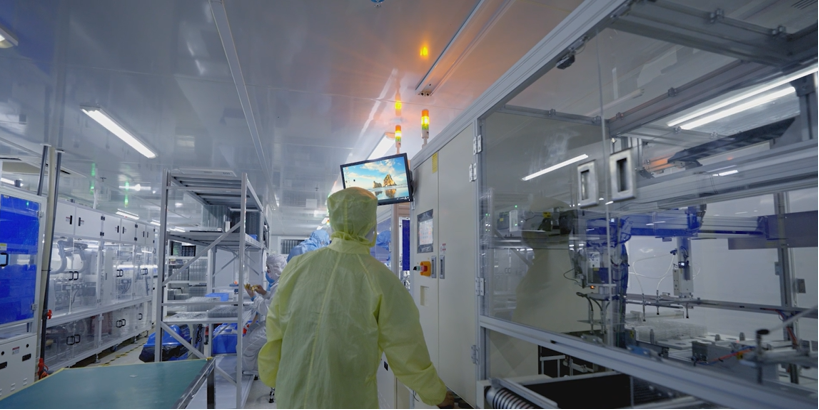
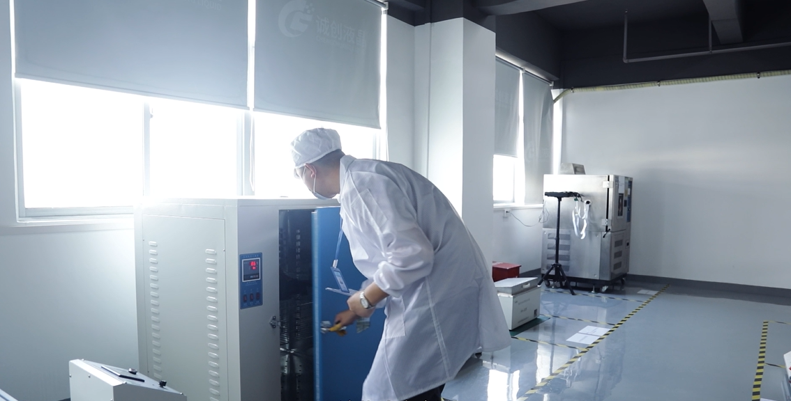
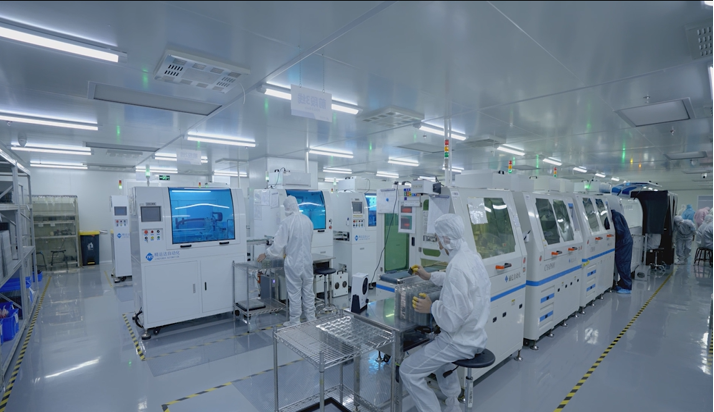
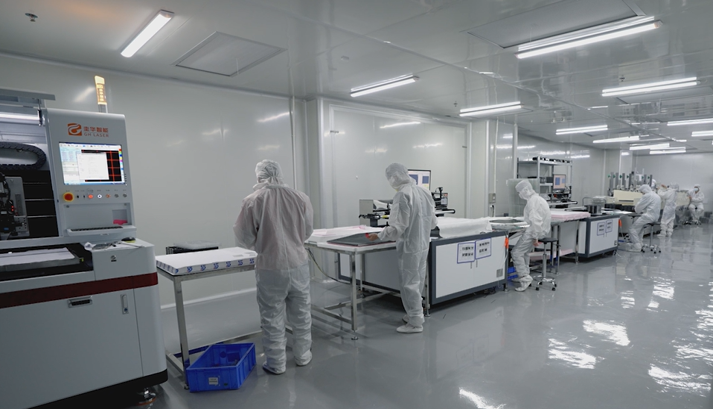
Transit procurement normally demands evidence, not claims. The qualification matrix should be agreed before the supplier is chosen, and the panel should be tested as an assembly — bonded stack, heater, backlight, and housing — because interfaces fail before components do.
- Thermal cycling and shock: IEC 60068-2-14 and 60068-2-30 style damp-heat cyclic testing expose delamination and heater fatigue. A hundred cycles between the rated extremes is a reasonable entry point for rail.
- Vibration and shock: EN 61373 is the reference for railway rolling stock equipment; road vehicles follow ISO 16750-style profiles. Vibration is what kills backlight connectors, not the LCD itself.
- Ingress protection: IP65 at the front face is typical for outdoor public interfaces; washdown and hose-directed cleaning in depots may require more, and the rear of the assembly needs protection too.
- Salt fog and UV: Coastal installations and sun-exposed housings age gaskets, coatings, and plastics far faster than lab conditions suggest.
EMC, Fire Safety, and Regulatory Evidence
An LCD module is an electronic assembly with switching backlight drivers, a heater, and high-speed LVDS or eDP links, so it emits and is susceptible. For rail projects, EN 50121 series requirements apply to the vehicle and trackside equipment; for road and general transit infrastructure, EN 55032 / EN 55035 emissions and immunity plus FCC Part 15 are the usual baseline. Rather than accepting a verbal assurance, request the actual test reports and certificates — a supplier that publishes its EMC documentation openly, for example through a certificates page such as /certificates/emc.html, is telling you something about how it handles the rest of its quality system. Confirm that the certificate names the exact model family you are buying, and that the test configuration matches your interface and cable length.
For rolling stock, EN 45545-2 fire performance (hazard level matched to the vehicle category) frequently governs the choice of adhesives, diffusers, and plastics. A panel that passes every thermal test but has no HL-rated material declaration cannot be fitted to a train.
Interface, Lifetime, and Long-Term Supply
Transit assets stay in service for 15–25 years, which is far longer than a display product's commercial life. Select accordingly:
- Interface: dual-channel LVDS remains the most widely supported and most easily replaced; eDP and V-by-One offer bandwidth for higher resolutions but narrow your second-source options. Avoid proprietary links unless the supplier commits to a form-fit-function replacement path.
- Long-term availability: ask for a written lifecycle statement with a minimum five-year manufacturing commitment and a last-time-buy notification period.
- Backlight and capacitor life: LED L70 figures quoted at 25 °C are meaningless at 70 °C ambient. Demand the derated lifetime at your actual operating temperature, and remember that electrolytic capacitor life halves for every 10 °C rise.
- Field replaceability: a bonded, potted, sealed module that must be shipped back to the factory is a different total cost of ownership than a field-swappable unit.
A Practical Selection Checklist
| Criterion | What to demand |
|---|---|
| Operating range | Glass-surface rating plus derating curves for brightness, contrast, and response time |
| Cold start | Time from −30 °C cold soak to usable image, with heater control method |
| Optics | Optical bonding, AR/AG treatment, circular polarizer, measured contrast under glare |
| Brightness | Nits at end of life (not initial), plus thermal budget for the backlight |
| Mechanical | EN 61373 or ISO 16750 evidence, IP rating, salt fog and UV exposure results |
| Regulatory | Current EMC certificates naming the model, EN 45545-2 material declaration for rail |
| Supply | Written five-year commitment, last-time-buy notice, second-source interface |
Qualify the Supplier, Not Just the Datasheet
The final filter is the engineering relationship. A supplier who can explain why a particular LC mixture was chosen for −30 °C, who provides the heater control curve rather than a wattage figure, who hands over EMC reports naming your exact model, and who will run a thermal cycling programme on a bonded sample before you commit to volume is a supplier who has built these products before. Request two units for your own environmental chamber and your own sunlight simulation; a display that looks perfect on a datasheet is still an unproven display until it has been cold-soaked, cooked, shaken, and read through a pair of polarized sunglasses.
KEYWORDS: wide temperature LCD display, transit LCD display, sunlight readable display, high brightness LCD, rail EMC compliance