Understanding Stretched LCD Displays
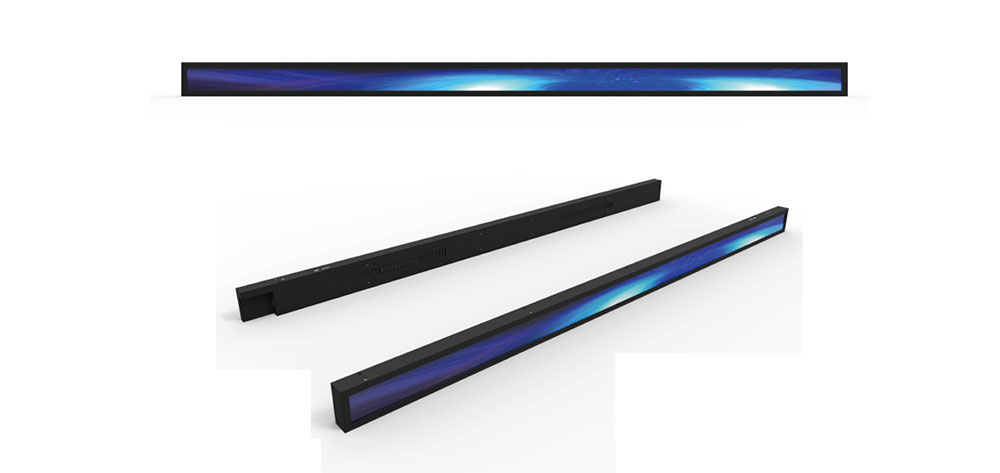
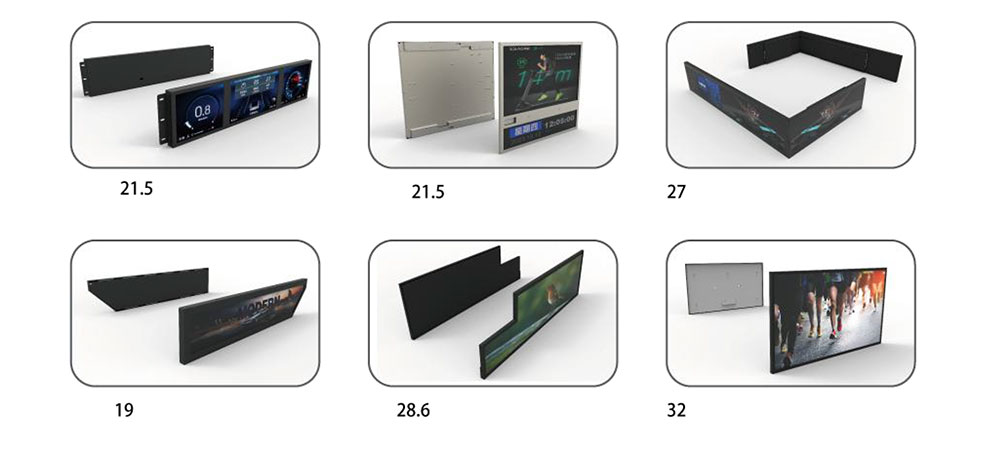
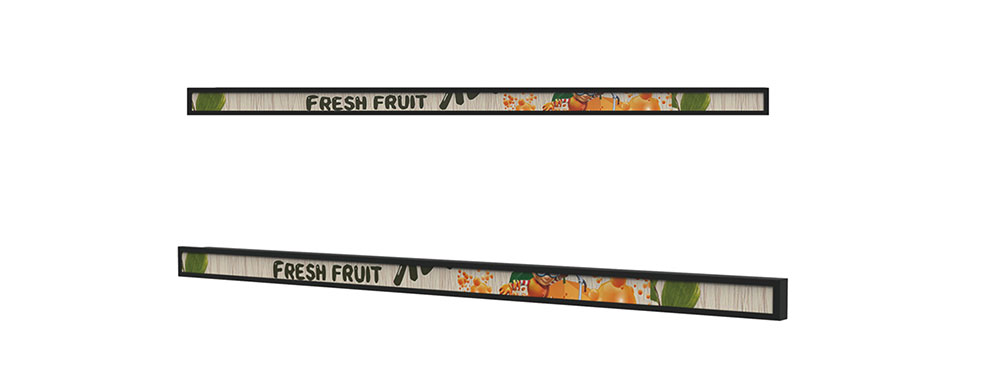
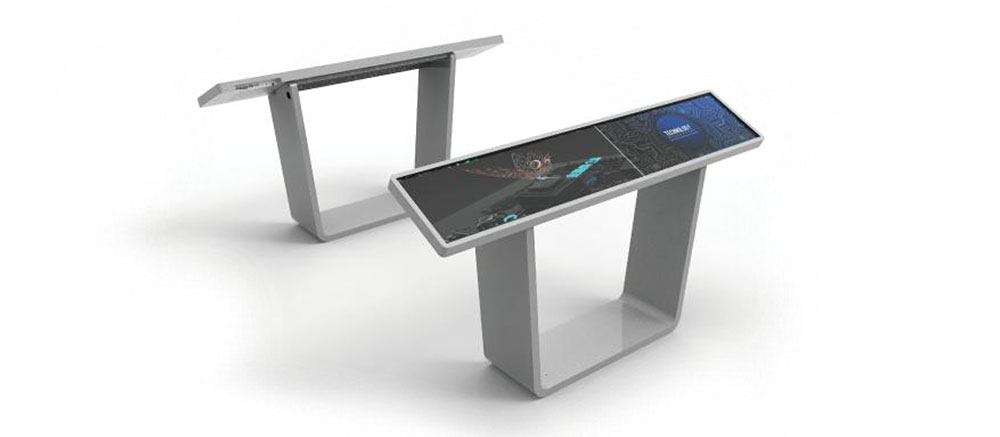
Stretched LCD displays, sometimes called bar-type or ultra-wide displays, are panels with an aspect ratio that departs significantly from the conventional 16:9 format. Common variants include 16:3, 16:4.5, 24:9, and 32:9 configurations, delivering elongated viewing surfaces suited to shelf edges, transit corridors, elevator interiors, and other spatially constrained environments. The panels are produced by cutting a standard mother glass into a narrow, wide segment, then integrating the driver electronics, backlight, and interface board to match the reshaped active area.
Because stretched panels serve applications where ambient light varies widely, many are specified as high-brightness units. At HITULCD, stretched panels are commonly built in the 700 to 2500 cd/m² range, with optical bonding and thermal management selected according to the target environment. The manufacturing challenge lies not only in the panel cut but in coordinating the timing controller, backlight uniformity, and mechanical housing so the finished module performs reliably across its full lifespan.
OEM and ODM: What the Terms Mean in Practice
The terms OEM and ODM describe two distinct engagement models, and clarifying them early helps buyers scope a project correctly.
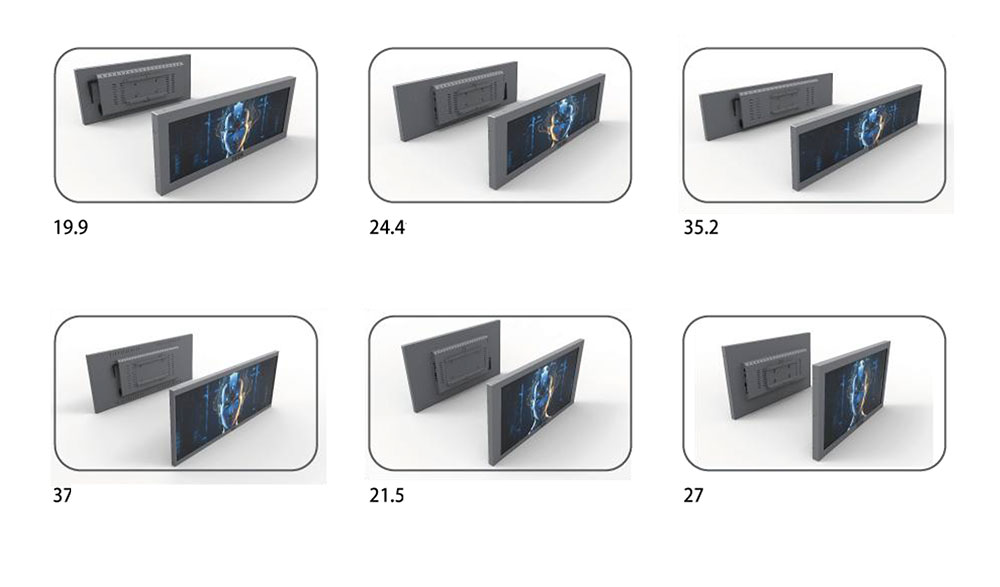
OEM (Original Equipment Manufacturer) generally applies when the customer arrives with a defined design, specification, or existing product and wants a manufacturer to build it to that specification. The customer owns the design intent; the manufacturer contributes production capacity, component sourcing, and quality control. Branding, firmware behavior, and mechanical form are largely dictated by the customer.
ODM (Original Design Manufacturer) applies when the customer defines requirements and outcomes but relies on the manufacturer to design the solution. The manufacturer contributes engineering: selecting the panel cut, designing the driver board, defining the enclosure, and validating the assembly. The customer then rebrands and distributes the finished product.
In real projects the boundary is often blurred. A customer may supply a housing design (OEM-style) while asking the manufacturer to engineer the display module and interface board (ODM-style). Treating these models as a spectrum rather than a binary choice tends to produce clearer contracts and fewer scope disputes.
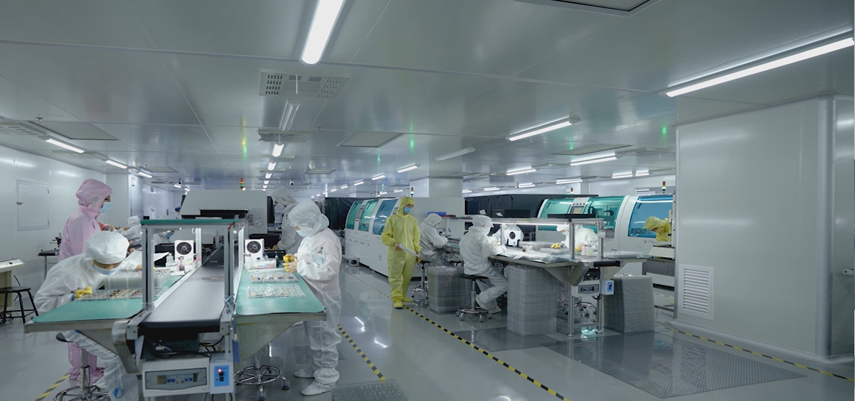
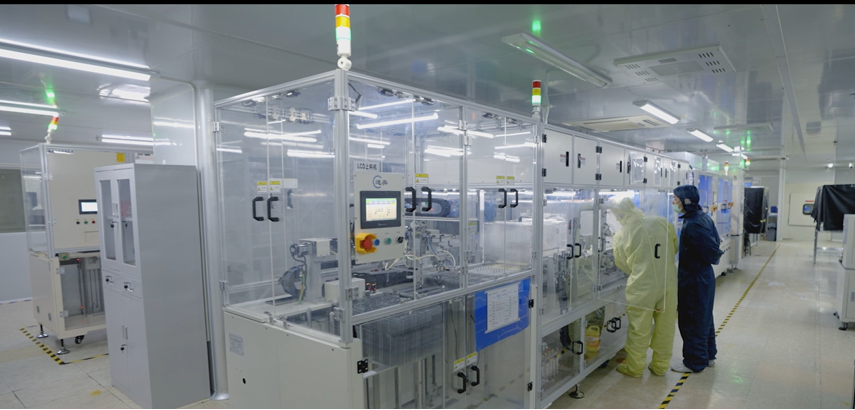
The Stretched LCD Manufacturing Workflow
1. Requirement Definition
Engagement begins with capturing the electrical, optical, mechanical, and environmental requirements: target brightness, resolution, aspect ratio, interface (LVDS, eDP, HDMI, or MIPI), operating temperature, ingress protection, and expected duty cycle. Duty cycle matters because a 24/7 retail installation places different demands on the backlight and thermal design than an 8-hour office deployment.
2. Panel Selection and Cutting
Not every panel size can yield every stretched dimension economically. The available mother glass determines which cuts are feasible without excessive material waste. Cut panels require re-routing or adaptation of the source driver signals, since the original panel's timing controller assumes the full, uncut active area.
3. Driver Board and TCON Design
The timing controller and driver board are adapted or custom-designed to address the reshaped active area and to support the chosen input interface. This stage also defines brightness control, EDID handling, and any onboard scaling.
4. Backlight and Optical Bonding
High-brightness stretched displays typically use enhanced LED backlight arrays. Optical bonding, where the cover glass or touch layer is laminated directly to the panel, reduces internal reflection, improves contrast in bright environments, and adds mechanical robustness. Bonding is optional and adds cost, so it is specified where sunlight readability or vibration resistance justifies it.
5. Thermal and Mechanical Integration
Higher brightness generates more heat. The mechanical design incorporates heat sinks, airflow paths, or in sealed enclosures, conduction paths to the housing. Poor thermal design shortens backlight life and can cause localized brightness degradation, so thermal simulation and validation are part of the workflow.
6. Sample, Validation, and Mass Production
Engineering samples are built and tested against the agreed specification before tooling is committed. Validation covers optical uniformity, thermal behavior under sustained load, aging, and interface compatibility. Only after sign-off does the project transition to production, where in-line inspection and outgoing quality checks maintain consistency.
Key Engineering Considerations
- Brightness and uniformity: A wide, narrow panel makes backlight uniformity harder to achieve than on a square panel, since light must travel further across the long axis. Uniformity targets should be stated explicitly.
- Interface compatibility: The chosen media player or host system must match the display's input. Custom cuts sometimes require non-standard resolutions that not every source device drives cleanly.
- Cover glass and touch: Capacitive touch on ultra-wide panels requires careful controller tuning to maintain edge-to-edge accuracy.
- Certification: Target markets impose their own safety and EMC requirements (CE, FCC, and others). Identifying these early prevents redesign late in the cycle.
Applicable Scenarios and Limitations
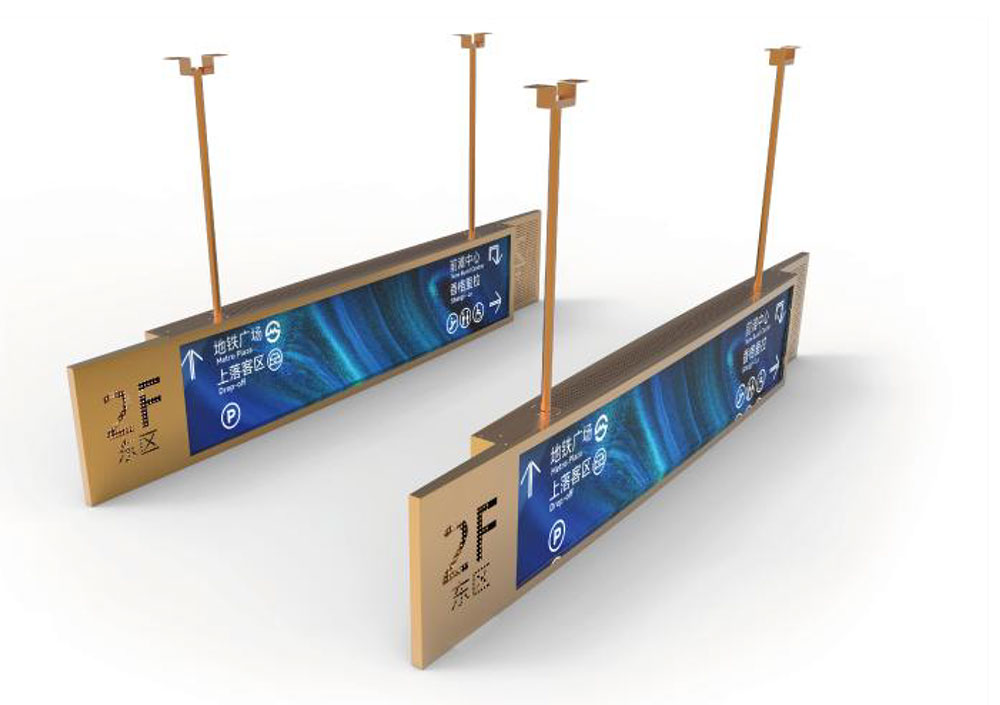
Stretched LCDs fit well where the mounting space is long and shallow: retail shelf-edge signage, transit and airport information strips, elevator media, banking counters, and menu boards. Their form factor lets content occupy space that a standard-ratio panel would leave awkward or unused.
They are not a universal replacement for standard displays, and it is worth being clear about the boundaries:
- Content constraints: The extreme aspect ratio requires content designed for it. Standard 16:9 video letterboxes heavily or crops on a stretched panel, so a content strategy should exist before hardware is ordered.
- Cost per unit area: Because stretched panels are cut from larger glass, yield and material use can make them cost more per usable square centimeter than a mainstream panel of similar area. This is a trade-off for the form factor, not a defect.
- Thermal load in high-brightness variants: Sustained high-brightness operation in enclosed or poorly ventilated fixtures can accelerate backlight aging. Adequate thermal design and, where possible, automatic brightness adjustment help manage this.
- Availability of specific cuts: Uncommon aspect ratios may depend on the current supply of a particular mother glass. Long-term programs benefit from confirming panel roadmap and second-source options.
- Maintenance: Displays in public or outdoor-adjacent settings need periodic inspection of seals, filters, and cooling paths. High-brightness units used continuously will exhibit gradual luminance decline over years of service, which is normal for LED backlights rather than a fault.
A common misconception is that "high brightness" alone guarantees readability in direct sunlight. Readability depends on the combination of luminance, anti-reflection or optical bonding treatment, and contrast under ambient light. Specifying brightness without addressing reflection can lead to disappointing results in the field.
Selecting an OEM or ODM Partner
When evaluating a manufacturing partner for stretched displays, useful questions include: What aspect ratios and brightness levels can they produce reliably? Do they design their own driver boards, or integrate third-party ones? What validation data can they share on thermal and aging performance? How do they handle panel end-of-life and design changes over a multi-year program? Clear answers to these questions tend to correlate with smoother projects than headline specifications alone.
Summary
OEM and ODM stretched LCD manufacturing brings together panel cutting, driver electronics, backlight and thermal engineering, and mechanical integration to produce ultra-wide displays for space-constrained applications. The OEM model suits customers with a defined design; the ODM model suits those who need the manufacturer to engineer the solution. Understanding the form factor's genuine strengths, along with its content, cost, and maintenance boundaries, allows buyers to specify a display that performs as intended over its full service life.
KEYWORDS: stretched LCD display, OEM ODM manufacturing, high brightness LCD, ultra-wide display panel, bar type display