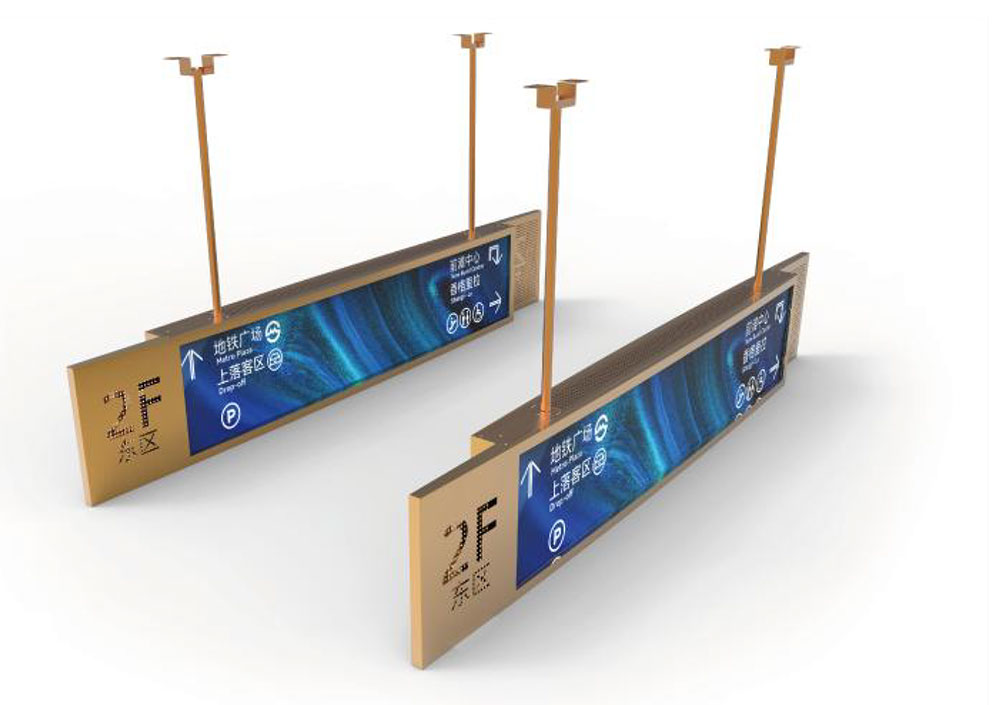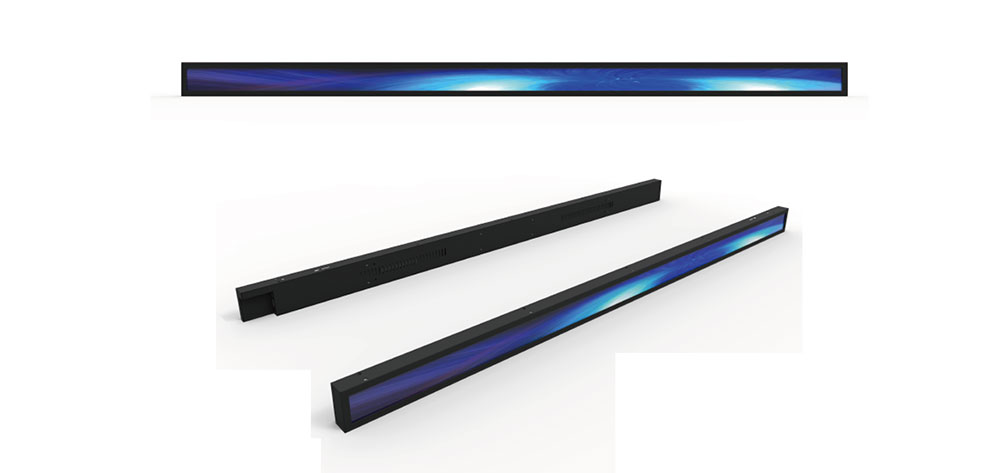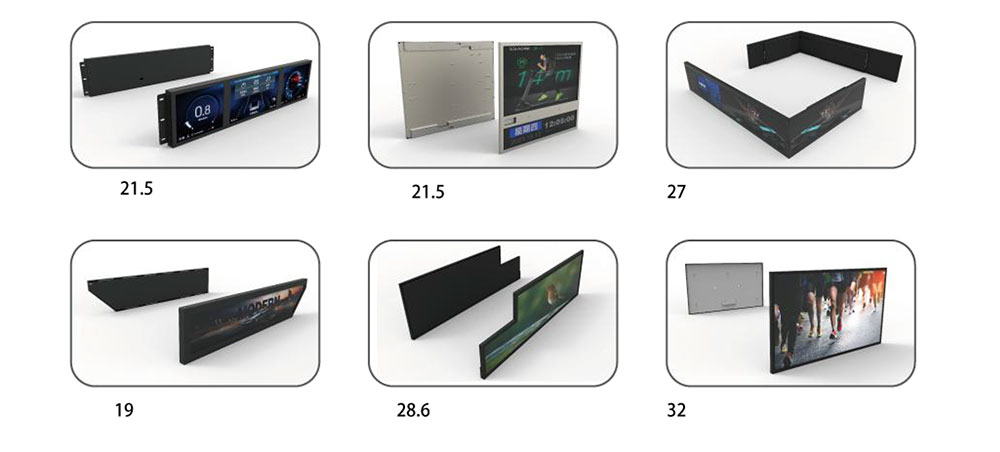
Bar LCD displays have become the backbone of instrumentation panels, industrial HMIs, transportation dashboards, and outdoor kiosks across Canada. Their narrow, elongated form factor makes them ideal for applications where space is constrained but information density is critical—fuel dispensers, CNC machines, elevator indicators, and automotive instrument clusters all rely on bar LCDs to deliver real-time data in confined spaces.
Yet in Canada's demanding climate, where direct sunlight routinely exceeds 100,000 lux in summer and ambient temperatures swing from -40°C in the Prairies to +35°C in southern Ontario, standard bar LCDs fail. Washout, low contrast, and unreadable displays compromise safety, productivity, and user experience. For Canadian engineers, specifying sunlight readable bar LCD displays isn't optional—it's a design requirement driven by both environmental conditions and regulatory expectations.
Why Standard Bar LCDs Fail in Canadian Outdoor Environments
A typical indoor bar LCD outputs 250 to 400 nits of brightness. In an office environment with 500 lux ambient light, this delivers adequate contrast. But outdoor conditions in Canada are exponentially more challenging. Direct sunlight delivers 100,000 lux or more, producing a contrast ratio below 3:1 on standard displays. At this threshold, text and icons become illegible, and safety-critical information disappears entirely.
The problem compounds with reflection. Standard bar LCDs use transmissive architectures with air gaps between the LCD cell, cover lens, and touch layer. Each interface reflects 4% to 8% of incident light. When sunlight strikes the display at oblique angles—common in vehicle dashboards, outdoor kiosks, and handheld instruments—multiple reflections wash out the image entirely, regardless of backlight brightness.
Temperature extremes further degrade performance. Liquid crystal response time slows dramatically below -20°C, causing ghosting and latency in dynamic content. Above +70°C, the LC mixture approaches its clearing point, reducing contrast and introducing color shift. For bar LCDs mounted in uninsulated enclosures—fuel dispensers, railway signaling boxes, agricultural equipment—Canadian temperature swings push standard displays beyond their operational limits.
The Engineering Fundamentals of Sunlight Readable Bar LCDs
Achieving sunlight readability in bar LCD form factors requires a multi-layer approach that addresses luminance, optical bonding, anti-reflective treatments, and thermal management.
Luminance Requirements by Application
Sunlight readability begins with brightness, but the required nit level depends on viewing conditions. Shaded outdoor environments—building overhangs, vehicle interiors with tinted glass—require 1,000 to 1,500 nits to maintain a 5:1 contrast ratio. Partial sunlight exposure, typical of kiosks under canopies or dashboards with polarized windshields, demands 1,500 to 2,500 nits. Direct sunlight applications—fuel dispensers, marine navigation, agricultural machinery—require 3,000 to 5,000 nits or higher to remain legible at midday.
For bar LCDs, achieving this luminance is challenging due to geometric constraints. The narrow width limits LED placement density along the light guide, and the elongated aspect ratio introduces brightness non-uniformity if edge-lit designs aren't carefully tuned. HITULCD's high-brightness bar LCD modules address this with dual-edge LED injection and prismatic light guides that deliver ±10% uniformity across the full length, even at 3,500 nits peak brightness.
Optical Bonding and Air Gap Elimination
Brightness alone does not guarantee readability. Reflection control is equally critical. Optical bonding eliminates air gaps between the LCD cell, cover glass, and touch sensor by laminating layers with optical-grade adhesive or liquid resin. This reduces Fresnel reflections from 12% to 16% down to 2% to 4%, dramatically improving contrast in high ambient light.
For bar LCD displays, full optical bonding presents manufacturing challenges due to the narrow profile and high aspect ratio. Void-free lamination requires precise vacuum pressure and cure control to prevent edge delamination and optical distortion. Engineers specifying bonded bar LCDs should verify lamination uniformity across the entire active area, as defects along the length can introduce brightness bands or touch dead zones.
Anti-Reflective and Anti-Glare Coatings
Even with optical bonding, the outermost surface still reflects 4% to 5% of incident light. Anti-reflective (AR) coatings use multi-layer dielectric thin films to destructively interfere with reflected wavelengths, reducing surface reflection to below 1%. This is critical for bar LCDs in automotive and avionics applications, where specular reflections can obscure safety-critical data.
Anti-glare (AG) treatments, which use surface etching or matte coatings to scatter reflected light, are less effective for sunlight readability but improve viewing angle consistency. Engineers should prioritize AR coatings over AG treatments for direct sunlight applications, as scattering reduces backlight efficiency and can introduce a hazy appearance that degrades text sharpness on narrow bar displays.
Temperature Performance and Canadian Climate Considerations
Canada's temperature extremes demand bar LCDs with extended operating ranges. Standard commercial displays specify 0°C to +50°C, which fails in both winter and summer outdoor installations. Industrial-grade sunlight readable bar LCDs must support -30°C to +80°C minimum, with many applications requiring -40°C to +85°C or wider.
Cold Temperature LCD Response
At temperatures below -20°C, liquid crystal viscosity increases exponentially, slowing molecular reorientation. Response times that measure 20 to 30 milliseconds at room temperature can stretch to 200 to 500 milliseconds in cold conditions, causing ghosting in dynamic content and sluggish touch response. For bar LCDs in transportation dashboards or outdoor industrial controls, this latency is unacceptable.
Cold-temperature LC formulations with reduced viscosity and lower activation energy extend usable response times down to -30°C or -40°C. These mixtures maintain sub-100ms response at -30°C, preserving readability in real-time instrumentation. Engineers should request cold-temperature response time data at the lowest anticipated operating temperature, not just the datasheet specification at 25°C.
High Temperature Stability and Backlight Thermal Management
High-brightness backlights generate significant heat. A 3,500-nit LED array in a bar LCD can dissipate 10 to 15 watts in a form factor only 30 to 50 millimeters wide. Without adequate thermal management, junction temperatures exceed 125°C, accelerating LED degradation and reducing brightness by 30% within 10,000 hours.
Thermal solutions for bar LCDs include aluminum or copper heat spreaders bonded to the LED flex, graphite thermal interface materials to conduct heat into the enclosure chassis, and active cooling for extreme environments. For outdoor Canadian installations where ambient temperatures reach +40°C and solar loading adds another +20°C to +30°C, engineers must calculate worst-case thermal rise and ensure junction temperatures remain below 100°C for 50,000-hour LED lifetimes.
CSA and Canadian Regulatory Considerations
While Canada does not mandate specific brightness or contrast standards for industrial displays, safety-critical applications fall under CSA regulations and provincial occupational health guidelines. Displays used in transportation, industrial machinery, and public-facing installations must meet CSA 62368-1 for electrical safety and, where applicable, CSA C22.2 for portable and stationary electric signs.
For accessibility-related applications—wayfinding, public information kiosks, elevator indicators—Accessibility Standards Canada provides guidance on lighting and contrast under CAN/ASC-24. While these standards focus on signage rather than dynamic displays, the underlying principle applies: information must remain legible under the full range of ambient lighting conditions the installation will encounter. For outdoor kiosks and transit displays in Canada, this effectively mandates sunlight readable specifications.
Engineers should also consider provincial regulations around outdoor equipment. In Alberta, Saskatchewan, and Manitoba, where winter temperatures routinely reach -40°C, equipment specifications for outdoor installations must demonstrate cold-start capability and operational performance at temperature extremes. Display failures due to inadequate cold-temperature specifications can trigger liability concerns, particularly in safety-critical roles like fuel dispensing or railway signaling.
Application-Specific Design Considerations for Canadian Engineers
Transportation and Automotive Dashboards
Bar LCDs in automotive instrument clusters face the harshest sunlight readability challenge. Dashboards are oriented toward the sky, maximizing solar exposure, while windshield reflections compound glare. Canadian vehicles also experience the full -40°C to +85°C temperature range, from cold-soak winter starts to summer dashboard heating.
Automotive-grade bar LCDs require 2,000 to 3,500 nits brightness, full optical bonding, AR coating, and wide-temperature LC. Polarizer orientation must be optimized for viewing through polarized windshields—typically 45° offset to avoid cross-polarization extinction. HITULCD's automotive bar LCD modules integrate circular polarizers that eliminate extinction artifacts while maintaining contrast under direct sunlight.
Fuel Dispensers and Payment Terminals
Fuel dispensers across Canada operate 24/7 in uncontrolled outdoor environments, with bar LCDs displaying transaction data, fuel grade selection, and payment prompts. These displays face direct sunlight, freezing rain, and temperature swings exceeding 60°C seasonally.
For this application, 1,500 to 2,000 nits brightness is typically sufficient when paired with optical bonding and AR coating, as canopy overhang provides partial shading. However, ingress protection is critical—IP65 minimum for front-panel sealing to prevent moisture ingress during freeze-thaw cycles. Engineers should specify sealed optical bonding to eliminate condensation inside the display stack, which causes permanent haze in cold climates.
Industrial HMI and CNC Machine Controls
Bar LCDs in industrial settings often serve as status indicators, parameter displays, or secondary readouts on CNC mills, injection molding machines, and packaging equipment. While these environments are typically indoor, large industrial facilities with bay doors, skylights, or outdoor equipment yards introduce high ambient light and temperature variability.
For industrial HMI, 1,000 to 1,500 nits brightness provides adequate readability in mixed indoor-outdoor lighting. The priority shifts to durability—shock and vibration resistance per IEC 60068-2-6 and IEC 60068-2-27, chemical resistance to coolants and solvents, and EMC compliance to prevent interference with adjacent machinery. HITULCD's industrial bar LCD series integrates metal shielding and reinforced glass to meet these requirements while maintaining sunlight readability in high-bay facilities.
Specification Best Practices for Canadian Projects
When specifying sunlight readable bar LCDs for Canadian applications, engineers should document the following parameters to ensure supplier alignment and avoid costly redesigns:
Environmental Operating Range: Define the full temperature range (-40°C to +85°C for outdoor, -20°C to +70°C for sheltered), humidity limits (typically 10% to 90% non-condensing), and any exposure to precipitation, ice, or salt spray. Include altitude if applicable for mountain or aviation installations.
Luminance and Ambient Light Conditions: Specify minimum brightness in nits (not "sunlight readable" as a vague term), the worst-case ambient illuminance in lux, and the required contrast ratio (minimum 5:1 for safety-critical readouts). Provide viewing angle requirements—bar LCDs often have asymmetric viewing cones that must be optimized for the installation orientation.
Optical Specifications: Define whether optical bonding is required, the type of AR coating (single-layer, multi-layer, or none), and any anti-glare surface treatment. For touch-enabled bar LCDs, specify the touch technology (PCAP, resistive, or none) and whether it must be integrated into the optical stack.
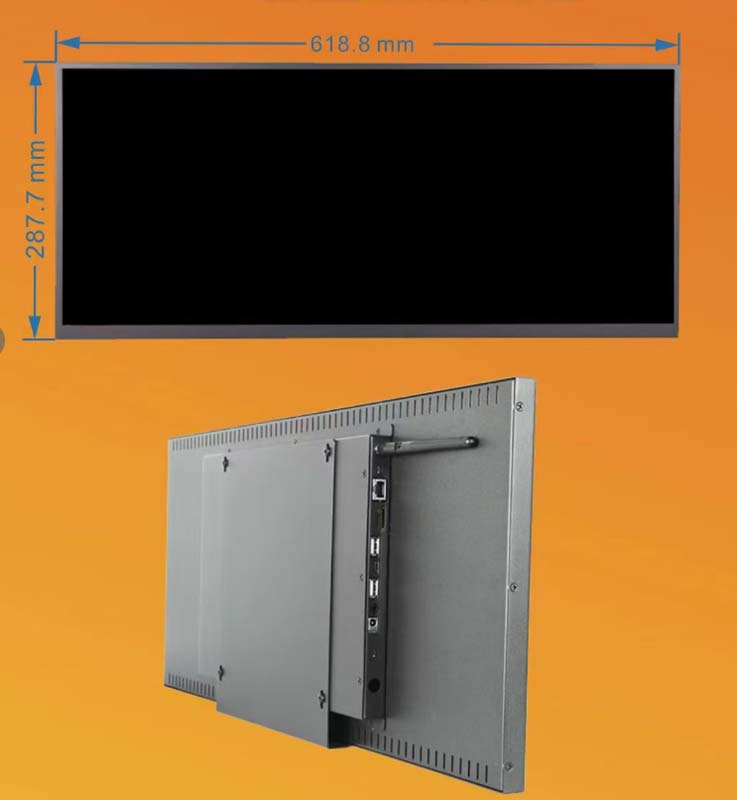
Mechanical and Interface Requirements: Bar LCDs come in custom lengths from 50 mm to 500 mm or longer. Specify the exact active area, bezel width, mounting method (adhesive, screw mounts, or spring clips), and electrical interface (LVDS, MIPI DSI, SPI). Include connector type and cable length to avoid integration surprises.
Regulatory and Certification Needs: Identify required certifications upfront—CSA, UL, CE for electrical safety; IP ratings for ingress protection; EMC standards for industrial or automotive environments. For transportation applications, specify any crash-safety, flammability, or toxicity standards (FMVSS, UL 94, etc.).
Long-Term Reliability and Total Cost of Ownership
Sunlight readable bar LCDs command a price premium over standard displays—typically 2x to 4 KEYWORDS: Sunlight Readable Bar LCD Displays: What Canadian Engineers Need to Know