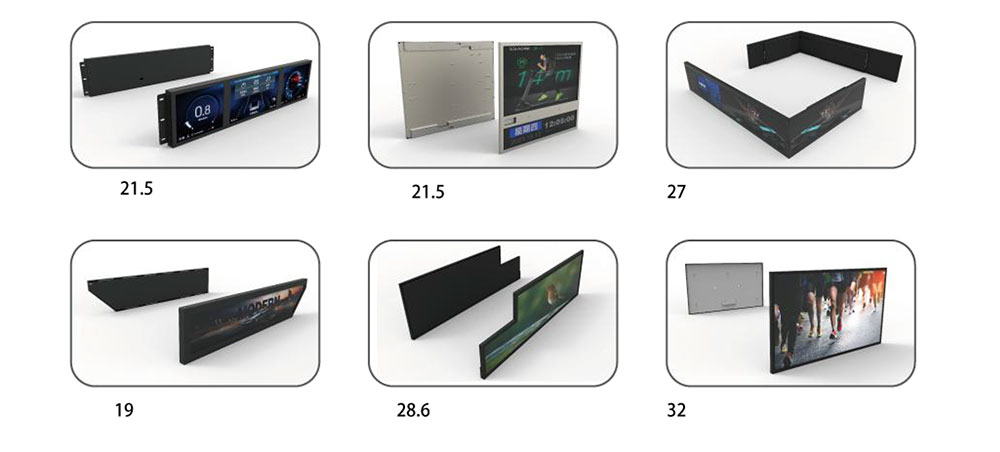
High-brightness LCDs are built for environments where ordinary displays wash out. Outdoor kiosks, marine instruments, vehicle dashboards, and industrial control panels all face strong ambient light, and their screens must stay readable under it. The ST20200317511-E is a HITULCD reference designation for a high-brightness LCD module aimed at this class of application. This article explains the engineering choices behind sunlight-readable displays: how luminance is specified, how the backlight and optical stack are designed, how heat is managed, and how performance should be verified. The discussion stays on the design and evaluation of high-brightness LCD modules. Specific values for any given product should always be confirmed against its datasheet and test report.
Why brightness alone is not enough
Display luminance is measured in nits, or candelas per square meter. Ambient light is measured in lux. Direct sunlight can exceed 100,000 lux, while an indoor office is typically a few hundred lux. A screen's readability depends on the contrast ratio it can maintain against reflected ambient light, not on its luminance alone. Reflected light adds a near-constant veil to both bright and dark pixels, which lowers the effective contrast. A panel that reaches high nits but reflects strongly can still look washed out.

For this reason, sunlight-readable design starts with a target. Engineers define the expected ambient illuminance, the viewing angle, and the minimum acceptable contrast under those conditions. The required luminance is then derived from these inputs, together with losses from the optical stack, which are discussed below. Setting a target before choosing components prevents over-specifying the backlight, which raises power consumption and heat without always improving legibility.
Backlight architecture
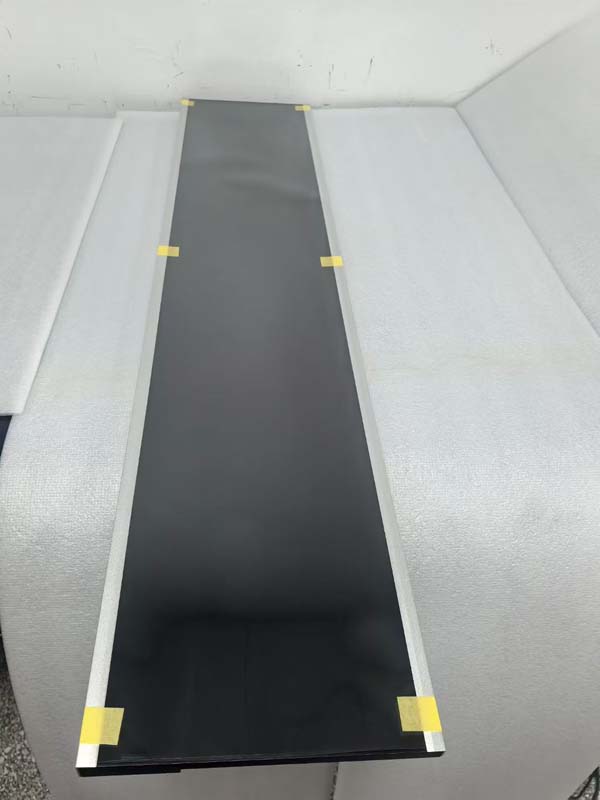
The backlight is the main source of luminance in a transmissive LCD. LED arrays are the standard choice. Edge-lit designs use a light guide plate to spread light from LEDs along one or more edges. They are thin and cost-effective, but their maximum luminance and uniformity are limited by the light guide's efficiency. Direct-lit designs place LEDs behind the diffuser, which allows higher luminance and better thermal spreading, at the cost of greater thickness. High-brightness modules usually favor direct-lit or hybrid structures when the target is high ambient light.
LED selection affects both luminous output and lifetime. Higher drive currents increase light output but also increase junction temperature, which accelerates lumen depreciation. Engineers therefore balance current density against expected service life. LED binning matters as well. Tight bins for luminous flux and color coordinates reduce visible variation across the panel and between production lots.
Driver design is equally important. Constant-current LED drivers keep brightness stable as input voltage varies. Dimming is usually handled by pulse-width modulation, PWM, or by analog current control. PWM provides wide dimming range and accurate color, but its frequency must be high enough to avoid visible flicker in cameras and to limit audible noise from inductive components. Dimming resolution should be checked at the lowest brightness level, where coarse steps can produce visible banding.
Optical stack and reflection control
The optical stack determines how efficiently emitted light reaches the viewer and how much ambient light returns from the panel surface. Each layer, including the diffuser, prism films, reflective polarizer, LC cell, color filter, polarizer, and cover glass, absorbs or scatters a portion of the light. Cumulative transmission losses can reduce the usable luminance by a large fraction, so every film choice should be justified by its contribution to luminance or uniformity.
Reflection is controlled through several measures. Optical bonding fills the air gap between the LCD and the cover glass with a transparent adhesive. This removes the internal air-to-glass interfaces that cause reflections and improves contrast under strong light. Anti-reflective coatings reduce surface reflectance on the cover glass. Anti-glare treatments diffuse reflections but can soften image sharpness, so they must be chosen with the application's viewing distance in mind. Polarizers with high transmittance and good heat tolerance are essential, because they operate close to the backlight in high-brightness designs.
Thermal management
Heat is the main constraint on high-brightness performance. LEDs convert only part of their input power into light, and the remainder becomes heat inside the module. Excess temperature shortens LED life, shifts color, and can damage polarizers and adhesives. The LC material itself also responds to temperature, changing response time and contrast.
Thermal design begins with a clear path from the LED junction to the ambient environment. Metal-core PCBs, thermal interface materials, and aluminum frames are typical solutions. Heat spreaders should be sized for the worst case, not the typical case, and the enclosure should be considered part of the thermal system. In sealed outdoor enclosures, internal temperature can exceed external temperature by a significant margin, so the design must be validated under real thermal loads. Many high-brightness modules also include temperature sensors that feed the driver, reducing current when temperature rises to protect the LEDs. This feature is a reliability safeguard, but its derating curve must be documented so system designers know the expected luminance at high temperatures.
Electrical and EMI considerations
High-brightness backlights draw significant current, so power supply design requires attention to efficiency, ripple, and noise. Switching regulators in the LED driver can generate electromagnetic interference, which may couple into touch controllers or video signal lines. Shielding, careful layout of high-current loops, and filtering on the input and output rails reduce this risk. Grounding should be planned to avoid noise coupling between the backlight and the LCD timing circuits.
Evaluation and verification
Verification should match the conditions the display will face. Photometric measurements of luminance and uniformity are taken at the center and corners of the active area, typically at several points, with the backlight at full and reduced levels. Contrast ratio is measured both in darkness and under simulated ambient illumination, which better reflects field readability. Color is evaluated for chromaticity shift across temperature and brightness settings.
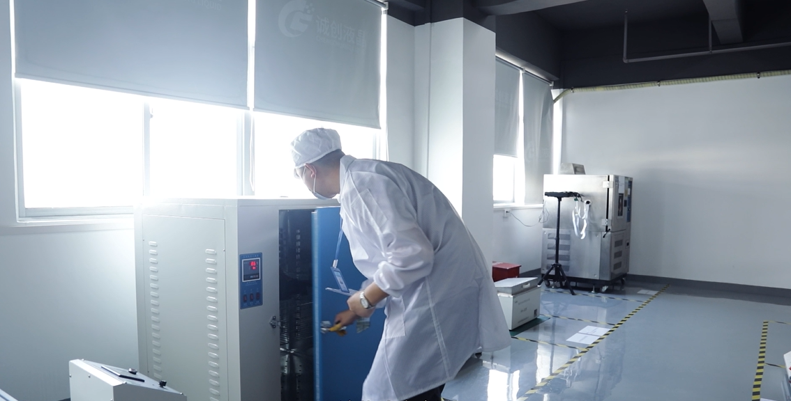
Reliability testing confirms that performance holds over time. Typical programs include high-temperature operation, humidity exposure, thermal cycling, vibration, and extended burn-in. Luminance decay is recorded at intervals to project lifetime, and the threshold for end of life should be defined in advance, commonly as a percentage of initial luminance. Test results should be documented with the test conditions, because luminance figures without temperature and drive current context are not comparable.
Integration guidance
System integrators should treat the module's luminance, thermal, and power specifications as a set. Mounting must preserve the thermal path, and the enclosure must allow heat to leave the module. Cover glass and bonding should be selected for the expected environment, including UV exposure and cleaning chemicals. The driver's dimming interface should be matched to the host controller, and brightness control should follow a calibrated curve so that perceived brightness changes smoothly.
Conclusion
Sunlight-readable LCD performance comes from balancing several factors at once: luminance targets derived from real ambient conditions, an efficient backlight and driver, an optical stack that limits reflections, thermal management that protects LEDs and materials, and verification that reflects field use. Reference designations such as ST20200317511-E provide a way to organize these decisions into a traceable specification. Engineers evaluating a high-brightness LCD should use the datasheet and test data for the exact configuration, and should confirm that the luminance, contrast, and thermal derating meet the requirements of their application.
KEYWORDS: high-brightness LCD, sunlight-readable LCD, LCD backlight design, outdoor display luminance, ST20200317511-E