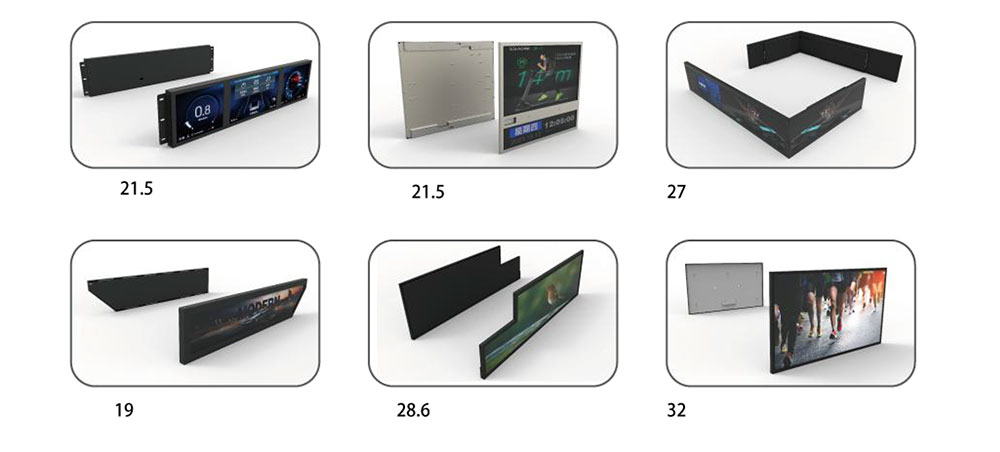
EN 60950-1 was the European harmonized safety standard for information technology equipment, and for many years it was the primary reference for certifying LCD screen displays sold in the European Economic Area. Understanding it remains important for engineers who maintain legacy product lines, review older certification files, or support customers with installed displays. This article explains what the standard covered, how LCD displays were evaluated against it, how the certification path worked, and how the transition to its successor affects current products.
Scope and regulatory context
EN 60950-1 is the European adoption of IEC 60950-1, the international safety standard for information technology equipment, including monitors and displays that operate from mains or low-voltage supplies. Its significance came from its link to the Low Voltage Directive 2014/35/EU. A product that conformed to a harmonized standard was presumed to meet the directive's essential safety requirements, which allowed the manufacturer to affix the CE marking after issuing a declaration of conformity. The standard addressed protection against electric shock, energy hazards, fire, heat, mechanical hazards, and radiation. For LCD displays, the most relevant areas were the power supply and backlight drive circuits, the enclosure, and the front glass or panel assembly.
The standard applied to equipment rated at up to 600 V AC or 900 V DC for the supply, with particular attention to hazardous voltages above defined thresholds. An LCD display was typically treated as information technology equipment, and its evaluation depended on whether its internal circuits presented hazardous energy levels, whether accessible parts could reach hazardous temperatures, and whether the enclosure could contain a fire.
Key safety requirements for LCD displays
Several requirements shaped nearly every LCD display design.
The first was protection against electric shock. Designers had to separate hazardous voltages from accessible parts through basic, supplementary, or reinforced insulation, depending on the circuit's role. The spacing rules, expressed as creepage distances (along surfaces) and clearances (through air), depended on working voltage, material group, and pollution degree. Pollution degree 2 was normally assumed for indoor office and home equipment, which set the baseline values engineers used on the power board and the high-voltage inverter area.
The second was energy hazard control. The standard limited the stored and available energy in accessible circuits. A display power supply that could deliver more than 240 VA at a voltage above certain thresholds was considered a hazard unless it was protected by an appropriate enclosure or a current-limiting arrangement. Designers therefore had to check output capacity and protective measures together, not separately.
The third was touch current. Leakage current from the display to earth, measured through a defined network that simulates the human body, had to remain below specified limits under normal and single-fault conditions. Touch current was a common reason for redesign in displays with switch-mode power supplies and filtering capacitors connected to mains.
The fourth was temperature. Accessible surfaces, including the bezel, stand, and rear housing, had to remain within temperature limits that depended on material and contact duration. Surfaces that a user might touch during normal operation were usually limited to a lower value than internal components. Thermal testing was conducted at the maximum rated ambient temperature, typically 40 degrees Celsius for the standard test condition, with the display operating at its highest brightness setting. This point is especially relevant to high-brightness LCD products, because backlight power is higher and heat dissipation becomes more demanding.
The fifth was fire safety. The enclosure and internal materials had to meet flammability requirements, normally V-1 or better for plastic parts that could be exposed to ignition sources, and components on the power board had to be selected or protected so that a single fault would not start a fire. Glass and polymer diffusers in the backlight stack had to be evaluated for their burning behavior and their contribution to fire spread.
The sixth was mechanical strength. The enclosure had to resist specified impact, drop, and force tests, and the stand and mounting interface had to withstand loads without creating hazards. Front glass in a display was evaluated for breakage behavior, since sharp fragments can create injury risk. Stability tests checked that the display would not tip over when tilted or when a force was applied to the top or to the stand.
The seventh concerned the backlight and specific lamp technologies. Older displays used cold cathode fluorescent lamps, which contained mercury. The standard did not itself regulate mercury content, but related directives required compliance, and the high-voltage inverter that drove CCFL tubes had to be protected against accidental contact. LED backlights simplified some of these concerns but introduced constant-current driver design and thermal management requirements.
The certification path
A typical certification process for an LCD display under EN 60950-1 followed a sequence of steps. The first was the definition of the product scope: model variants, power ratings, panel type, touch functions, and optional accessories. The second was pre-compliance review, usually performed by the engineering team with reference to the standard's clauses and a gap analysis of the insulation, spacing, and thermal design. Many companies used internal checklists to catch problems before formal testing.
The third step was type testing at an accredited laboratory. Laboratories commonly issued a test report covering each clause. For a product seeking the CB Scheme route, the IECEE CB Test Certificate and CB Test Report provided the basis for national certification in participating countries. The CB process allowed one test to support multiple national approvals, though national deviations still had to be checked.
The fourth step was the technical documentation file. This included schematics, bills of materials with component certificates, the insulation diagram, the label and marking drawings, user instructions with relevant warnings, and the risk assessment. Components such as power supplies, transformers, and fuses were usually required to carry their own certification, which reduced the scope of testing on the final product.
The final step was the declaration of conformity and CE marking, issued by the manufacturer or its authorized representative. The declaration had to reference the applicable harmonized standard and the directive. Because LCD displays also fall under the EMC Directive and frequently under RoHS and ecodesign rules, the technical file had to cover those requirements too, even though they were separate from the safety certificate.
Common pitfalls
Several issues repeatedly caused delays. Undersized creepage distances on high-voltage inverter boards were a frequent cause of failure, especially where contamination or board coating had not been considered. Thermal failures often occurred when a display was tested at maximum brightness in an enclosure with insufficient ventilation. Labeling errors, such as incorrect rating plates or missing warnings on the rear housing, could cause a test to be rejected even when the physical design was sound. Finally, component substitutions made after initial testing invalidated the earlier evaluation unless the change was assessed, so change control was essential.
Transition to EN 62368-1
EN 60950-1 was superseded by EN 62368-1, which takes a hazard-based approach. Instead of organizing requirements around equipment type, the newer standard classifies energy sources, including electrical energy sources (ES), thermal energy sources (TS), kinetic energy, and radiation, and then specifies safeguards that protect people from those energy sources. For LCD displays, this changes the analysis: designers identify energy sources in the backlight driver, power supply, and interface circuits, then define the safeguards required for each one.
The presumption of conformity for EN 60950-1 under the Low Voltage Directive ended in December 2020. From that date, new display designs placed on the European market needed evaluation to EN 62368-1. Products already certified and placed on the market before the transition could generally remain in circulation, and their existing certificates remained valid for those units. Manufacturers should still verify that legacy certificates cover the actual model, firmware, and component set in use, and should not assume that an older certificate supports a new variant.
For high-brightness LCD products, the transition is practically significant because it encourages a more explicit review of thermal energy sources and enclosure safeguards. Designers evaluating a new panel with a stronger backlight should assess surface temperatures, the energy available from the power supply, and the fire containment strategy against the hazard-based requirements, not merely against the clause numbers used in the old standard.
Practical recommendations
For engineers working with legacy LCD display certifications, the following practices are advisable. Keep the complete certification file, including test reports, component certificates, and the declaration of conformity, for each model and revision. Record every design change and assess whether it affects insulation, thermal performance, or flammability. Confirm the scope of each CB certificate against the product's actual ratings and variants. For new products, plan the evaluation directly against EN 62368-1 and treat any surviving EN 60950-1 documentation as historical reference rather than as the basis for new approvals.

Certification is most efficient when safety is designed in from the start. Choosing components with appropriate certifications, allowing adequate creepage and clearance margins, managing backlight heat, and planning enclosure flammability early reduce the risk of costly retesting. These principles applied under EN 60950-1 and continue to apply under EN 62368-1, even though the standard's structure has changed.
KEYWORDS: EN 60950-1 LCD display certification, LCD display safety standard, EN 62368-1 transition, CB scheme LCD monitor, high-brightness LCD compliance