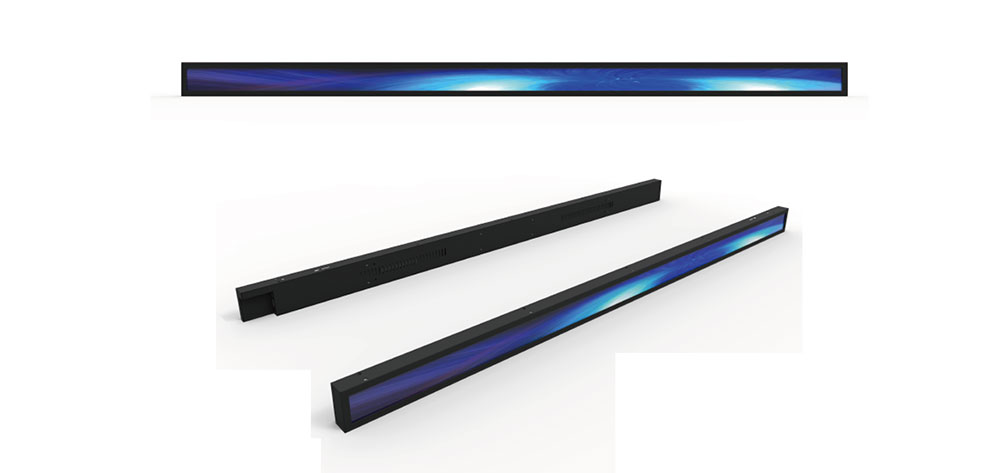
Australian forecourts are among the toughest places to run a digital screen. Fuel canopies and pump islands face intense UV, summer ambient temperatures that regularly pass 40°C, tropical humidity and cyclonic rain in the north, dust and salt air along the coast, and constant vibration from heavy vehicles. At the same time, gas stations are one of the most valuable retail media locations: drivers are stationary for several minutes, they are in a purchase mindset, and they will often walk into the shop afterward. A weatherproof stretched LCD, the long bar-format display with an aspect ratio such as 16:3 or 24:9, is an increasingly practical way to turn that dwell time into revenue. This paper explains where stretched displays fit on an Australian forecourt, which engineering specifications matter, and how to deploy and maintain them.
**1. Why Stretched Format Suits Forecourt Advertising**
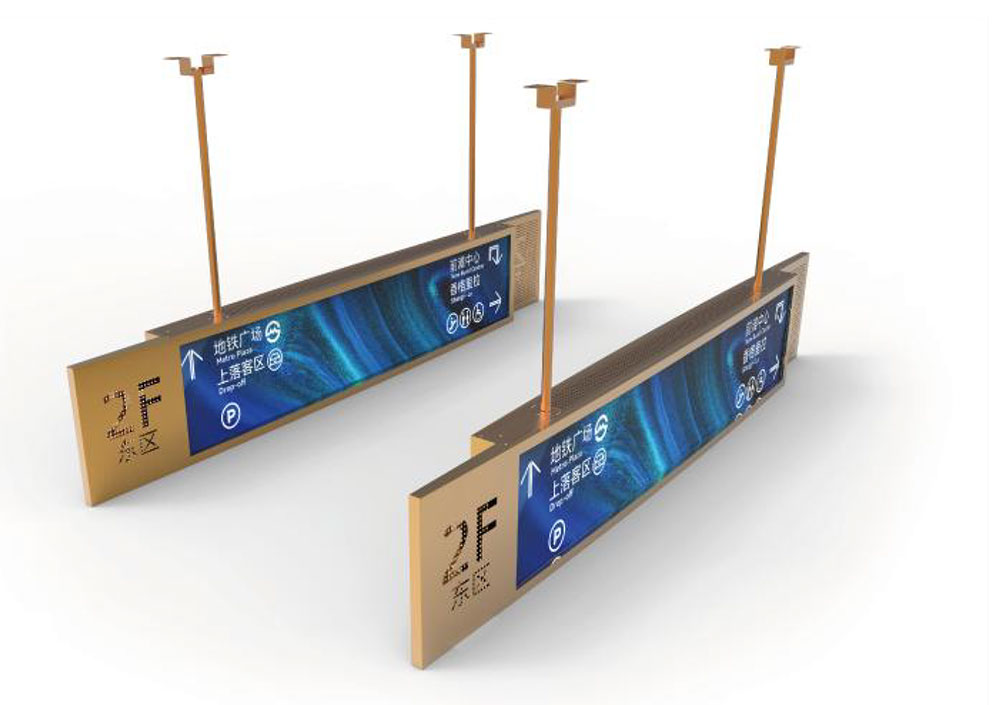
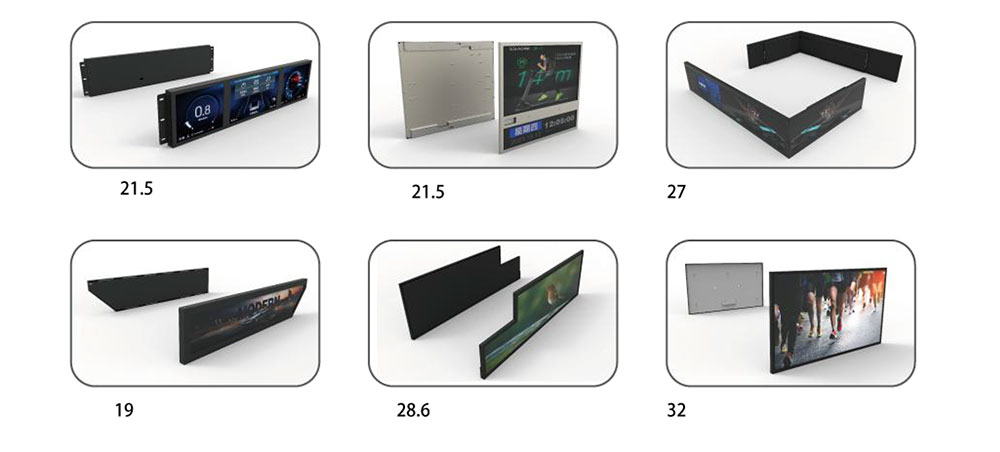
Standard 16:9 panels waste space in many forecourt positions. Pump fascias, canopy columns, shop-front fascias, price-sign extensions, and car-wash entrances are long and narrow. A stretched LCD, typically 19 to 58 inches in diagonal with a bar shape, fills these spaces without bulky frames or custom cladding.
The format also supports content that works for fuel retail: scrolling promotions, a fuel-price ticker, a split layout with a main video zone and a lower banner zone, and a loyalty offer next to a coffee-and-meal-deal creative. Because a bar screen is wide but shallow, it can sit above or beside a pump nozzle without blocking the customer or the hazardous-area clearance defined by the site's safety plan.
**2. Typical Placements and Content Roles**
- Pump-top or pump-side bars: aimed at the driver during fueling, ideal for 15 to 30 second offers on drinks, food, car wash, and gas bottle exchange.
- Canopy column or underside displays: seen on approach, suited to bold, short messages and brand promotions.
- Shop entrance and window-facing bars: sunlight-readable displays that promote hot food, bakery items, and daily deals.
- Car-wash and air-and-water bays: wait-time messaging and upsell of premium wash packages.
- Roadside pylon extensions: day and night promotional content beside fuel-price boards.
Each position has a different viewing distance, so the pixel pitch, text size, and brightness target should be specified per location rather than using one model everywhere.
**3. Brightness: The First Specification That Fails in Australia**
Sunlight on a forecourt can exceed 100,000 lux in open areas. Canopies reduce direct sun but not reflected glare from concrete, vehicles, and light-colored fascias. Indoor-grade 350 to 500 nit panels become washed out.
Practical brightness targets:
- Under a deep canopy or in shaded pump islands: 1,500 to 2,500 nits.
- Semi-open positions with reflected light: 2,500 to 3,500 nits.
- Direct sun exposure on shop fronts or pylons: 3,500 to 5,000 nits or more.
Look for an ambient light sensor with automatic dimming. It maintains contrast during the day, reduces glare and energy use at night, and helps stay within local planning conditions on illumination near roads. Optical bonding with anti-reflective and anti-glare glass further improves legibility by removing the internal air gap that causes reflection and parallax.
**4. Thermal Design for 45°C Summers and Solar Load**
High brightness means more heat, and Australian sun adds more. A high-brightness panel inside a sealed enclosure can see internal temperatures far above ambient. The main thermal issues are:
- LCD clearing point: if the liquid crystal exceeds its clearing temperature, usually around 80 to 110°C depending on the panel, the screen turns black in patches. The effect often reverses on cooling, but repeated events shorten life.
- LED backlight derating: excessive heat reduces lifetime and brightness.
- Electronics: drivers, power supplies, and media players have rated limits, commonly 60 to 70°C for industrial parts.
Engineering options include a high-efficiency LED backlight, heat-spreading rear chassis, filtered forced-air circulation, closed-loop heat exchangers, and a sun-facing layout that avoids a black bezel absorbing solar energy. Temperature sensors should trigger staged brightness reduction rather than a hard shutdown, and the system should report thermal events remotely. A wide operating range of about -20°C to +50°C is a sensible target for most Australian regions, including alpine sites, while a 60°C-rated design may be appropriate for northern or desert-adjacent roadhouses.
**5. Weatherproofing and Corrosion Resistance**
Ingress protection:
- IP65 is generally the minimum for exposed forecourt use, protecting against dust and water jets from any direction. It is also useful for high-pressure cleaning near car-wash areas, although the cleaning regime should be confirmed with the supplier.
- IP66 is preferable for cyclone-prone regions of Queensland, the Northern Territory, and northern Western Australia, where wind-driven rain is severe.
- Cable glands, breathable pressure-equalizing vents, and gasketed rear covers prevent condensation, a common failure cause during humid nights followed by hot days.
Material and finish:
- Marine-grade aluminum or powder-coated or galvanized steel for coastal sites in Sydney, Perth, Gold Coast, and Hobart suburbs.
- Stainless fasteners to avoid galvanic corrosion.
- UV-stable gaskets and coatings that do not chalk or crack.
- Chemical resistance to fuel vapor, oil mist, and common cleaners.
Impact protection: 4 mm to 6 mm tempered, anti-glare glass with IK08 or IK10 resistance helps against vandalism, shopping trolleys, and vehicle debris.
**6. Hazardous Area and Electrical Compliance**
Forecourts contain zones where flammable vapors may be present. In Australia, equipment installed near dispensers must align with the hazardous area requirements in AS/NZS 60079 series and the site's classified zone drawings. Many bar displays on canopy columns or shop fronts sit outside the classified zones, but pump-mounted screens may fall within or near them. Do not assume a standard weatherproof LCD is acceptable. Confirm the position against the hazardous area dossier with the site's licensed engineer, and use certified or properly segregated installations where required.
Other points to verify:
- Electrical safety and EMC compliance, with RCM marking for supply in Australia.
- Mains wiring by a licensed electrician in accordance with AS/NZS 3000.
- Surge protection for lightning-prone regions, with a 240 V supply tolerant of voltage variation.
- Planning and signage rules from local councils and road authorities regarding moving images near roads. Many jurisdictions restrict flashing, rapid transitions, or content that could distract drivers on public roads.
HITULCD recommends having site compliance confirmed in writing before volume deployment.
**7. Choosing Panel and Display Specifications**
A suggested specification checklist for Australian gas station stretched LCDs:
- Size and ratio: 23 to 58 inch bar, 16:3, 24:9, 32:9, or custom, chosen to match the physical opening.
- Resolution: 1920x360, 1920x540, or higher for text-rich content. Fine text at close pump distance needs a pixel density suited to a viewing distance of 0.5 to 2 meters.
- Brightness: 2,500 to 5,000 nits depending on exposure.
- Contrast and viewing angle: wide-angle IPS or ADS panels with polarizers designed for sunlight, including a consideration for polarized sunglasses.
- Optical bonding: recommended for anti-reflection and condensation resistance.
- Operating temperature: -20 to +50°C or better, with a high storage tolerance.
- Ingress: IP65 minimum, IP66 for cyclone areas.
- Power: 100 to 240 V AC, with efficient supplies and low standby draw.
- Orientation: landscape by default, with the option of portrait where fitting requires it.
**8. Content Management and Connectivity**
A display only generates value if the content is current. A forecourt network should include:
- Android, Linux, or embedded media players integrated within the display to reduce cabling and heat sources.
- Cloud CMS with scheduling by site, day-part, and weather condition, for example promoting cold drinks above 35°C and hot coffee on a cold morning.
- Integration with fuel-price data and point-of-sale promotions so that prices and offers remain consistent.
- 4G or 5G and Wi-Fi connectivity with cached content, because remote and highway sites may have unstable networks.
- Proof-of-play reporting, which is vital if you sell advertising to third-party brands such as beverage, telecommunications, or automotive partners.
- Remote monitoring of temperature, brightness, fan status, and backlight hours.
Content design should use high contrast, large type, short copy, and minimal motion. Dark text on pale backgrounds and saturated reds, oranges, and yellows often read well in strong sunlight, while thin fonts and low-contrast gradients disappear.
**9. Installation Best Practice**
- Orient displays to minimize direct afternoon sun, usually west in the Australian summer. Where this is not possible, use sunshades or a deeper canopy.
- Leave ventilation clearance, and do not enclose the display in a tight cavity that traps heat.
- Provide structural support for wind loads. Cyclone-rated regions need engineered mounting and fixing documents.
- Use drip loops, sealed conduit, and surge-protected circuits.
- Protect against vehicle impact with bollards or an offset in vulnerable positions.
- Commission each unit with a brightness curve, temperature thresholds, and content test under full sun at midday.
**10. Maintenance and Lifetime Cost**
A properly specified weatherproof high-brightness LCD can deliver 50,000 hours or more of backlight life, but the actual figure depends on heat and brightness settings. Maintenance planning should include:
- Quarterly or semiannual cleaning of the glass and vents with non-abrasive products.
- Inspection of seals, fasteners, and corrosion at coastal sites.
- Replacement of filters in dusty or rural locations.
- Firmware and CMS updates.
- Spare-unit strategy for remote highway sites to limit downtime.
Total cost of ownership is lower with a unit built for the environment than with a retrofitted indoor display, which commonly fails within one or two summers. Evaluate energy use, service call-out cost across large distances, warranty terms, and local support.
**11. Return on Investment**
Revenue can come from two directions. First, in-store conversion: promotions for coffee, pies, drinks, and car wash can raise basket size and attachment rates. Second, third-party advertising: a network across multiple sites can be sold on audience impressions, location, and day-part. Typical pricing varies widely, so use a pilot at several sites, track promotion redemption through POS data, and compare results with sites that do not have screens. A pilot of 3 to 6 months provides a credible basis for scaling.
**Conclusion**
For Australian gas stations, a stretched weatherproof LCD works when it is engineered for the actual operating environment: high brightness for sun glare, careful thermal management for extreme heat, sealing and corrosion resistance for rain, dust, and coastal air, and compliance with hazardous-area and electrical rules. Combine this with smart, weather-aware content and remote monitoring, and the display becomes a durable retail media asset rather than a recurring maintenance problem. HITULCD develops high-brightness, optically bonded, IP-rated bar-type LCD solutions that can be customized to forecourt dimensions and climate zones, helping fuel retailers and media owners build reliable networks across Australia.
KEYWORDS: weatherproof stretched LCD, gas station digital advertising, Australian forecourt display, high brightness bar LCD, outdoor LCD IP65