Bars are the commercial heart of an Australian hotel or resort. They are where the guest decides to stay another hour, order a second bottle of Barossa Shiraz, watch the last ten minutes of the Ashes, or find out that tonight's special is a $22 parmi. Long before the guest reaches the front desk, the bar has already shaped their impression of the whole property. That is why the displays behind, above and around an Australian bar counter deserve to be engineered, not improvised — and why a domestic television bought on a weekend special is the wrong instrument for the room.
What "Australian Indoor" Actually Means as a Specification
The phrase "Australian Indoor" is a deployment classification, not a marketing word. It separates interior, permanently installed bar displays from two other categories: outdoor or semi-outdoor signage (pool decks, beer gardens, entry forecourts) and window-facing or high-ambient retail displays. A screen carrying the Australian Indoor designation is specified for an interior venue wall, a back-bar joinery fascia, a ceiling-hung truss, an enclosed gaming lounge or a function room, under an Australian roof, in an Australian climate, connected to Australian mains power and subject to Australian electrical and building requirements.
That last sentence is doing a lot of work. Australia is not a single interior environment. A bar in a Cairns resort with wide sliding doors and 85 percent relative humidity in February is a very different installation from a subterranean sports bar in inner Melbourne, a rooftop bar in Perth with direct western sun through glazing, or a heritage-listed Hobart hotel where the wall cannot be penetrated. The indoor classification fixes the broad framework — no direct rain exposure, no need for 2,500 to 5,000 nit sunlight legibility — but it still requires the designer to read the room: glazing, ceiling height, fixture levels, HVAC delivery, joinery depth, service access and content duty cycle.
The Core Technical Problem: Bar Lighting Is a Moving Target
Midday service in a bistro bar with glass frontage can push ambient illuminance to 500 to 1,000 lux at the back bar. By 9 pm, dimmers are at 20 percent, candles and pendant lamps dominate, and the same surface may sit below 50 lux. A screen that looks crisp at lunchtime can become an eye-searing white rectangle at night, dominating the room and washing out the joinery.
This is the single most common failure in Australian hotel bar deployments, and it is a specification failure, not an installation failure. Standard commercial panels are engineered for high brightness, not low brightness. A 700-nit display with a nominal 10 percent minimum dim level still emits roughly 70 nits — brighter than the terminal at an airport check-in desk. In a candlelit cocktail bar that reads as a floodlight.
There are four legitimate engineering answers, and the right one depends on the zone:
- Wide dynamic dimming panels. Some commercial LCD platforms offer a true 0 to 100 percent luminance slider with gamma compensation, so shadow detail is preserved as brightness falls. Specify a minimum output figure, not just a maximum.
- Correct sizing of peak nits to peak lux. A back-bar zone that never exceeds 300 lux does not need 700 nits; a 400 to 500 nit panel with better black level will look superior.
- Neutral density and anti-glare optical film. Applied to the protective glass, ND film reduces emitted luminance and specular reflection simultaneously, at the cost of a small amount of perceived contrast.
- Technology substitution in the darkest zones. In a low-lit whisky bar or private gaming room, a fine-pitch LED wall or a good OLED panel with per-pixel black delivers a truer dark-room image than any edge-lit LCD. The trade-off is cost, weight, service access and static-content burn-in risk, which is covered below.
Commercial-Grade Versus Consumer Panels: The Duty Cycle Question
A hotel bar is one of the hardest duty cycles in hospitality. Screens run from the moment staff set up the venue to the moment they cash out — 16 to 20 hours a day, seven days a week, often in portrait, often inside sealed joinery with poor airflow, and frequently displaying a static menu layout for weeks.
Consumer televisions are rated for roughly eight hours a day in a ventilated living room and are warranted for domestic use. Inside commercial joinery they run hot, their power boards degrade faster, and their capacitors age more quickly. More importantly, they usually lack the control surface a venue needs: RS-232 or IP command sets, scheduled power on/off, panel brightness scheduling, input locking, source switching without remote controls and daisy-chain video output.
Commercial displays for bar duty typically carry a 24/7 rating, fanless passive thermal design, a three-year or longer commercial warranty, metal rear chassis for heat spreading, and a documented large-format display service path. Where a venue in a regional centre needs a panel swapped, that service path matters more than a small brightness advantage.
Contrast, Black Level and Static
Choosing the Right Technology
Bar content is rarely full-screen cinema. It is menus, price lists, cocktail recipes, tap lists, odds boards, sponsor loops, event posters and split-screen sport. Much of that material is static or near-static, which makes burn-in the decisive risk factor.
- LCD (LED-backlit). No meaningful image retention risk from static text. Excellent for permanent menu boards and price ladders. Contrast is limited by backlight bleed and IPS/VA panel behaviour in dark rooms.
- OLED. Superb in dark rooms, exceptional viewing angles, but static logos and price tables held for months are a genuine hazard. Best reserved for content that genuinely moves, with pixel-shift and panel-care routines enabled.
- Mini-LED LCD with local dimming. The pragmatic middle path for high-end bars. Hundreds or thousands of dimming zones raise dynamic contrast close to OLED levels while retaining LCD's static-content tolerance. Watch for blooming around bright text on black backgrounds.
- Fine-pitch LED. The reference solution for feature walls and nightclub-adjacent bars. Modular, no bezel, true black, and brightness that dims to near nothing. Higher capital cost, plus heat, weight and access requirements.
Screen Form Factors Behind an Australian Bar
Back-bar fascia displays
The classic installation: a run of 43, 50 or 55-inch commercial panels set flush into the bottle display, aligned to a joinery module. Specify uniform bezel width across the run, identical panel revision, and a single control protocol. Odd panel counts and mixed vintages are the fastest way to make a premium back bar look like a hardware store.
Ultra-wide and stretched menu boards
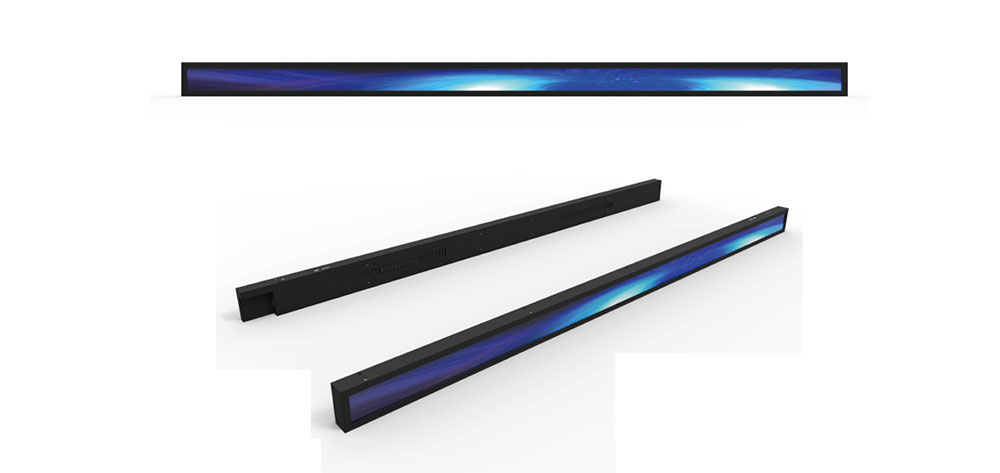
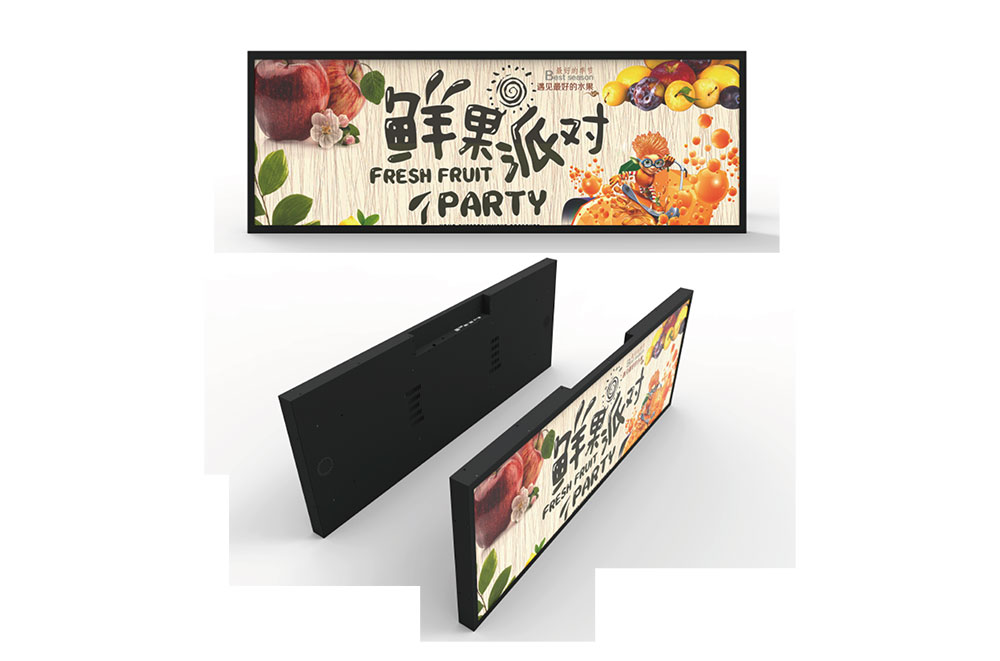
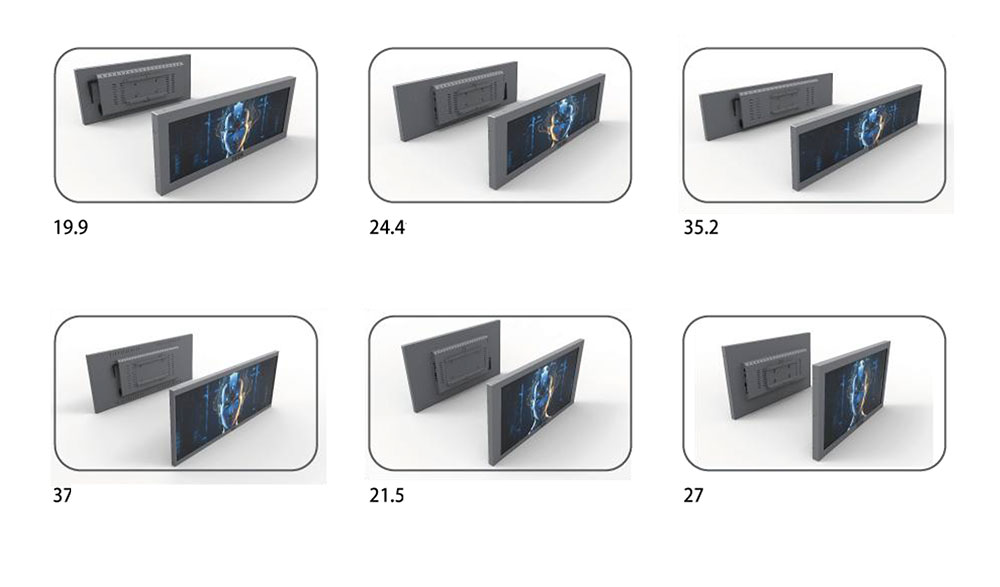
Digital menu boards above the pass or the service counter in food-led bars typically run in a 16:8, 3:1 or 4:1 aspect ratio. These "stretch" panels eliminate the dead space that occurs when a 16:9 screen is loaded with a two-row price layout. They also reduce the vertical footprint, which matters in heritage venues with fixed ceiling heights.
Video walls and feature installations
Multi-screen walls are now standard in Australian sports bars and resort entertainment precincts. Specify the bezel-to-bezel figure (0.9 mm to 3.5 mm depending on budget), the mounting system's serviceability, and whether the source is a dedicated video wall processor, a daisy-chain DisplayPort arrangement, or a networked media player per column. Daisy-chaining is cheaper but restricts the layout to fixed grids.
Ceiling-hung and truss-mounted screens
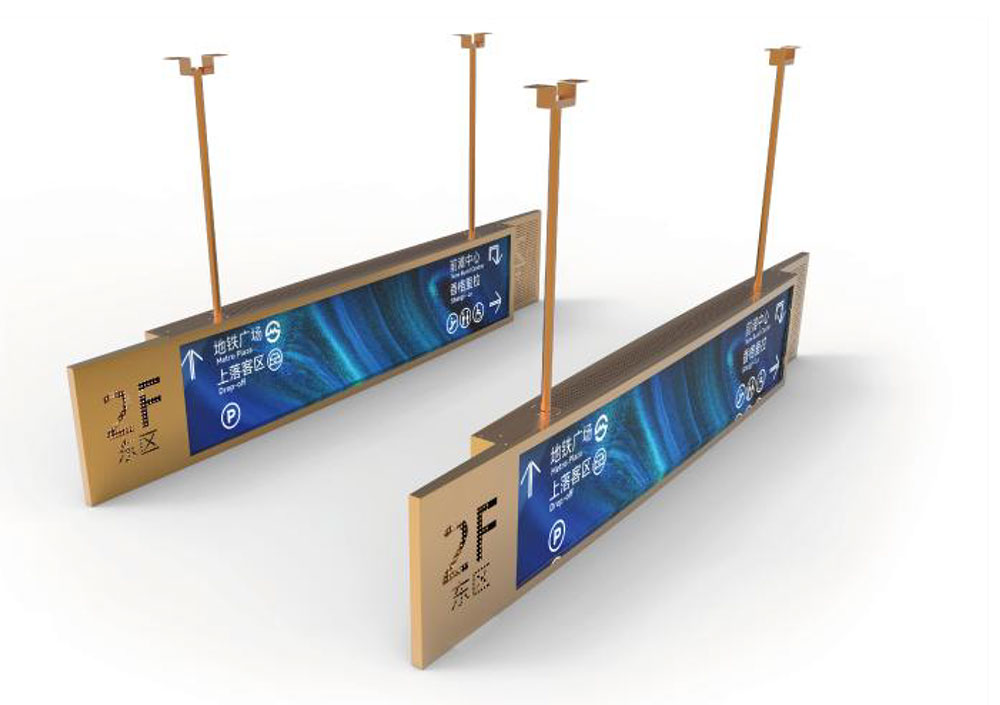
Central bar islands often cannot use wall-mounted displays. A ceiling-hung dual-sided unit serves the whole room but introduces wind-load from HVAC diffusers, cable management obligations and a fall-safety requirement. In every Australian installation, the mount must be rated well above the panel weight, and the ceiling structure must be verified — plasterboard alone is not a fixing point.
Displaying Live Sport and Odds Legitimately
Australian venues need to distinguish between three content streams, each with different technical and licensing requirements: broadcast sport, odds and wagering information, and house promotional content.
Live broadcast in a licensed venue requires a commercial content agreement. A domestic streaming subscription is not a licence to show premium sport in a bar, and displays should not be networked to personal accounts. This has a technical consequence worth planning for: commercial broadcast services typically arrive via dedicated set-top hardware. The display specification should therefore include an appropriate number of HDMI inputs with HDCP compliance, a predictable input-switching routine via RS-232 or IP so staff can change sources from a single touch panel, and input locking so an enthusiastic patron cannot switch the main screen to a different source mid-over.
Odds and wagering boards are near-static data displays. Latency tolerance differs by
an odds panel needs scheduled refresh every few seconds, while a live race picture needs low decode-to-glass delay. Separate the two onto different panels so that a data refresh never disturbs the video stream. Time synchronisation matters here — an odds board showing an incorrect timestamp in a room full of punters undermines confidence in every other number on the screen.
Australia's Time Zones, Daylight Saving and Content Scheduling
Australia spans three primary time zones and several daylight saving arrangements, and a resort group operating in Queensland, Western Australia and New South Wales cannot rely on manual scheduling. Every display controller should synchronise to network time, and every content management system should schedule against venue-local time, not the head office's time. A breakfast menu that flips to lunch at 11 am Perth time will flip at 1 pm in Sydney during daylight saving unless the CMS is configured correctly. This single configuration error produces more guest complaints in multi-property groups than any hardware fault.
Power, Safety and Australian Compliance
Any display permanently installed in an Australian hotel or resort is electrical equipment connected to a 230 volt, 50 hertz supply, and it falls within a regulatory framework that procurement teams should verify before purchase rather than after:
- Electrical safety. Products must meet the applicable Australian/New Zealand safety standard for audio/video and information technology equipment, marked and listed appropriately for the Australian market.
- EMC. Emissions and immunity compliance is required for supply; this matters in venues with wireless order tablets, gaming floor networks and audio distribution systems.
- RCM marking. The Regulatory Compliance Mark evidences that the supplier has declared conformity against the relevant electrical safety and EMC requirements.
- Energy. Displays sold with an integrated broadcast tuner may fall within Australian minimum energy performance requirements. Commercial signage panels without tune KEYWORDS: Australian Hotels and Resorts Bar LCD Screens for Australian Indoor