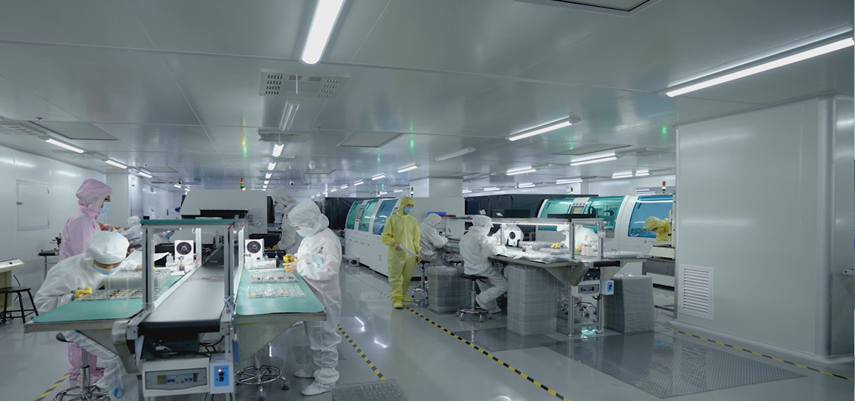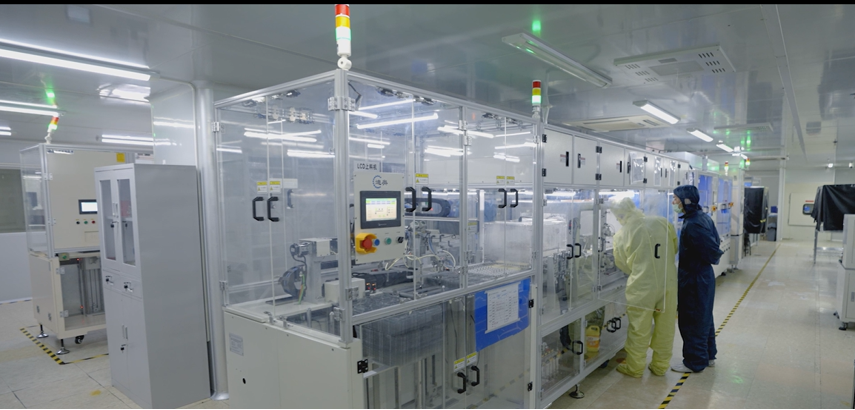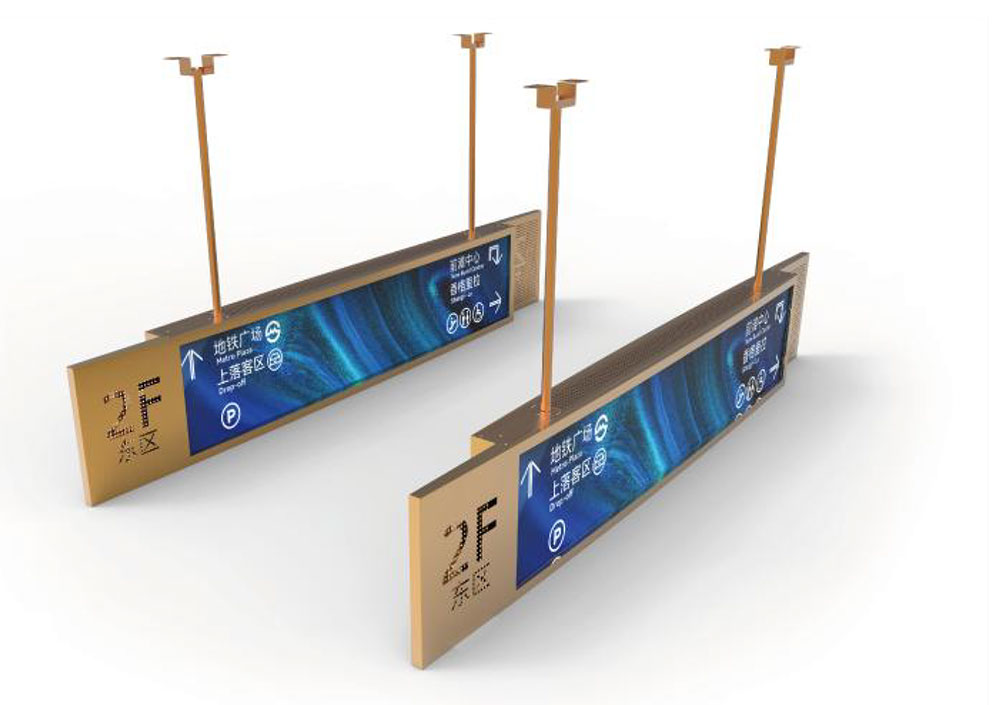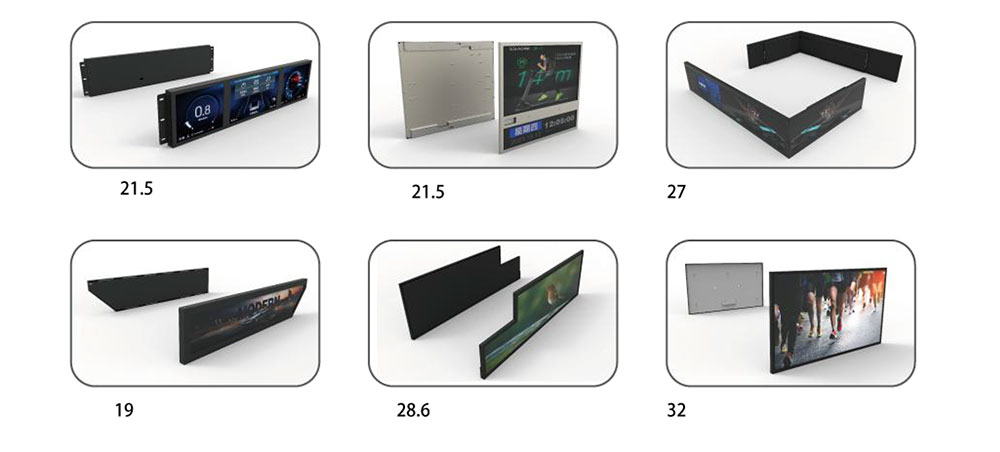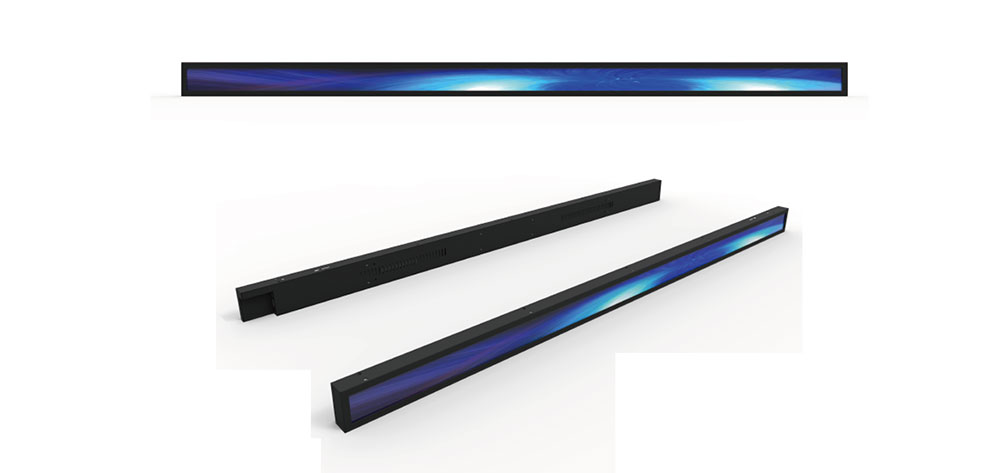
Australia has some of the harshest operating conditions for electronic displays. Rooftop solar inverters face UV radiation and surface temperatures above 70°C. Battery energy storage cabinets sit in dusty outback yards. EV charging pedestals stand in direct sun on coastal forecourts. Wind and solar monitoring stations are exposed to salt air, humidity, and heavy temperature swings. Stretched LCD screens, also called bar-type or ultra-wide LCDs, are increasingly the display of choice for this equipment. This article explains why, which specifications matter, and how to select and validate them, including the safety standards context behind EN 60950-1:2006+A11:2009+A1:2010+A12:2011+A2:2013.
1. What Stretched LCD Screens Are and Why Renewable Equipment Uses Them
A stretched LCD is a display with an extreme aspect ratio, typically 16:3, 24:9, 28:9, or wider, in sizes from about 7 to 48 inches along the diagonal. Panels like these are made by cutting or re-configuring standard TFT-LCD glass, and they are not simply a standard screen with a letterbox.
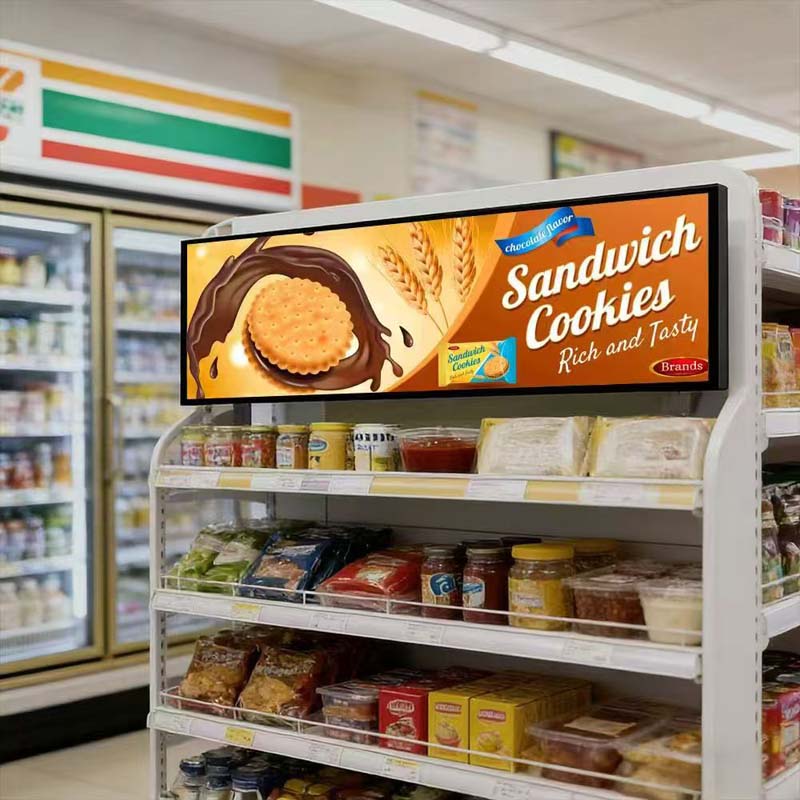
Renewable energy cabinets suit this form factor because their front panels are usually narrow. A string inverter has a slim fascia, a battery rack module has a 1U or 2U-height front, and an EV charger often has a slender column. A bar display fits these spaces and shows the key data points: power output, state of charge, voltage, fault codes, and tariff or network status. A standard 4:3 or 16:9 panel would force a larger enclosure, more cost, and a bulkier mechanical design.
2. Sunlight Readability: The First Requirement
Australian solar irradiance can exceed 1,000 W/m² at midday, and ambient illuminance on a sunlit surface can reach 100,000 lux. A conventional 250 to 300 nit commercial display becomes unreadable under those conditions. For outdoor renewable equipment, a practical brightness range looks like this:
- Shaded or semi-covered installations (garage or carport inverters, indoor-outdoor battery enclosures): 500 to 800 nits.
- Fully exposed wall-mounted inverters and EV chargers: 1,000 to 1,500 nits.
- Direct-sun kiosks and ground-mount monitoring cabinets: 1,500 to 2,500 nits or more.
Brightness alone is not enough. Effective sunlight readability combines high-luminance LED backlighting, optical bonding to remove the internal air gap, anti-reflective (AR) and anti-glare (AG) surface treatments, and a high contrast ratio. Optical bonding typically reduces internal reflections significantly and improves contrast in bright light. It also prevents fogging between the cover glass and the LCD.
Transflective or sunlight-readable polarizer options can help when power is limited, such as in off-grid monitoring units, because they use ambient light to supplement the backlight.
3. Thermal Performance in Australian Conditions
High-brightness backlights generate considerable heat, and a sealed outdoor enclosure adds solar gain. The risk is the LCD liquid crystal clearing point, where the panel turns black above a certain temperature. Standard TN and VA panels clear at around 80°C, and some wide-temperature IPS panels hold to 90°C or more.
Recommended design practices include:
- Select a wide-temperature panel with an operating range of at least -20°C to +70°C, and ideally -30°C to +80°C for desert and alpine installations.
- Use a high-clearing-point liquid crystal and a polarizer rated for sustained heat.
- Add automatic backlight dimming based on a thermistor, which protects the LED array and extends life when the cabinet temperature rises.
- Use a metal-frame or heat-spreader structure to conduct heat to the chassis rather than trapping it behind the panel.
- Provide a sun shield or recessed bezel, because shading the display can lower surface temperature considerably.
4. Environmental Protection: Dust, Water, Salt, and UV
Australian equipment is commonly specified to IP65 at the front face, and IP66 for coastal or washdown conditions. The display module and cover glass should be bonded and gasketed so the front seal contributes to the enclosure rating. For coastal sites, such as Queensland, Western Australia, and Tasmanian coastlines, consider:
- Conformal coating on the driver board to resist salt-mist corrosion.
- Stainless or anodised aluminium bezels.
- Chemically strengthened cover glass with an AR coating that resists scratching from windblown sand.
- UV-stable polarizers and adhesives to avoid yellowing and delamination.
Capacitive touch is increasingly requested for configuration menus, but the designer should confirm performance with gloves, rain, and dust. Many installers prefer a physical button or a rotary encoder on the side.
5. Electrical Interfaces and Integration
Stretched LCD modules for energy equipment generally support the following interfaces:
- LVDS or eDP for the panel, with a controller board converting HDMI, DisplayPort, or MIPI DSI.
- RGB parallel or MIPI DSI for embedded SoC platforms common in inverter controllers.
- Wide-input power, typically 12 V or 24 V DC. This matters because many energy systems have a 12 V or 24 V auxiliary rail.
- Backlight dimming through PWM or DC dimming for night-time use and energy savings.
- Touch via I²C or USB.
Because inverters and chargers are electrically noisy (high-frequency switching, large inductive loads), the display design should consider EMC. Shielded cables, ferrite cores, and a ground path through the bezel help the equipment meet the EMC requirements applicable in Australia under the RCM regime.
6. Safety Standards: The Role of EN 60950-1:2006+A11:2009+A1:2010+A12:2011+A2:2013
EN 60950-1 covers the safety of information technology equipment, which historically included display modules, controllers, and their power supplies. The consolidated version listed here (2006 with amendments A11, A1, A12, and A2) addressed electric shock, energy hazards, fire, heat, mechanical hazards, and radiation.
An important point for buyers in 2026: EN 60950-1 and the corresponding AS/NZS 60950.1 have been superseded by the hazard-based IEC 62368-1 family, adopted as EN IEC 62368-1 in Europe and AS/NZS 62368.1 in Australia and New Zealand. New product designs should be assessed against the current standard. The older test records are still useful in projects that carry legacy certifications, in component documentation, and when reviewing supplier files.
For a stretched LCD supplier, the relevant evidence includes:
- Insulation and creepage/clearance distances on the power input and backlight driver.
- Temperature rise limits of components and plastics, especially important in high-brightness modules.
- Flammability ratings of PCB materials (UL 94 V-0), wiring, and plastic frames.
- Limited-power-source considerations for the backlight circuit.
- Component approvals for capacitors, fuses, and connectors.
Renewable equipment manufacturers should treat the display module as a component within a larger system. The final inverter, battery, or charger must still comply with its own product standards, such as AS/NZS 4777 for grid-connected inverters, IEC 62109 for PV converter safety, AS/NZS 5139 for battery installations, and AS/NZS 3100 for general electrical safety. Ask the display supplier for a component-level test report, material data, and an RoHS and REACH declaration to simplify the system-level assessment.
7. Application Examples
Solar inverter status bars: A 10 to 15 inch 16:3 bar display of 1,000 nits can show a real-time power curve, daily yield, and grid status in a slim enclosure.
Battery energy storage systems: A 7 to 12 inch stretched panel on a rack front gives state of charge, module temperature, and alarms. In cabinets with limited depth, the thin profile is a strong advantage.
EV charging stations: A 12 to 28 inch bar display of 1,500 nits or more suits a slender pedestal. It shows charging status, pricing, and branding, and it has to read in full sun and at night.
Wind and hybrid-site monitoring: Remote control cabinets need wide-temperature, low-power displays with long product lifecycles.
Digital signage on solar-powered shelters and microgrids: Ultra-wide panels with transflective options serve information displays where power is limited.
8. Selection Checklist
Before specifying a stretched LCD for Australian renewable energy equipment, confirm:
- Brightness appropriate to the installation (at least 1,000 nits for exposed sites).
- Optical bonding and AR/AG treatment.
- Operating and storage temperature range, plus the liquid crystal clearing point.
- IP rating of the front seal and cover glass specification.
- Backlight lifetime at the operating brightness (50,000 hours or more at the rated luminance is a common target) and a dimming strategy.
- Interface compatibility with your controller and a stable supply of matching driver boards.
- Safety and EMC documentation, with the current IEC/AS/NZS 62368 alignment and any legacy EN 60950-1 reports.
- Long-term supply commitment, since energy equipment often has a 10-year or longer service life.
- Customisation options, such as cut-to-size glass, special bezels, and connector positions.
9. Validation Testing
A robust qualification plan should include high-temperature operation under solar load, thermal cycling, humidity (for example 85°C/85%RH), salt-mist exposure, UV ageing, vibration for transport, and ingress testing. Measure luminance and contrast under a solar simulator or real sunlight to confirm readability, not just spec-sheet numbers. Pilot installations in a hot northern climate and a coastal environment are worth the time before volume release.
Conclusion
Stretched LCD screens give Australian renewable energy equipment designers an efficient way to present critical information on narrow fascias, provided the display is engineered for sunlight, heat, dust, and salt. By combining high-brightness backlighting, optical bonding, wide-temperature construction, a correctly rated front seal, and clear safety documentation, manufacturers can deliver equipment that remains readable and reliable for many years. HITULCD works with energy equipment makers to tailor stretched high-brightness LCD modules to these requirements, from the panel and optical stack to the interface board and compliance documents.
KEYWORDS: stretched LCD screens, Australian renewable energy equipment, high-brightness LCD, sunlight readable display, outdoor bar LCD