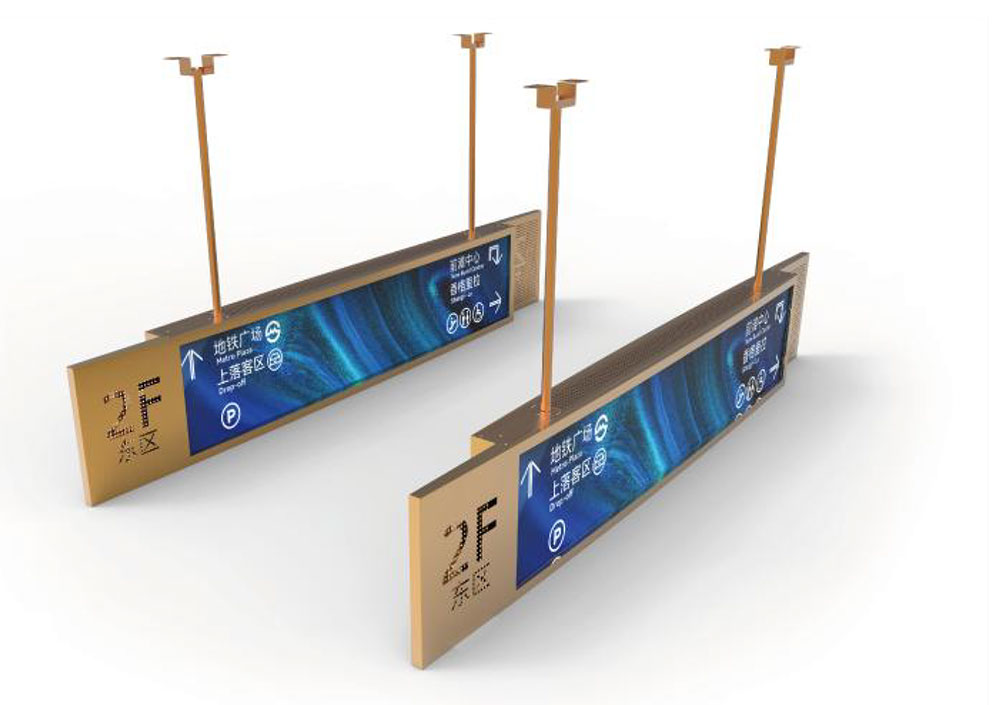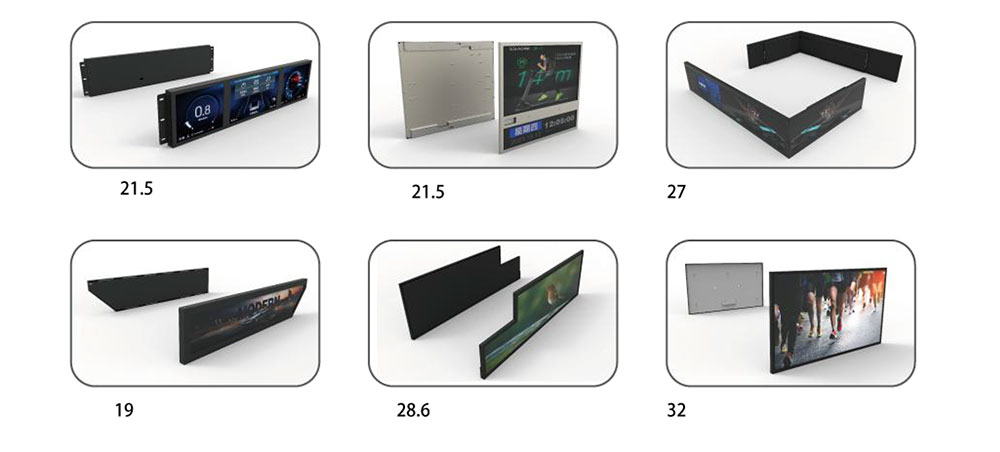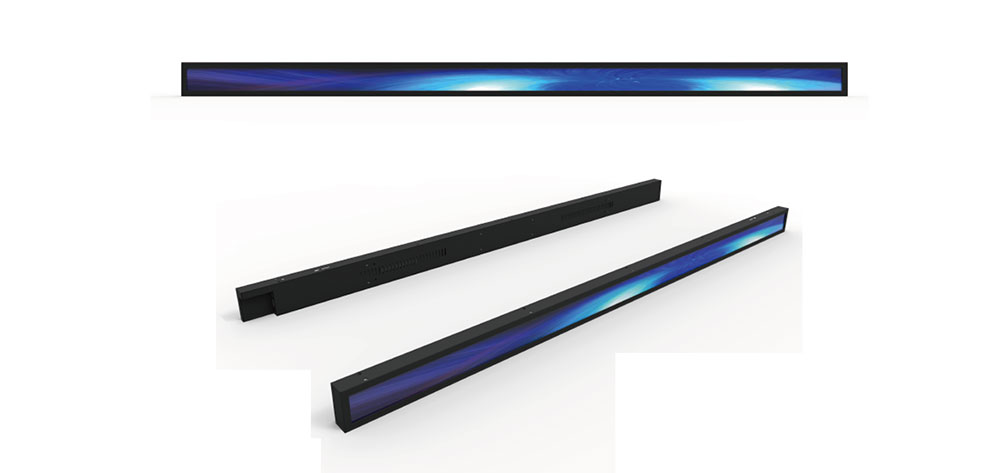
Australian transit is one of the most demanding environments for a display. Buses, trams, light rail, ferries, regional trains and platform shelters in Sydney, Melbourne, Brisbane, Perth and Darwin all expose screens to intense UV, strong sunlight, heat, dust, vibration and constant operation. In this setting, the bar LCD display, the stretched-format panel with aspect ratios such as 16:3, 24:5 or 32:9, has become a standard for passenger information. It fits above doors, along ceiling rails, behind windscreens and inside shelter frames, where a conventional 16:9 screen would not.
The "High" in the title points to the single most important specification: high brightness. This guide explains how to choose a high-brightness bar LCD for Australian transit, covering the criteria an engineer or procurement team should work through before issuing a purchase order.
## 1. Understand the Transit Use Case First
Bar displays serve different roles, and each carries different requirements.
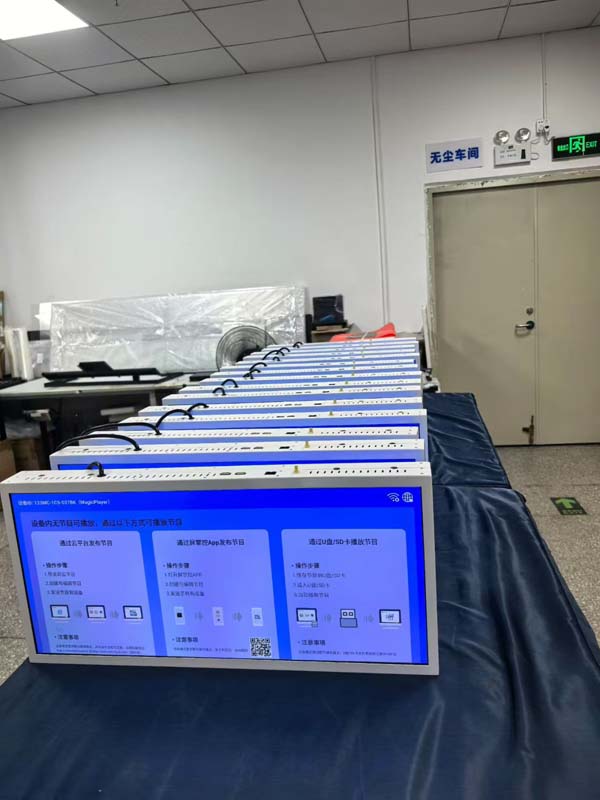
- **In-vehicle interior (bus, tram, train):** Mounted above doors or along the ceiling to show next stops, route maps, connections and safety messages. Sunlight enters through large side windows, so 700 to 1,000 nits is usually necessary even indoors.
- **Window-facing or windscreen-adjacent displays:** Destination and route signs facing outward need 1,500 to 3,000 nits or more, because the panel competes with direct sun.
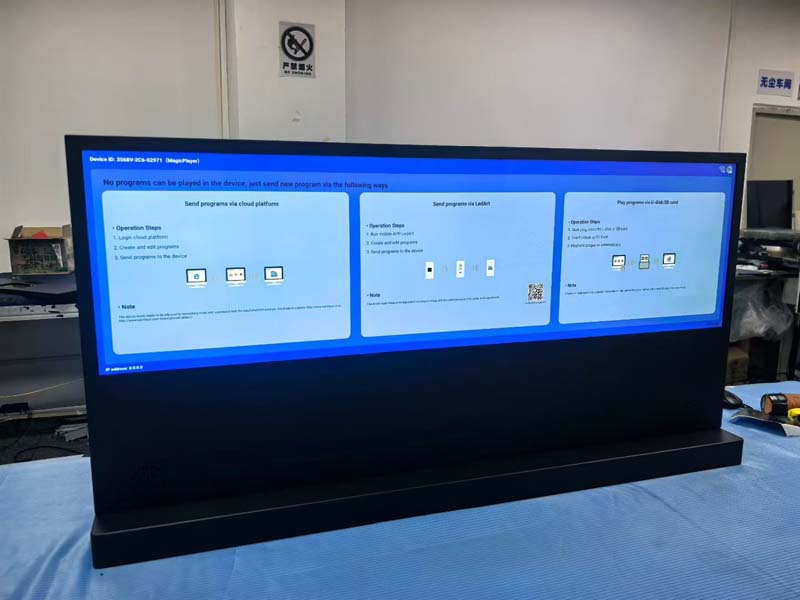
- **Platform and shelter displays:** Real-time arrival boards, often in semi-outdoor enclosures. These typically need 2,500 to 4,000 nits plus thermal protection.
- **Ferry and wharf displays:** Salt-laden air and glare off the water add corrosion and reflection concerns.
Defining the mounting position, viewing distance and sun exposure angle will narrow the field faster than any datasheet comparison.
## 2. Brightness: Specify for the Worst Hour, Not the Average
Australian summer sun can produce ambient illumination exceeding 100,000 lux. A display rated at 500 nits that looks fine in a showroom becomes unreadable at midday. Practical guidance:
- **Interior, shaded vehicle:** 700 to 1,000 nits
- **Interior with strong window exposure:** 1,000 to 1,500 nits
- **Window-facing or semi-outdoor:** 2,500 to 4,000 nits
Ask whether the quoted figure is typical or minimum, whether it is measured at panel center or averaged across nine points, and what the brightness is at maximum operating temperature. LED backlights lose output when hot, so a display quoted at 2,500 nits at 25°C may deliver far less inside a closed shelter at 60°C.
Also check automatic dimming. An ambient light sensor with smooth, stepped control reduces glare for night-time passengers, avoids driver distraction in cabins, and extends backlight life. Look for deep dimming down to 1 to 5 nits for night service, and a reliable PWM or DC dimming method that avoids visible flicker on camera or at low brightness.
## 3. Optical Performance in Sunlight
Brightness alone does not guarantee readability. Contrast under sunlight depends on how much ambient light reflects off the surface.
- **Optical bonding:** Filling the air gap between cover glass and LCD removes internal reflections and improves contrast, and it prevents condensation and dust ingress. It is strongly recommended for transit.
- **Anti-reflective (AR) and anti-glare (AG) coatings:** AR coatings reduce reflectance to under 1 percent, while AG gives a diffused surface that hides fingerprints. Choose based on whether sharp color or glare control matters more.
- **Polarizer quality:** Sunlight-readable panels often use enhanced polarizers that keep the picture visible through polarized sunglasses. Test this, since many passengers and drivers wear them.
- **Viewing angle:** Bar displays are viewed from along the vehicle or platform. IPS or advanced wide-angle panels with 170 degrees or better prevent color shift for people seated or standing at the side.
## 4. Size, Aspect Ratio and Resolution
Bar panels range from about 11 inches to 40 inches or more in length. Select the format that matches the physical space and the content layout.
- Match the active area to the available mounting aperture and add allowance for bezel and housing.
- Choose resolution for content: stop lists and scrolling text read well at 1920x360 or 1920x480 on common 16:3 panels, while longer formats suit route maps with full line diagrams.
- Consider pixel density for viewing distance. In a bus, passengers sit 1 to 4 meters away, whereas a platform board may be read from 5 to 10 meters. Larger text and higher contrast take priority over very fine pixel pitch.
- Confirm the video interface (LVDS, eDP, HDMI via board, MIPI) matches your player or controller, and whether a driver board is included.
## 5. Temperature, Thermal Design and Reliability
Interior temperatures in a parked bus in Queensland or the Northern Territory can exceed 70°C, and shelter enclosures in direct sun run hot as well. Standard commercial panels, rated 0 to 50°C, are not adequate.
- Choose an **operating range of at least -20°C to 70°C** for in-vehicle and shelter use, and confirm the storage range.
- Verify the **clearing point** of the liquid crystal. If it is too low, the screen develops black areas when hot. High-brightness panels should have a clearing point above 100°C.
- Review thermal management: heat sinks, thermal pads to the chassis, or a controlled fan design. Fanless is preferred in dusty vehicles.
- Look for **MTBF and backlight lifetime** of 50,000 hours or more, ideally with a stated half-life at the brightness you intend to use rather than at a lower test setting.
- Ask about thermal derating logic, which lowers backlight output automatically to protect the panel above set temperatures.
## 6. Vibration, Shock and Mechanical Robustness
Vehicles generate constant vibration. Rail track joints, bus suspension on regional roads and tram braking produce loads that damage poorly mounted boards.
- Seek compliance with **EN 61373** for railway rolling stock, or equivalent shock and vibration testing.
- Use locking connectors, strain relief on cables, and board-level adhesive or conformal coating on exposed circuitry.
- Specify tempered or chemically strengthened cover glass, and consider anti-shatter film for passenger-safety reasons.
- Metal chassis and robust brackets reduce resonance. Ask the supplier for random vibration profiles and how many hours the unit has been tested.
## 7. Compliance, Safety and Local Standards
Australian transit projects frequently involve state transport agencies with strict procurement specifications.
- **Electrical and EMC:** Look for RCM compliance, which covers electrical safety and EMC requirements for the Australian and New Zealand markets.
- **Rail:** EN 50155 for electronic equipment on rolling stock covers supply voltage variations, temperature and surges. EN 45545-2 addresses fire behavior of materials in railway vehicles.
- **Bus:** Check E-mark or equivalent and ISO 7637-2 for transient voltage immunity from the vehicle power system.
- **Power input:** A wide-range DC input such as 9 to 36 V or 12/24 V, with protection against reverse polarity, surges and load dump, is essential for vehicles.
- **Accessibility:** Where relevant, verify text size, contrast and audio integration against the Disability Standards for Accessible Public Transport.
Confirm the certificates relate to the exact model and not only to a sibling product.
## 8. Ingress Protection and Environmental Sealing
Australia presents dust in the interior, heavy tropical rain in the north, and coastal salt exposure around many ferry routes and port cities.
- Interior in-vehicle units: IP54 to IP65 front sealing is usually sufficient and helps with cleaning crews using damp cloths or sprays.
- Platform and shelter units: IP65 or higher, with anti-condensation design. Humidity swings can cause fogging if the enclosure is not sealed or vented properly.
- Coastal and ferry settings: Request salt-spray test results, anodized or powder-coated aluminum and stainless fasteners.
- Consider vandal resistance. Impact-rated glass or IK ratings (IK08 to IK10) reduce replacement costs in public spaces.
## 9. Content, Control and Connectivity
Hardware only delivers value when the information is reliable and manageable.
- **Player integration:** Verify compatibility with your CMS and onboard computer. Android, Linux and Windows media players are all common; make sure drivers and EDID behavior are documented.
- **Remote management:** 4G or 5G, Wi-Fi and Ethernet allow content updates and health monitoring across a fleet. Support for scheduled power on/off tied to ignition signals saves energy and drains less of the vehicle battery.
- **Real-time data:** Check support for GTFS-Realtime, SIRI or proprietary AVL feeds, since arrival data drives bar display content.
- **Fail-safe behavior:** Define what appears if the connection drops, such as a static timetable or default message.
- **Touch or no touch:** Most transit bars are non-touch, which reduces cost and sunlight-related reflections.
## 10. Lifecycle, Support and Total Cost of Ownership
A cheap display that fails in three years is expensive once removal, truck rolls and downtime are counted.
- Ask for a **minimum 5-year supply commitment** and notice periods for end-of-life changes so you can keep fleets consistent.
- Request warranty terms of 3 years or more for high-brightness industrial modules, and confirm what is excluded, such as backlight burn-in or damage from vibration.
- Evaluate local logistics: spare stock in Australia, RMA turnaround, and technical support in compatible time zones.
- Ask for sample units for field trials. Install a few on a route for one summer and review brightness, temperature and failure logs before scaling.
- Compare **total cost** including power consumption, since a 3,000-nit panel can draw significantly more than a 1,000-nit one, and the cost of cooling or cabling.
## Quick Selection Checklist
1. Define the location and sun exposure.
2. Set minimum brightness at the maximum operating temperature.
3. Select bonded, AR-treated, wide-viewing-angle optics.
4. Match size, ratio, resolution and interface to your layout and player.
5. Confirm -20 to 70°C operation and high clearing point.
6. Verify vibration and shock testing for rolling stock or buses.
7. Check RCM, EN 50155, EN 45545-2 or E-mark as relevant.
8. Select an appropriate IP and IK rating.
9. Validate software, data feeds and remote management.
10. Secure supply, warranty and local support.
## How HITULCD Can Help
HITULCD designs high-brightness bar LCD modules for demanding transit conditions, with options for optical bonding, wide-temperature operation, high clearing-point panels and custom sizes and interfaces. Our engineering team can review your mounting space, sun exposure and certification path, then recommend a configuration and supply samples for field trials. Choosing carefully at the specification stage protects passengers' access to information and your project budget throughout the vehicle's service life under the Australian sun.
KEYWORDS: bar LCD display, Australian transit, high brightness LCD, sunlight readable display, transit passenger information