Introduction: Why Standard Aspect Ratios Fall Short in Industry
For decades, the display industry has revolved around a handful of standardized aspect ratios. The 4:3 format dominated the early computing era, 16:9 became the consumer standard for televisions and monitors, and 16:10 carved out a niche among productivity users. These ratios were shaped by mass-market economics, broadcast conventions, and cinema formats. They serve consumer electronics well. In industrial environments, however, the physical constraints of the machine rarely match the proportions of a television screen. A control panel embedded in the door of a CNC lathe, a status bar mounted above a conveyor line, or an instrument cluster inside a locomotive cab each has its own geometry, and forcing a rectangular 16:9 panel into that space wastes real estate, complicates mechanical design, and often degrades the operator experience.
This is where custom aspect ratio LCD displays enter the picture. At HITULCD, we design and manufacture high-brightness LCD panels engineered to fit the precise dimensional envelope of an industrial application, rather than asking the application to bend around a commodity panel. A custom aspect ratio display is not simply a cropped standard panel. It is a purpose-built optical and electronic assembly whose active area, backlight, driver electronics, and mechanical mounting are tailored to the target system. This white paper examines the engineering rationale behind custom aspect ratio displays, the technical challenges of producing them, and the industrial use cases where they deliver measurable value.
Defining Aspect Ratio in the Industrial Context
Aspect ratio describes the proportional relationship between the width and height of the active display area. A 16:9 panel is 1.78 times wider than it is tall, while a square 1:1 panel has equal dimensions. In industrial design, the relevant question is rarely "what is the standard ratio?" but rather "what shape does the available mounting space allow, and what information geometry does the operator need?"
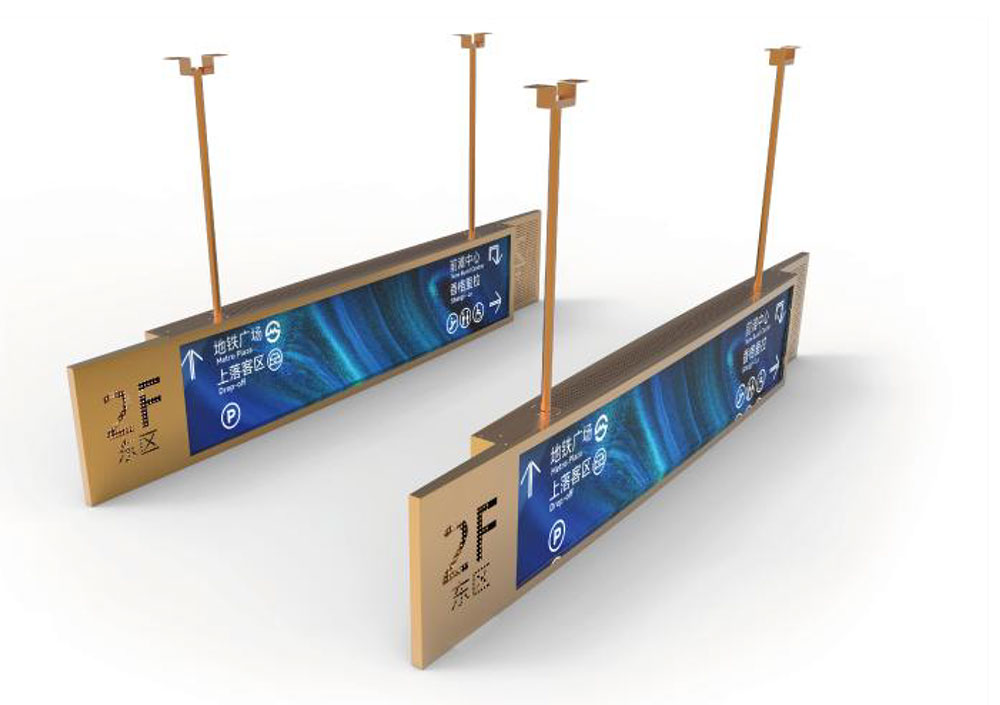
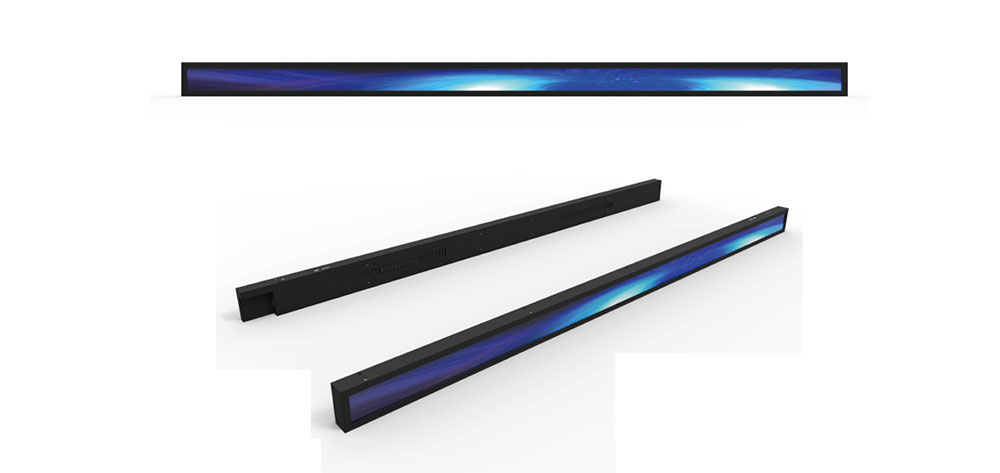
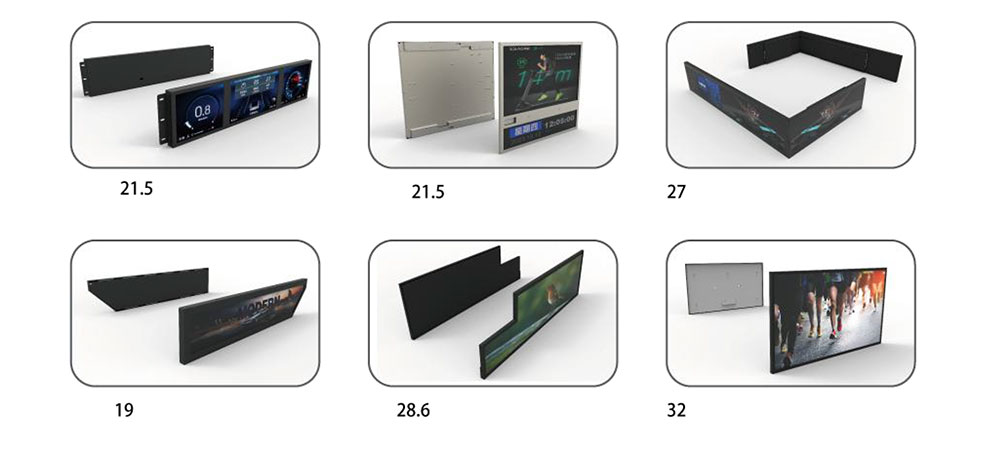
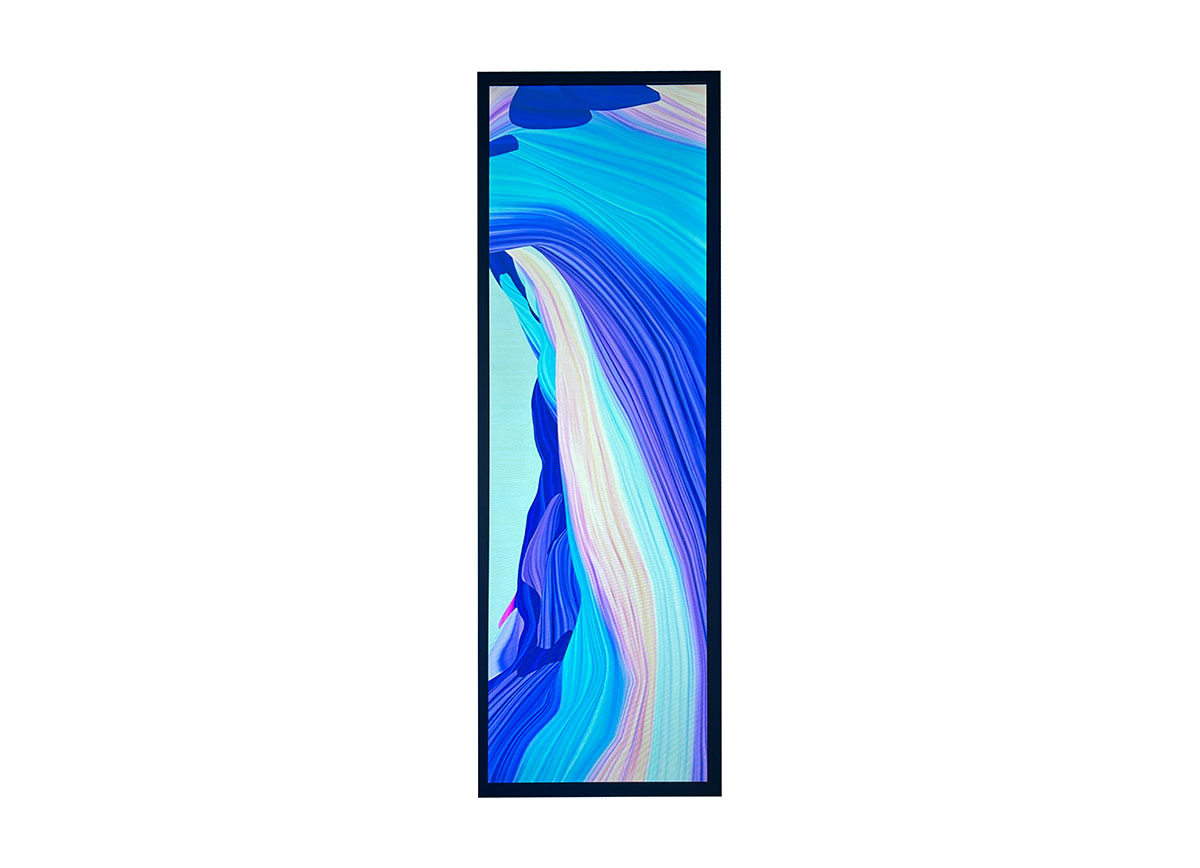
Consider a few examples that recur across our customer base. Bar-type displays with ratios such as 32:9, 24:9, or even more extreme stretched formats are ideal for shelf-edge signage, elevator indicators, and machine status strips where a long, thin horizontal band is the only usable space. Square and near-square displays around 1:1 or 4:3 suit gauges, meters, and rotary control interfaces where circular or symmetrical layouts dominate. Portrait-oriented panels rotated to a tall format serve kiosk terminals, access control readers, and vertical process diagrams. Ultra-tall stretched bars find homes in transit displays and queue management. Each of these breaks from the 16:9 mold because the underlying industrial task has a different visual and spatial logic.
The key insight is that in industrial design the display should follow the function and the enclosure, not the other way around. When an engineer is granted the freedom to specify a 15:4 or 3:8 panel, the resulting product is more compact, more legible, and more mechanically elegant.
How Custom Aspect Ratio Displays Are Made
There are two principal engineering paths to a custom aspect ratio LCD, and choosing between them is one of the most important early decisions in a project.
Path One: Cell-Level Customization
The most complete approach is to design the LCD glass, or cell, from scratch at the target dimensions. Here the thin-film transistor array, the pixel matrix, the color filter, and the polarizers are all fabricated to the specified active area. This yields a panel with no wasted glass, an optimal pixel density for the chosen size, and a native resolution that matches the desired proportions. The tradeoff is cost and lead time. Building a new cell requires photomask tooling and a minimum production volume to be economically viable. For programs with sufficient annual quantities, cell-level customization delivers the best result.
Path Two: Cutting and Reconfiguring Standard Cells
For lower volumes or faster turnaround, we can start from a standard mother glass and produce a custom aspect ratio through precision cutting and driver reconfiguration. Modern LCD cutting techniques, including laser scribing and mechanical dicing followed by edge sealing, allow a rectangular panel to be reduced to a narrower or shorter active area. This process, sometimes called panel stretching or bar-type conversion, must be paired with careful re-routing of the source and gate drivers so that the addressable region matches the physical active area. Edge sealing is critical because a freshly cut LCD edge exposes the liquid crystal layer to moisture ingress; without a robust seal the display would fail in the field. HITULCD applies industrial-grade edge sealing and re-lamination to ensure that cut panels meet the same reliability standards as native cells.
Both paths must address the backlight. A custom active area demands a custom backlight unit, since the LED placement, light guide plate geometry, and diffuser stack all define brightness uniformity. For high-brightness industrial applications this is especially demanding, and it is where our core expertise lies.
High Brightness and the Custom Aspect Ratio Challenge
Industrial and outdoor displays frequently need luminance levels far beyond the 250 to 350 nits typical of office monitors. Sunlight-readable panels often require 1,000 to 2,500 nits or more so that content remains visible under direct sun or intense factory lighting. Achieving high brightness in a non-standard shape introduces engineering challenges that a commodity supplier is not equipped to handle.
The first challenge is backlight uniformity. When you stretch a panel into a long 32:9 bar, the light guide plate must distribute illumination evenly across a much longer path, and hot spots near the LEDs become more visible. Our optical engineers design bespoke light guide plates and select LED binning to hold luminance uniformity within tight tolerances, typically better than 80 percent across the active area, even on extreme aspect ratios.
The second challenge is thermal management. High-brightness LEDs generate heat, and heat is the primary enemy of LCD longevity and color stability. A narrow bar display concentrates LEDs along a short edge, creating a thermal gradient. We mitigate this with aluminum heat spreaders, thermally conductive adhesives, and, where the enclosure allows, active cooling. Managing junction temperature also protects the liquid crystal from clearing point issues that cause dark blotches in hot conditions, a phenomenon known as isotropic failure.
The third challenge is optical bonding. To maximize sunlight readability and mechanical robustness, we often optically bond the cover glass or touch sensor directly to the LCD using an optically clear adhesive or resin. This eliminates the air gap that causes internal reflections, boosting contrast under ambient light. On custom aspect ratios the bonding fixtures and vacuum lamination process must be re-tooled for each geometry, which is routine work in our production line but a significant barrier for suppliers who only handle standard sizes.
Industrial Use Cases
Factory Automation and Machine Interfaces
On the factory floor, human-machine interface panels are embedded into equipment where every millimeter counts. A packaging machine might have a shallow, wide slot in its control cabinet that perfectly fits a 24:9 bar display but cannot accommodate a square 4:3 panel without a costly redesign of the sheet metal. A custom aspect ratio panel lets the machine builder present a real-time production dashboard, alarm banner, or line-speed readout in exactly the space available, improving both aesthetics and operator glanceability.
Transportation and Rail
Rolling stock, buses, and metro systems make heavy use of stretched bar displays. Passenger information systems above doors, next-stop indicators, and route maps all favor long horizontal formats. These environments demand high brightness for daylight visibility, wide operating temperature ranges for unheated vehicle interiors, and vibration resistance. Custom aspect ratio panels engineered for these conditions carry ruggedized mounting, conformal-coated electronics, and extended temperature liquid crystal formulations.
Medical and Laboratory Equipment
Diagnostic instruments, patient monitors, and laboratory analyzers often integrate displays into compact housings alongside sensors and fluidics. A custom portrait panel can present a vertical parameter list beside a control knob, or a square panel can show a circular scan pattern without letterboxing. Medical applications also demand color consistency and long product lifecycles, since a device may remain in service and require display replacements for a decade or more. Custom programs give the manufacturer control over long-term supply.
Retail, Signage, and Smart Shelving
Shelf-edge displays are one of the fastest-growing markets for bar-type LCDs. A thin strip running along a store shelf can show pricing, promotions, and stock information. These require reliable operation for extended hours, moderate to high brightness for well-lit retail interiors, and slim depth for tight shelf mounting. The extreme wide aspect ratio is fundamental to the concept and simply cannot be served by standard panels.
Energy, Utilities, and Process Control
Control rooms and field equipment in energy and utility applications rely on displays that convey status at a glance and survive harsh conditions. A tall vertical panel might display a pipeline schematic, while a wide panel serves a substation status board. High brightness ensures readability in outdoor cabinets, and custom sizing allows integration into legacy equipment where standard panels would not fit.
Interface, Resolution, and Integration Considerations
Specifying a custom aspect ratio display involves more than the outline dimensions. Resolution must be chosen to deliver adequate pixel density for the viewing distance. A far-viewed status bar can use a lower pixel density than a close-viewed touch interface. The signal interface, whether LVDS, eDP, MIPI-DSI, or a parallel RGB interface, must match the customer's controller board or system-on-module. Where the customer prefers a turnkey solution, we can integrate a driver board that accepts HDMI or another common input and handles timing conversion internally.
Touch integration is another dimension. Projected capacitive touch sensors can be manufactured to match any active area, and we tune the sensor for use with gloves or in the presence of water and electrical noise, both common in industrial settings. The touch controller firmware is calibrated to the specific panel geometry so that reported coordinates map correctly across the unconventional shape.
Mechanical integration should be planned early. Mounting features such as brackets, gaskets, and bezels are designed alongside the panel so that the finished module drops into the customer's enclosure with a proper environmental seal. For applications facing dust and liquids, we design toward ingress protection ratings and specify cover glass thickness and adhesive to meet impact and sealing requirements.
Reliability, Lifespan, and Environmental Robustness
Industrial displays are judged by their durability. A commodity consumer panel is designed for a few thousand hours of typical living-room use, whereas an industrial custom display must often operate continuously for tens of thousands of hours across a wide temperature band. HITULCD specifies extended-temperature liquid crystal, wide-temperature backlight LEDs, and components rated for the target environment. We validate designs through thermal cycling, humidity soak, vibration, and shock testing so that the display performs reliably over its intended service life.
Brightness longevity deserves special attention. LED backlights dim over time, and running them at maximum current to hit high brightness accelerates that decay. Our approach balances drive current, thermal design, and optical efficiency so that the panel maintains its rated luminance over a long half-life rather than sacrificing lifespan for peak numbers. Where the application allows, an ambient light sensor and automatic dimming reduce power and extend backlight life by matching brightness to conditions.
The HITULCD Advantage in Custom Aspect Ratio Design
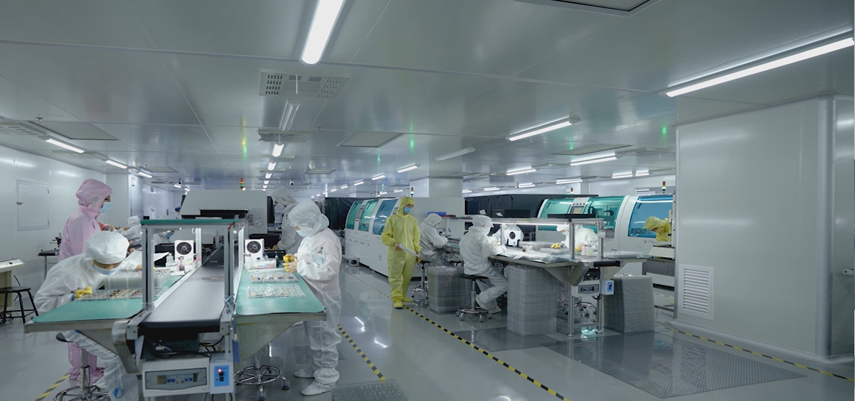
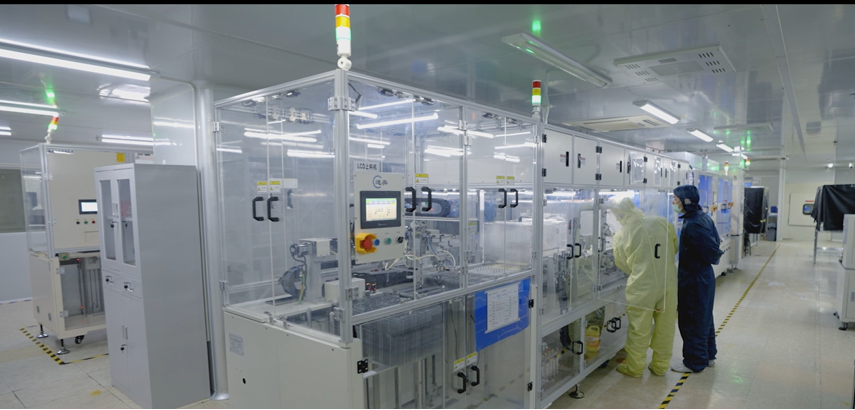
Delivering a successful custom aspect ratio display is a systems engineering effort, not a catalog transaction. It requires coordinated design of the LCD cell or cut process, the backlight optics, the thermal solution, the driver electronics, the optical bonding, and the mechanical enclosure interface. At HITULCD, we bring these disciplines together under one roof and focus specifically on the high-brightness segment where the challenges are hardest. We work with customers from concept, helping translate an available mounting envelope and a functional requirement into a manufacturable specification, then carry that specification through prototyping, validation, and volume production.
The result is a display that fits the machine precisely, remains readable in demanding light, survives the operating environment, and supports the long product lifecycles industrial customers depend on. Rather than compromising the design of a valuable piece of equipment to accommodate a commodity screen, engineers can specify exactly the shape, brightness, and interface their application needs.
Conclusion
Standard aspect ratios were shaped by television and the consumer market, and they rarely align with the physical and functional demands of industrial equipment. Custom aspect ratio LCD displays free designers from those constraints, letting the display conform to the machine and the task. When combined with high-brightness engineering, robust thermal design, optical bonding, and industrial-grade reliability, a custom panel becomes a strategic advantage rather than a design compromise. As factories, vehicles, medical devices, and smart retail systems continue to integrate displays in ever more specialized ways, the demand for purpose-built aspect ratios will keep growing. HITULCD is positioned to meet that demand with the optical, electronic, and mechanical expertise required to turn a unique dimensional requirement into a dependable, sunlight-readable, long-life display.
KEYWORDS: custom aspect ratio LCD, industrial LCD display, high brightness LCD, bar-type LCD display, sunlight readable display