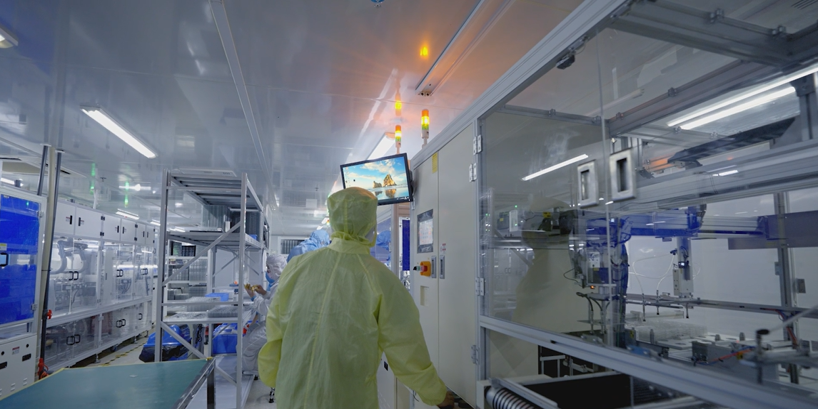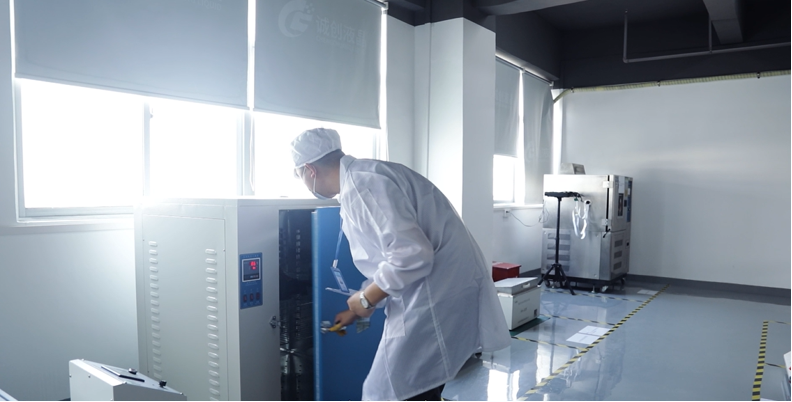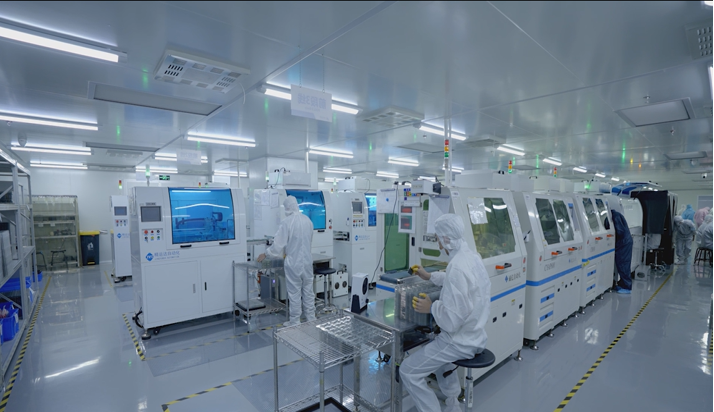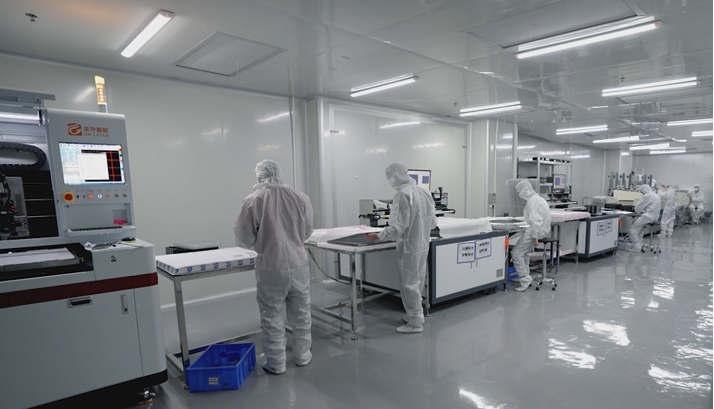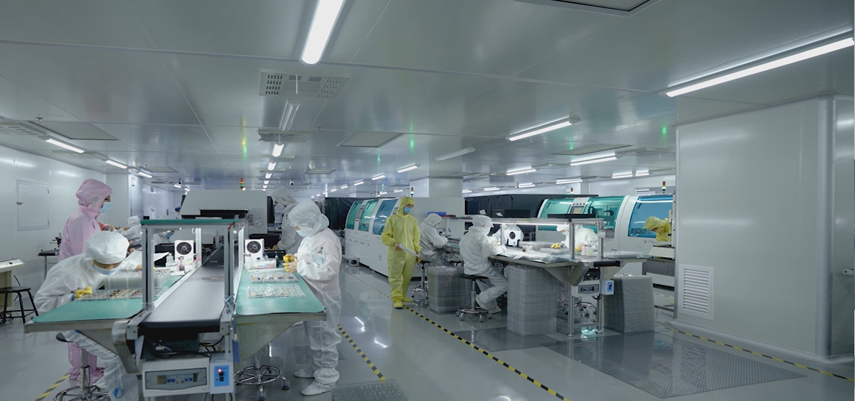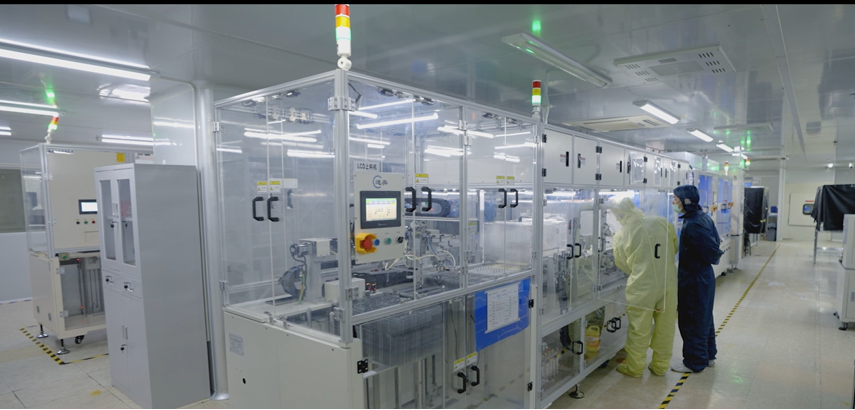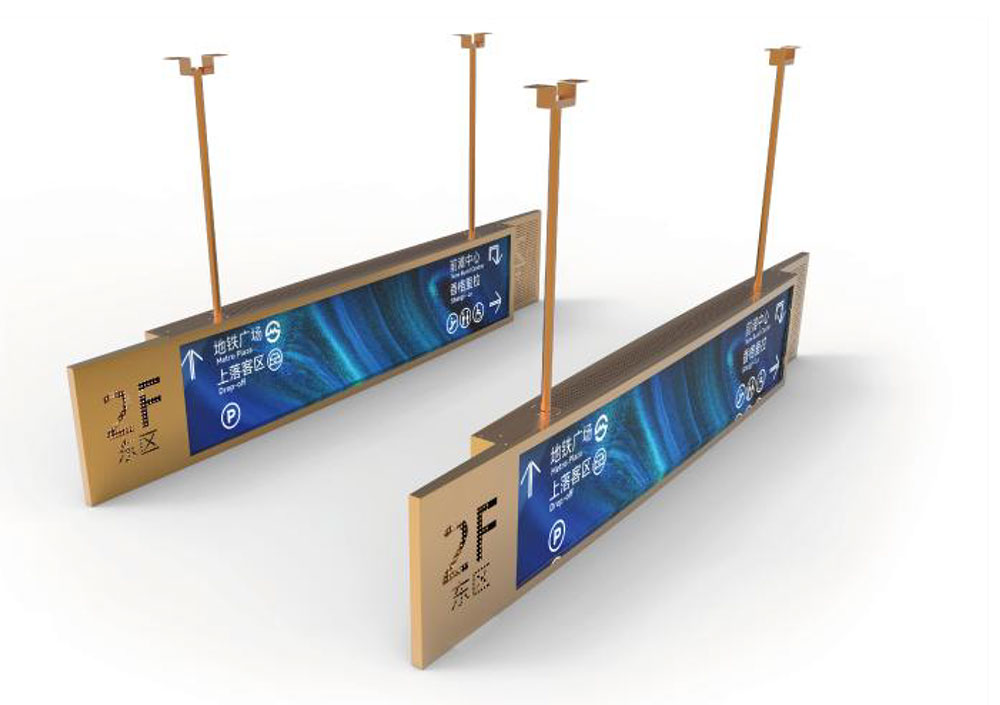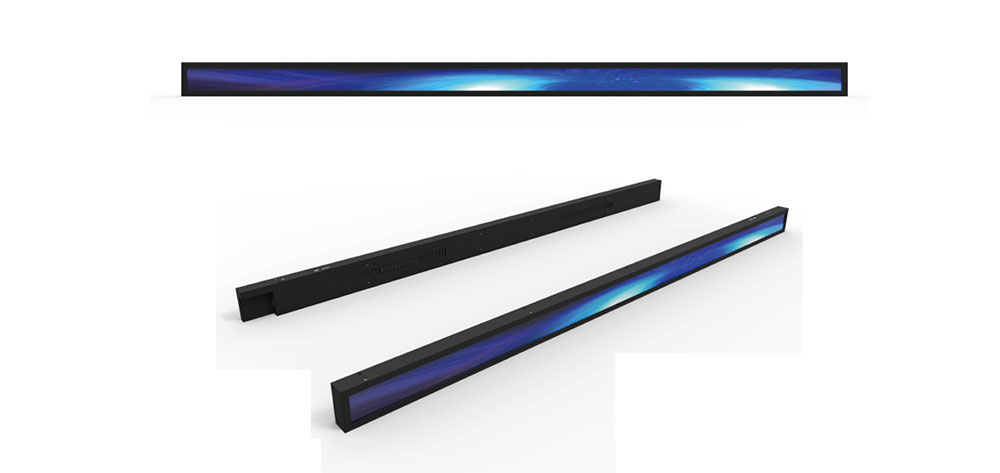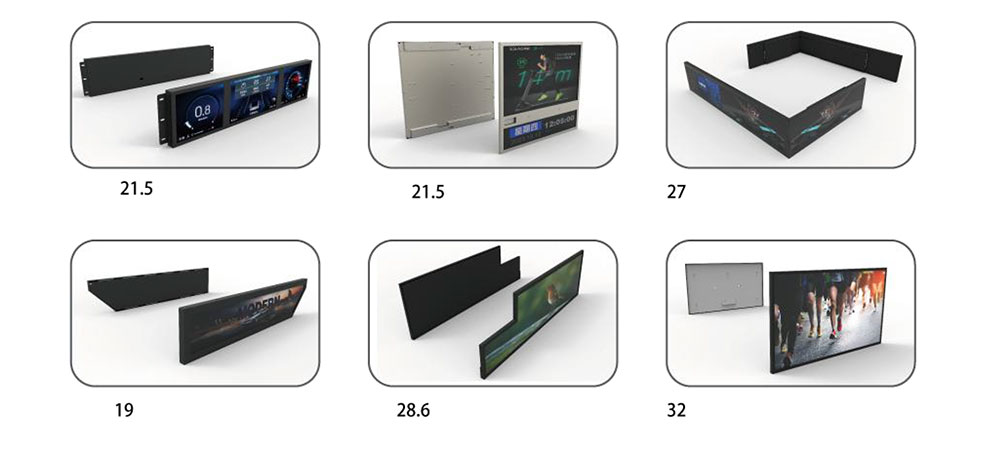
Original equipment manufacturers (OEMs) across the United States and Europe increasingly demand display formats that break away from conventional 16:9 rectangles. Stretched LCD displays—also known as bar-type or ultra-wide displays—have become the format of choice for digital signage, transportation systems, retail shelf-edge messaging, and industrial control panels. As a dedicated high-brightness LCD manufacturer, HITULCD supplies stretched display solutions engineered to meet the rigorous performance, compliance, and supply-chain expectations of Western OEM programs.
What Is a Stretched LCD Display?
A stretched LCD is a panel with a non-standard aspect ratio—commonly 16:3, 16:4, 16:4.5, 24:9, or fully custom proportions—produced either as a purpose-built panel or as a precision-cut segment of a larger mother glass. The result is an elongated form factor ideal for narrow mounting spaces such as under-shelf rails, elevator jambs, kiosk headers, and instrument clusters. Unlike consumer displays, stretched panels are specified around installation geometry rather than entertainment viewing.
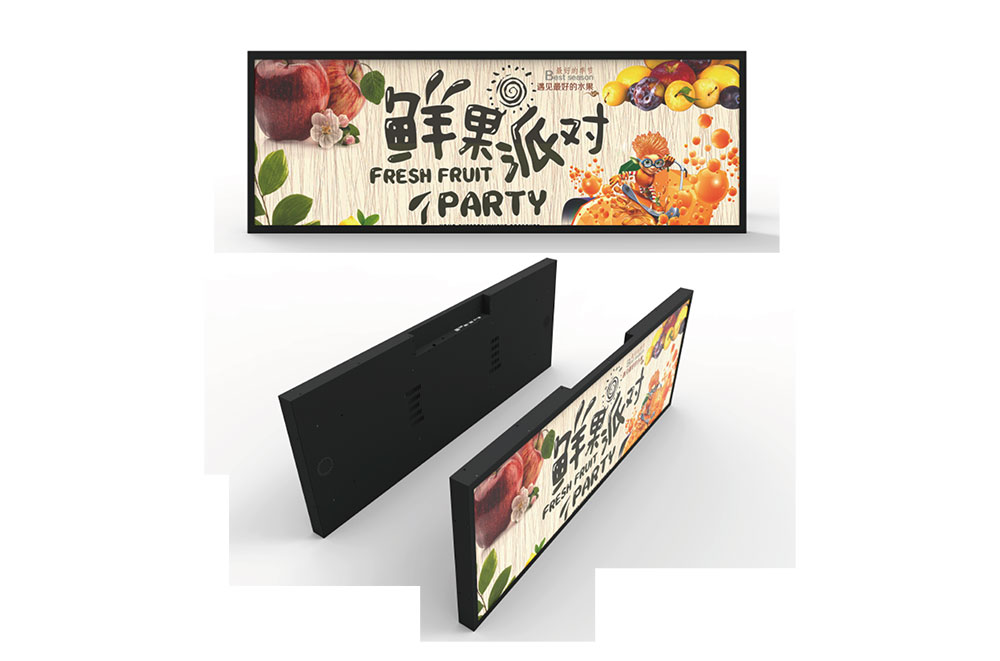
Two production approaches exist. Native stretched panels are manufactured to the target aspect ratio on the production line, offering full pixel utilization and optimal reliability. Cut-to-size stretched panels are derived from standard TFT modules and re-laminated, delivering faster availability for prototyping and lower tooling cost for mid-volume runs. HITULCD offers both paths, allowing OEMs to balance NRE cost, lead time, and volume commitments.
Why US and European OEMs Prioritize High Brightness
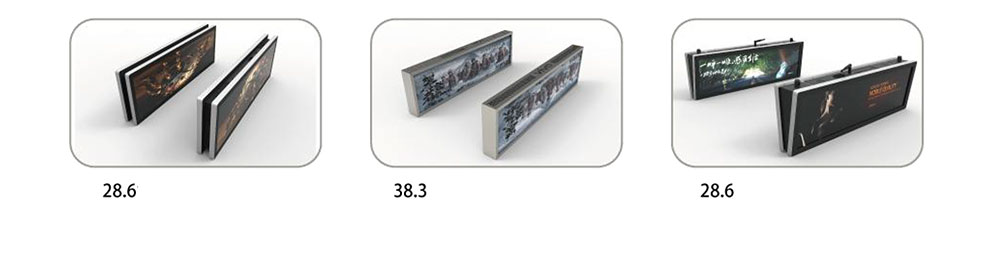
Stretched displays are frequently deployed in environments with challenging ambient lighting: sun-facing storefront windows, transit stations, outdoor kiosks, and factory floors under industrial fixtures. Standard commercial panels rated at 250–400 nits wash out under these conditions. HITULCD stretched displays are available from 700 nits for semi-outdoor use up to 2500 nits for direct-sunlight-readable applications.
To sustain high luminance without thermal degradation, our displays integrate optically bonded cover glass to reduce internal reflection, wide-temperature LED backlights with current-regulated driving, and thermal management structures rated for continuous 24/7 operation. Automatic brightness control via ambient light sensors is available to comply with energy directives and to preserve backlight lifetime, an important consideration for OEMs managing total cost of ownership across large fleets.
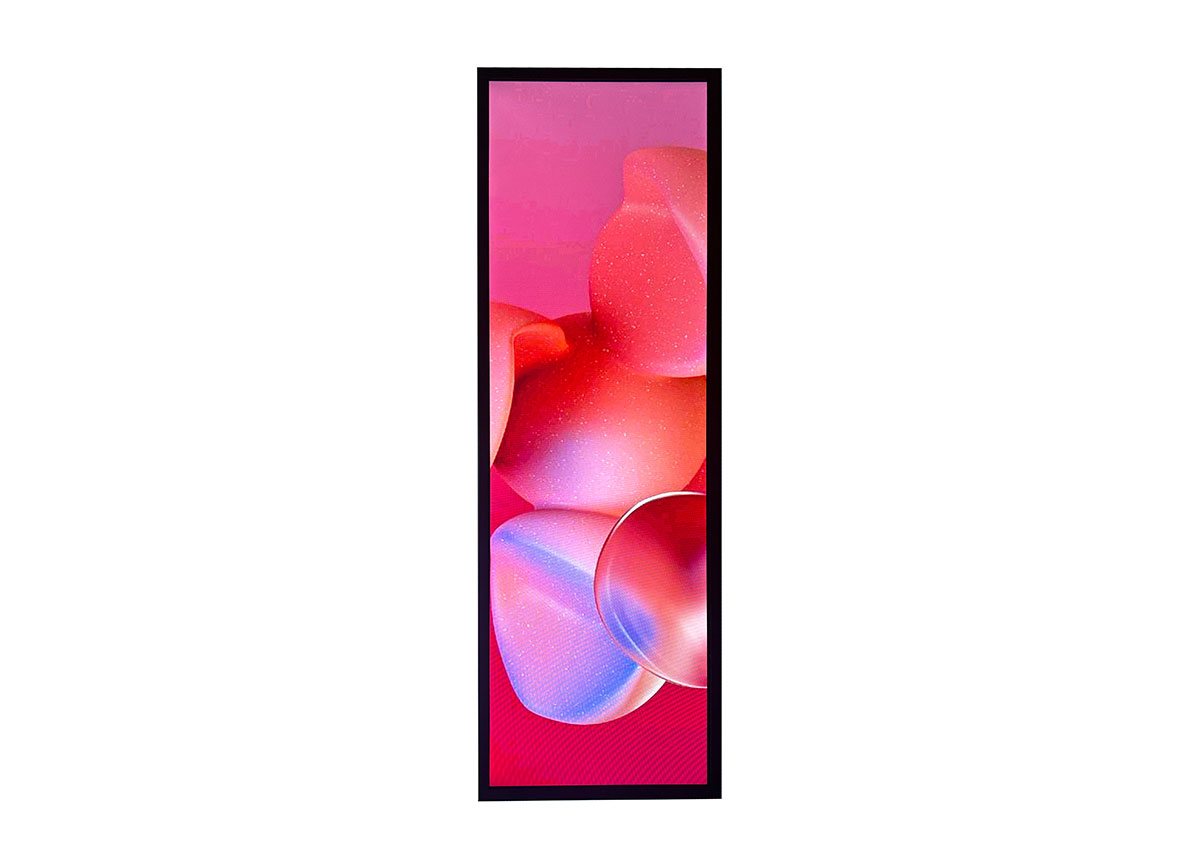
Engineering Specifications for OEM Integration
OEM design teams require detailed, stable specifications to lock into their bill of materials. HITULCD stretched display modules are documented across the parameters that matter for integration:
- Aspect ratios: 16:3, 16:4.5, 16:6, 24:9 and fully custom cut sizes from 7 to 88 inches.
- Brightness: 700, 1000, 1500, and 2500 nit backlight options with optional sunlight-readable enhancement.
- Interfaces: LVDS, eDP, and MIPI-DSI for embedded designs; HDMI/DisplayPort when paired with our controller boards.
- Operating temperature: Industrial-grade –30 °C to +80 °C variants for transportation and outdoor deployment.
- Enhancements: Optical bonding, anti-glare and anti-reflective treatments, capacitive touch integration, and wide viewing-angle IPS glass.
- Longevity: Backlight rated up to 50,000 hours and committed component lifecycle support to avoid mid-program redesigns.
Compliance and Certification for Western Markets
Selling into US and European channels requires more than a functional panel. HITULCD stretched displays are engineered to support OEM certification programs, including FCC and UL for North America, and CE, RoHS, REACH, and WEEE for the European Union. Our documentation packages provide the material declarations, EMC test data, and safety records that OEM compliance teams need to complete their own product approvals efficiently. This alignment shortens time-to-market and reduces the risk of costly re-testing.
Supply Chain Reliability and Localized Support
OEM procurement leaders in the US and Europe are acutely focused on supply continuity after recent global disruptions. HITULCD addresses this through committed component sourcing, safety-stock programs, and end-of-life (EOL) notifications with last-time-buy windows. For long-lifecycle industrial and transportation programs, we offer form-fit-function stability guarantees so that a panel qualified today remains available for the multi-year duration of a platform.
We support Western time zones with responsive engineering communication, provide English-language datasheets and 3D CAD models, and coordinate logistics with Incoterms suited to US and EU delivery, including DDP options that simplify import handling for our customers. Regional warehousing arrangements can be established for high-volume accounts to reduce lead times and buffer against transit variability.
Custom Development and Co-Engineering
Many stretched display projects require more than a catalog part. HITULCD operates as a co-engineering partner, working from an OEM's mechanical envelope, brightness target, and interface requirements to develop a tailored module. Typical customization includes bespoke aspect ratios, custom FPC routing and connector placement, integrated controller and driver boards, protective cover-lens printing, and touch overlays. Our NRE and tooling process is structured with clear milestones—from feasibility review and prototype through design validation testing (DVT) and production validation (PVT)—so OEM program managers maintain visibility at every stage.
Application Sectors We Serve
HITULCD stretched displays are deployed across the sectors where Western OEMs are most active. In retail, they power shelf-edge and window signage that must remain readable against daylight. In transportation, they serve as passenger information displays on buses, trains, and stations, meeting vibration and wide-temperature demands. In smart buildings, they operate as elevator and wayfinding displays. In industrial automation, stretched bar displays present real-time process data on machinery with constrained panel space. Each sector benefits from our combination of brightness, ruggedization, and lifecycle assurance.
Selecting the Right Stretched Display Partner
Choosing a stretched LCD supplier is a strategic decision that affects product performance, certification timelines, and long-term availability. OEMs should evaluate a supplier's native panel capability, brightness range, compliance readiness, lifecycle commitments, and engineering responsiveness. HITULCD delivers on all of these dimensions, positioning itself as a reliable manufacturing partner rather than a transactional vendor.
By combining high-brightness expertise, flexible manufacturing, robust compliance documentation, and Western-facing supply-chain support, HITULCD enables US and European OEMs to bring differentiated stretched display products to market with confidence. To discuss a specific aspect ratio, brightness target, or program timeline, our engineering team is ready to begin a technical consultation.