Why Bar-Shaped Displays Fit Transit Environments
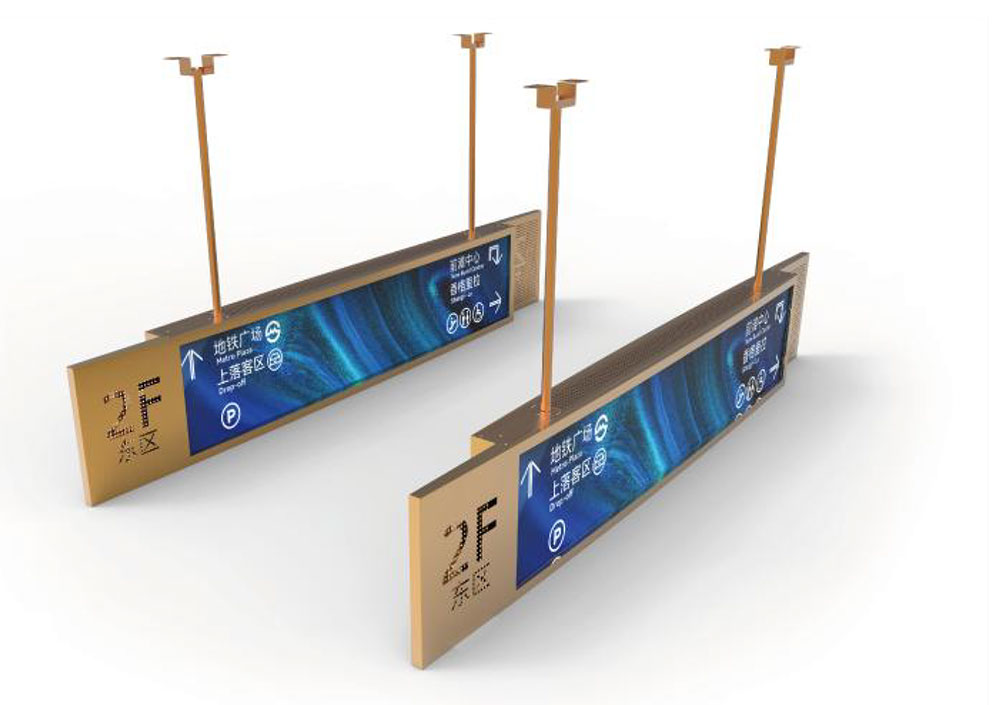
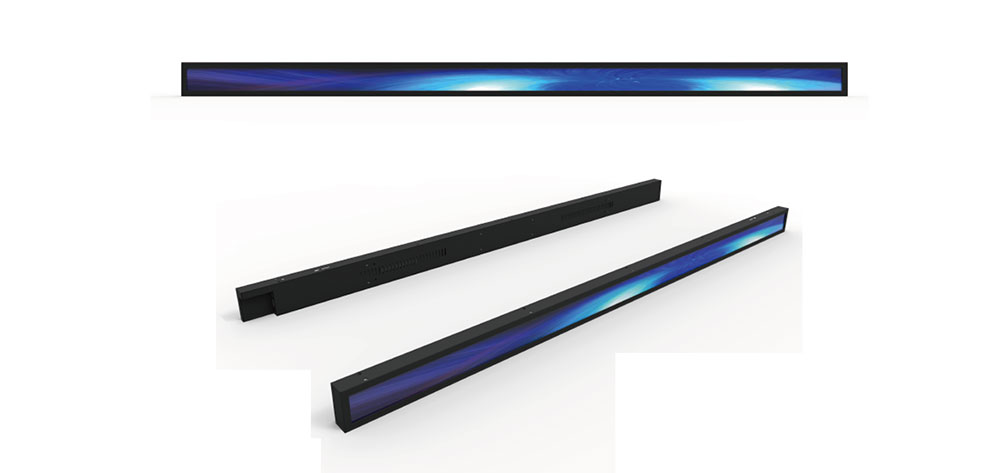
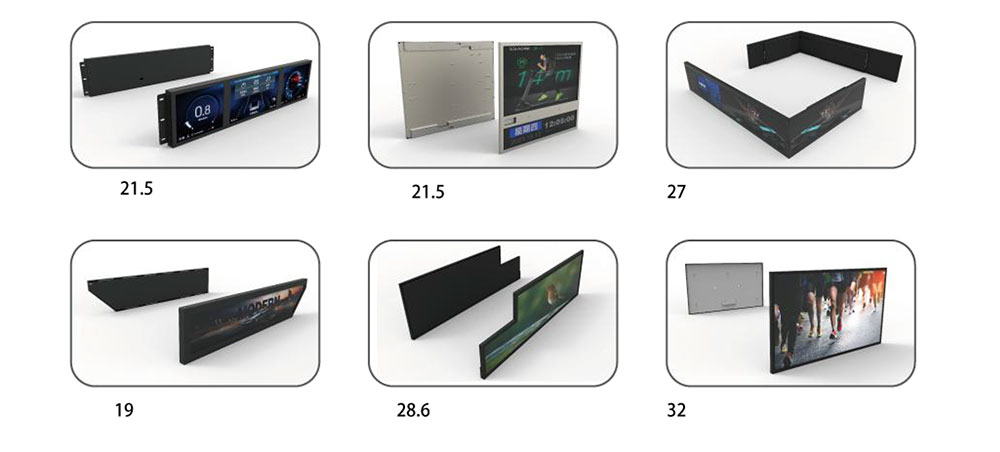
Transit stations, bus interiors, rail platforms, and fare gates share a common constraint: the mounting space is long and narrow. Standard 16:9 or 4:3 panels waste that geometry, forcing integrators to crop content or leave dead bezel area above and below the information strip. Bar LCD modules, also called stretched or ultra-wide displays, match the physical slot. Common aspect ratios range from 16:3 to 32:9, with diagonal sizes from 8 inches above a doorway to 58 inches along a concourse rail.
For a transit system integrator, the display is one component inside a larger passenger information system (PIS). The panel must survive the environment, accept the signal formats already in the network, and keep a predictable supply over the multi-year life of a tender. This article covers the engineering decisions that determine whether a bar LCD performs for a decade in service or becomes a maintenance liability.
Reading Transit Specifications: Brightness, Temperature, and Ingress
Three parameters drive most transit display failures in the field.
Brightness and Sunlight Readability
Platform-edge and vehicle-interior displays face direct and reflected sunlight. A 250–350 nit office panel washes out behind glass. HITULCD specifies 1,000 to 2,500 nits for transit bar modules, chosen against the measured illuminance at the install point rather than a generic "high-bright" label. Readability depends on contrast under ambient light, not luminance alone, so an optically bonded cover glass that cuts internal reflection often buys more legibility than another 500 nits of backlight. Automatic brightness control via an ambient light sensor keeps the panel readable at noon and prevents glare at night while reducing backlight power and heat.
Operating Temperature
Liquid crystal response slows and darkens (clearing point and freezing behavior) outside its rated band. A standard commercial panel rated 0°C to 50°C will ghost on a cold platform and black out in a sealed enclosure in summer. Transit modules should carry a -30°C to +85°C storage range and a wide operating range, with a heater film for cold-start climates and thermal headroom for the backlight at the top end. Thermal simulation of the sealed enclosure matters as much as the panel rating, because a 1,500 nit backlight inside an IP-sealed box is a significant heat source.
Ingress and Vibration
Vehicle-mounted modules face EN 50155 vibration and shock, water ingress at doorways, and dust on open platforms. Specify IP65 on the front face, conformal-coated driver boards, and a mechanical design that isolates the glass from frame stress. For rolling stock, confirm compliance with EN 50155 (electronics), EN 45545-2 (fire, smoke, toxicity of materials), and the relevant shock and vibration clauses of EN 61373.
What "Custom" Actually Means for a Bar Module
Customization for transit rarely means a bespoke glass cut from zero, which carries tooling cost and long lead times. In practice it means configuring a proven panel into an integrator-ready module:
- Cover glass and touch: anti-glare or anti-reflective treatment, anti-fingerprint coating, projected-capacitive touch tuned for gloved operation where passenger interaction is required.
- Optical bonding: eliminates the air gap to stop internal condensation, improve sunlight contrast, and add impact resistance.
- Interface board: LVDS or eDP from the panel converted to the signal the integrator's media player uses, typically HDMI, DisplayPort, or Ethernet-fed HDMI over fiber for long runs.
- Mechanical kit: mounting brackets, gasket design, and connector orientation matched to the enclosure.
- Firmware behavior: auto-restart after power loss, no on-screen menus visible to passengers, source auto-detect, and scheduled on/off.
Deciding between modifying a standard panel and commissioning a custom-cut cell is a cost-versus-fit trade-off. A standard cut with custom bonding and electronics reaches production in weeks at low tooling cost; a custom cell suits only high-volume programs where the exact dimension cannot be met otherwise.
Integration Interfaces and Content Delivery
The display is the endpoint of a content chain. Integrators typically drive bar modules from a central content management system (CMS) through networked media players. Points to confirm early:
- Signal path: native panel timing must match the player output. Stretched resolutions such as 1920×360 or 3840×1100 are non-standard; the player and the scaler must both support the exact timing to avoid cropping or interpolation blur.
- Control channel: RS-232, LAN, or CEC for remote power, brightness, and diagnostics lets the operations center monitor a fleet of displays instead of dispatching staff to each site.
- Redundancy: dual signal inputs with automatic failover keep a platform display showing safety information if the primary player drops.
- Synchronization: adjacent long displays showing a single scrolling message need frame-level sync to avoid tearing at the seam.
Reliability, Lifetime, and Burn-In Resistance
Transit displays run 18 to 24 hours a day and often show the same route map or station name for hours. This creates two concerns. First, backlight lifetime: specify LED backlights rated for 50,000 to 70,000 hours to half-brightness at the operating temperature, not the bench figure at 25°C. Second, image persistence: although LCDs do not burn in the way OLEDs do, static high-contrast content can cause temporary retention. Pixel-shifting in firmware and content design that rotates static elements reduce the risk.
Mean time between failures is dominated by the power supply, the backlight driver, and the connectors, not the LC cell. A design that uses an industrial-grade supply, derates the driver, and uses locking automotive-grade connectors will outlast one built from commercial parts, even with the same panel.
Supply Continuity and Documentation
A transit tender commits an integrator to spare parts and identical replacements for years. The real procurement risk is a panel going end-of-life mid-contract. Address it before award:
- Written longevity commitment on the panel generation, with last-time-buy notice terms.
- A documented second source or a pin- and timing-compatible successor panel.
- Full submittal package: mechanical drawings, optical test reports, EN 45545 and EN 50155 certificates, and a factory acceptance test procedure.
- Serialized traceability so a field failure maps to a production batch.
A Practical Selection Checklist
- Measure ambient illuminance and temperature at the worst-case install point; size brightness and thermal design to that, not to a catalog label.
- Confirm the exact native timing and that both player and scaler support it.
- Match ingress, fire, and vibration ratings to the mounting location (platform, concourse, or rolling stock).
- Decide custom cut versus configured standard panel on volume and dimension tolerance.
- Specify remote diagnostics and signal failover for unattended operation.
- Lock in lifetime, second source, and the full certification package before contract.
Handled this way, a bar LCD module stops being a risk item and becomes a predictable, serviceable part of the passenger information system. HITULCD works with integrators from illuminance survey through certified, integration-ready modules so the display matches both the slot and the service life the contract demands.
KEYWORDS: custom bar LCD modules, transit display, high brightness stretched LCD, passenger information system, EN 50155 display