Australia's energy infrastructure is among the most demanding display environments in the world. Solar farms in the Pilbara, wind sites on the Victorian coast, LNG facilities in Queensland and Western Australia, substations in the Hunter Valley, mine-site power plants in the Outback and battery storage systems in South Australia all share one challenge: operators must read, trust and act on information in intense sunlight, extreme heat, dust, humidity and salt air. Standard commercial displays are rarely suited to these conditions. This white paper explains how custom high-brightness LCD solutions are specified for Australian energy infrastructure, what engineering choices matter, and how to evaluate a supplier.
**1. Why Australian Energy Sites Are Uniquely Demanding**
Australia receives some of the highest solar irradiance on Earth. Ground-level solar loading in inland regions regularly exceeds 1,000 W/m², and ambient temperatures in summer can pass 45°C, with enclosure surface and interior temperatures considerably higher. A display mounted in an outdoor kiosk, a vehicle cab or a sealed control cabinet can therefore see internal temperatures well above ambient, particularly when exposed to direct sun.
Other site factors compound the problem:
- **Sunlight readability:** Operators work in open air where glare and reflected light wash out ordinary 300–500 nit panels.
- **Heat and thermal cycling:** Large day-night swings in desert regions stress adhesives, polarizers, liquid crystal materials and solder joints.
- **Dust and fine particulates:** Red-earth dust in mining and remote renewable sites can clog vents and abrade surfaces.
- **Salt and humidity:** Coastal wind farms, offshore support facilities and LNG export terminals expose equipment to corrosive salt fog.
- **Remote and unmanned locations:** Maintenance visits may involve hundreds of kilometres of travel, so reliability and long service life carry real economic value.
- **Safety-critical use:** Operator decisions at substations, switchyards and process plants must be based on accurate, legible data.
**2. Where Displays Are Used in Energy Infrastructure**
*Solar and wind generation.* Local HMI panels at inverter stations, tracker controllers, turbine base cabinets and met masts allow technicians to read status, alarms and performance data on site.
*Substations and grid equipment.* Protection relays, RTU front panels, switchgear HMIs and ring main unit interfaces require clear readout, often in outdoor cabinets.
*Battery energy storage systems (BESS).* Container-based systems need monitoring panels for state of charge, temperature, fire-detection status and isolation control.
*EV charging and energy retail points.* Outdoor charger screens must display pricing, instructions and payment prompts under full sun, and be vandal-resistant.
*Oil, gas and LNG facilities.* Panels in process areas must tolerate corrosive atmospheres and, where applicable, sit within hazardous-area enclosures designed by the system integrator.
*Mining and remote power.* Vehicle-mounted terminals, hybrid diesel-solar controllers and mobile equipment displays face vibration, dust and heat together.
*Control rooms and field tablets.* Rugged field terminals bridge the gap between the control room and equipment in the yard.
**3. Core Technical Requirements for High-Brightness Energy Displays**
**Brightness and contrast.** For direct-sunlight readability, outdoor energy applications typically call for 1,000 to 2,500 nits or more, depending on mounting orientation and shading. A brightness figure alone is not enough. Effective readability depends on the contrast ratio under ambient light, which is improved by optical bonding, anti-reflective (AR) coatings and anti-glare treatment. Auto-dimming through an ambient light sensor reduces power draw and heat at night while preserving legibility during the day.
**Optical bonding.** Filling the air gap between the LCD and cover glass removes internal reflections, reduces condensation risk and improves impact resistance. In hot climates, bonding material selection is critical, since poor adhesive can yellow, bubble or delaminate over time. Bonding also helps prevent dust and moisture from entering the gap.
**Wide operating temperature.** Energy sites require displays that operate reliably across a broad range, commonly -30°C to +80°C for wide-temperature designs, depending on the product. Specification should distinguish between operating and storage temperatures and define the conditions, including brightness level and sun exposure, under which ratings apply.
**Sunlight-related thermal management.** Solar loading can push the black polarizer and liquid crystal toward their clearing point, which can produce a dark or black screen. Good designs use high-clearing-point liquid crystal materials, heat-resistant polarizers, appropriate cover glass filters (such as IR-reducing coatings), thermal spreaders, heat sinks and, where needed, thermostatically controlled fans or heaters. Low-temperature operation may need heaters to keep response time acceptable.
**Ingress protection.** Many outdoor installations require front-panel sealing to IP65 or higher, with gaskets and enclosures chosen for dust and water jet resistance. Cooling must be balanced against sealing; fanless conduction designs are often preferred in dusty conditions.
**Corrosion and salt resistance.** For coastal sites, specify corrosion-resistant bezels (such as marine-grade aluminium or stainless steel), conformal coating on PCBs, and sealed connectors. Salt-spray test methods can be used to verify durability against the target environment.
**Impact, vibration and vandal resistance.** Chemically strengthened or tempered cover glass, often 3 mm or thicker for outdoor use, supports IK-rated protection where required. Vehicle and mobile applications require vibration and shock validation.
**Touch technology.** Projected capacitive (PCAP) touch with glove and wet-touch support is typical for field use. Technicians frequently wear gloves, so touch tuning matters. Resistive touch can be preferable in some very specialised cases, but it generally reduces optical clarity.
**Long lifecycle and supply stability.** Energy assets operate for 20 years or more. Displays should be backed by long-term component availability, controlled revision management and spare-part planning.
**4. Why Customisation Matters**
Off-the-shelf displays rarely align with the mechanical, electrical and environmental needs of energy equipment. Custom solutions allow a design to be fitted to the equipment rather than the other way around. Typical customisation areas include:
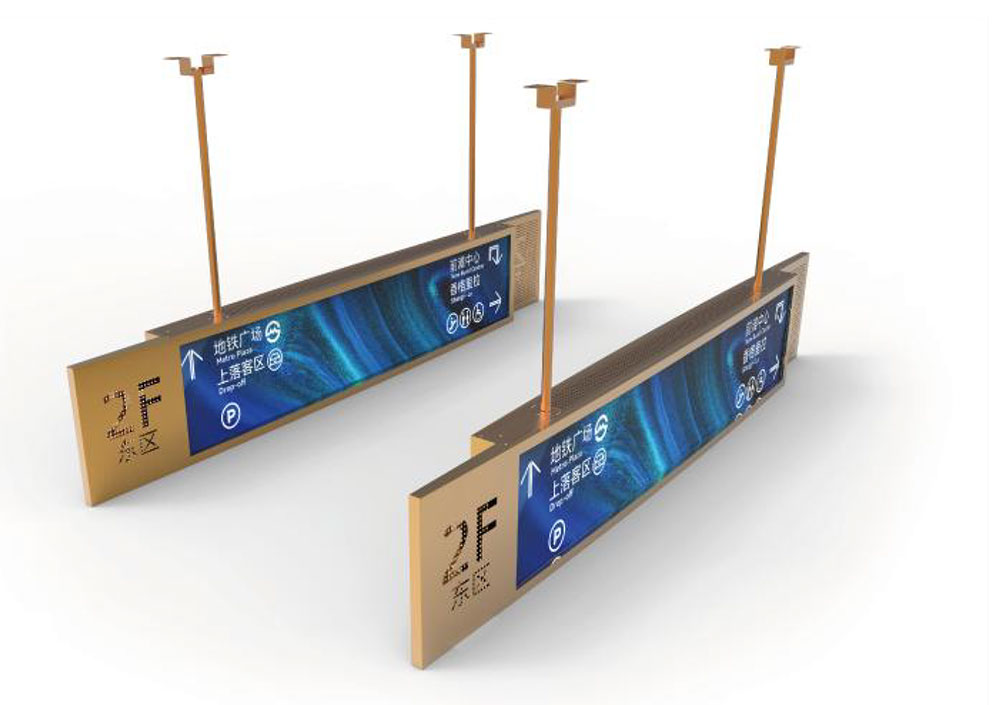
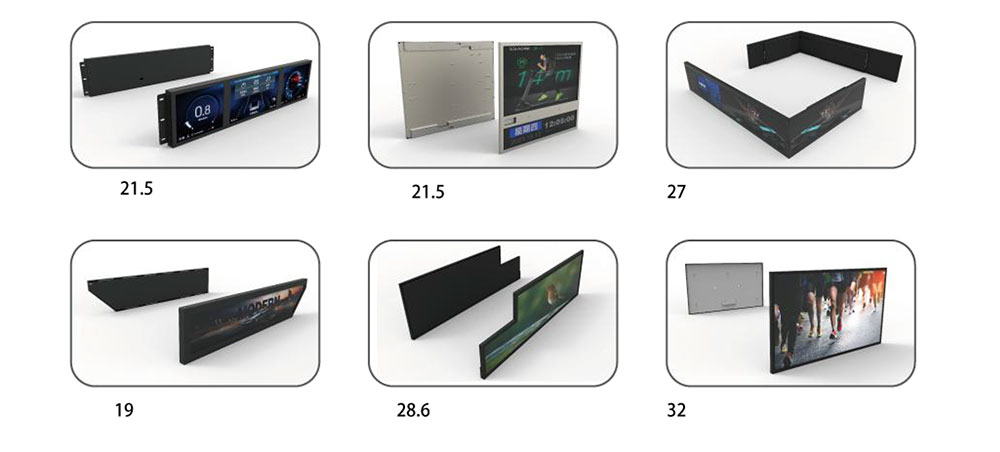
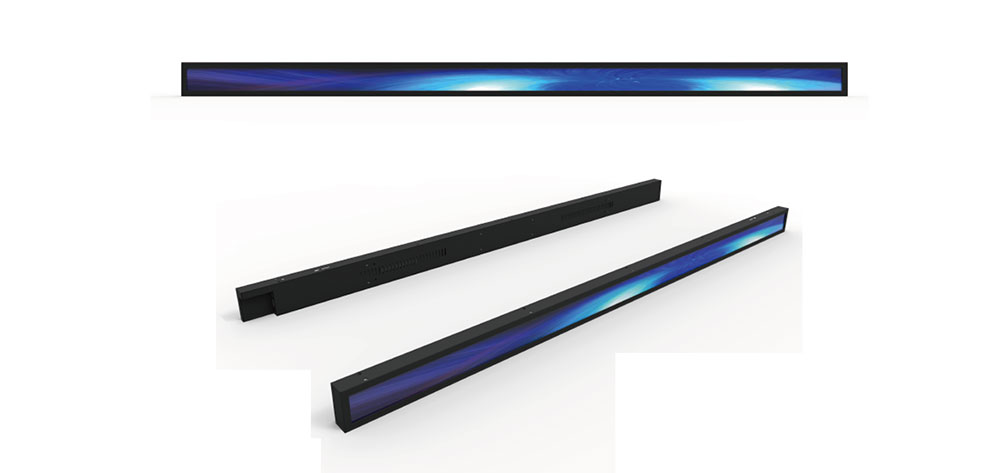
- **Size and aspect ratio:** From compact 4.3-inch status panels to 15.6-inch and larger HMIs, and bar-type displays for cabinet fronts.
- **Cover glass and bezel design:** Custom printing, logos, window cutouts, branding colours and mounting features.
- **Brightness and backlight configuration:** LED driver design tuned to the required nit level and power budget.
- **Interface and controller board:** HDMI, LVDS, eDP, MIPI, VGA or DisplayPort; touch via USB or I2C; and wide-range DC input such as 9–36 V to suit industrial power systems.
- **Mechanical integration:** Panel mount, open frame, VESA, or chassis designs that match existing cabinet cut-outs.
- **Environmental hardening:** Conformal coating, extended-temperature components, heaters and sealed connectors.
- **Firmware and OSD:** Brightness curves, input priorities and automatic recovery behaviours aligned with remote-site operation.
**5. Compliance and Standards Considerations**
Australian projects commonly require evidence of conformity with electrical safety, electromagnetic compatibility and environmental standards. Typical checks include:
- **EMC compliance:** Equipment in Australia and New Zealand is generally expected to meet the Regulatory Compliance Mark (RCM) framework, and EMC performance is typically validated against recognised standards such as CISPR/EN limits. HITULCD maintains EMC-related test documentation; see the FCC test documentation at /certificates/fcc-certificate.html for a reference of our emissions testing practice. Final compliance for the installed system remains the integrator's responsibility.
- **Electrical safety:** IEC 62368-1 or relevant AS/NZS equivalents for the assembled product.
- **Environmental testing:** IEC 60068 series for temperature, humidity, vibration and shock.
- **Ingress protection:** IEC 60529 for IP ratings.
- **Impact protection:** IEC 62262 for IK ratings.
- **Hazardous areas:** Where displays are used in explosive atmospheres, they must be installed within appropriately certified enclosures (such as under IECEx/AS/NZS 60079 schemes). A standard display is not itself a certified hazardous-area product unless explicitly stated.
- **RoHS and REACH:** Material compliance, often requested by asset owners.
Always confirm requirements with your project's technical specification and compliance advisors, because they vary by asset owner, state regulation and application.
**6. A Practical Specification Checklist**
Before ordering, define the following:
1. Mounting orientation and sun exposure (facing north, shaded, vertical or tilted).
2. Required readable brightness and target contrast under measured ambient light.
3. Operating and storage temperature range, including enclosure internal temperature.
4. IP and IK ratings and salt-spray requirements.
5. Touch needs, including glove, wet and rain operation.
6. Interface, power input and cable length constraints.
7. Mechanical drawings, including cut-out dimensions and mounting method.
8. Expected product life, volume and spare strategy.
9. Test and documentation needs, including reliability reports and compliance paperwork.
**7. Example Application Scenarios**
*Solar farm inverter station.* A 10.1-inch 1,500-nit optically bonded PCAP display in a sealed, fanless chassis allows technicians to read inverter status at midday. Heat-resistant polarizers and an IR-reducing cover glass prevent blackout under direct sun.
*Coastal wind turbine base controller.* A 7-inch conformal-coated display with a marine-grade aluminium bezel withstands salt fog and condensation; wide-temperature operation handles cold nights and hot afternoons.
*Outdoor EV charging station.* A 15.6-inch 2,000-nit display with tempered, anti-glare glass and IK-rated protection remains legible and resists tampering.
*BESS container.* A wide-input-voltage, fanless HMI with a tightly sealed front maintains stable readout despite container-level heat and dust.
**8. Evaluating a Custom Display Supplier**
When selecting a partner, look beyond the datasheet:
- **Engineering depth:** Can the supplier tune the backlight, thermal design, bonding and touch controller together rather than assembling parts?
- **Testing capability:** High-temperature, low-temperature, thermal shock, humidity, vibration and sunlight-simulation testing should be available and documented.
- **Transparent specifications:** Brightness should be stated with and without cover glass; temperature ratings should state conditions.
- **Sample and prototype support:** Fast engineering samples reduce project risk.
- **Quality system:** Look for ISO-aligned processes, traceability and incoming material control.
- **Lifecycle commitment:** Long-term supply and change-notification practices matter for 20-year assets.
- **Technical support across time zones:** Responsive remote engineering support is valuable for Australian sites.
**9. How HITULCD Supports Energy Projects**
HITULCD designs and manufactures high-brightness LCD modules and complete display assemblies for outdoor and industrial use. For energy infrastructure projects, our engineering team works with integrators and OEMs to define brightness, thermal strategy, optical bonding, cover glass, touch, interface and mechanical design from the outset. Customisation can range from adjusting a standard high-brightness module to developing a fully bespoke assembly with branded cover glass, sealed housing and tailored controller board. Because environmental conditions differ so widely across Australia, we recommend validating prototypes under conditions that match the target site.
**Conclusion**
Displays for Australian energy infrastructure succeed or fail on how well they handle sun, heat, dust, salt and long service life. Sufficient brightness is the starting point, but it must be combined with optical bonding, thermal engineering, sealing, corrosion protection, suitable touch and a controlled lifecycle. Custom display solutions let asset owners and integrators align each of these factors with the specific equipment and site. By defining clear requirements early and working with a supplier that has genuine engineering and testing depth, energy projects can deploy displays that remain readable, dependable and maintainable for the full life of the asset.
KEYWORDS: Australian energy infrastructure displays, custom high-brightness LCD, outdoor sunlight readable display, optically bonded industrial display, solar and substation HMI