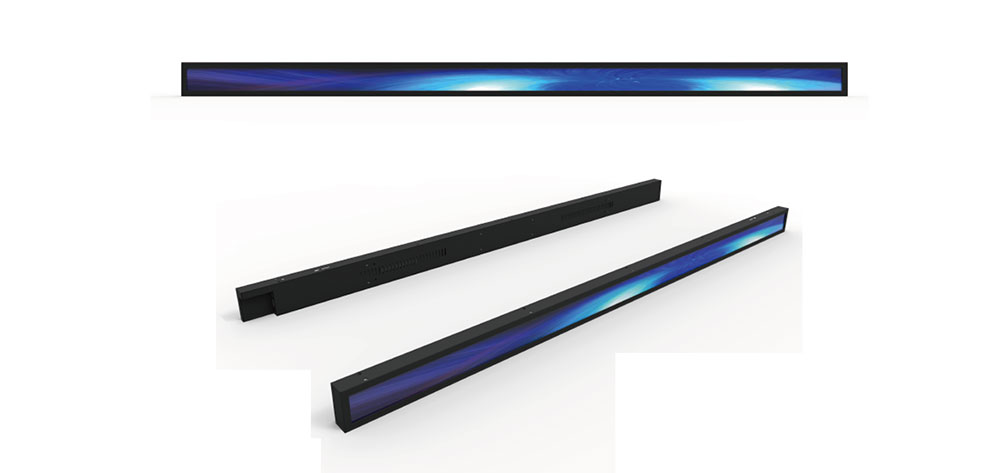
Australia's transit networks are expanding and digitizing at a pace few other markets match. Sydney Metro, Melbourne's Metro Tunnel, Brisbane's Cross River Rail, Perth's METRONET and light rail lines in Canberra and the Gold Coast all need passenger information that works in every condition. Buses, trams, trains and ferries must also show clear information in harsh sunlight and extreme heat. Equipment bar LCD displays, the ultra-wide stretched panels (typically 16:3 to 32:9 and beyond) mounted above doors, along ceilings and on bus stop and platform fascias, have become one of the most practical formats for this job. This article explains why they suit Australian smart transit, what specifications matter, and how to select and deploy them.
## 1. What Is an Equipment Bar LCD in a Transit Context?
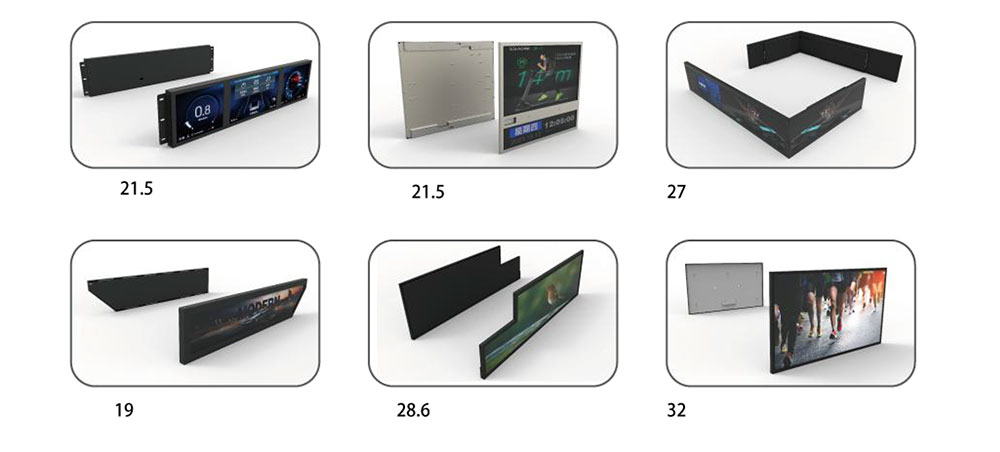
An equipment bar LCD, often called a stretched or bar-type display, is a high-aspect-ratio panel, commonly 19, 23, 28, 35, 37 or 40 inches in diagonal with aspect ratios such as 16:3, 24:9 or 32:9. Conventional 16:9 displays waste space and are hard to mount in narrow areas. Bar displays fit above vehicle doors, along the top of a saloon, inside driver cabs, in shelter canopies and on ticket gate headers.
Typical transit uses include:
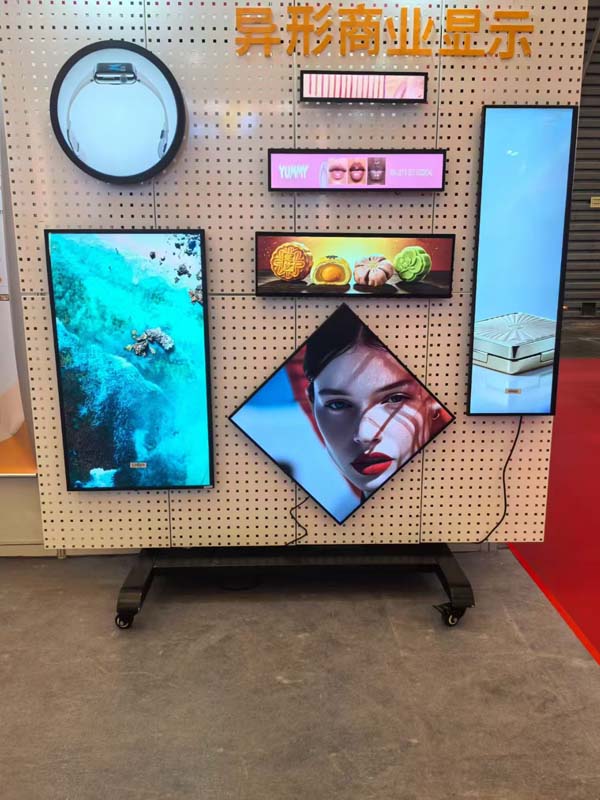
- Next-stop and route strip displays, showing the line map with progress.
- Door-side information on connections, accessibility and platform side.
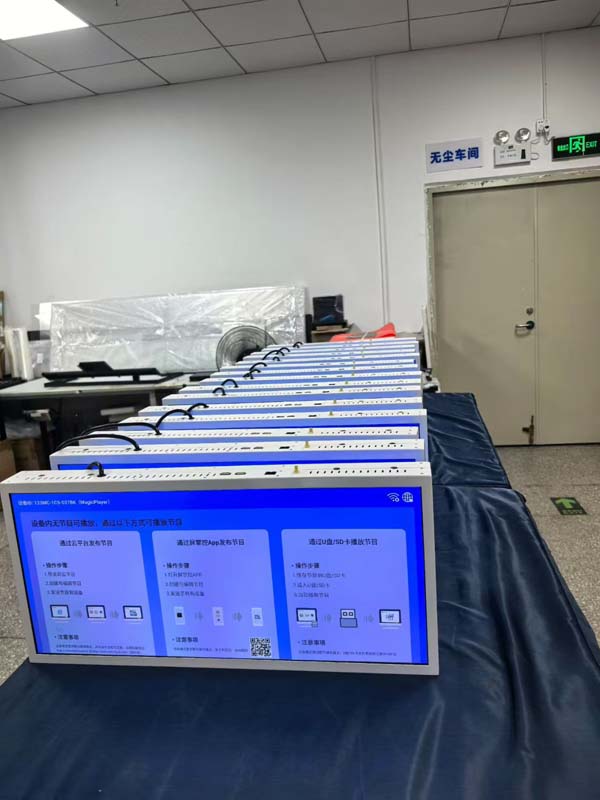
- Real-time arrival boards in bus shelters and interchange concourses.
- Emergency messaging and service disruption alerts.
- Short advertising or community content loops where the operator permits.
## 2. Why Australia Is a Demanding Environment
**Intense solar load.** Australian UV indices regularly reach extreme levels, and direct sun on bus stops, open platforms and tram windows can exceed 100,000 lux of ambient illumination. A standard 250 to 350 nit commercial panel becomes unreadable. Sunlight-readable bar displays generally need 1,000 to 2,500 nits for shaded or semi-outdoor areas and 2,500 to 5,000 nits for direct-sun installations.
**Heat.** Summer temperatures in Perth, Adelaide, Brisbane and inland regions regularly pass 40°C, and enclosed shelters and vehicle interiors can be far hotter. Panels must have a high-temperature rated liquid crystal, a clearing point well above peak internal temperatures, and thermal design that avoids black-screen or image-darkening effects.
**Dust, humidity and coastal air.** Coastal routes face salt-laden air and tropical North Queensland faces high humidity and monsoon rain. Dust is common in inland and mining-region transit. Ingress protection and conformal coating matter.
**Vibration and shock.** Buses, trams and trains impose continuous vibration, so displays need to resist it per rail and road vehicle standards.
**Vandalism.** Public-facing units need tempered, anti-vandal cover glass.
## 3. Key Technical Specifications
### 3.1 Brightness and Contrast
Brightness should be matched to the installation. Shaded in-vehicle displays may need 700 to 1,000 nits, while platforms and shelters in direct sun need 2,500 nits or more. Optical bonding removes the internal air gap, reducing reflections and improving effective contrast in daylight. Auto-brightness through an ambient light sensor lowers power and heat at night and avoids glare in dark tunnels.
### 3.2 Panel Technology and Viewing Angles
IPS or advanced wide-viewing-angle panels hold color and readability for passengers standing at the side of the saloon. Anti-glare etching combined with anti-reflection coating further improves legibility.
### 3.3 Operating Temperature
Look for a wide operating range, such as -20°C to 70°C, and a panel clearing point high enough to handle vehicle parked-in-sun conditions. Thermal modeling should include solar gain through the cover glass.
### 3.4 Ingress and Mechanical Protection
For shelters and open platforms, IP65 front protection is a common target, with tempered glass of suitable thickness (often 3 to 5 mm, with IK ratings for impact). For in-vehicle use, secure mounting and vibration-tested design are the priority.
### 3.5 Power and Electrical Compatibility
Vehicles commonly run on 24V DC (buses) or 110V DC (rail), with transient surges. Wide-input power supplies, such as 9 to 36V DC or 66 to 160V DC with protection, are important. Bear in mind EN 50155 for rolling stock electronics and EN 50121 for electromagnetic compatibility, which are widely referenced in Australian rail procurement alongside local requirements.
### 3.6 Connectivity and Control
Smart transit depends on live data. Bar displays should support HDMI, LVDS, Ethernet and optional 4G/5G or Wi-Fi modules, with media players running Android or Linux. Standards-based integration with GTFS and GTFS-Realtime feeds, widely used by Australian state transport agencies, allows live arrival information. Remote monitoring of temperature, brightness and fault status reduces service visits.
## 4. Deployment Scenarios
### 4.1 Buses and Coaches
A bar display above the front windscreen or along the saloon ceiling shows next stops, route and time. Power should be 24V compatible with ignition-sense and soft shutdown. Because buses face direct sun through the windows, 1,000 nits or more with optical bonding is recommended.
### 4.2 Trams and Light Rail
Door-header bar displays show stop sequences and connections. Low-floor trams in Melbourne, Sydney, Canberra and the Gold Coast benefit from slim, lightweight bars that fit tight headers and withstand vibration and frequent door cycling.
### 4.3 Trains and Metro
Saloon strip displays and door indicators need EN 50155-aligned power and long-life backlights. High reliability is important for driverless or highly automated metro lines, where passenger information is a primary communication channel.
### 4.4 Bus Stops and Shelters
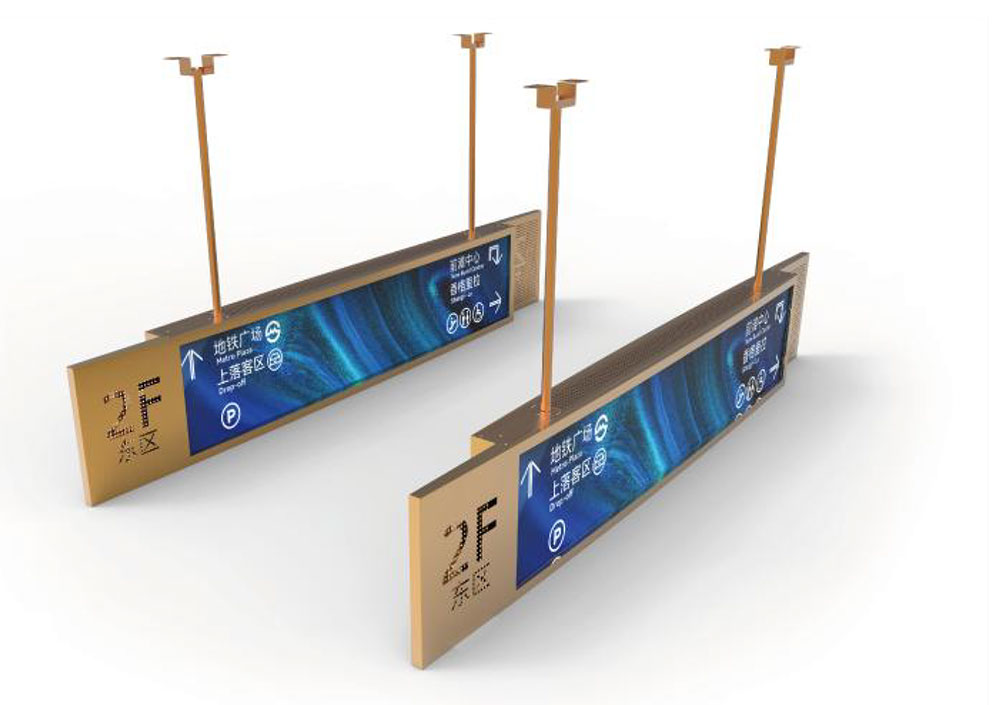
Outdoor bar displays suspended in a shelter canopy show real-time arrivals. Solar load, heat and vandalism dominate. Use 2,500 nits or higher, IP65 housings, active or passive thermal management and tempered glass. Low-power operation and sleep schedules help where power is limited, and some shelters may pair displays with solar supplies.
### 4.5 Platforms, Interchanges and Ferry Terminals
Fascia-mounted bar displays above platform edges and wharf waiting areas provide departure boards. Marine and coastal sites demand corrosion-resistant frames and sealed connectors.
## 5. Content Design for Wide Bar Displays
Hardware only delivers value if the content is readable at a glance:
- Use high-contrast color pairs and large sans-serif fonts. Aim for text height relative to viewing distance, roughly 25 mm per 10 m.
- Lay out horizontal route lines, with the current stop highlighted and upcoming stops visible.
- Keep animations minimal, especially on moving vehicles.
- Support accessibility: clear iconography, consistent language, and synchronized audio announcements. Australia's Disability Standards for Accessible Public Transport set expectations for passenger information.
- Provide multilingual options where needed, given the diversity of Australian passengers.
- Prepare emergency override templates that take priority across the network.
## 6. Reliability, Maintenance and Total Cost of Ownership
Transit operators think in 10 to 15-year asset cycles. Specify LED backlights rated for 50,000 hours or more at high brightness, and verify rated lifetime at the actual operating brightness rather than at a lower test level. Design for serviceability: front-access or modular units reduce downtime, and standardized form factors simplify spares. Remote diagnostics lower truck-roll costs across Australia's long distances. Where power efficiency matters, local dimming and automatic brightness control reduce consumption and heat.
## 7. Procurement and Compliance Checklist
1. Define installation environment, direct sun or shaded, indoor or outdoor.
2. Specify brightness, with test conditions and temperature.
3. Confirm operating and storage temperature ranges and panel clearing point.
4. Verify EN 50155, EN 50121, IEC 60068 vibration/shock and relevant Australian rail or road vehicle requirements.
5. Check ingress rating, glass type and impact rating.
6. Validate power input range and surge protection.
7. Confirm integration with GTFS-Realtime, CMS platforms and remote monitoring.
8. Review warranty terms, spare availability and local support.
9. Request sample testing in representative sun and heat conditions.
## 8. How HITULCD Supports Australian Transit Projects
HITULCD designs high-brightness bar LCD modules and complete display units for transit, with brightness options from 1,000 to 5,000 nits, optical bonding, wide-temperature operation and customizable sizes and aspect ratios. Our engineering team can adapt mechanical outlines, power inputs and interfaces to match bus, tram, rail and shelter requirements, and support thermal and solar-load analysis during design. Sample units can be validated against your specific route conditions before volume rollout.
## Conclusion
Equipment bar LCD displays fit the narrow mounting spaces of buses, trams, trains and shelters while delivering the wide, linear layouts that route information needs. In Australia, success depends on addressing intense sunlight, high temperatures, dust, vibration and vandalism through high brightness, optical bonding, robust thermal design, wide-input power and live data integration. Operators who specify these factors up front and validate in real conditions will deliver passenger information that stays readable, reliable and cost-effective across the life of their fleets and stations.
KEYWORDS: equipment bar LCD display, Australian smart transit, high-brightness bar LCD, sunlight readable transit display, stretched LCD for buses