Introduction: Why Window Displays Demand 1000 Nits Stretched Bar Screens
Retail storefronts, restaurant entrances, transit hubs, and bank windows all share one stubborn challenge: how to display dynamic content that remains crisp, colorful, and legible when sunlight is pouring directly onto the glass. Standard commercial displays, typically rated between 250 and 450 nits, simply wash out under these conditions. The image fades, contrast collapses, and the message that was supposed to attract passersby becomes an invisible gray rectangle. For window-facing applications, brightness is not a luxury — it is the single most important specification.
This is exactly where 1000 nits stretched bar screens earn their place. By combining an ultra-wide, panoramic "bar" form factor with high-brightness LCD technology, these displays deliver eye-catching, sunlight-readable content in the narrow horizontal or vertical spaces that window displays demand. At HITULCD, we engineer high-brightness LCD modules specifically for these punishing environments, and in this white paper we present our top five 1000 nits stretched bar screens, explain the technology behind them, and help you select the right model for your bright window display project.
What Is a Stretched Bar Screen?
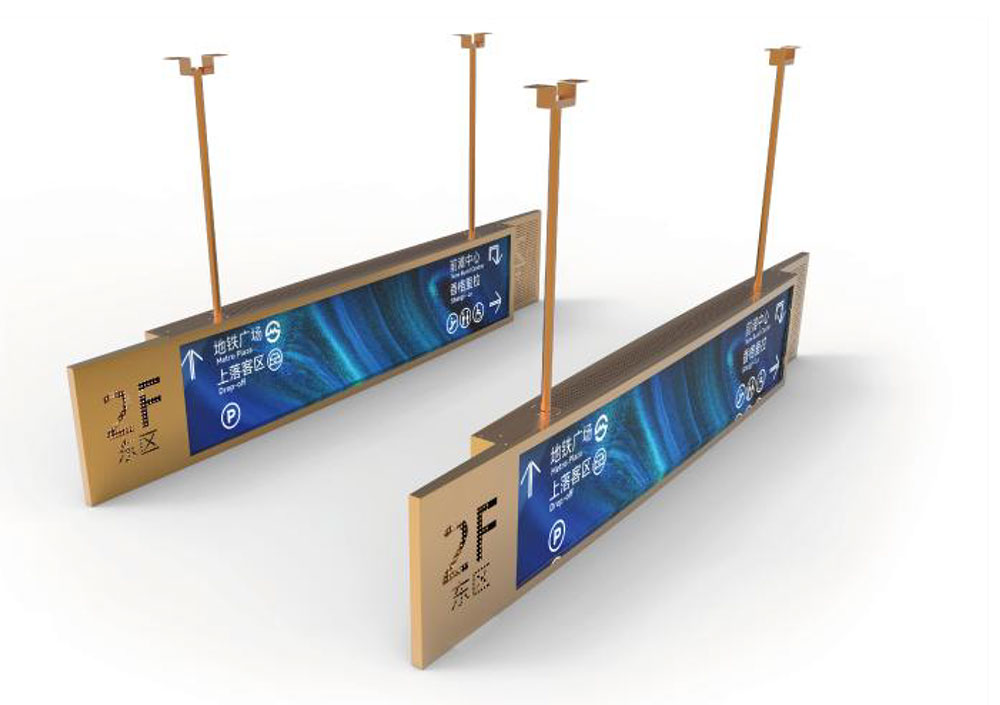
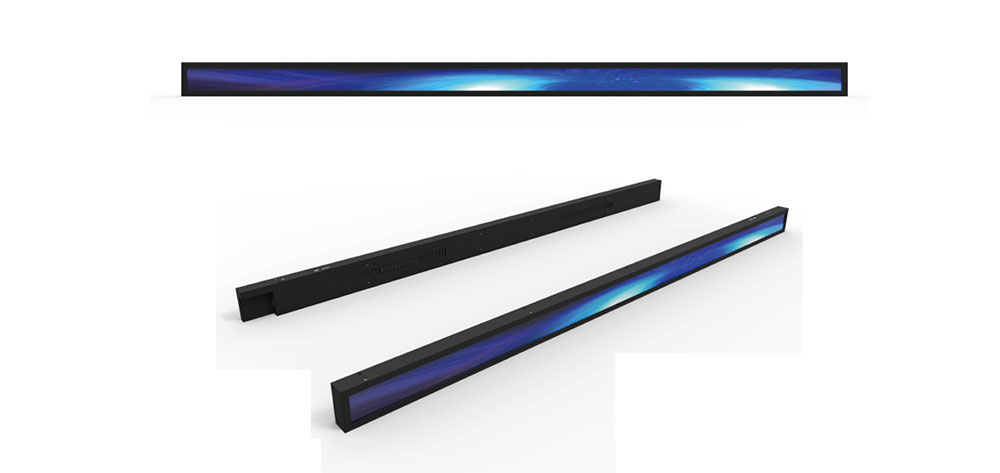
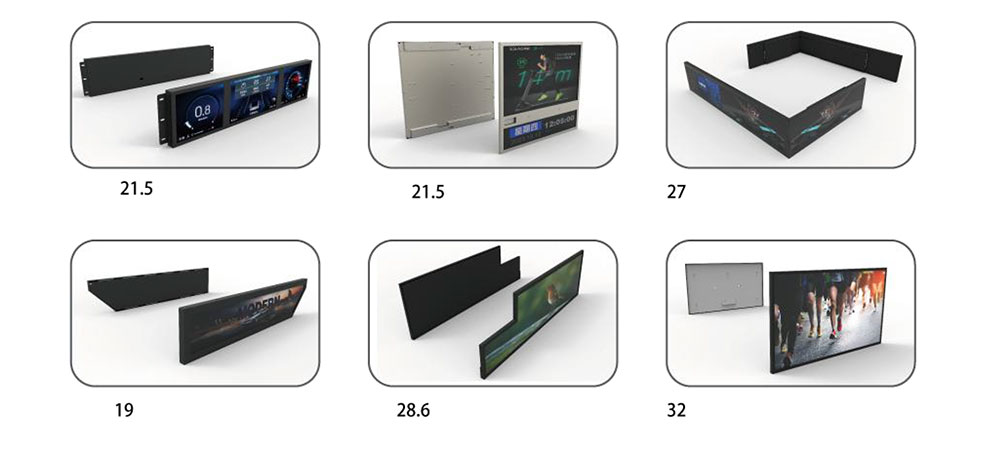
A stretched bar screen — also called a stretched LCD, bar-type display, or ultra-wide signage panel — is an LCD display with a non-standard aspect ratio. Where a conventional monitor uses a 16:9 ratio, a stretched bar screen may use ratios such as 16:4.5, 24:9, 32:9, or even more extreme proportions. The result is a long, slim panel that fits naturally into shelves, window ledges, transit platforms, elevator frames, and the horizontal or vertical bands of a storefront window.
Stretched bar screens are produced in two primary ways. Some are purpose-built panels manufactured at the elongated ratio from the start. Others are "cut" panels, where a standard LCD glass is precision-cut and re-bonded into a bar shape. At HITULCD, we work with both approaches and apply our own optical bonding and high-brightness backlight upgrades to ensure consistent performance, regardless of the base panel.
The defining advantage of the bar format is spatial efficiency. A window display rarely offers a full rectangular area. Instead, it offers a band — the strip above a counter, the slim vertical column beside an entrance, or the long ledge facing the street. A stretched bar screen turns that otherwise wasted space into prime advertising real estate.
Why 1000 Nits Is the Sweet Spot for Window Displays
Brightness in displays is measured in nits (candelas per square meter). To understand why 1000 nits matters, consider the lighting environment of a typical retail window:
- Indoor ambient light: 200–500 lux — a 350-nit display is acceptable.
- Shaded storefront: 1,000–5,000 lux — 500–700 nits begins to struggle.
- Direct sunlight on glass: 10,000–100,000 lux — only 1,000 nits and above remains clearly readable.
A 1000 nits stretched bar screen offers roughly three times the brightness of a standard commercial panel. This headroom is what keeps whites bright, blacks deep, and colors saturated even when the sun is at its harshest. It also enables the display to overcome reflections from the window glass itself — a factor many specifiers overlook until their first installation fails in the field.
Could you go higher, to 1,500 or 2,500 nits? Absolutely, and HITULCD manufactures those tiers as well. But for window-facing displays that sit behind glass — which provides a degree of shading and UV filtering — 1000 nits represents the optimal balance of readability, power consumption, heat generation, and cost. It is the practical sweet spot for the vast majority of window display deployments.
The Technology Inside a HITULCD 1000 Nits Stretched Bar Screen
Achieving reliable 1000-nit performance in a slim bar form factor is far more demanding than simply turning up the backlight. Several engineering disciplines must work together:
High-Efficiency LED Backlight
Our bar screens use binned, high-output LED arrays with carefully controlled light guide plates and diffusers. Even illumination across an ultra-wide panel is challenging because the light must travel a long horizontal distance. HITULCD uses edge-lit and, where appropriate, direct-lit configurations with optimized LED spacing to eliminate hot spots and ensure uniformity above 85%.
Optical Bonding
Optical bonding fills the air gap between the LCD glass and the protective cover glass with an optically clear adhesive. This single process dramatically reduces internal reflection, improving contrast in bright conditions and boosting effective readability far beyond what the raw nit number suggests. Optically bonded units also resist condensation, dust ingress, and impact — all valuable in a window environment exposed to temperature swings.
Thermal Management
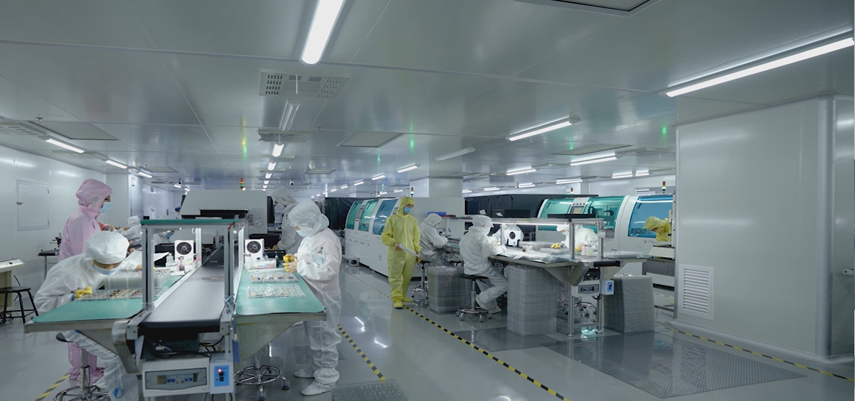
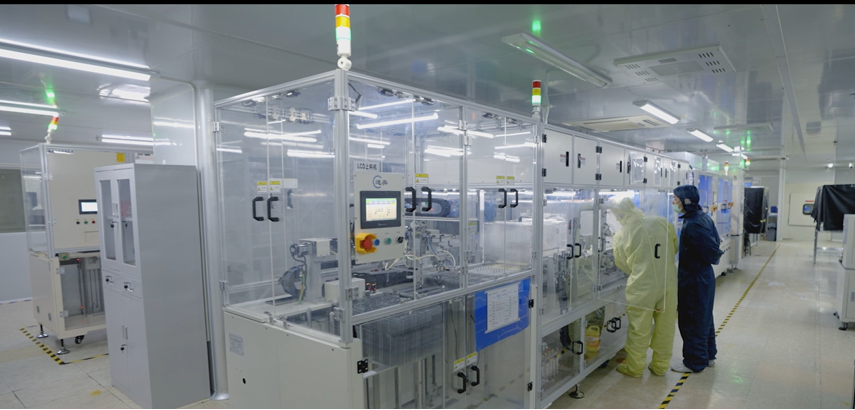
More brightness means more heat. A 1000-nit backlight generates significantly more thermal load than a standard panel, and that heat is concentrated in a narrow chassis. HITULCD bar screens incorporate aluminum heat-spreading structures, optimized airflow channels, and, on larger models, active cooling. Effective thermal design protects the liquid crystal from "clearing" (a temporary black blotch that appears when an LCD overheats in sunlight) and extends backlight lifespan.
Wide Temperature and Anti-Glare Treatments
Window displays may face direct sun in summer and cold drafts in winter. Our panels support wide operating temperature ranges, and we offer anti-glare (AG) and anti-reflective (AR) surface treatments to further tame reflections from the window glass and surrounding environment.
Our Top 5 1000 Nits Stretched Bar Screens
Below we present the five HITULCD stretched bar screens most frequently specified for bright window display projects. Each has earned its place through a combination of brightness reliability, mechanical robustness, and real-world deployment success.
1. HITULCD BarVue 23.1" Ultra-Slim 1000 Nits
The BarVue 23.1" is our most popular entry-level window bar screen and a workhorse for shelf-edge and counter-front displays. With a 23.1-inch diagonal and a 32:10 aspect ratio, it delivers a panoramic 1920×600 resolution that is perfect for scrolling promotions, menu items, and price tickers.
- Brightness: 1000 nits, optically bonded for sunlight readability behind glass.
- Form factor: Ultra-slim depth under 40mm, ideal for tight window ledges.
- Interface: HDMI and LVDS options, with optional built-in Android media player.
- Best for: Pharmacies, convenience stores, bakeries, and bank teller windows.
What makes the BarVue 23.1" a standout is its balance of price and performance. It brings true 1000-nit visibility to small and mid-sized retailers who cannot justify large-scale signage but still need their window to compete for attention on a busy street.
2. HITULCD StripePro 28" High-Contrast 1000 Nits
The StripePro 28" steps up in both size and image quality. Its 28-inch diagonal and 16:4.5 aspect ratio produce a striking 1920×540 canvas with enhanced contrast and color depth thanks to a wide-color-gamut panel.
- Brightness: 1000 nits with high native contrast for vivid imagery in sunlight.
- Color: Wide color gamut covering over 72% NTSC, excellent for brand-accurate visuals.
- Durability: Optional 5mm anti-glare cover glass for harsh exterior-facing windows.
- Best for: Fashion boutiques, cosmetics retailers, jewelry stores, and automotive showrooms.
Where the BarVue prioritizes affordability, the StripePro prioritizes image fidelity. For brands whose identity depends on precise color reproduction — think luxury and lifestyle retail — the StripePro 28" keeps logos and product photography looking premium even on the sunniest afternoons.
3. HITULCD VistaBar 37" Panoramic 1000 Nits
The VistaBar 37" is our go-to choice when a window display needs to make a bold, full-width statement. At 37 inches diagonal with a 16:4.5 ratio and 1920×540 resolution, it spans a generous horizontal area while maintaining the slim profile that defines the bar category.
- Brightness: 1000 nits with high-uniformity edge-lit backlight across the full width.
- Mounting: Landscape or portrait, with VESA and custom bracket options.
- Connectivity: HDMI, DisplayPort, USB media playback, and optional network control.
- Best for: Department store windows, transit station retail, shopping mall storefronts.
The VistaBar 37" is engineered for high-traffic environments where the display must read from across a wide sidewalk or concourse. Its larger size lets content remain legible at greater viewing distances — a critical factor in pedestrian-heavy locations.
4. HITULCD ColumnView 43" Vertical-Optimized 1000 Nits
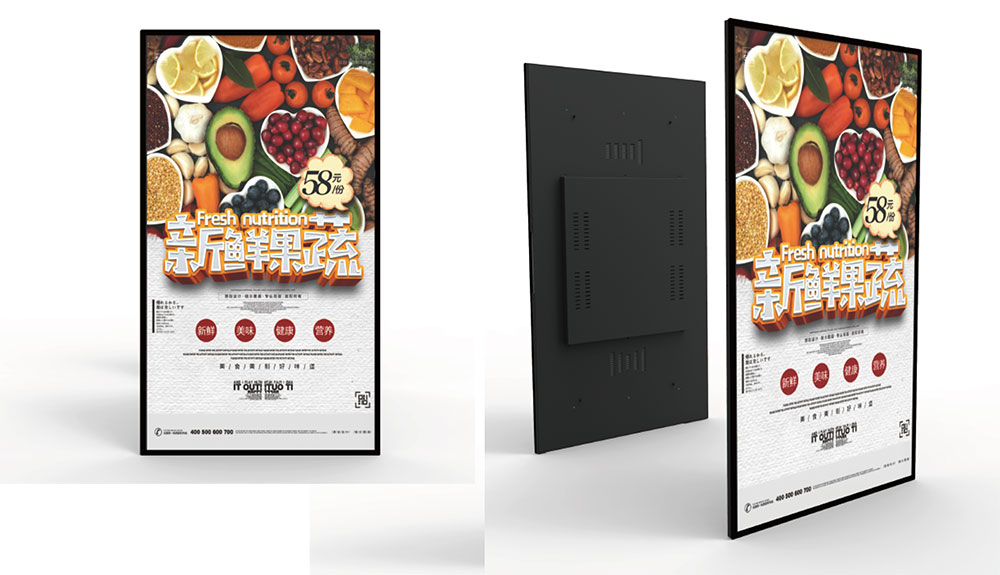
Not every window display is horizontal. The ColumnView 43" is designed for vertical mounting in the slim columns beside entrances, elevators, and pillar-mounted window frames. Rotated to portrait, its 43-inch panel becomes a tall, attention-commanding banner.
- Brightness: 1000 nits, optically bonded, with portrait-optimized thermal design.
- Orientation: Native portrait support with auto-rotate firmware.
- Cooling: Active thermal management tuned for vertical airflow.
- Best for: Entrance pillars, elevator lobbies, hotel facades, and corner storefronts.
Vertical bar screens present unique thermal challenges because heat rises along the long axis of the panel. The ColumnView 43" addresses this with a cooling system specifically validated for continuous portrait operation, ensuring no clearing artifacts appear at the top of the display where heat tends to accumulate.
5. HITULCD MegaBar 58" Flagship 1000 Nits
For landmark storefronts and premium brand windows, the MegaBar 58" is HITULCD's flagship stretched bar screen. This large-format panorama dominates a window with sweeping, cinematic content while retaining full 1000-nit sunlight readability.
- Brightness: KEYWORDS: Our Top 5 1000 Nits Stretched Bar Screens for Bright Window Displays