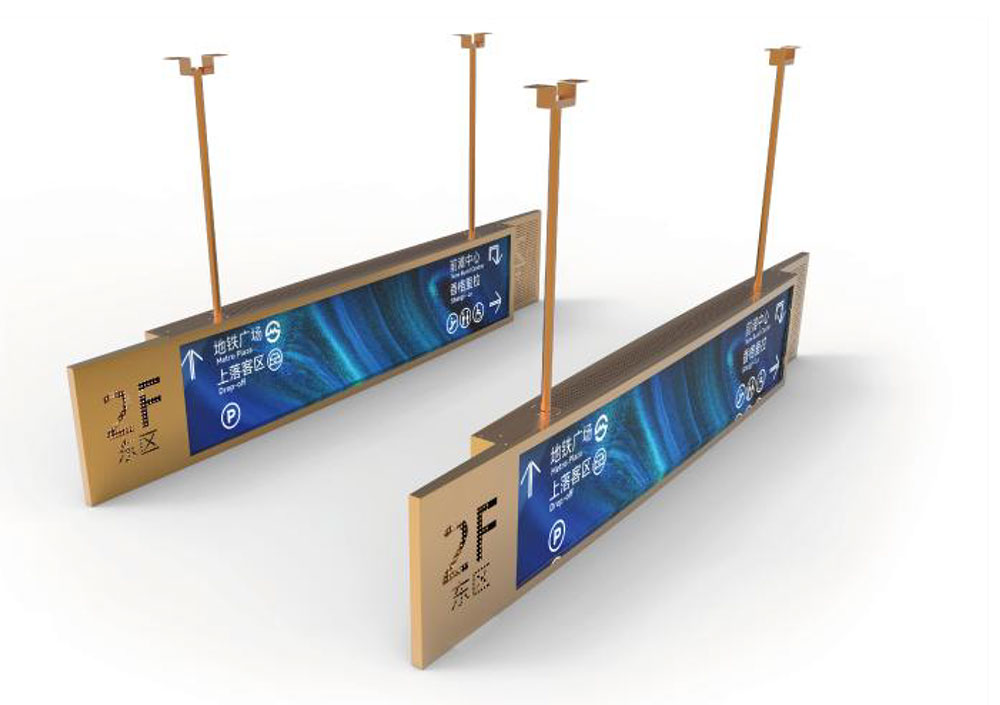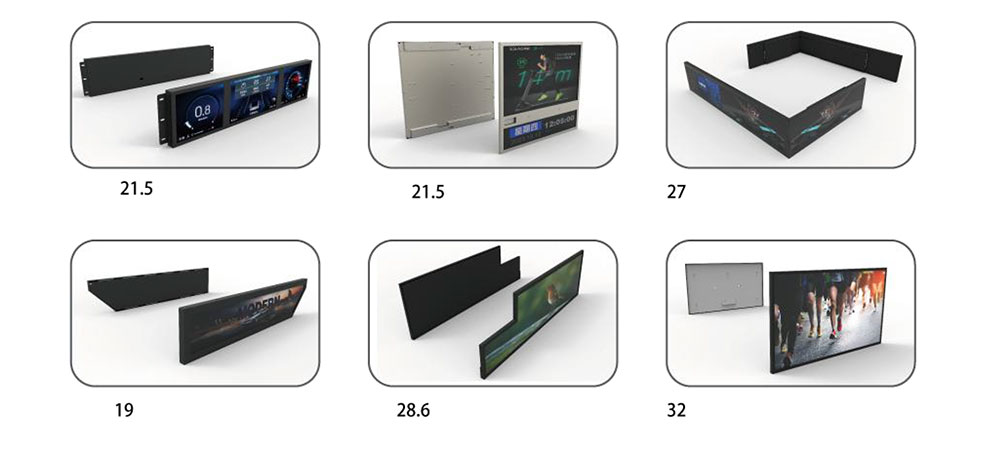
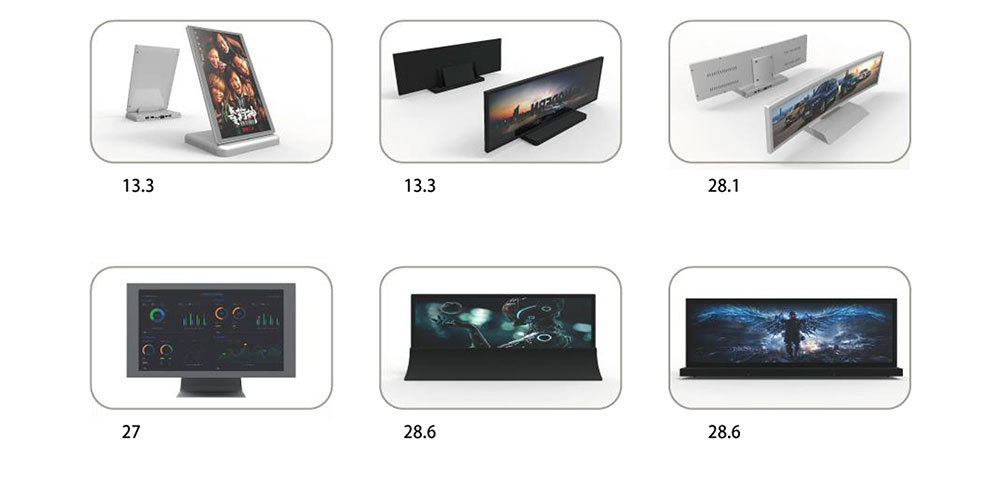
Ceiling-hung retail signage lives or dies by two numbers: weight and brightness. A stretched bar LCD suspended above an aisle has to be light enough for a safe overhead mount, yet bright enough to punch through skylights and heavy showroom lighting. At HITULCD, we engineer high-brightness stretched bar displays specifically for this environment, and this guide breaks down the six lightweight configurations we recommend most often for hanging deployments.
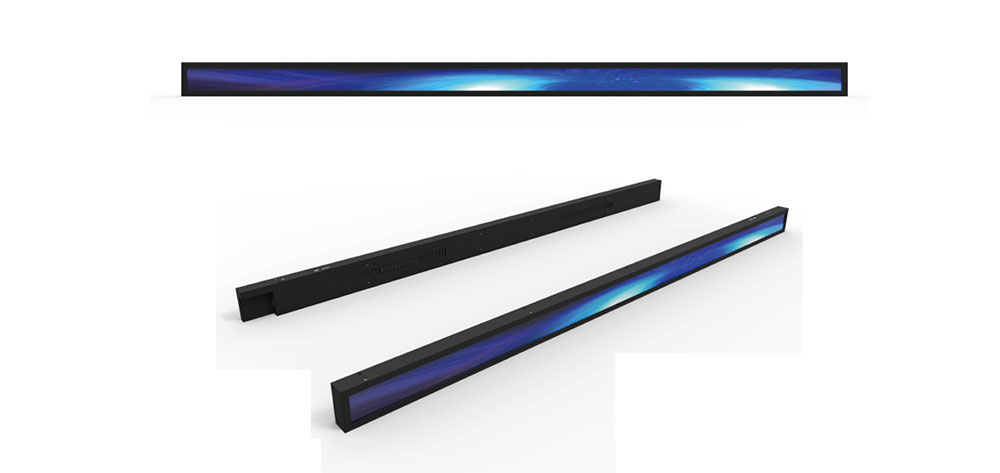
📌 Quick definition: A stretched bar screen is an ultra-wide-aspect LCD (typically 16:4.5, 24:9, or 32:9) cut from a standard panel to fit narrow shelf edges, ceiling rails, and transit corridors. "Lightweight" here means chassis mass low enough for single-point or dual-cable suspension without reinforced structure.
Why Weight Matters More When Signage Hangs
On a wall or shelf, the fixture carries the load in compression. When you hang a bar screen from a ceiling, the mount works in tension and every gram is amplified by leverage and vibration. A panel that is 30% lighter reduces cable gauge, simplifies structural sign-off, and cuts installation labor. It also lowers the consequence of a failure. That is why we prioritize aluminum-alloy frames, slimmed backlight modules, and edge-lit LED architecture across every model below.
Key selection criteria we used
- ⚖️ Chassis weight under practical single-cable or dual-cable limits
- ☀️ Sustained brightness of 1000 nits or higher for lit interiors
- 🌡️ Thermal design that survives trapped ceiling heat
- 🔌 Cable management for clean overhead power and signal runs
- 🕒 Duty rating for 16/7 or 24/7 retail hours
The Top 6 Lightweight Stretched Bar Screens
1. 23.1" Ultra-Slim Bar — The Aisle Marker
Our lightest hangable model, built on a magnesium-aluminum frame at roughly 2.8 kg. The 23.1-inch diagonal in a 32:10 ratio suits narrow directional signage over checkout lanes and end caps. At 1000 nits it reads clearly under standard LED store lighting, and the sub-30 mm depth keeps the profile discreet when viewed from below.
💡 Best for: Single-cable suspension over pinch-point aisles where minimal visual footprint matters.
2. 28" Stretched Bar — The Balanced Workhorse
A 28-inch 16:4.5 panel around 3.6 kg that balances screen real estate against mount simplicity. It handles rotating promotions, pricing, and short-form video without overloading a two-cable rig. The edge-lit backlight keeps heat generation low, which matters when warm air pools near the ceiling deck.
3. 35" High-Bright Bar — The Skylight Fighter
For atriums and storefronts with daylight ingress, this 35-inch model pushes 1500 to 2000 nits while staying near 5.1 kg through optimized light-guide plates. An anti-glare film reduces ceiling-lamp reflections that would otherwise wash out overhead content.
🔆 Engineering note: Higher brightness normally means more heat. We offset this with a finned rear plate and low-power LED binning so the module stays within a safe junction temperature even in a still-air ceiling cavity.
4. 37.2" Double-Sided Bar — The Two-Way View
Hanging signage is often seen from both directions. This double-sided 37.2-inch bar carries two panels back-to-back yet holds a combined mass near 7.4 kg thanks to a shared aluminum spine and a single power inlet. Ideal for perpendicular ceiling mounting where shoppers approach from either side.
5. 43.8" Wide Bar — The Zone Header
When a display needs to label a whole department, the 43.8-inch 24:9 bar delivers presence while keeping weight manageable at about 6.9 kg. It runs at 1200 nits and supports landscape banner content, wayfinding, and category branding across a wide sightline.
6. 47" Panoramic Bar — The Statement Piece
Our largest lightweight hangable model, a 47-inch panoramic bar near 8.2 kg. Despite the size, thin-bezel construction and a lightened rear housing keep it inside dual-cable limits. Reserved for flagship stores where a bold overhead ribbon anchors the visual merchandising plan.
Comparing the Six at a Glance
| Model | Approx. Weight | Brightness | Best Use |
|---|---|---|---|
| 23.1" | ~2.8 kg | 1000 nits | Aisle markers |
| 28" | ~3.6 kg | 1000 nits | General promo |
| 35" | ~5.1 kg | 1500-2000 nits | Daylit areas |
| 37.2" dual | ~7.4 kg | 1200 nits | Two-way viewing |
| 43.8" | ~6.9 kg | 1200 nits | Zone headers |
| 47" | ~8.2 kg | 1200 nits | Flagship statement |
Installation Tips for Overhead Bar Screens
- 🔩 Verify the anchor point. Confirm the ceiling grid or structural member is rated for the fixture load plus a safety factor before you hang anything.
- 🧵 Use rated aircraft cable. Match cable gauge to the model weight and add a secondary safety tether on larger units.
- 🌀 Plan for airflow. Ceilings trap heat, so leave clearance around vents and avoid enclosing the rear housing.
- 📐 Set the viewing angle. Tilt bar screens slightly downward so overhead content aligns with shopper sightlines.
Choosing the Right Model
Start with your lighting environment. If daylight reaches the sign, the 35-inch high-bright model is the safe default. For everyday interior lighting, the 28-inch bar covers most needs at minimal weight. Scale up to the 43.8-inch or 47-inch panoramic only where the sightline and structure justify it, and choose the double-sided 37.2-inch model whenever traffic approaches from both directions. Across all six, the shared design goal is the same: maximum readability at the lowest safe hanging weight.
✅ Takeaway: Lightweight does not mean dim. Every HITULCD stretched bar in this lineup pairs a slimmed, low-mass chassis with high-brightness output, so your ceiling signage stays legible, safe, and simple to install.