
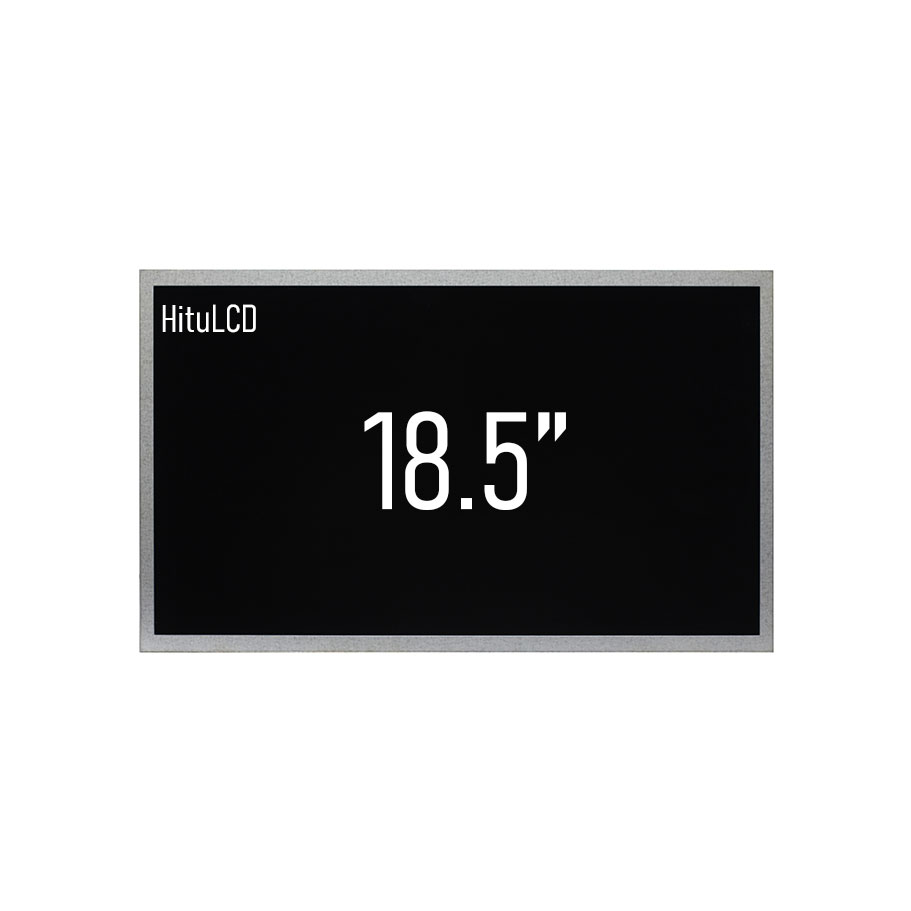
18.5 Inch Custom Industrial TFT LCD Screen-1000NITS
MODEL: HT185FHD-1000
Need customized solution?
Our engineering team is always ready to provide you with professional technical support and flexible customized services.
Understand light customization servicesBuilt by us. Configured for you.
HITULCD supplies LCD modules and display solutions directly from our manufacturing operation, giving OEMs, integrators and distributors direct access to engineering, customization and production.
Supply
Supplier Qualification
VerificationTechnical Specifications
| LCD PANEL PARAMETERS | HDMI/CONTROL BOARD SPECIFICATIONS | ||
|---|---|---|---|
| ITEM | DETAILS | ITEM | DETAILS |
| Description | HITULCD 18.5" QLED QUANTUM DOT HIGH COLOR GAMUT 350CD | Input Interface | HDMI, VGA, |
| Size | 18.5' | Power Input | DC 12V-5A |
| Display area (mm) | 408.96(H)x 230.04(V) | OSD KEYS | 5 KEYS (POWER SWITCH, MENU, +, -, EXIT) |
| Resolution | 1920*1080 | OSD CONTROL | BRIGHTNESS, COLOR, CONTRAST, AUTO ROTATION, H/V POSITION, ETC. |
| Aspect ratio | 16:9 | ||
| Contrast ratio | 1000:1 | ||
| Pixel per inch (PPI) | 119 | ||
| Viewing angle | 178(H),178(V) | ||
| Display Colors | 16.7M, 72% NTSC | ||
| Response time(Typical) | 8ms | ||
| Signal Type | LVDS (2 ch, 8-bit) 30pins | ||
| Backlight | WLED, 30K hrs, With LED Driver | ||
| Power consumption | 18W | ||
| Dimensions (mm) | 430.37×254.6×11.2 mm (H×V×D) | ||
| Mounting | VESA | ||
| Bezel size (U/B/L/R) | 10/10/12/12 | ||
| Operating temperature | 0℃~+50℃ | ||
| Storage temperature | -20℃~+60℃ | ||
| Weight (Net) | 1.2KG | ||
OEM/ODM at HITULCD: Built to Take Your Display Project From Spec to Shipping Container
For an engineer evaluating a manufacturing partner, "we do OEM/ODM" isn't the question — every supplier says that. The real questions are: how deep does the customization go, who owns the design risk, what equipment is actually running the line, and can they prove it? Since 2014, HITULCD has built its manufacturing stack specifically to answer those questions — not with claims, but with process.
Two Paths, Matched to Your Development Stage
OEM — Branding & Build-to-SpecYou bring the layout, drawings, or an existing product to match. We manufacture to your specification and apply your brand — logo, packaging, labeling. This path suits teams that already have engineering resources in-house and need a manufacturing partner, not a design partner. Lower MOQ, faster cycle (typically 4–6 weeks to delivery), no NDA overhead beyond standard confidentiality.
ODM — Full Engineering PartnershipOur engineering team participates from the layout stage: structural design, mechanical fit, driver board selection, thermal design, and mold development for a fully exclusive product. This is the path for teams that have an application and a set of constraints (enclosure, environment, interface) but not yet a finished display design. NDA-protected, longer development cycle (typically 8–16 weeks) reflecting genuine R&D — not just a private-label sticker.
Most clients don't need to pre-decide — our engineers help identify which mode fits once we understand your target application, volume, and how much of the design is already fixed.
What "Customization" Actually Covers
Customization at HITULCD isn't limited to size and brightness. It runs through every layer of the product:
Panel-level: size (5.5"–98"+), resolution, brightness (350–3000 nits), contrast, viewing angle, color gamut, custom cutting/shape
Interface & driving: HDMI/VGA/LVDS/eDP, custom AD boards supporting mixed signal inputs, automated dimming sensors, OSD control sets
Touch & bonding: COG/FOG bonding with micron-level alignment for touch integration, capacitive/resistive touch stack-up
Structural & mechanical: housing/enclosure design, VESA and custom mounting, bezel width, ultra-slim frame requirements, ruggedized chassis for transport or outdoor use
Branding: logo printing, custom packaging, private labeling, documentation under your brand
Compliance: CE, FCC, RoHS, ISO 9001:2015, ISO 14001:2015, IATF 16949:2016, UL, REACH, WEEE — arranged to match your target export market
The Line Behind the Promise
Customization claims are only as credible as the equipment running them. Here's what's actually on our floor:
| Stage | Equipment | What it does for your project |
|---|---|---|
| Cell feeding & bonding | JYD-I900E Full-Automatic COG Series, JYD-F900E/F900A Atomization Bonding System | Micron-level alignment for custom LCD module development — stable signal transmission over the product's service life |
| Cutting & shaping | GH-1111 Laser Cutting Machine (7.5KW fiber laser), OC-1200A Glass Cutting Machine | Burr-free, dimensionally stable edges for non-standard sizes and cuttable/stretched-bar formats |
| Marking & structural assembly | LS-900Pro Laser Marking Machine, automated laminating & gluing lines | High-precision marking and structural integration from backlight module through to complete open-frame monitor |
| Component mounting | PT-A12-B Automatic Mounter | Stable, high-speed assembly of driver and interface components |
| Circuit bonding | F6-AS120 ACF Laminating Machine | 100% stable circuit connection at the conductive-film interface |
| Reliability qualification | HYC-TH-80DH Temperature & Humidity Chamber, 2D measuring instruments, microscopy/visual inspection systems | Environmental simulation and aging testing to industrial standards before your product ships |
The full production sequence — cell feeding → vacuum quenching → ACF attachment → IC alignment & pre-bonding → FOG electrical test → FPC bonding → IC main bonding → ITO encapsulation → high-temp adhesive & label attachment → visual inspection — runs in an ISO 14644-1 certified cleanroom, giving every custom build the same process discipline as standard production.
Why This Matters to You
Design risk stays technical, not schedule-driven. Because bonding, cutting, and structural assembly all run on our own automated lines — not subcontracted — your custom spec doesn't get queued behind a third party's priorities.
Scale without re-qualifying a new vendor. 120,000+ units/year of annual capacity means your project can move from a 20-piece engineering sample to a multi-thousand-unit production run on the same line, under the same quality system.
Global-market-ready from day one. With CE/FCC/RoHS as standard and IATF 16949, UL, REACH and WEEE available on request, compliance is planned into the project instead of retrofitted before shipment.
A decade of export experience. Founded in 2014, shipping into 38+ export markets — the certification, documentation, and Incoterms conversations (EXW/FOB/CIF) are already familiar territory, not a first-time negotiation.
Getting Started
To scope an OEM or ODM project, our engineering team typically needs:
Target application and environment (indoor/outdoor/semi-outdoor, operating temperature range)
Whether you're starting from an existing design (OEM) or an application brief without a finished spec (ODM)
Size, brightness, interface, and touch requirements — with drawings if you have them
Certification targets for your destination market(s)
Estimated annual volume, for MOQ and pricing tier discussion
Custom-Cut TFT LCD Screens: A Technical Buyer's Guide
Based on the HITULCD 18.5" 1000nits Industrial TFT LCD (Model: HT185FHD-1000)
For engineers evaluating a non-standard panel size, procurement managers building a bill-of-materials, or project leads validating a new industrial display before tooling — the questions are always the same: Can it be cut without breaking the array? Will it seal? Will it survive qualification testing? And what will it cost, in dollars and in weeks?
This guide walks through what to expect when working with HITULCD on a size-cutting project, using the 18.5" 1000nits panel (408.96mm × 230.04mm active area, 1920×1080, 30-pin LVDS) as a reference platform.
1. Cutting Process & Feasibility Assessment
Cutting method — mechanical wheel vs. ultra-fast laser?The right process depends on target dimension, tolerance, and how close the new edge sits to active circuitry. Mechanical scribe-and-break (diamond/carbide wheel) is cost-effective for straightforward rectangular reductions with looser tolerances. Ultra-fast (picosecond/femtosecond) laser cutting is used when the cut line runs close to the Gate/Source driving area, when tighter dimensional tolerance is required, or when micro-crack control is critical to long-term reliability. HITULCD's engineering team recommends the method after reviewing your target outline against the original panel's array layout — this is confirmed at the feasibility stage, before any tooling commitment.
Will the cut interfere with Gate/Source traces or the TFT array?This is the first thing our engineers check. Every LCD cell has a defined active area, a Gate/Source (COF or PCB-bonded) trace region, and a sealant/spacer border — cutting into any of these will damage the panel electrically or compromise the seal. Before confirming feasibility, we typically request:
Your target outer dimensions and desired active area (with tolerance)
Mounting/cutout requirements (if any) relative to the panel's Gate/Source side
The current panel's cell drawing or datasheet, if you're working from an existing SKU rather than a HITULCD base panel
Based on this, our team maps your requested cutline against the internal array and trace layout and confirms whether a direct cut is viable or whether an alternate base panel size is a better starting point.
Edge flatness and micro-crack control after cuttingPost-cut edges are inspected against defined flatness and chip/crack tolerances before any unit proceeds to sealing. Panels showing visible edge chipping, propagating micro-cracks, or out-of-tolerance edge profile are rejected at this stage — this inspection happens before, not after, the sealing step, so defects are caught while rework is still possible.
2. Reliability & Edge-Sealing Assurance
Sealing process after cuttingA cut edge exposes the liquid crystal layer to moisture and physical ingress risk unless it is properly re-sealed. HITULCD applies a secondary edge-sealing process — typically UV-cure resin dispensing along the cut edge — engineered to restore moisture and leakage resistance at the new boundary. The specific sealant and dispensing pattern are matched to panel thickness and cut geometry, and confirmed with you at the DFM (design-for-manufacturing) review stage.
Reliability testing after cuttingCut-and-resealed panels are put through the same qualification battery as standard production, scaled to consumer-grade or industrial-grade requirements depending on your end application. Typical reference tests include:
Double 85 (85°C/85%RH) high-temp, high-humidity soak
High/low temperature cycling (thermal shock)
Structural drop testing
We can share benchmark data from prior cutting projects of comparable size and cut geometry on request, so you can compare expected pass margins against your own qualification requirements before committing to tooling.
Optical performance at the cut edge — light leakage and MuraEdge light leakage and color-shift (Mura) risk are directly tied to sealant uniformity and how close the cut line sits to the backlight/polarizer stack. Panels are optically inspected under backlight-on conditions post-sealing specifically at the cut boundary, in addition to standard full-panel Mura inspection, to catch edge-localized defects that a center-panel inspection would miss.
3. Cost, Yield & Lead Time
NRE and first-sample cost/lead timeCustom cutting projects carry a one-time NRE (non-recurring engineering) cost covering DFM review, fixture/tooling setup, and first-article inspection — the exact figure depends on cut complexity (mechanical vs. laser, cut proximity to the array) and is quoted after the feasibility review in Section 1. A first-sample run (e.g. 20pcs) typically follows a defined lead time from tooling sign-off; we confirm this window as part of the same quotation so it can be built into your project schedule up front.
Expected yield and MOQ at mass productionMass-production yield for a cutting project depends on cut geometry and proximity to active circuitry, and is typically discussed as a range based on comparable past projects, not guaranteed as a fixed number before first-article results are in. MOQ for a custom-cut specification is generally higher than our standard 1-unit MOQ for uncut panels — the adjustment is confirmed at the quotation stage (not after deposit), consistent with our standard order-minimum policy.
Getting Started
To move a cutting evaluation forward, our engineering team typically needs:
Target outer dimensions and active-area requirement (with tolerance)
Base panel reference — either a HITULCD standard size (like the 18.5" 1000nits HT185FHD-1000 above) or your current panel's cell drawing
End-use environment (operating temp range, expected reliability standard — consumer or industrial grade)
Target volume, for MOQ and pricing tier discussion
Know The Terms Before You Inquire.
|
01 — Shipping Terms
Incoterms Available
EXW
Ex Works — pick up from our factory
FOB
Free On Board — most common for ocean freight
CIF
Cost, Insurance & Freight — to your port
|
02 — Order Minimum
MOQ: 1 Units
Applies to standard specs. Custom brightness, cutting or bezel may adjust MOQ, confirmed at quotation. Sample units available before bulk order
|
03 — Payment Protection
Multiple Secured Methods
|
A Real Factory. Publicly Verifiable.
|
Legal Company Name
Shenzhen Hantu Jiashi Technology Co., Ltd.
|
Unified Social Credit Code
91440300306068446B
|
|
Legal Representative
YUN CHEN
|
Registered Capital
RMB 2,000,000
|
|
Established
May 23, 2014 (11+ years operation)
|
Business Status
● Active / In Operation
|
|
Registered Factory Address
Building B, Gangshen Innovation Park, Huaning Road, Dalang Sub-district, Longhua District, Shenzhen, Guangdong, China
|
|
Contact HITULCD
We'll respond via email within 24 hours. If you'd like to discuss details over WhatsApp or a call, please leave a preferred time and contact method in your message — we will never call you unannounced.
Related solutions
This product is suitable for the following industry application scenarios
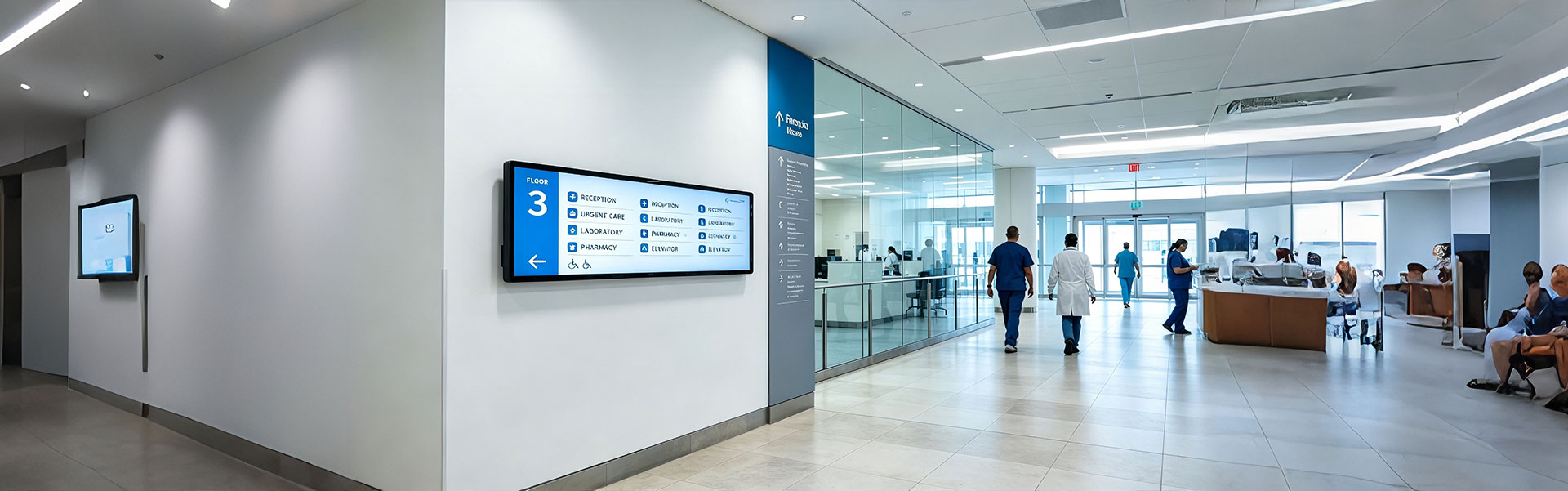
Floor Information Bar LCD Display Solution
Ultra-wide, high-brightness stretched bar LCD disp...
view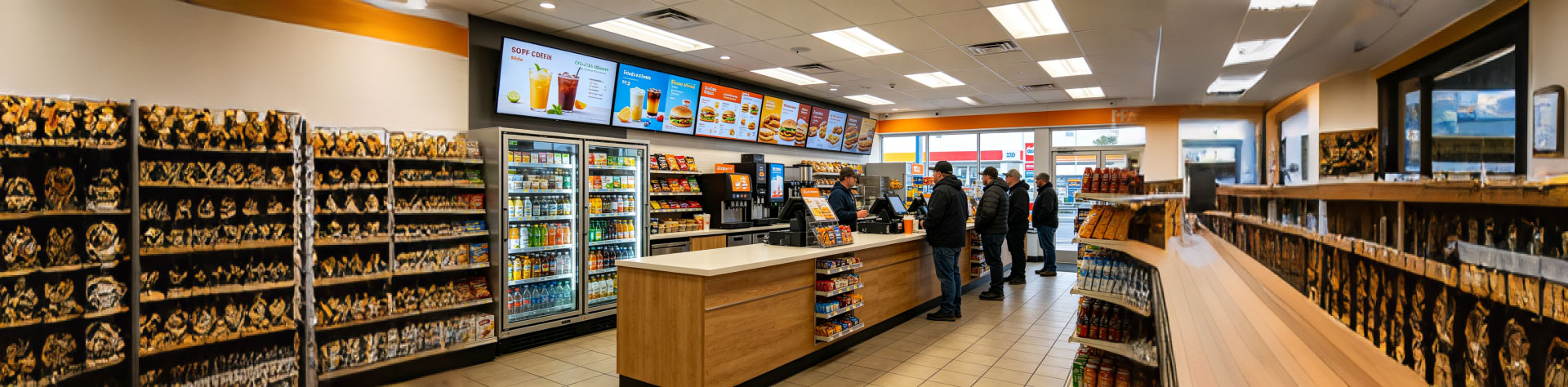
Convenience Store Bar LCD Display Solution
Ultra-slim, high-brightness stretched bar LCD disp...
view
Bus Passenger Information Stretched Bar Display Solution
A rugged, ultra-wide stretched bar display solutio...
viewRelated Products
You may also be interested in the following products
 1000 Nits
27 Inch Industrial LCD Display | High Brightness, OEM Custom Solutions
 1000 Nits
23.8 Inch Sunlight Readable TFT LCD Display -1000Nits Industrial Grade
 1000 Nits
