
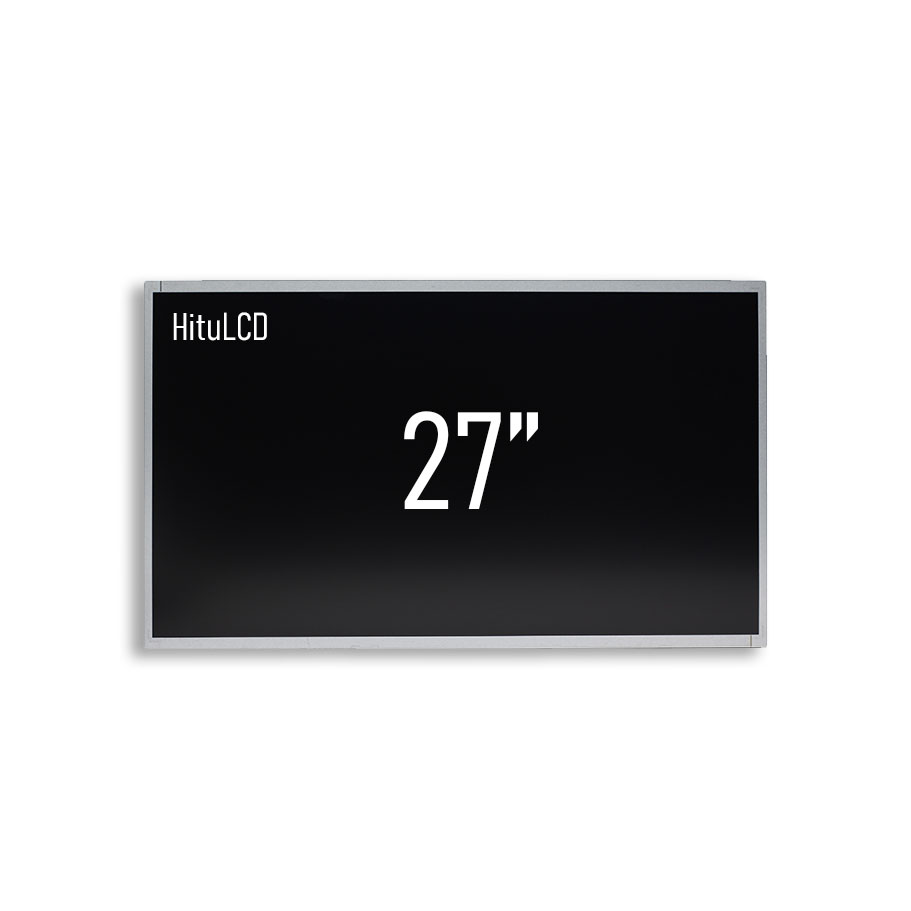
27 Inch Industrial LCD Display | High Brightness, OEM Custom Solutions
MODEL: HT270FHD-1000
Need customized solution?
Our engineering team is always ready to provide you with professional technical support and flexible customized services.
Understand light customization servicesBuilt by us. Configured for you.
HITULCD supplies LCD modules and display solutions directly from our manufacturing operation, giving OEMs, integrators and distributors direct access to engineering, customization and production.
Supply
Supplier Qualification
VerificationTechnical Specifications
| LCD PANEL PARAMETERS | HDMI/CONTROL BOARD SPECIFICATIONS | ||
|---|---|---|---|
| ITEM | DETAILS | ITEM | DETAILS |
| Description | HITULCD 27" QLED QUANTUM DOT HIGH COLOR GAMUT 350CD | Input Interface | HDMI, VGA, |
| Size | 27 | Power Input | AC 100~240V |
| Display area (mm) | 597.888(H)×336.312(V) mm | OSD KEYS | 5 KEYS (POWER SWITCH, MENU, +, -, EXIT) |
| Resolution | 1920*1080 | OSD CONTROL | BRIGHTNESS, COLOR, CONTRAST, AUTO ROTATION, H/V POSITION, ETC. |
| Aspect ratio | 16:9 | ||
| Contrast ratio | 1000:1 | ||
| Pixel per inch (PPI) | 81 | ||
| Viewing angle | 178(H),178(V) | ||
| Display Colors | 16.7M, 72% NTSC | ||
| Response time(Typical) | 8ms | ||
| Signal Type | LVDS (2 ch, 8-bit) , 30 pins | ||
| Backlight | WLED, 30K hrs, With LED Driver | ||
| Power consumption | 25W | ||
| Dimensions (mm) | 630x368.2x9.7 mm (H×V×D) | ||
| Mounting | VESA100*100MM | ||
| Bezel size (U/B/L/R) | 14.2/14.2/14.2/14.2 | ||
| Operating temperature | 0℃~+50℃ | ||
| Storage temperature | -20℃~+60℃ | ||
| Weight (Net) | 1.5KG | ||
OEM/ODM Manufacturing — Built In-House, End to End
Content for HITULCD's OEM/ODM page
Most display "manufacturers" you'll talk to are actually trading companies coordinating subcontractors — which means your project timeline depends on someone else's factory schedule, and your quality depends on a process you never get to see. HITULCD is different: design, bonding, assembly, and reliability testing all happen on our own production floor, under our own quality system. When you talk to us, you're talking to the people running the line — not a middleman relaying answers from one.
One Factory, the Whole Process
We don't outsource the steps that determine whether your display survives the field. Our vertically integrated line covers:
Product design & engineering — panel selection, driver board design, mechanical/enclosure integration
COG/FOG bonding — chip-on-glass and flex-on-glass bonding for custom LCD module development
Touch integration — capacitive/resistive touch lamination for interactive applications
SMT & PCB assembly — high-speed, high-precision surface mounting for stable component assembly
Housing & module assembly — from bare panel to fully housed, ready-to-ship unit
Reliability testing — environmental and structural qualification before anything ships
Because every stage sits under one roof, a design change on Monday doesn't mean a two-week email chain with three different vendors before production catches up.
Precision Equipment, Not Manual Guesswork
Bonding quality is where most custom display projects succeed or fail — misalignment or unstable signal transmission at this stage shows up later as flicker, dead pixels, or field failures. Our bonding lines are built for consistency at scale:
JYD-I900E Full-Automatic COG Series — automated chip-on-glass bonding with micron-level alignment control, supporting stable signal transmission and long service life across production runs
JYD-F900E / F900A Atomization Bonding System — precision lamination process for consistent optical bonding quality
High-precision conductive film lamination — engineered for 100% stable circuit connection, eliminating the intermittent-contact failures that plague hand-assembled modules
Automated cutting, gluing, and assembly lines — covering everything from backlight modules to complete open-frame monitors, giving us the flexibility to handle both custom prototypes and stable mass production on the same infrastructure
This isn't equipment we point to in a brochure — it's what runs every unit that ships, including the samples on your desk.
Quality Control That Matches Industrial-Grade Expectations
Consumer-grade tolerances don't hold up in kiosks, transit systems, outdoor signage, or 24/7 industrial control rooms. Our QC process is built around that reality:
Reliability testing under extreme environmental conditions (temperature cycling, humidity, thermal shock) to validate industrial-grade durability before mass production
Burn-in and aging tests to catch early-life failures before they reach your customers
Full traceability from incoming panel lot to finished unit, so a field issue can be traced back to its root cause — not guessed at
Certifications (CE, RoHS, FCC as standard; UL/CCC/EAC available on request) are backed by process documentation, not just a label on the box.
Scale That Doesn't Sacrifice Flexibility
Monthly production capacity: 12,000+ units, spanning custom specifications — enough depth for volume programs, without forcing small-batch or prototype orders to wait behind them
Safety stock maintained on common panel sizes and standard components, buffering your project against upstream supply chain fluctuations
Scheduled/forecasted production slots for repeat orders, so your reorder doesn't have to compete from scratch against every other customer's queue
11+ years operating as a registered manufacturer (Shenzhen Hantu Jiashi Technology Co., Ltd., est. 2014), with our factory address and business registration fully public for your due diligence before you commit
What This Means for Your Project
Faster iteration — design, bonding, and assembly under one roof means engineering changes move at the speed of a conversation, not a subcontractor chain
Fewer field failures — micron-level bonding alignment and 100% conductive-film connection integrity reduce the intermittent failures that are hardest to diagnose after deployment
Reliable scale-up — the same automated lines that build your first 20-unit sample run your 5,000-unit production order, so performance doesn't drift between prototype and mass production
Direct engineering access — questions about your project go to the engineers who built it, not through a sales layer that has to ask the factory and get back to you tomorrow
Have a project in mind? Send us your specs and we'll walk you through exactly which stage of our line handles your build, with a straight answer on feasibility, timeline, and cost — no subcontractor guesswork in between.
Custom Panel Cutting Services — What Engineers & Procurement Teams Need to Know
Technical content for HITULCD's OEM/ODM customization page (27" and related industrial LCD panels)
Every custom cutting project starts with the same set of questions from serious buyers — the design engineer wants to know if it's physically possible, the reliability engineer wants proof it will survive the field, and the procurement manager wants a number and a date. Below is how HITULCD addresses all three, based on our in-house cutting line and 11+ years of panel-level manufacturing experience.
1. Process Feasibility: Can It Actually Be Cut This Way?
Cutting method. For most industrial LCD cutting requests, we evaluate two approaches:
Mechanical wheel scribing (cutter wheel) — lower cost, faster turnaround, well suited to straight-line cuts on standard glass thickness where the cut line stays clear of active circuitry.
Ultrafast (picosecond/femtosecond) laser cutting — used when the cut line is close to the Gate/Source driving area, TFT array, or COF/COG bonding region, or when the target shape includes curves, notches, or tight corner radii. Laser cutting produces less mechanical stress and a cleaner micro-crack profile near sensitive circuit zones.
We select the method after reviewing your target dimensions against the panel's internal layout — not before.
Circuit clearance check. Before confirming feasibility, our engineering team maps your requested cut line against the panel's Gate driver, Source driver, and active TFT array boundaries to confirm there's no interference. To do this accurately, please provide:
Target outline dimensions and tolerance (±mm)
A reference photo or sketch of where the cut line falls relative to the visible active area and bezel
The specific panel model/part number if it's based on an existing HITULCD or third-party panel
Any keep-out zone requirements from your enclosure design
With this, we can confirm within the initial feasibility review whether the cut line clears the circuit area or whether a redesigned drive IC layout / re-routed FPC is needed.
Edge quality. Post-cut glass edges are controlled to standard industrial flatness and micro-crack tolerances appropriate for the cutting method used — laser-cut edges typically show tighter micro-crack control than mechanically scribed edges. Exact edge-quality specs (Ra, chip depth, crack propagation limits) are confirmed per project based on final glass thickness and cut geometry.
2. Reliability & Edge Sealing
Sealing process. Cutting a panel removes the factory-sealed edge, so re-sealing is not optional — it's the step that determines whether the module survives in the field. We apply a secondary sealing process (typically UV-cure dispensed adhesive along the cut edge, with dispensing parameters adjusted for glass thickness and cut profile) to restore moisture and liquid-crystal leakage protection at the new edge.
Reliability testing. Cut-and-resealed modules are qualified against consumer-grade or industrial-grade reliability protocols depending on the application (let us know your target grade). Typical benchmarks referenced for similar cutting projects include:
85°C/85%RH (double-85) humidity test — extended duration soak to confirm the new seal holds under sustained heat and humidity
High/low temperature cycling — repeated thermal shock cycles to check for seal cracking or delamination at the cut edge
Structural drop testing — to confirm the cut edge doesn't become a stress-concentration failure point under mechanical shock
We're glad to share test summary data from comparable past cutting projects once we understand your target panel size and cut geometry — reach out with your spec and we'll pull the closest reference case.
Optical performance after sealing. A poorly sealed or poorly cut edge is the most common cause of light leakage or Mura (color shift/unevenness) near the border after cutting. Our process controls backlight edge treatment and seal placement specifically to avoid this — final samples are optically inspected under low-ambient-light conditions before shipment to confirm no visible leakage or Mura at the cut edge.
3. Cost, Yield & Lead Time
NRE and sampling. Custom cutting projects carry a one-time NRE (non-recurring engineering) cost covering feasibility review, cutting jig/fixture setup, and initial process validation. Exact NRE depends on panel size, cut complexity, and whether the drive circuit needs redesign. A first sample batch (commonly ~20 pcs) is typically deliverable within 2–4 weeks of design confirmation — final timeline depends on cut complexity and whether new tooling is required.
Expected yield. Yield on custom-cut panels depends heavily on cut geometry (straight edge vs. curved/notched), glass thickness, and proximity to the active circuit area. Straightforward straight-line cuts on standard glass typically run close to standard panel yields; complex geometries or cuts near the active area carry a yield penalty that we'll quote transparently once we've reviewed your drawing.
MOQ. Standard panel MOQ starts at low unit volumes for evaluation, but custom cutting, size modification, or bezel redesign will typically raise the MOQ — this is confirmed at the quotation stage, before any deposit, not after.
Ready to check feasibility on your project? Send us your target dimensions, tolerance, and a rough sketch or photo of the cut line relative to the active area — our engineering team will confirm cutting method, circuit clearance, and a first-pass cost/timeline estimate directly, not through a sales intermediary.
Know The Terms Before You Inquire.
|
01 — Shipping Terms
Incoterms Available
EXW
Ex Works — pick up from our factory
FOB
Free On Board — most common for ocean freight
CIF
Cost, Insurance & Freight — to your port
|
02 — Order Minimum
MOQ: 1 Units
Applies to standard specs. Custom brightness, cutting or bezel may adjust MOQ, confirmed at quotation. Sample units available before bulk order
|
03 — Payment Protection
Multiple Secured Methods
|
A Real Factory. Publicly Verifiable.
|
Legal Company Name
Shenzhen Hantu Jiashi Technology Co., Ltd.
|
Unified Social Credit Code
91440300306068446B
|
|
Legal Representative
YUN CHEN
|
Registered Capital
RMB 2,000,000
|
|
Established
May 23, 2014 (11+ years operation)
|
Business Status
● Active / In Operation
|
|
Registered Factory Address
Building B, Gangshen Innovation Park, Huaning Road, Dalang Sub-district, Longhua District, Shenzhen, Guangdong, China
|
|
Contact HITULCD
We'll respond via email within 24 hours. If you'd like to discuss details over WhatsApp or a call, please leave a preferred time and contact method in your message — we will never call you unannounced.
Related solutions
This product is suitable for the following industry application scenarios
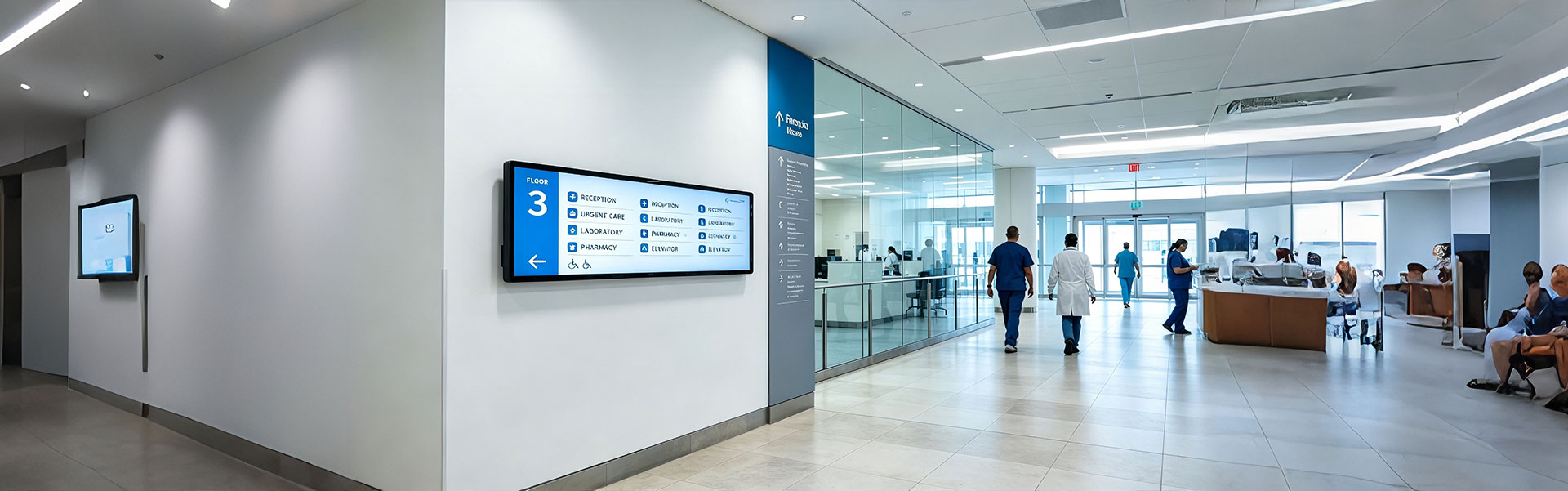
Floor Information Bar LCD Display Solution
Ultra-wide, high-brightness stretched bar LCD disp...
view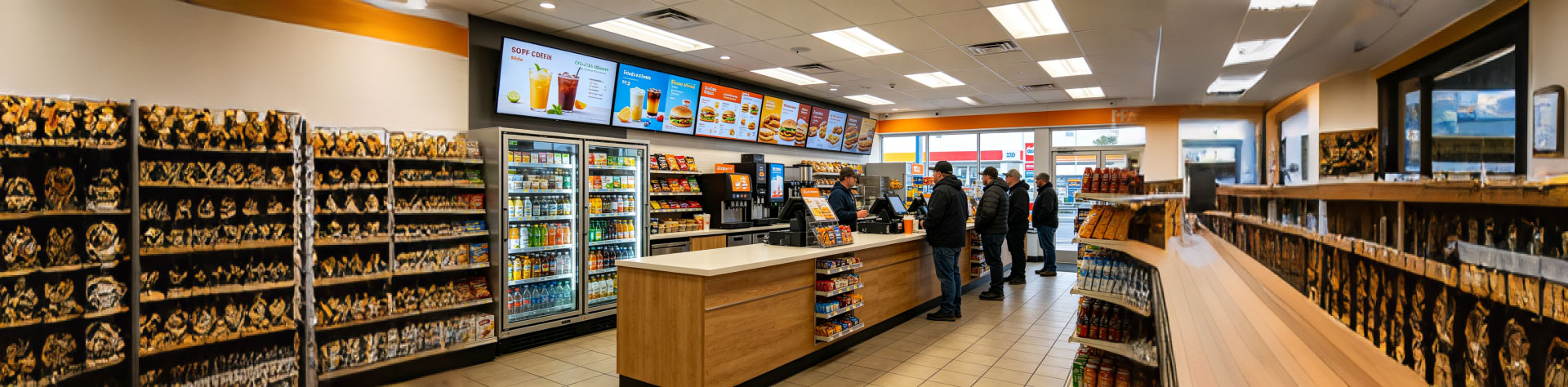
Convenience Store Bar LCD Display Solution
Ultra-slim, high-brightness stretched bar LCD disp...
view
Bus Passenger Information Stretched Bar Display Solution
A rugged, ultra-wide stretched bar display solutio...
viewRelated Products
You may also be interested in the following products
1000 Nits
27 Inch Industrial LCD Display | High Brightness, OEM Custom Solutions
 1000 Nits
23.8 Inch Sunlight Readable TFT LCD Display -1000Nits Industrial Grade
 1000 Nits
