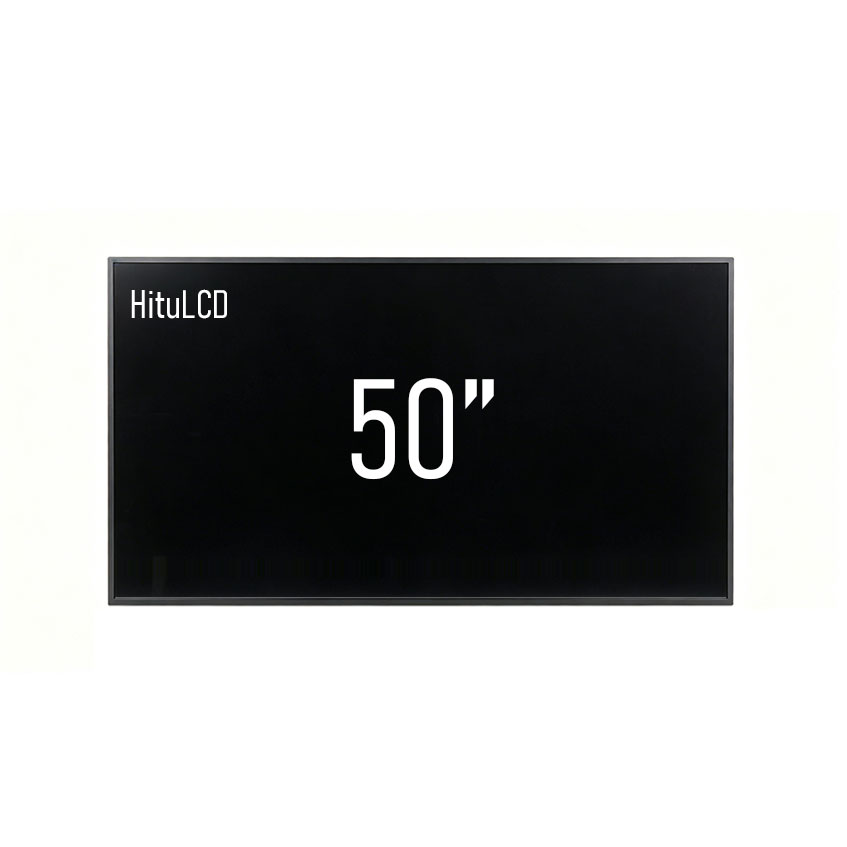
50 Inch Ultra Thin Industrial LCD Panel Suitable for Embedded and OEM Systems
MODEL: HT500FHD-800
Need customized solution?
Our engineering team is always ready to provide you with professional technical support and flexible customized services.
Understand light customization servicesBuilt by us. Configured for you.
HITULCD supplies LCD modules and display solutions directly from our manufacturing operation, giving OEMs, integrators and distributors direct access to engineering, customization and production.
Supply
Supplier Qualification
VerificationTechnical Specifications
| LCD PANEL PARAMETERS | HDMI/CONTROL BOARD SPECIFICATIONS | ||
|---|---|---|---|
| ITEM | DETAILS | ITEM | DETAILS |
| Description | HITULCD 50" QLED QUANTUM DOT HIGH COLOR GAMUT 350CD | Input Interface | HDMI, VGA,DP |
| Size | 50' | Power Input | AC 100~240V |
| Display area (mm) | 1095.84×616.41 mm (H×V) | OSD KEYS | 5 KEYS (POWER SWITCH, MENU, +, -, EXIT) |
| Resolution | 3840*2160 | OSD CONTROL | BRIGHTNESS, COLOR, CONTRAST, AUTO ROTATION, H/V POSITION, ETC. |
| Aspect ratio | 16:9 | ||
| Contrast ratio | 4000:1 | ||
| Pixel per inch (PPI) | 88 | ||
| Viewing angle | 178(H),178(V) | ||
| Display Colors | 16.7M, 72% NTSC | ||
| Response time(Typical) | 8ms | ||
| Signal Type | V-by-One 8 lane ,51pins | ||
| Backlight | WLED, 30K hrs, With LED Driver | ||
| Power consumption | 120W | ||
| Dimensions (mm) | 1115.04×638.41×29.9 mm (H×V×D) | ||
| Mounting | VESA400x400 | ||
| Bezel size (U/B/L/R) | 7.9/7.9/7.9/7.9 | ||
| Operating temperature | 0℃~+50℃ | ||
| Storage temperature | -20℃~+60℃ | ||
| Weight (Net) | 14KG | ||
OEM/ODM Manufacturing at HITULCD
One Factory, Full-Spectrum Display Manufacturing — From Panel to Finished Product
Audience: Overseas engineers / procurement managers / project leads evaluating a long-term OEM/ODM display partner
A Factory Built to Cover the Full Range, Not One Niche
Most display suppliers specialize narrowly — one size range, one brightness tier, one backlight technology. HITULCD is structured differently: a single vertically-integrated factory capable of covering LCD, OLED, and e-paper technologies, panel sizes from 5.5" to 98", and brightness levels from 350 nits for indoor signage up to 3000+ nits for direct sunlight readability. This breadth means a customer sourcing a 7" HMI panel, a 55" outdoor kiosk display, and a 21.5" stretched-bar shelf display for the same project can consolidate all three under one engineering team and one quality system, instead of managing three separate vendors with three separate qualification processes.
Manufacturing Infrastructure: Cleanroom, Automation, In-House Testing
Display reliability is decided on the production floor, not in the datasheet. HITULCD's assembly lines run in ISO 14644-1 certified cleanrooms, with automated bonding and assembly equipment used throughout LCD bonding, touch-panel integration, and housing assembly, rather than relying on manual sub-assembly for critical steps. Every product line — from high-brightness kits to open-frame monitors to OLED modules — passes through the same in-house certified test labs before shipment, checked against international safety and environmental standards rather than sampled after the fact.
This matters for OEM/ODM buyers specifically: when your design, brand, and BOM live in someone else's factory, process consistency is the thing you're actually buying. A cleanroom and automated line reduce the variability that shows up months later as field failures — not just the defect rate on day one.
Production Diversity: One Supplier, Multiple Product Categories
HITULCD's product range spans seven categories, each addressing a different integration challenge rather than being variations of the same panel:
Industrial High Brightness Displays — edge-lit (350–800 nits) and direct-lit (1000–3000 nits) kits for HMI panels, automation systems, and embedded devices, rated for 24/7 operation across −20°C to +70°C with 50,000-hour backlight lifespan.
Stretched Bar Displays — ultra-wide format panels for shelf edges, elevators, and transit signage, where a standard 16:9 panel simply doesn't fit the physical space.
Open Frame Monitors — designed for embedding into kiosks, vending equipment, and control panels without a standalone enclosure.
Digital Window Displays — high-brightness units engineered specifically to be viewed through glass, for storefront and outdoor advertising.
Outdoor Digital Displays — weatherproof, sunlight-readable displays built for continuous outdoor exposure.
OLED & E-Ink — for projects needing ultra-thin form factors, wide viewing angles, or ultra-low-power always-on displays.
Accessories — controller boards, driver kits, and mounting hardware to complete the integration.
For a project team, this range means the display architecture doesn't have to compromise around what one factory happens to make — the factory adapts to the application, not the other way around.
Customization Depth: Beyond Picking From a Catalog
OEM/ODM work at HITULCD is not limited to relabeling standard SKUs. Customization is available across multiple dimensions simultaneously:
Size — including non-standard cutting for embedded or space-constrained enclosures;
Brightness — full brightness tuning within and across the 350–3000 nit range for the specific ambient light conditions of your deployment;
Interface — HDMI, VGA, DP, and custom AD board designs supporting mixed signal inputs and features like automated dimming sensors for energy-sensitive projects;
Mechanical fit — from ultra-slim bezels for retail-grade aesthetics to ruggedized frames for transport and outdoor environments;
Certification path — CE/FCC/RoHS as standard, with UL/CCC/EAC available on request to match your target market's compliance requirements.
Scale Without Losing Flexibility
Monthly production capacity exceeds 12,000 units across customizable specifications, which is enough to support scheduled, forecasted production slots for repeat OEM/ODM partners — but the same lines also run small-batch prototyping, so a 20-unit qualification sample and a 5,000-unit production order are handled by the same infrastructure, not routed to different facilities with different quality baselines. Safety stock of common panel sizes and standard components is maintained specifically to buffer OEM/ODM customers against supply chain fluctuations, which is often the difference between hitting a launch date and missing one.
Why This Matters for an OEM/ODM Decision
When you're choosing a manufacturing partner rather than just a component, the questions that actually determine long-term risk are: Can they hold process consistency at volume? Can they support my product line if it grows into adjacent sizes or technologies later? Can they scale from prototype to thousands of units without changing suppliers mid-program? HITULCD's answer is a single factory with cleanroom-grade process control, in-house testing, and a product range wide enough that most integration roadmaps can be covered without switching vendors as requirements evolve.
Ready to scope your project? Share your target size, brightness, environment, and expected volume, and our engineering team will return a written feasibility assessment and quotation.
HT500FHD-800 Custom Cutting & Sizing Service
50 Inch Ultra Thin Industrial LCD Panel — Custom Cutting & Sizing Service
Audience: Overseas system integration engineers / Procurement managers / Project leadsApplicable product: HT500FHD-800 (50" 800nits QLED industrial panel, 3840×2160, V-by-One 8 lane 51pin, 1095.84×616.41mm active area)
Introduction
Many overseas customers integrating a standard 50" panel into embedded devices, kiosks, or non-standard enclosures start with the same question: "Can this panel be cut down to the size I need?" It's a reasonable question, but cutting is far from a simple "trim the glass" job — it involves circuit trace avoidance, edge sealing against moisture, optical consistency, and a full reliability re-validation. Below we walk through the three areas customers most often ask about before requesting a quote, so you can go into an inquiry with a clear picture of feasibility, timeline, and cost.
1. Process Feasibility & Engineering Assessment
Which cutting method — mechanical wheel or laser?The choice between mechanical scribe-and-break cutting and ultrafast (picosecond/femtosecond) laser cutting depends on the target dimensions, tolerance requirements, and how close the cut line is to the active display area. As a general rule:
For tolerances within ±0.5mm, or cuts near the Gate/Source driver region, ultrafast laser cutting is recommended — smaller heat-affected zone, lower edge stress.
For looser tolerances (±1mm or more) on cuts within the panel's non-active border margin, mechanical wheel cutting is sufficient and more cost- and time-efficient. A final recommendation is provided in writing after our engineering team reviews your drawings.
Will the cut interfere with trace routing or the TFT array?This is the core feasibility question. If a cut line touches the Gate/Source driver traces or the active TFT array, it will cause display defects on that side — or scrap the panel entirely. Before quoting, we need:
Target outline dimensions and the trim amount on each side (sketch or DXF/CAD drawing);
Any mounting holes, cutouts, or non-rectangular corner requirements;
The allowable tolerance range. Once received, our engineering team maps your requested cut lines against the panel's actual Gate/Source trace layout and returns a feasibility report identifying safe-to-cut zones versus high-risk zones, along with any adjustments needed.
Edge flatness and micro-crack control after cuttingCut edges are ground and chamfered to control chipping and micro-cracking within acceptable limits — no visible chipping, and micro-crack depth kept within a safe threshold relative to glass thickness. Panels are stress-screened after cutting to filter out any with latent crack risk before they move to the sealing stage.
2. Reliability & Edge Sealing Assurance
Sealing processThe exposed edge after cutting is the primary risk point for liquid crystal leakage and moisture ingress. We use a secondary edge-sealing process — typically UV-cured adhesive dispensing along the cut edge, with an additional moisture-barrier coating where needed — to restore the seal integrity of the cut edge and prevent leakage, bubbling, or edge fogging during reliability testing or field use.
Can the cut module pass reliability testing?After cutting and sealing, the module goes through a fresh round of environmental and structural reliability testing, at a test level (consumer-grade or industrial-grade) matched to your end application. Standard tests include:
Double 85 high-temperature/high-humidity test (85°C/85%RH, extended duration);
Thermal shock / hot-cold cycling test (-20°C to 60°C);
Structural drop testing (simulating shipping and installation impacts). Every cutting configuration is tested in parallel during the sample-build stage, and test reports are provided along with the samples for your internal engineering review.
Light leakage or color shift (Mura) at the cut edge?The refractive index match and coating uniformity of the sealing adhesive directly affect optical performance at the edge. Poorly controlled sealing can cause light leakage or slight color shift near the cut line. We run dedicated Mura inspection during sample builds — dark-room visual inspection plus instrument verification — and adjust dispensing parameters or seal thickness and re-sample if any edge defect is found, so delivered samples show no perceptible leakage or color shift at normal viewing distance.
3. Cost, Yield & Lead Time
NRE (Non-Recurring Engineering) costNRE for a custom cutting project depends mainly on: cutting process complexity (mechanical vs. laser), whether new jigs/fixtures are required, how tight the trace-avoidance margin is, and whether additional reliability testing is needed. A firm quote is provided in writing after drawings are reviewed and feasibility confirmed — we avoid rough verbal estimates that create mismatched expectations.
Sample lead timeFor a 20pcs sample run, the typical flow is: drawing review and process confirmation (3–5 working days) → jig/program setup → cutting and sealing production → internal QC and reliability sampling. Total sample lead time is generally 3–4 weeks, confirmed in a written process-confirmation sheet and subject to change based on cutting difficulty or third-party test requirements.
Expected mass production yield & MOQYield for custom cutting projects is closely tied to the safety margin between the cut line and the active display area, and to how tight the tolerance is — wider margins and looser tolerances mean more stable yield, while tight margins or non-standard corner cuts require iterative process tuning based on sample data. Mass production MOQ is confirmed after sample approval, and differs from the standard product MOQ of 1 unit — custom cutting typically requires a minimum order to cover jig and process tuning costs, with the exact number stated clearly in the quotation and never adjusted after deposit.
Recommended Next Step
If you're evaluating a custom cut-down version of the HT500FHD-800 (or any of our 32–55" panels), include the following with your inquiry to speed up feasibility review and quoting:
Target outline drawing (DXF/CAD preferred, with trim amount per side and tolerance);
Application environment (indoor/outdoor, temperature/humidity range, required reliability grade);
Target quantity (sample run + expected mass production volume).
Our engineering team will respond with a written feasibility assessment, a preliminary process plan, and a sample quotation.
Know The Terms Before You Inquire.
|
01 — Shipping Terms
Incoterms Available
EXW
Ex Works — pick up from our factory
FOB
Free On Board — most common for ocean freight
CIF
Cost, Insurance & Freight — to your port
|
02 — Order Minimum
MOQ: 1 Units
Applies to standard specs. Custom brightness, cutting or bezel may adjust MOQ, confirmed at quotation. Sample units available before bulk order
|
03 — Payment Protection
Multiple Secured Methods
|
A Real Factory. Publicly Verifiable.
|
Legal Company Name
Shenzhen Hantu Jiashi Technology Co., Ltd.
|
Unified Social Credit Code
91440300306068446B
|
|
Legal Representative
YUN CHEN
|
Registered Capital
RMB 2,000,000
|
|
Established
May 23, 2014 (11+ years operation)
|
Business Status
● Active / In Operation
|
|
Registered Factory Address
Building B, Gangshen Innovation Park, Huaning Road, Dalang Sub-district, Longhua District, Shenzhen, Guangdong, China
|
|
Contact HITULCD
We'll respond via email within 24 hours. If you'd like to discuss details over WhatsApp or a call, please leave a preferred time and contact method in your message — we will never call you unannounced.
Related solutions
This product is suitable for the following industry application scenarios
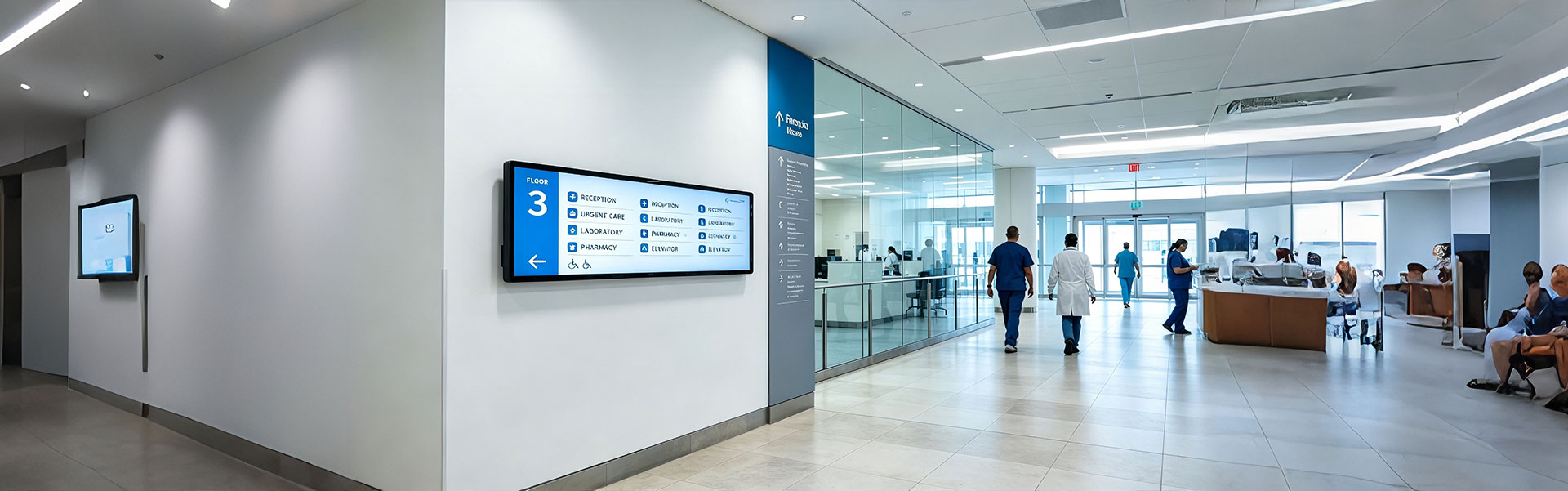
Floor Information Bar LCD Display Solution
Ultra-wide, high-brightness stretched bar LCD disp...
view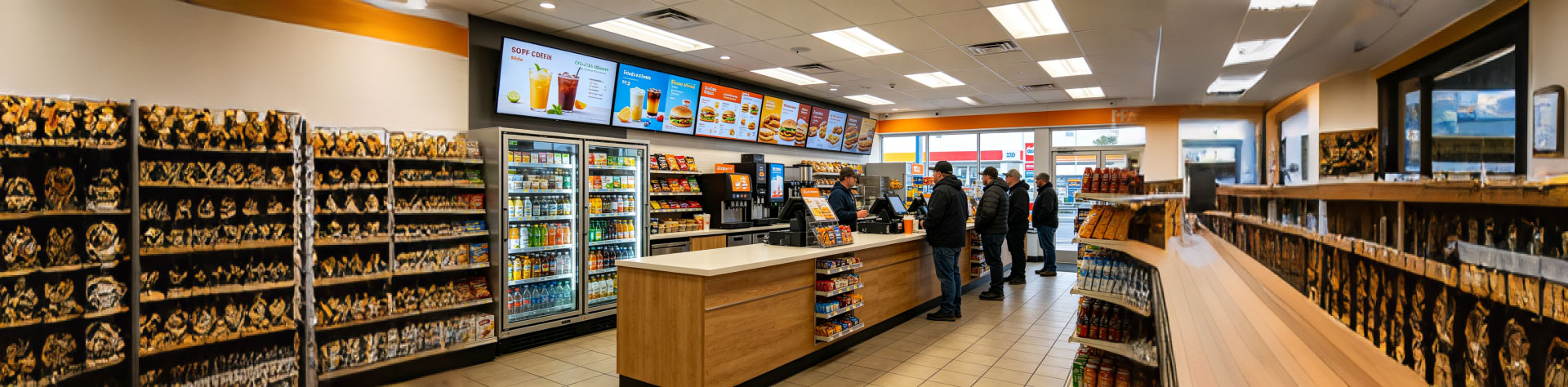
Convenience Store Bar LCD Display Solution
Ultra-slim, high-brightness stretched bar LCD disp...
view
Bus Passenger Information Stretched Bar Display Solution
A rugged, ultra-wide stretched bar display solutio...
viewRelated Products
You may also be interested in the following products
 800 Nits
49 Inch 800nits Ultra-Thin LCD Panel | Suitable for OEM Projects
800 Nits
50 Inch Ultra Thin Industrial LCD Panel Suitable for Embedded and OEM Systems
 350 Nits
