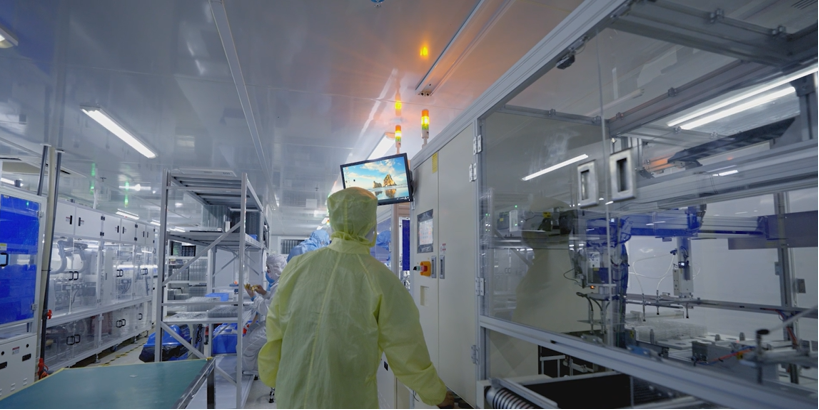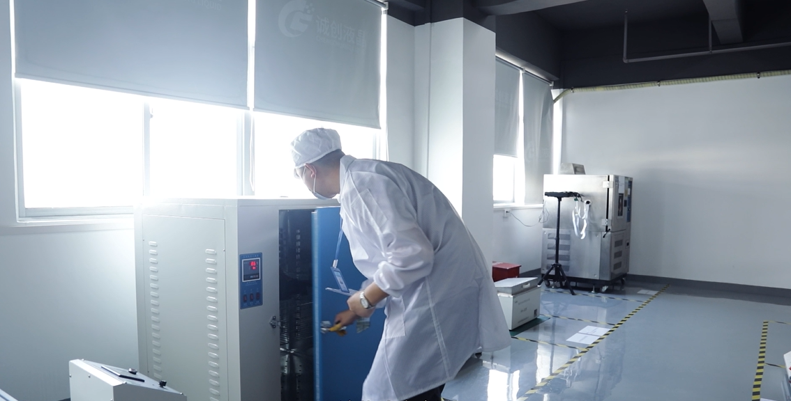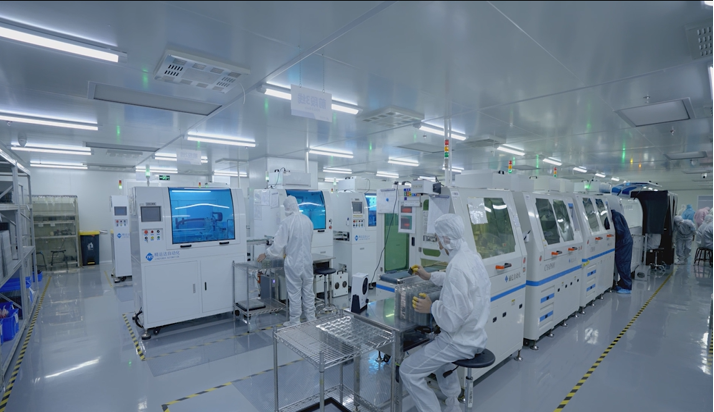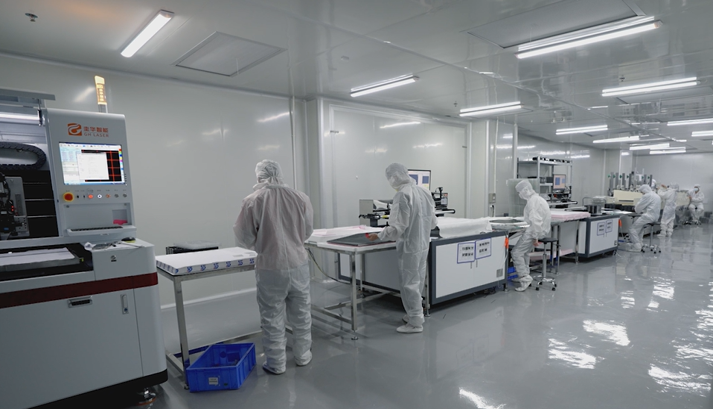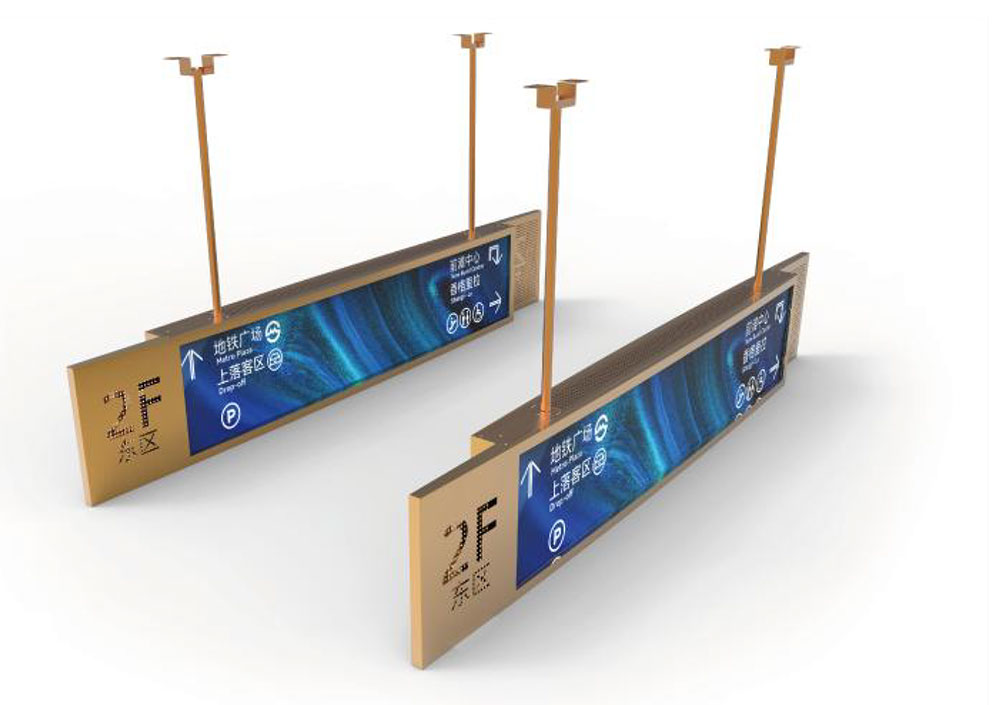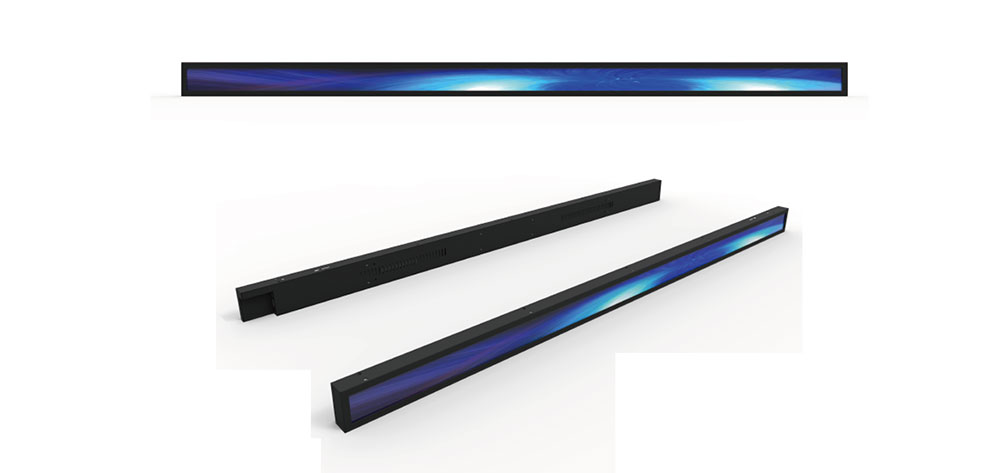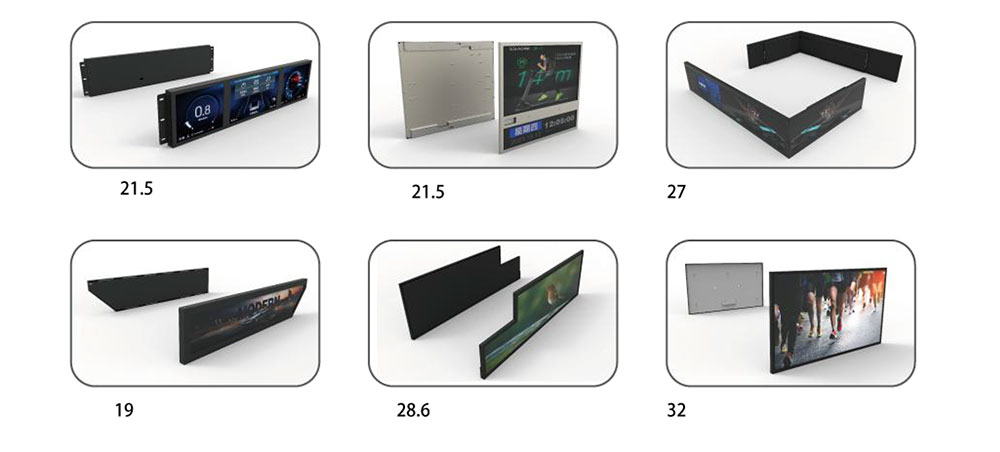
A glass door cabinet is one of the most hostile optical environments in retail. The display sits behind two panes of reflective glass, under 800–1,500 lux of ceiling lighting, inside a frame that must stay closed, sealed, and cold. A bar LCD — a stretched TFT with an aspect ratio between 16:3 and 16:9 — is the only format that fits the vertical door frame without blocking the product behind it. This paper sets out the engineering decisions that determine whether such a display survives: optical budgeting, thermal architecture for freezer duty, mechanical and sealing integration, power economics, and the material compliance evidence required under IEC 62321-3.
1. Why the Bar Format Wins in Glass Door Cabinets
Glass door merchandisers are vertically oriented. The usable real estate is a narrow horizontal band: header rail, door mullion, or the top and bottom rails of the door frame. A standard 16:9 panel of useful height would be too narrow to carry a readable message; a 16:9 panel rotated to portrait would obstruct the product view.
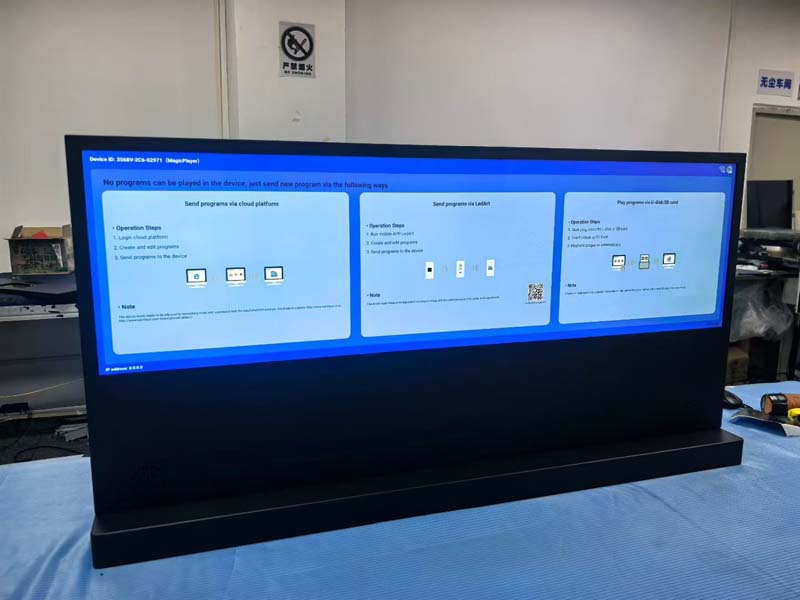
Bar panels solve this geometrically. Typical formats include 23.1", 28.4", 37", and 47.6" diagonal at resolutions of 1920 × 540 (16:4.5), 1920 × 360 (16:3), and 3840 × 1080 (32:9 variants). At a typical 1.5–3 m viewing distance, 1920 × 540 across a 28" panel yields roughly 70–75 ppi — sufficient for typography, price points, and product photography, and far cheaper per unit area than a full-resolution panel of the same width.
The bar format also lowers the bill of materials: fewer LEDs, smaller driver board, lighter housing, less structural load on the door hinge.
2. Optical Budgeting: Luminance Is Not a Spec, It Is a Calculation
Suppliers quote brightness in nits on axis, in a dark room. In a cabinet door, contrast is what the shopper perceives, and contrast is dictated by reflected ambient light, not by the panel alone.
Reflected luminance from a glass surface can be approximated as Lr = ρ × E / π, where E is illuminance in lux and ρ is the effective reflectance of the display-plus-door stack. For a two-surface stack with anti-reflective coating and an anti-glare front polarizer, ρ of 0.04–0.06 is achievable; an untreated glossy pair can reach 0.15–0.20.
| Ambient illuminance | Effective reflectance | Reflected luminance | Required panel luminance for 10:1 contrast |
|---|---|---|---|
| 800 lux | 0.05 | ≈ 13 cd/m² | ≈ 130 cd/m² |
| 1,200 lux | 0.10 | ≈ 38 cd/m² | ≈ 380 cd/m² |
| 1,500 lux | 0.15 | ≈ 72 cd/m² | ≈ 720 cd/m² |
| 2,000 lux (high-bay store) | 0.15 | ≈ 95 cd/m² | ≈ 950 cd/m² |
The practical conclusion: 700 nits is a floor for interior ambient, 1,000–1,500 nits is the working range for bright supermarkets, and anything above 2,000 nits is usually compensating for poor anti-reflection treatment rather than delivering real legibility. Buy the optical coating before buying the LED current — it costs less, generates no heat, and improves contrast without raising power draw.
Three further optical points matter in a door:
- Viewing angle and colour shift. Shoppers approach at an angle and look down. Specify horizontal/vertical CR10 minimums at 178°/178° and require Δu'v' ≤ 0.020 at 60° off-axis. Cheap vertical-alignment variants drift badly and the brand colours on a pricing message will not match the printed shelf label.
- Anti-glare vs anti-reflective. AG diffusion scatters reflections but softens the image; AR coating preserves sharpness. On a door viewed at short range, low-haze AG (below 15%) combined with AR is the better compromise.
- Light leakage and bezel bleed. In a dark aisle at night, an edge-lit bar panel with an unsealed light guide produces a glow line along the rail. Specify an optical bond or a full foam gasket between light guide and bezel.
3. Thermal Architecture: The Freezer Case Is the Real Test
Commercial refrigeration divides into two very different duties. A chiller cabinet runs at 0 °C to +8 °C with high relative humidity. A freezer runs at −18 °C to −25 °C with low absolute humidity but severe condensation risk whenever the door is opened or the store is warm and humid.
Standard commercial TFT panels are rated 0 °C to +50 °C. At −20 °C the liquid crystal mixture enters a smectic or crystalline phase: response time collapses, the image freezes or shows black patches, and the backlight may strike but the panel will not switch. There are only three viable answers:
3.1 Wide-temperature liquid crystal
Wide-temp formulations extend operation to −30 °C, but they trade off response time at room temperature and raise cost. They are the cleanest solution for chillers and for freezers that are rarely opened.
3.2 Active heating
The standard freezer solution is a heater combined with a temperature-controlled start sequence. Two heater placements are used:
- Rear film heater bonded to the panel back, heating the LC cell indirectly through the backlight assembly. Slower, but mechanically simple and safe.
- Front ITO transparent heater laminated into the front stack. It heats the LC layer directly and, critically, keeps the front surface above dew point — which is the same mechanism that prevents fogging.
Heater power scales with area and delta-T: a 28" bar at −20 °C ambient typically needs 40–90 W to reach a stable +5 °C to +15 °C cell temperature inside a 20-minute warm-up window. The controller must not enable the backlight at full current until the panel thermistor reads above the safe threshold; a cold strike on a frozen LC cell produces permanent mura and, in some driver topologies, inrush damage.
3.3 Condensation control
A display mounted inside the door of a freezer faces a specific problem: the inner surface of the outer glass and the display's own front surface sit on the cold side of the thermal break. Every door opening admits warm humid air. The classical cure in freezer doors is a frame heater; when a display is added, the display's own front heater can take over that duty locally, or the display can be optically bonded to the inner pane so the air gap — the condensation site — is eliminated entirely.
Optical bonding also removes a second reflection interface and improves contrast by 10–20%. The cost is loss of field serviceability and a tighter thermal path from the cold glass into the panel, which must be modelled rather than guessed.
4. Mechanical and Sealing Integration
A door display is a structural element of a moving assembly. Three failure modes dominate field returns:
- Hinge cable fatigue. Cables routed through the door hinge see a full flex cycle every time the door opens. Specify a high-flex cable rated for at least 500,000 bending cycles, add a service loop, and route it on the neutral axis of the hinge. Many field failures attributed to "panel death" are actually broken LVDS or 24 V conductors at the hinge.
- Ingress. Washdown and condensate runoff mean the display housing should meet IP54 as a minimum and IP65 for cabinets cleaned with hose or pressure spray. Gaskets must be closed-cell silicone or EPDM, not foam, which collapses under thermal cycling.
- Mass and moment. A 37" bar display with an aluminium housing plus heater and driver can exceed 4 kg. Hanging that mass on the door rail changes the hinge load and the door's self-closing behaviour. Specify the display's mass and centre of gravity to the cabinet OEM early; retrofits frequently need a reinforced header bracket.
Housing material selection matters as much as geometry. Extruded aluminium gives the best thermal spreading and stiffness per kilogram; cold-rolled steel is cheaper but heavier and needs a paint system that survives condensate. Where the housing is visible to the shopper, powder-coated aluminium with a matte finish reduces stray reflections off the rail.
5. Power and the Door Energy Budget
A glass door cabinet is an energy-managed product. Adding a display adds heat directly into the refrigerated volume, and the compressor pays for it. A rough accounting for a freezer door:
- Backlight at 1,000 nits, 28" bar: 45–70 W
- Heater during steady-state hold and door-open recovery: 30–100 W average
- Driver, SoC, and connectivity: 10–20 W
That is 85–190 W of heat load on a door that previously carried a 10–20 W frame heater. Design levers: allow the panel to dim to 300–500 nits when the ambient sensor detects low store illuminance; use a proximity or door sensor to raise brightness only when a shopper is within 1.5 m; use 24 V DC distribution with a single certified supply per cabinet rather than per-door adapters; and specify backlight efficiency in cd/W, not just nits.
Where the display is powered from a shared rail, inrush current and EMC matter. High-brightness bar panels with direct-lit arrays can draw 6–10 A inrush at 24 V. Specify soft-start, and confirm compliance with IEC 61000-4-2 through -4-6 at the cabinet level, not just at the panel module.
6. Signal, Control, and Content
Bar displays in refrigeration are usually driven by an embedded media player rather than a live HDMI feed. Practical requirements:
- Local storage and offline operation. Retail networks drop. The display must play a cached playlist and report health when connectivity returns.
- Deterministic content zones. Price, unit price, and legal origin labelling are often regulated; the player must guarantee that these zones update without a full-screen reload flicker.
- Interfaces. LVDS or eDP internally, HDMI 1.4/2.0 for commissioning, RS-232 or RJ45 for control, USB for service. Include a hardware watchdog and a remote reboot path — a locked-up display behind a sealed door is expensive to service.
- Brightness and colour management. Per-unit factory calibration stored in the EDID or a configuration file prevents a bank of 12 doors showing 12 different whites.
7. Material Compliance: IEC 62321-3 in Practice
Under RoHS and its regional equivalents, a bar display for refrigeration is a catalogue of regulated materials: solder alloys, PCB finishes, backlight solder joints, PVC or halogen-free cable insulation, diffuser and light-guide polymers, adhesives, optical coatings, gaskets, and painted or plated metal parts. The restricted thresholds are 0.1% by weight (1,000 mg/kg) for lead, mercury, hexavalent chromium, PBB, PBDE, and the four phthalates DEHP, BBP, DBP and DIBP, and 0.01% (100 mg/kg) for cadmium.
The IEC 62321 series defines how those limits are demonstrated. Dismantling and mechanical sample preparation follow IEC 62321-2, which establishes the "homogeneous material" as the unit of testing — a single coating, a single alloy, a single polymer compound. The IEC 62321-3 sub-parts (published across 2013–2017) cover screening methods: rapid, often non-destructive techniques used to triage a bill of materials before confirmatory analysis. In a display BOM, this typically means:
- X-ray fluorescence screening of housings, brackets, screws, solder, and cable jackets for lead, mercury, cadmium, total chromium, and total bromine. XRF is fast and requires no digestion, but it is a screening tool: cadmium suffers spectral overlap in some matrices, and total chromium cannot distinguish Cr(III) from Cr(VI).
- Combustion ion chromatography for total bromine in polymer and electronic parts, used as a trigger for further investigation of brominated flame retardants.
- Spot-test and spectrophotometric screening for hexavalent chromium on coated and passivated metal surfaces.
Screening results above a decision threshold are not a non-conformance; they require confirmation by the appropriate quantitative method — ICP-OES or ICP-MS after acid digestion for metals, GC-MS for PBB, PBDE and phthalates, and colorimetric determination after alkaline extraction for hexavalent chromium. A compliant supplier file therefore contains three distinct layers of evidence: a full BOM with homogeneous-material breakdown, screening reports per part, and confirmatory reports for any part that screened as indeterminate or elevated.
Two practical notes for procurement teams:
- Ask for reports that name the standard and part number explicitly, state the test method and detection limit, identify the homogeneous material tested, and are traceable to a specific production batch or part revision. A certificate saying "RoHS compliant" with no test data is not evidence.
- Re-test when the design changes. A new optical adhesive, a new gasket compound, or a switch of solder paste supplier invalidates the prior file for that material. Display suppliers change light-guide resins and LED die attach materials quietly; the compliance file is the only place that change becomes visible.
Beyond RoHS, expect requests for REACH SVHC declarations, halogen-free confirmation (IEC 61249-2-21 for bromine and chlorine limits in laminate), and conflict-minerals reporting for the driver board.
8. Qualification Test Plan
A bar display specified for glass door duty should be qualified to the following, at minimum, and the report should be for the assembled display, not the bare panel:
- IEC 60068-2-1 cold start at −25 °C, including a timed warm-up profile and a functional check at the end of each ramp.
- IEC 60068-2-2 dry heat at +55 °C to +60 °C, with brightness and colour measured hot.
- IEC 60068-2-30 damp heat, cyclic, to exercise condensation recovery.
- IEC 60068-2-14 thermal shock, 20–50 cycles, to stress the optical bond and solder joints.
- IEC 60529 IP54 or IP65 verification on the sealed housing.
- IEC 61000-4-2/-4-3/-4-4/-4-6 EMC at cabinet level.
- IEC 62368-1 safety for the display and its 24 V supply.
- IEC 62321-3 screening plus confirmatory analysis per the compliance section above.
- Hinge flex cycle of 500,000 operations on the cable assembly, with continuity monitoring.
Add a 500-hour burn-in at elevated brightness and a 1,000-hour image-sticking check with a static price-zone layout — static content is exactly what these displays show, and retention is the most common long-term cosmetic complaint.
9. Specification Checklist
When writing the purchase specification, the following fields separate a display that works from one that generates service tickets:
- Diagonal, active area, resol KEYWORDS: Bar LCD Displays for Commercial Refrigeration and Glass Door Cabinets