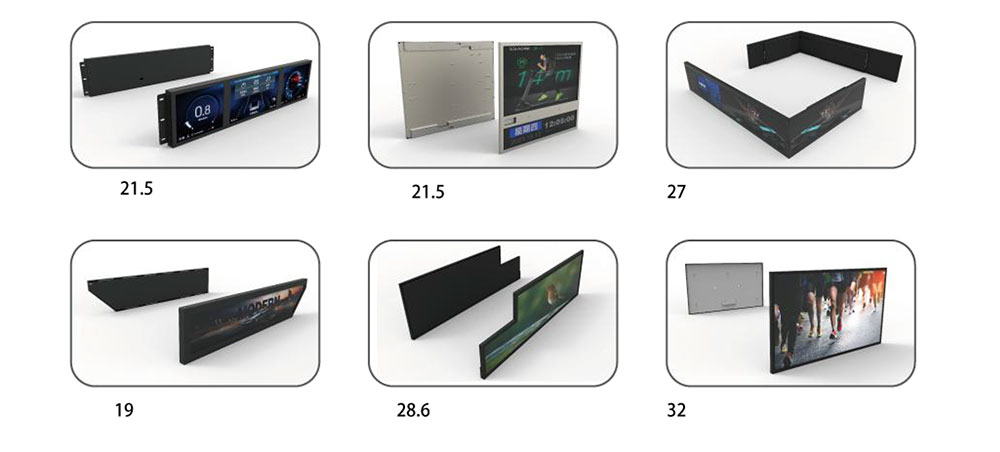
Fuel dispensers face a display problem that most indoor equipment never encounters: a narrow, horizontally elongated viewing window, direct sunlight on the pump face, temperature swings from desert heat to winter frost, and a service life measured in years of continuous operation. Standard square or widescreen panels waste space and fail under these conditions. Bar type LCD modules, built to a long and shallow aspect ratio, solve the physical fit while high-brightness engineering solves the environment. This article explains how HITULCD designs custom bar type LCD modules for fuel dispensers and gas station equipment, and what specifications matter when you select one.
Why a Bar Type Form Factor Suits Fuel Dispensers
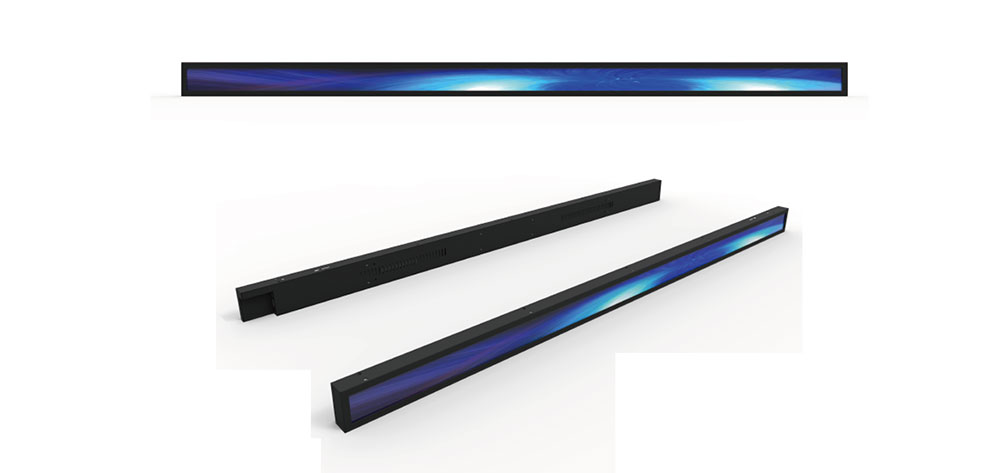
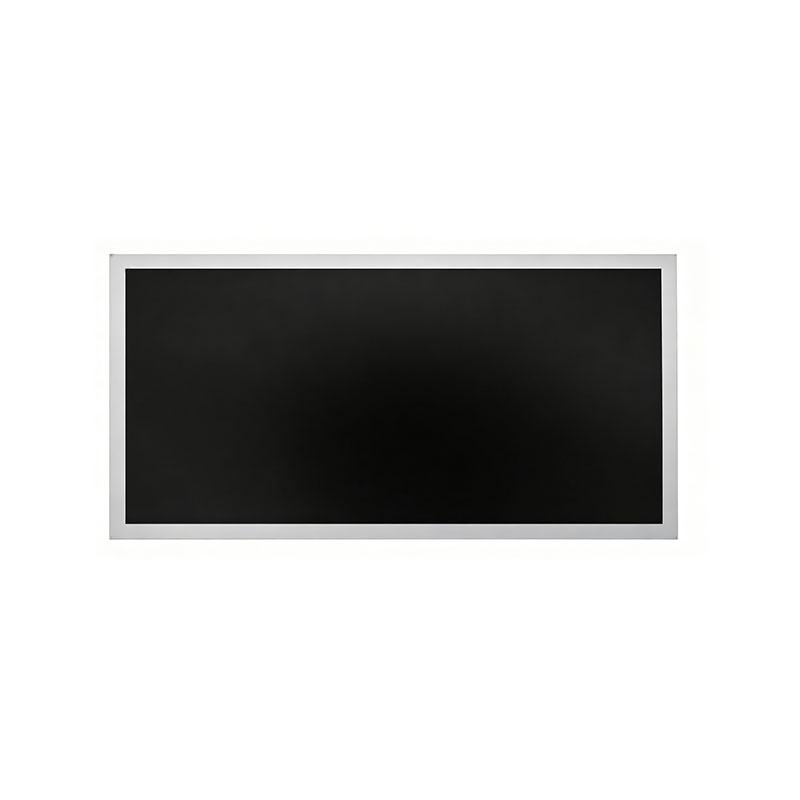
A dispenser display shows a small set of large numbers: volume delivered, price per unit, and total sale. These three values sit naturally in a single horizontal row. A bar type LCD, with aspect ratios such as 8:3, 16:3, or custom proportions down to roughly 24:1, maps directly onto that layout. The panel occupies the slim band available on the pump housing without forcing designers to shrink digits or stack information awkwardly.
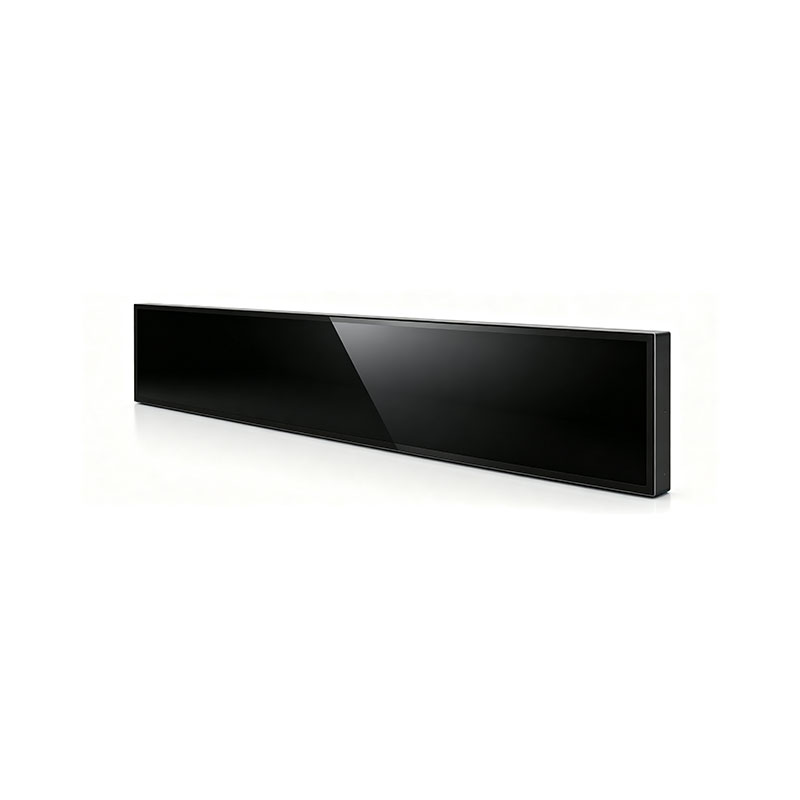
Bar type modules are produced by cutting the glass to a stretched outline and routing the driver electronics to one short edge or one long edge, depending on the mechanical envelope. This keeps the active area maximized while the bezel and flex connector stay within the mounting channel. For a fuel dispenser, where the display cavity is often fixed by an existing enclosure, this flexibility removes a common integration headache.
Sunlight Readability and Brightness
Pump faces sit outdoors, frequently under a canopy but still exposed to reflected and direct sun. A standard 250 to 400 nit panel washes out and becomes unreadable, which is a safety and billing-trust issue when a customer cannot confirm the amount charged. HITULCD builds these modules at 1000 to 2500 nits depending on the deployment. Under a canopy, 1000 to 1500 nits restores clear contrast; for fully exposed island equipment, 2000 nits and above holds legibility against the brightest midday conditions.
Raw brightness alone is not enough. We pair the high-luminance backlight with optical bonding, which fills the air gap between the cover glass and the LCD cell with an index-matched adhesive. Optical bonding cuts internal reflections, raises effective contrast in ambient light, eliminates fogging from condensation inside the gap, and stiffens the assembly against vibration from the pump motor and nozzle handling.
Surviving the Outdoor Environment
Gas station equipment runs year round. A dispenser display must operate across a wide temperature band, so we specify wide-temperature liquid crystal fluid and rate these modules for roughly minus 30 to plus 80 degrees Celsius operation. An optional transparent film heater keeps the LCD above its lower response threshold in cold climates, preventing the sluggish, ghosting behavior that cold liquid crystal otherwise shows.
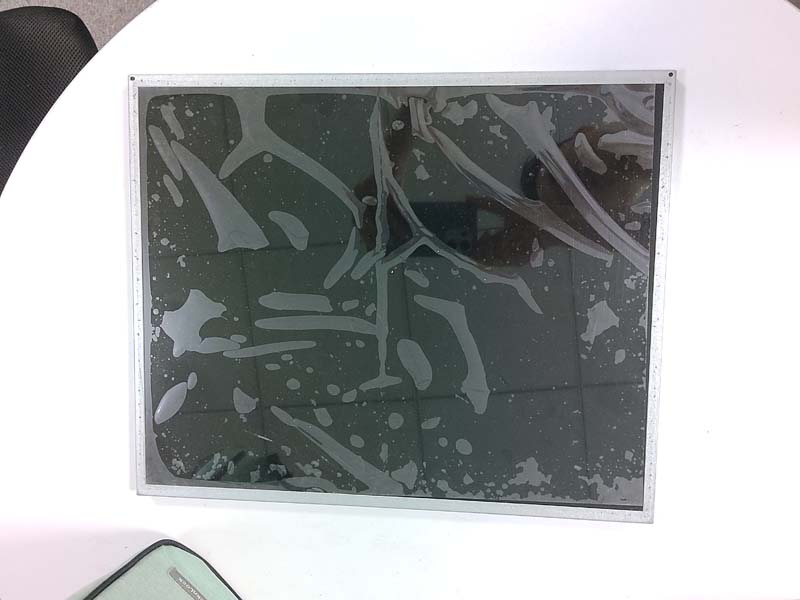
Sustained sunlight on a dark panel can drive the cell into isotropic blackening, where the liquid crystal overheats and the image disappears until it cools. For displays aimed at the sky or west-facing islands, we apply UV-resistant polarizers and backlight thermal management so the module tolerates prolonged solar loading without blackening.
Sealing matters as much as temperature. Fuel vapor, rain, pressure washing, and airborne dust all reach the pump face. We design the front assembly to an IP65 or higher rating at the cover glass seal and select adhesives and gaskets that resist hydrocarbon exposure.
Safety Certification for Hazardous Locations
A fuel dispenser sits in a classified hazardous area where flammable vapor may be present. Any electronics mounted there must respect the relevant explosion-protection requirements, such as ATEX and IECEx intrinsic safety concepts, or be placed outside the classified zone with appropriate barriers. HITULCD supplies modules with low-power, current-limited backlight driving and documentation that supports your enclosure-level intrinsic safety or flameproof certification. The display module is one component of a certified assembly; we engineer it to fit that certification path rather than complicate it.
Display Technology Options
Three technologies cover most dispenser and station needs:
- Segment and TN/VA glass: For pure numeric readouts of volume, price, and total, a custom segment LCD is the lowest-cost, lowest-power, and most robust choice. VA segment glass delivers deep black digits on a bright field with wide viewing angles, ideal for a customer standing at an angle to the pump.
- Monochrome graphic TFT and FSTN: When the display must also show promotions, loyalty prompts, or multiple fuel grades, a graphic module adds flexibility while staying power-efficient.
- Color TFT bar type: For modern dispensers that integrate media, payment status, and branded graphics, a stretched color TFT in a bar format provides full RGB output with the same high-brightness and bonding treatment.

Customization Scope
Custom work on these modules covers outline dimensions and aspect ratio, active area and digit layout, brightness and dimming range, cover glass with printed decoration and anti-glare or anti-fingerprint coating, touch integration where needed, interface selection (SPI, I2C, RGB, LVDS, or MIPI depending on the controller), connector position, and mounting features. For segment displays we lay out the custom pixel map to the exact figures and symbols your billing board drives. For integrators replacing an obsolete panel, we can match the original footprint and interface so the retrofit drops into the existing dispenser without redesigning the control board.
Reliability and Supply
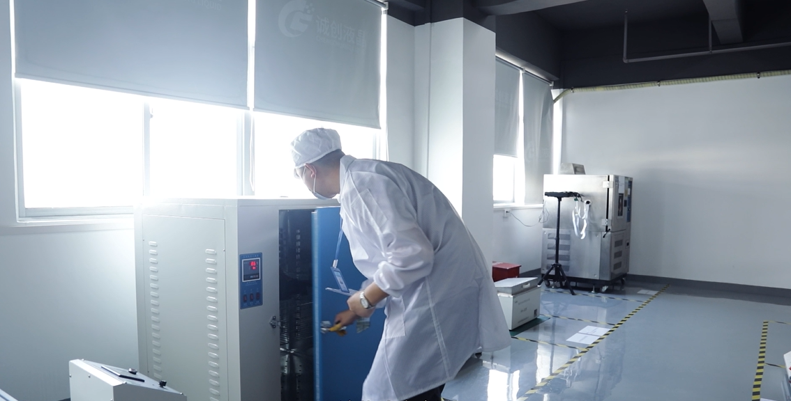
Gas station equipment is deployed in large fleets and expected to run for a decade. HITULCD commits to long-term component availability and consistent bill-of-materials control so a design qualified today can be reordered years later without a forced redesign. Each module ships with electrical, optical, and environmental test data, and we support field-return analysis to close the loop on long deployments.
Selecting the Right Module
Start from four questions: What is the exact window opening and digit size? Is the display under a canopy or fully exposed, which sets the brightness target? What is the coldest and hottest site temperature? And what certification path does your enclosure follow? With those answers, HITULCD can specify a bar type LCD module that fits the mechanical envelope, stays readable in sunlight, survives the outdoor duty cycle, and supports your hazardous-area approval. Send us your drawing or the panel you are replacing, and we will return a buildable specification.