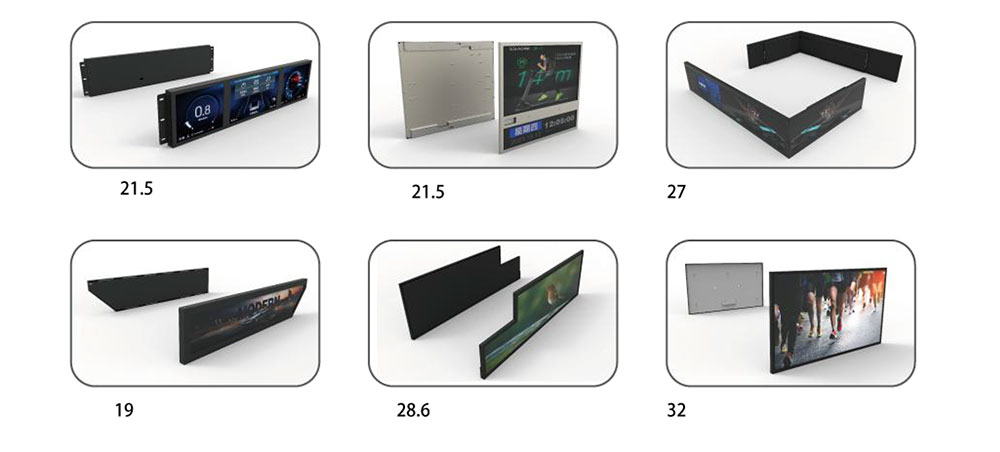
Why Bus Display Readability Is a Transit Infrastructure Problem, Not a Cosmetic One
An Australian bus operator spends a fortune on a vehicle, a ticketing system, a network brand, and a driver workforce — then loses the passenger relationship in the last three metres, at the windscreen, where a destination sign washes out in the Queensland sun or fogs over in a Melbourne winter. Displays are the only part of the bus that talks to every single passenger, at every stop, all day. Yet they are routinely specified last, chosen on price, and replaced on failure rather than on strategy.
This paper sets out ten engineering and operational reasons Australian transit fleets are moving to purpose-built high-brightness LCD destination and passenger-information displays — and the design decisions that separate a display that survives an Australian summer from one that merely arrives in an Australian depot.
Reason 1 — Australian Daylight Is a Hostile Optical Environment
Ambient illuminance in direct sun on a bus windscreen reaches 80,000 to 100,000 lux. A conventional 400–500 nit information display has no chance: contrast collapses, the image becomes a pale grey smear, and the passenger at 20 metres reads nothing.
The engineering answer is a luminance and contrast pairing, not luminance alone:
- ◆ 1,500–2,500 nits surface luminance for windscreen-facing destination signs in full sun exposure
- ◆ Anti-reflective, anti-glare front lamination to suppress specular washout from low-angle summer sun
- ◆ High contrast ratio (ideally 1000:1 or better) so legibility survives at oblique roadside viewing angles
- ◆ Optical bonding of cover glass to the panel to eliminate internal reflections that double images in strong light
Rule of thumb: display brightness should be roughly 5–10× the ambient reflected luminance at the glass surface, not a fixed number from a datasheet. A spec written in nits without reference to mounting angle and glass treatment is not a specification at all.
Reason 2 — Heat Is the Real Failure Mode, and Australia Supplies Plenty
An LCD is a heat machine with a light problem. Backlight LEDs and driver electronics generate waste heat, and a dark dashboard enclosure in a bus parked in the open can soak to 70–85 °C internally. Above roughly 70 °C, liquid-crystal response degrades, polarisers yellow, and LED lifetimes halve for every 10 °C rise.
Fleet-grade designs therefore pair high brightness with thermal discipline:
- ◆ Automotive-grade or wide-temperature panels rated to 85 °C operating
- ◆ Direct-bonded heatsink paths and aluminium chassis frames rather than plastic housings
- ◆ Thermal foldback — automatic luminance reduction in extreme heat rather than failure
- ◆ IP65+ sealed enclosures with pressure-equalising vents to stop condensation while excluding dust and water
✱ A display that runs at 2,000 nits for one summer and 900 nits the next has effectively been downgraded inside its own warranty.
Reason 3 — Bush Dust, Coastal Salt, and the Corrosion Economy
Australia covers the full environmental spread within a single network: red Pilbara dust, coastal salt spray on the Gold Coast, monsoon humidity in Darwin, and alpine cold in the Snowy Mountains. Dust ingress onto a diffuser sheet produces permanent hot spots; salt attacks connector pins and chassis plating.
What actually matters in the specification:
- ◆ Sealed optical cavity so no air path exists between the backlight and the LCD
- ◆ Marine-grade fasteners and anodised or powder-coated chassis
- ◆ Conformal-coated driver boards for humidity resilience
- ◆ UV-stable, non-yellowing polycarbonate or chemically strengthened glass on the front face
Reason 4 — Vibration, Shock, and the Long Life of a Corrugated Road
Bus-mounted electronics endure continuous broadband vibration plus discrete shock events: potholes, speed humps, kerb strikes, and depot washdown. Ordinary commercial monitors fail at the backlight connector and the panel bond before they fail electrically.
Specify to a vehicle standard, not a consumer standard: random vibration to IEC 60068-2-64 and shock to IEC 60068-2-27, with bonded and mechanically retained internal assemblies. Connector retention and strain relief are as important as the panel itself.
Reason 5 — Passenger Information Is Now an Accessibility Obligation
Destination and next-stop information is not decorative signage; under disability-access and transport-equipment obligations it functions as an information channel for passengers with low vision, cognitive impairment, or limited English. That shifts design priorities:
- ◆ Large character height — a common heuristic is 25 mm of character height per 7–8 m of viewing distance for reliable legibility
- ◆ High contrast with non-colour-dependent coding, so route information survives colour-vision deficiency
- ◆ Consistent typography and layout across the fleet so familiar patterns aid low-vision passengers
- ◆ Even luminance uniformity — no bright centre falloff or dim corners that push letters below perceptual threshold
✔ Readability engineering is accessibility engineering. The same choices that satisfy an access standard also satisfy the passenger reading a sign through a rain-streaked windscreen at dusk.
Reason 6 — Night Glare, Dimming, and Driver Distraction
A high-brightness display that cannot dim is a hazard. At night, an over-bright interior or windscreen-facing sign creates veiling glare in the driver's field of view and destroys the operator's night vision.
- ◆ Ambient-light-sensing automatic dimming across a wide dynamic range — typically from full daylight output down to single-digit nits
- ◆ Defined dimming curve with hysteresis so tunnel entry and exit do not cause flicker or hunting
- ◆ Front-surface treatment that suppresses reflections into the cabin rather than merely absorbing them
✱ The correct metric is not maximum brightness. It is usable dynamic range — the span between legible-in-sun and unobtrusive-at-night.
Reason 7 — Fleet Uptime and Whole-of-Life Cost
Display replacement is not the cost of a panel; it is the cost of a depot bay, a technician's morning, an out-of-service vehicle, and a missed service. Across a 10–15 year bus life, the whole-of-life equation favours the higher-specification part:
- ◆ 50,000–70,000+ hour backlight lifetimes with luminance depreciation curves specified, not just an MTBF number
- ◆ Modular replacement — backlight, driver board, and front glass serviceable independently
- ◆ Long-term availability guarantees of 7–10 years matched to vehicle life, so a mid-life repair does not force a full display redesign
- ◆ Common part numbers across the fleet to reduce spare-parts inventory and technician learning
A display specified on unit price and replaced twice in a vehicle's life typically costs more than a display specified on lifetime and replaced once.
Reason 8 — Integration With Ticketing, Telematics, and Real-Time Data
Modern Australian fleets are layered with ticketing validators, automatic vehicle location, real-time passenger information feeds, and driver-assist systems. The display is the human-readable end of that stack.
- ◆ Standard interfaces — LVDS/eDP internally, plus Ethernet, CAN, or RS-422 externally for legacy and new systems
- ◆ Wide input voltage tolerance and load-dump protection to survive 24 V bus electrical transients
- ◆ Support for IP-based data feeds so next-stop and disruption messaging updates without bespoke firmware changes
- ◆ Multi-zone content — destination, route number, next stop, and accessibility messages on one display
Reason 9 — Brand, Wayfinding, and Network Perception
Passengers form their judgement of a network at the kerb. A crisp, readable, correctly dimmed destination sign signals a well-run service; a washed-out or flickering one signals neglect, and the perception is transferred to punctuality and safety regardless of the underlying reality.
Design consistency across a fleet — same typeface, same layout grid, same colour semantics — also measurably reduces boarding confusion at interchanges and terminates, which shortens dwell time.
Reason 10 — Future-Proofing: Higher Resolution, Richer Content, Longer Service Life
The content expected on a bus display is expanding: multilingual messaging, service-disruption maps, crowding indicators, and accessibility symbols now compete for the same glass. Specification decisions made today determine whether the vehicle can carry that content in year ten of its life.
- ◆ Resolution headroom — choose pixel density that leaves room for graphical, not just textual, content
- ◆ Sufficient processing and memory to render modern content without external hardware
- ◆ Firmware update pathways that do not require vehicle removal from service
- ◆ Open protocols over proprietary lock-in, so the display outlives the ticketing or telematics vendor
Specification Checklist for Australian Fleet Procurement
| Parameter | Recommended Target |
|---|---|
| Peak luminance | 1,500–2,500 nits (sun-exposed windscreen signage) |
| Contrast ratio | 1000:1 minimum with optical bonding |
| Dimming range | Full output to single-digit nits, ambient-sensed |
| Operating temperature | −30 °C to +85 °C panel rating |
| Ingress protection | IP65 or better, pressure-equalised |
| Vibration / shock | IEC 60068-2-64 / IEC 60068-2-27 vehicle profile |
| Electromagnetic compatibility | UN ECE R10 (E-mark) for vehicle installation |
| Power input | 9–36 V DC with load-dump and reverse-polarity protection |
| Backlight life | 50,000+ hours to defined luminance depreciation |
| Availability | 7–10 year supply commitment matched to vehicle life |
Conclusion: Buy the Optical and Thermal Engineering, Not the Panel
Every one of the ten reasons above converges on the same principle. In an Australian bus, a display succeeds or fails on three coupled design variables: luminance headroom, thermal dissipation, and sealed mechanical integrity. Brightness without thermal control degrades. Thermal control without optical bonding is wasted on glare. Mechanical integrity without accessibility-grade layout still fails the passenger.
Fleets that specify these three together — and write the specification in terms of operating environment rather than datasheet peak values — get displays that stay legible in a Darwin wet season, a Perth summer, and a decade of depot washdowns. That is the actual procurement objective: not the brightest display at delivery, but the most readable display in year ten.
KEYWORDS: high-brightness LCD bus displays, Australian transit displays, bus destination signs, sunlight-readable displays, passenger information displays