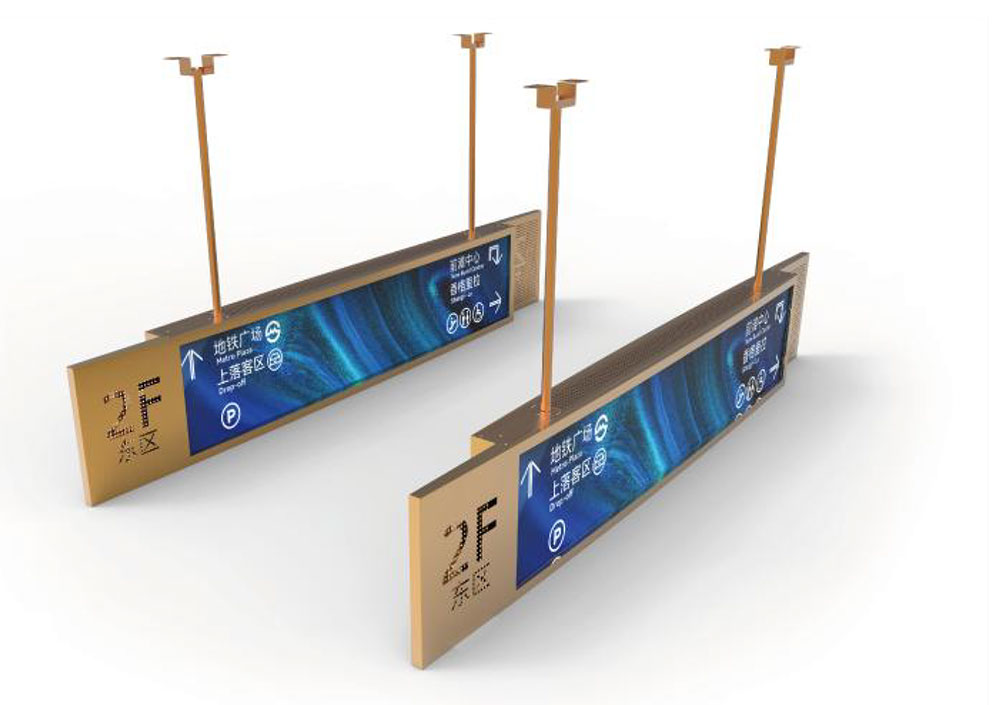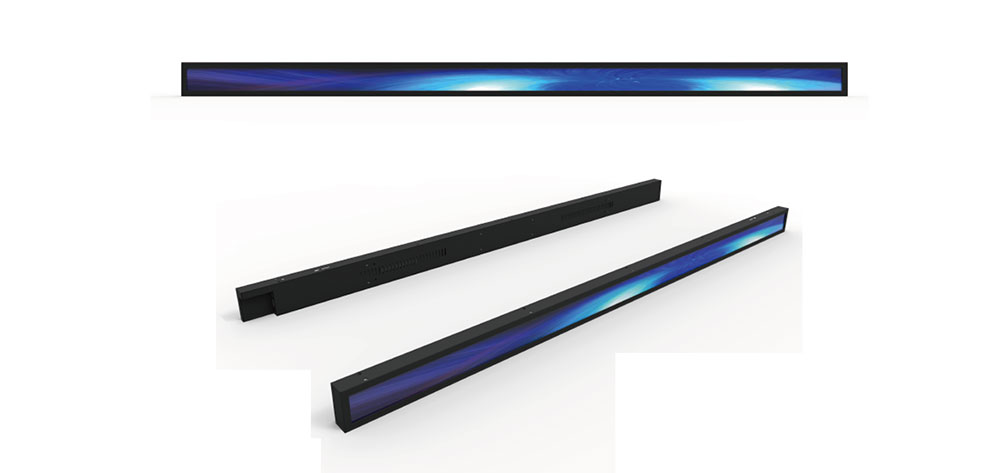
Canadian grocery and mass-merchandise retail is in the middle of a quiet but decisive change: the shelf edge is becoming an active surface. Paper shelf talkers, printed price strips, and laminated promotion cards are giving way to stretched bar LCDs — ultra-wide, shallow-format displays that mount where a printed strip used to live and occupy the same few centimetres of sightline.
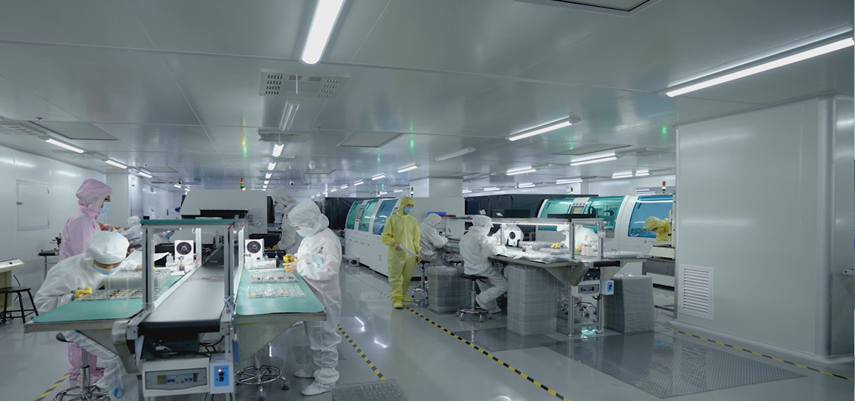
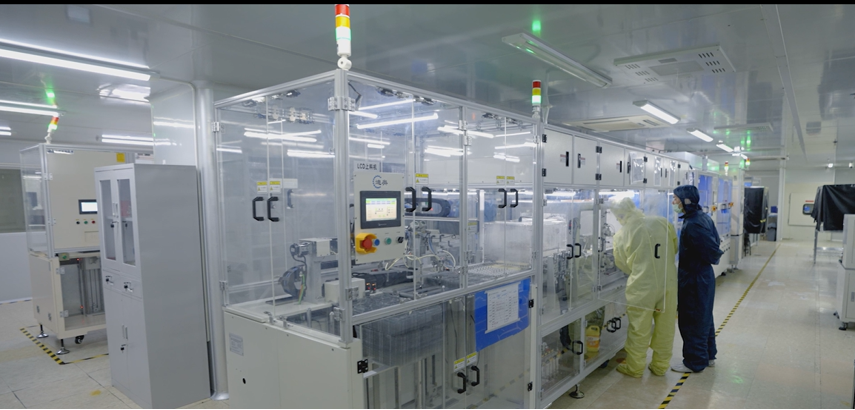
This paper examines the engineering, environmental, regulatory, and operational factors that determine whether a stretched bar LCD succeeds on a Canadian supermarket shelf. Canada is not a simple derivative of a US deployment: bilingual labelling obligations, Quebec's language regime, cold-climate logistics, NRTL certification requirements, refrigerated-case condensation, and a smaller service footprint all reshape the specification. For a supplier such as HITULCD (Shenzhen ST Testing Technology Co., Ltd.), understanding those differences is the difference between a pilot that scales and a pilot that quietly goes offline in month nine.
1. Why the Shelf Edge Is the Right Place for a Bar Display
A shopper in a supermarket spends only a few seconds per product facing. The shelf edge is the one location that is physically and visually tied to the product, sits at a consistent viewing distance (roughly 0.6 m to 1.6 m for a standing shopper), and already carries the information that drives the purchase decision: price, unit price, promotion, origin, and nutrition cues.
A conventional 16:9 or 21:9 monitor cannot be integrated into a shelf for three reasons: it is too tall for the strip height available on a standard gondola, it obstructs the shopper's view of the product at eye level, and its cost per display position is prohibitive at the density of a supermarket (a 4,000 SKU store has thousands of facing positions). A stretched bar panel — typically between 3.5:1 and 16:1 aspect ratio — matches the physical geometry of the shelf rail and delivers pixel density exactly where the message goes.
| Typical bar format | Native resolution | Common diagonal | Best-fit retail use |
|---|---|---|---|
| 16:4.5 (≈3.55:1) | 1920 × 540 | 28.8" – 37" | Category headers, aisle banners, end-cap headers |
| 32:9 (≈3.56:1) | 3840 × 1080 | 43" – 49" | End caps, checkout lanes, overhead aisle signage |
| ≈5.3:1 | 1920 × 360 | 24" – 30" | Single shelf rail, promotional strip |
| ≈8:1 and 16:1 | 1366 × 168 / 1920 × 120 | 19" – 28" | Price-rail replacement, price-per-unit ticker |
2. Panel and Backlight Architecture: The Real Specification
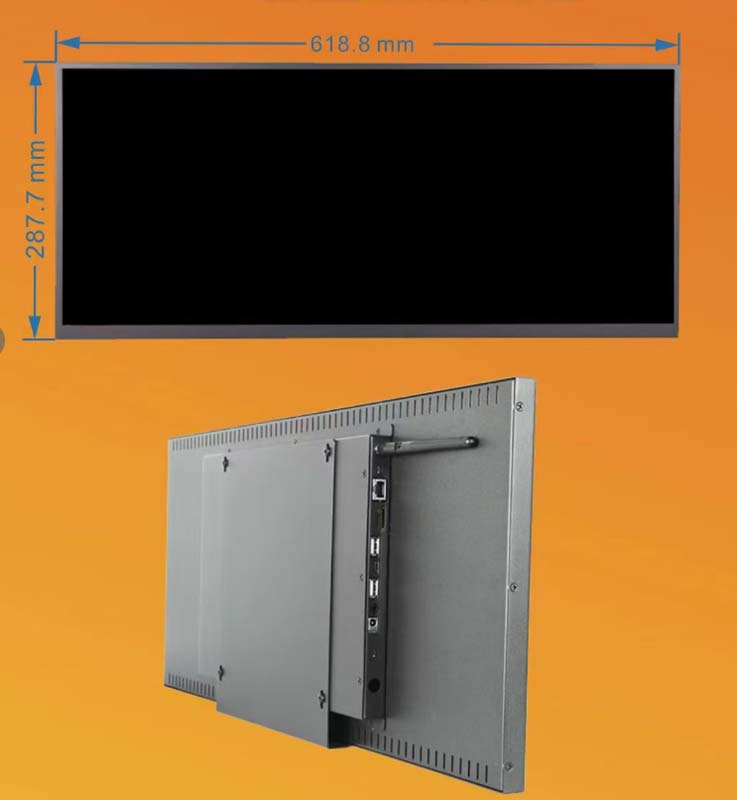
The commercial success of a shelf-edge display is decided by the backlight, not the panel glass. Most stretched bars are edge-lit: LEDs are coupled into a light guide along one or both long edges, keeping the module thin enough (typically 12–25 mm total) to sit inside a shelf rail or a slim enclosure. Edge-lit designs are cost-efficient but have two known weaknesses — thermal concentration near the LED bar and luminance falloff across the long axis.
For supermarket deployment, four backlight parameters matter more than the headline brightness figure:
- Uniformity. Ask for a 9-point or 13-point luminance uniformity figure of 75% or better across the active area. A visible hot band near one end reads as "damaged" to a shopper and shortens the perceived life of the installation.
- Dimming range. A store dims lighting after hours and at night; the display must dim proportionally without colour shift. Look for PWM dimming at 1,000 Hz or higher to avoid banding on smartphone cameras, or DC dimming where flicker sensitivity is a concern.
- Sustained brightness. A panel quoted at 1,000 cd/m² in a datasheet may deliver 700 cd/m² after thermal equilibrium inside a sealed shelf rail. Specify brightness at thermal equilibrium, in the intended enclosure, at the ambient temperature of the store zone.
- LED binning and ageing. Batch-to-batch colour consistency is essential when forty displays sit end to end on a run of shelving. Require a defined white-point tolerance (for example Δu'v' ≤ 0.003) and an L70 or L50 lifetime statement at rated current and case temperature.
3. Brightness Budget for the Canadian Store Environment
Canadian sales floors commonly run between 400 and 1,000 lux of ambient illuminance, with higher levels in fresh produce and bakery and lower levels in wine, pharmacy, and general merchandise. Refrigerated cases add their own internal lighting, and glass doors add specular reflection from overhead fixtures.
As a working rule:
| Zone | Ambient (typical) | Recommended display luminance | Notes |
|---|---|---|---|
| Dry grocery gondola | 500 – 800 lux | 500 – 700 cd/m² | Matte AG coating; avoid mirror-finish cover glass |
| Fresh produce / bakery | 800 – 1,200 lux | 700 – 1,000 cd/m² | Warmer store lighting; verify white point under 3000–3500 K |
| Refrigerated / freezer case | 300 – 800 lux + internal LED | 700 – 1,000 cd/m² | Condensation control is the dominant risk, not brightness |
| Checkout lane | 300 – 600 lux | 400 – 600 cd/m² | Short dwell; high contrast and large type |
Higher brightness is not automatically better. Overdriven edge-lit bars run hotter, age faster, and shift toward blue. The correct approach is a luminance budget derived from the actual store zone, then a panel selected with 20–30% headroom for ageing, not a 1,500 cd/m² specification applied indiscriminately.
4. Cold-Chain Deployment: Refrigerated and Freezer Cases
Canada's grocery mix is dairy-, produce-, and frozen-heavy, so a large share of any shelf-display rollout lands inside refrigerated cases. This is where most pilots fail. Two mechanisms cause trouble:
Condensation. Cold display surfaces in a warm, humid store aisle fall below dew point whenever a door opens. Moisture on the front polariser degrades contrast and, over months, causes haze, edge staining, and delamination. Mitigations include an ITO or anti-fog coated front glass, a sealed front chamber with a desiccant, a low-power transparent heater between the panel and the front glass, and a gasket design that prevents cold-air migration behind the module.
Temperature derating. Standard commercial panels are specified for 0 °C to 50 °C operation. A freezer case can sit at −18 °C to −22 °C. Two options exist: use an extended-temperature panel rated to −20 °C or −30 °C (slower response time, higher cost), or thermally isolate the display behind a low-E front glass so the panel's own backlight heat maintains the module within its operating window. The second approach is usually more economical and more reliable; it must be validated with a thermal chamber test that mimics door-open events.
For freezer cases, also specify: no exposed metal on the shopper-facing surface that can frost-bite on contact, IP54 or better sealing on the enclosure, and a condensation sensor or heater thermostat rather than continuous full-power heating.
5. Bilingual Content and Canadian Compliance
Language is a hard requirement, not a design preference. Federal packaging and labelling law requires specified information in both English and French, and Quebec's Charter of the French Language, strengthened by Bill 96 and its 2024 implementing regulations, imposes markedly predominant French in commercial advertising and signage within the province, with tightened rules on trademarks and commercial publications taking effect in 2025.
For a digital shelf display, this means the content system — not the hardware — must be bilingual by design:
- Every template must hold both languages, and the display must be able to render either or both depending on store locale.
- French strings run 15–25% longer than English. A layout that fits "Family Size" will clip "Format familial." Design to the French string, then let English sit in space.
- In Quebec, French must be markedly predominant — larger, or at least displayed simultaneously and with equal prominence within a bilingual layout. Do not sequence French and English in alternating time slots and assume compliance; get sign-off from counsel before deployment.
- Unit price (price per 100 g, per 100 mL, or per unit) is mandatory in most Canadian price representations and must be updated atomically with the shelf price.
Price accuracy is a second compliance axis. Under the Competition Act, materially false or misleading price representations are prohibited, including undisclosed fixed fees and inaccurate "was/now" comparisons. Many Canadian retailers additionally follow the Scanner Price Accuracy Voluntary Code, under which a scanning error in the customer's favour generally results in the item being free (under $10) or discounted by $10. A dynamic shelf display that lags the point-of-sale system by even a few minutes can therefore create a real financial and reputational exposure. Specify that shelf-edge prices derive from the same price master as the POS, with an audit trail and a fail-safe that reverts to a static, verified price if the content feed is stale.
6. Electrical Safety, EMC, and Certification for the Canadian Market
Canada accepts certification marks from SCC-accredited certification bodies. A display entering the Canadian market should carry:
- cUL, cCSA, or equivalent Canadian safety mark to CAN/CSA-C22.2 No. 62368-1 (the current audio/video and IT equipment safety standard), or the older 60950-1 for legacy inventory — but new designs should be 62368-1 based.
- ICES-003 compliance for unintentional radiators, administered by Innovation, Science and Economic Development Canada. Note that ICES-003 requires Canadian-specific labelling showing the ICES-003 statement and the CAN ICES-3(A)/NMB-3(A) or Class B designation.
- RSS-247 certification where Wi-Fi or Bluetooth radios are integrated — a single module certified for Canada is far simpler than certifying a custom radio design.
- Provincial electrical approval for hardwired installations. Ontario, Quebec, BC, and Alberta each enforce their own electrical code; a field evaluation or a recognised certification mark is required for inspection sign-off.
Practical implication: a supplier who can ship a Canadian-market SKU with the cUL mark, ICES-003 statement silkscreened on the rear label, and an external certified power supply saves the integrator six to ten weeks and a five-figure certification bill. Confirm the mark is on the product, not just in the documentation, before a single unit is installed.
7. Mechanical Integration and the Gondola Reality
Canadian supermarkets overwhelmingly use standard gondola shelving with 1.2 m (4 ft) or 1.25 m bays and shelf rails at 30–50 mm strip height. Design constraints follow from that:
- Open-frame or rail-mount construction. An open-frame module with a defined mounting flange and a metal chassis is easier to integrate into a custom rail extrusion than a finished monitor with a plastic bezel.
- Depth budget. Many shelf rails allow only 25–35 mm of depth including the connector. Specify right-angle or recessed connectors, and confirm cable bend radius.
- Weight and safety factor. A shelf front edge is a cantilever. A 28.8" bar module may weigh 1.5–3 kg; adding a bracket and cabling to a loaded shelf edge changes the load path. Verify shelf load ratings and use a retention clip so a display cannot fall into a shopper's path if the rail is bumped by a pallet jack.
- Serviceability. Displays fail or need re-imaging. A tool-less front-release mechanism, or a design where the module slides out of the rail without removing product, cuts service time from twenty minutes to two.
- Power distribution. Distributing 12 V or 24 V DC along a bay via a single certified power bus is far cheaper and more reliable than fitting forty individual adapters into a shelf.
8. Thermal Management and 24/7 Reliability
Shelf-edge displays usually run continuously, are enclosed, and sit in still air. Heat is the dominant ageing factor for both the LED backlight and the driver electronics. Design targets worth writing into the purchase specification:
- Panel surface temperature at thermal equilibrium at least 10 °C below the panel's rated maximum.
- Driver board components rated for 105 °C, not 85 °C.
- No active fan in a grocery environment — fans ingest flour dust, produce mist, and cleaning aerosols, and become the first failure point. Passive thermal design via an aluminium back plate and conduction to the mounting rail is preferred.
- Static-content burn-in mitigation: a pixel-shift routine, periodic full-screen refresh, and CMS-enforced maximum static dwell for high-contrast elements such as a fixed price box.
- Watchdog timer with automatic recovery, and a scheduled nightly reboot window.
9. Connectivity, Content Systems, and Privacy
There are two mainstream architectures. An embedded SoC display (Android-based, with local storage and a CMS agent) is cheapest per position and works well at scale, but it multiplies the number of network endpoints and firmware versions. An external player or centralised renderer feeding displays over HDMI or over IP gives tighter content control and simpler patching, at higher cost and cabling complexity.
For a Canadian grocery chain, network design should assume: VLAN segregation of shelf devices from POS and pharmacy systems; TLS for all content and management traffic; signed firmware with a documented update path; and offline resilience so that a WAN outage leaves prices displayed and correct rather than blank or stale.
If the display includes a camera, people counter, or any sensor that collects personal information, Canada's Personal Information Protection and Electronic Documents Act (PIPEDA) applies, along with Québec's Law 25 for Quebec operations. In practice this means: meaningful notice at the point of collection, purpose limitation, retention limits, and — for anything beyond aggregate counting — consent. The simplest and most defensible design is a display that stores no personal data at all and does its analytics on anonymous aggregate counts.
10. Content Design for a Two-Metre Sightline
Bar displays reward restraint. At a viewing distance of 1.0–1.5 m, a 1920 × 540 panel at 37" diagonal yields roughly 60 pixels per degree — comfortable for text at 24 px and above. Practical rules:
- One message per screen. The shelf edge KEYWORDS: Stretched Bar LCD Displays for Retail Shelves and Supermarkets in Canada