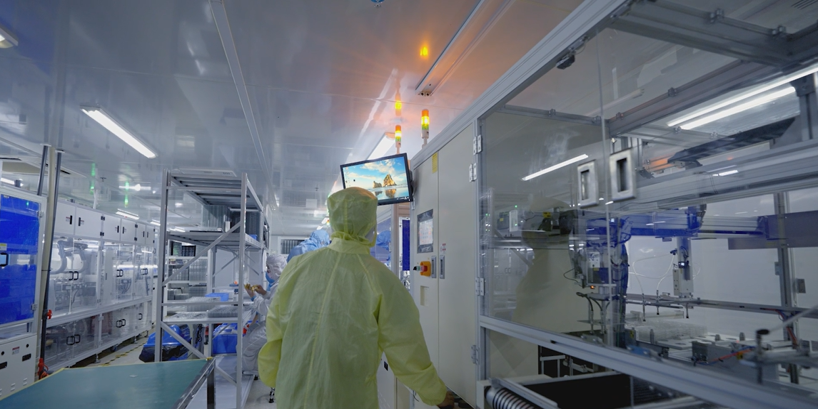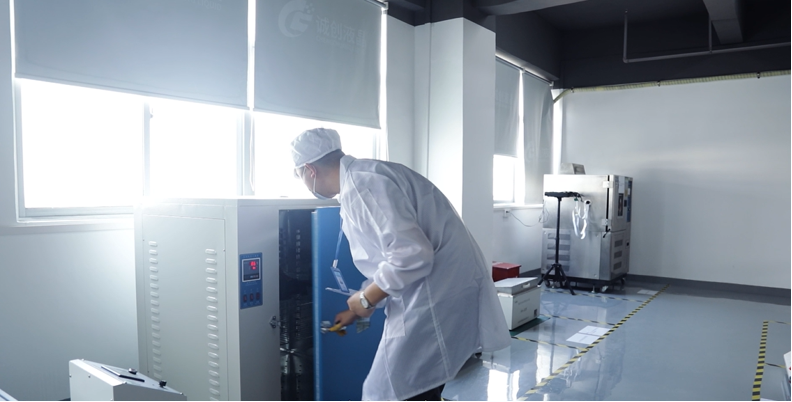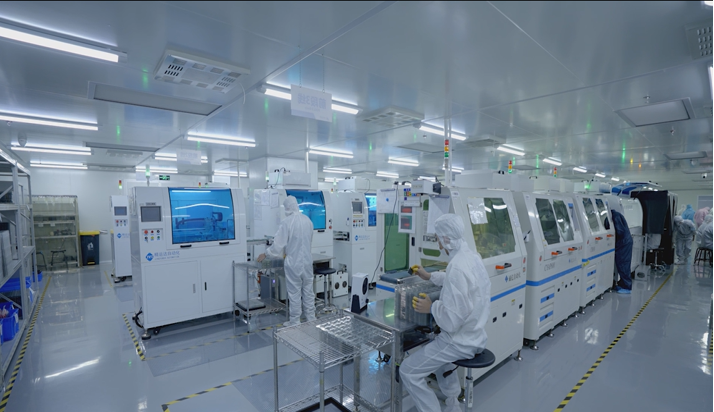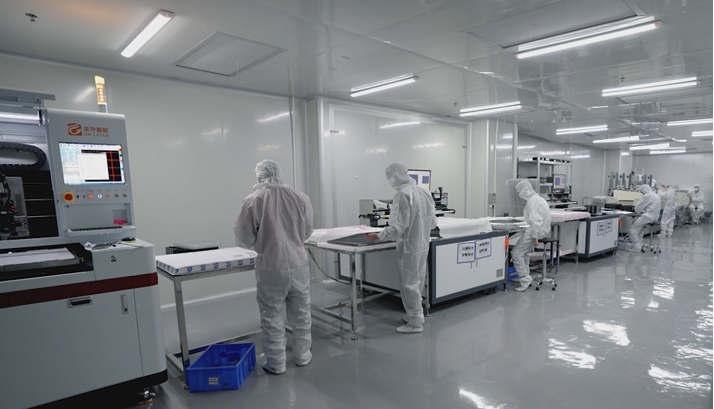
Diagnostic imaging lives or dies by the quality of the display in front of the clinician. A missed micro-calcification on a mammogram, a hairline fracture lost in a shadow, or a subtle density gradient washed out by ambient glare can all trace back to a single point of failure: the LCD panel. Medical grade LCD displays are engineered to a different standard than commercial monitors, combining calibrated luminance, DICOM Part 14 conformance, wide bit-depth grayscale, and long-life industrial components rated for continuous clinical duty. At HITULCD we build high-brightness LCD modules for exactly these environments, and this white paper walks through the ten displays we most frequently specify into diagnostic equipment, along with the engineering rationale behind each choice.
What Makes an LCD "Medical Grade"
Before ranking the panels, it helps to define the criteria. A true medical grade LCD display is not simply a bright commercial panel with a certification sticker. It must satisfy several overlapping requirements simultaneously:
- DICOM GSDF conformance: The grayscale response must follow the Grayscale Standard Display Function so that perceived contrast is uniform across the full luminance range, from deepest black to peak white.
- Stable calibrated luminance: Diagnostic panels typically operate between 400 and 1000 cd/m² calibrated, with a maximum native luminance well above that to preserve headroom as the backlight ages.
- Wide viewing angle and low color shift: IPS or equivalent wide-angle technology ensures that a clinician standing at the bedside sees the same values as one seated directly in front.
- Long-life LED backlight with luminance sensing: Front or rear photosensors feed a closed-loop control system that holds calibrated output constant for the life of the display.
- Industrial reliability: Wide operating temperature, extended MTBF, and long-term availability so that OEMs can build the same device for a decade without a panel change.
Every model below is measured against these benchmarks, then differentiated by size, resolution, brightness, and the specific diagnostic modality it serves.
The Top 10 Medical Grade LCD Displays
1. HT150HDL-1000 — Compact High-Bright Endoscopy Panel
This 15-inch panel delivers 1000 cd/m² of native luminance calibrated down to a rock-steady 500 cd/m², making it ideal for endoscopy carts and minimally invasive surgical towers where reflected light from OR lamps is a constant challenge. The IPS matrix holds a 178°/178° viewing cone and a 1500:1 native contrast ratio, while an integrated anti-reflective bonded cover glass suppresses veiling glare. With a 10-bit driver delivering 1.07 billion colors, subtle mucosal tissue gradients remain visible even under bright surgical lighting.
2. HT190HDL-800 — Patient Monitoring and Point-of-Care Display
At 19 inches and 800 cd/m², the HT190HDL-800 is our workhorse for multi-parameter patient monitors and point-of-care ultrasound. Its high brightness ensures waveform trends and numeric vitals stay legible in daylight-flooded emergency departments. A wide 4:3 aspect ratio suits legacy monitoring form factors, and the panel carries an optically bonded projected-capacitive touch option for glove-friendly interaction. Continuous 24/7 duty rating and a 70,000-hour backlight MTBF keep it in service across long deployment cycles.
3. HT215HDL-700 — Full HD Diagnostic Ultrasound Display
This 21.5-inch Full HD (1920×1080) panel is tuned for diagnostic ultrasound and Doppler imaging, where smooth motion and accurate low-luminance grayscale matter more than raw pixel count. Calibrated to 500 cd/m² with DICOM conformance, it resolves the fine speckle texture of B-mode imaging and preserves the color fidelity of flow overlays. Low input lag and a 60 Hz stable refresh keep real-time scanning fluid, and the wide gamut backlight covers sRGB completely for consistent color Doppler reproduction.
4. HT240HDL-600 — 2MP Clinical Review Display
A 24-inch 2-megapixel display built for clinical review and multi-modality reading rooms. The HT240HDL-600 pairs 600 cd/m² native luminance with a factory DICOM calibration and per-unit luminance uniformity correction, holding deviation across the screen to within a few percent. This is the panel we recommend for radiology reporting stations that mix CT, MR, and CR images in a single review workflow, where consistent grayscale across the entire surface is essential to reader confidence.
5. HT270HDL-750 — Surgical and Hybrid OR Display
Designed for hybrid operating rooms and image-guided surgery, this 27-inch panel pushes 750 cd/m² so that live fluoroscopy and endoscopic feeds remain sharp under the intense ambient light of a modern OR. It features a fully sealed IP-rated bezel for cleanability, chemical-resistant cover glass, and DisplayPort plus 3G-SDI inputs for direct connection to imaging chains. The wide color gamut and 10-bit pipeline render tissue and instrument detail with the depth surgeons rely on.
6. HT320HDL-500 — Large-Format Multimodality Display
The 32-inch HT320HDL-500 is a large-format 4K (3840×2160) panel calibrated to 400 cd/m² for reading rooms that consolidate multiple studies onto one screen. Its 8-megapixel resolution lets radiologists display several images side by side without windowing overhead, and the DICOM-conformant grayscale plus front-sensor luminance stabilization make it suitable for primary interpretation across CT and MR. A wide 178° viewing cone supports collaborative reading with colleagues gathered around the workstation.
7. HT215HDL-1000 — High-Bright Mobile C-Arm Display
Mobile C-arms move between rooms and lighting conditions, so this 21.5-inch panel is specified at a full 1000 cd/m² native to guarantee readability anywhere. Optical bonding eliminates the internal air gap that causes parallax and internal reflections, and a hardened front surface withstands repeated disinfection. The display is rated for a wide operating temperature range to tolerate the thermal cycling of a cart-mounted system, and its high brightness leaves ample calibration headroom as the LED backlight ages.
8. HT490HDL-600 — Operating Room Wall Display
A 49-inch large-format wall display for integrated OR video routing and surgical navigation. The HT490HDL-600 combines 4K resolution with 600 cd/m² brightness and a matte anti-glare surface so that the surgical team can view imaging from a distance without hot-spot reflections. Multi-window processing lets it show up to four simultaneous sources, and the industrial-grade panel is rated for extended continuous operation with long-term component availability for OEM integration programs.
9. HT550HDL-700 — Radiology Conference and Tumor Board Display
This 55-inch, 700 cd/m² 4K display is built for multidisciplinary conferences and tumor boards where diagnostic-quality images must be shared with a room full of specialists. DICOM conformance and uniform luminance ensure that the projected diagnostic detail is faithful to what the reporting radiologist saw at the workstation. Wide viewing angles and high brightness keep the image accurate across a large, often brightly lit conference space.
10. HT650HDL-1000 — Ultra-High-Bright Digital Radiography Display
At the top of the range, the 65-inch HT650HDL-1000 delivers a striking 1000 cd/m² across a 4K surface for high-ambient digital radiography suites and teaching environments. This ultra-high-brightness large-format panel is engineered for demanding installations where windows, overhead lighting, or public-facing displays would defeat a conventional monitor. A closed-loop luminance sensor and thermal management system hold calibration stable over long duty cycles, and the wide-gamut backlight supports both grayscale diagnostic content and full-color reference material.
How to Choose the Right Display for Your Modality
Selecting among these panels comes down to matching brightness, resolution, and size to the clinical task. For grayscale-dominant primary interpretation such as mammography-adjacent review or CR reading, prioritize resolution and DICOM-calibrated luminance uniformity over raw brightness. For real-time modalities like ultrasound, endoscopy, and fluoroscopy, prioritize high native brightness, low latency, and glare control, since these displays operate in bright, dynamic environments. For collaborative and conference use, large-format 4K panels with wide viewing angles and stable luminance carry the diagnostic intent across the room.
Two engineering details deserve special attention during specification. First, always confirm the ratio between native and calibrated luminance. A panel rated at 1000 cd/m² native but calibrated to 500 cd/m² retains headroom to hold that calibrated value for years as the backlight dims, whereas a panel calibrated near its native ceiling will drift out of DICOM conformance far sooner. Second, verify that luminance sensing is closed-loop rather than a one-time factory setting, because only active feedback keeps grayscale response within tolerance over the display's full service life.
The HITULCD Engineering Advantage
Every model in this ranking is built on the same core commitments: high native luminance for lasting calibration headroom, DICOM GSDF-conformant grayscale, wide-angle IPS imaging, long-life LED backlights with luminance stabilization, and industrial reliability suited to continuous clinical duty. Optical bonding, anti-reflective and anti-glare treatments, medical-grade cover glass, and sealed cleanable bezels are available across the range, and long-term component availability protects OEM designs against mid-lifecycle redesign. The result is a family of medical grade LCD displays that let diagnostic equipment perform to its full potential, from the compact endoscopy cart to the 65-inch radiography suite.
Conclusion
The right display is an active participant in diagnosis, not a passive window. High native brightness, DICOM conformance, and disciplined luminance control are what separate a medical grade LCD from a commercial panel that merely looks bright on a spec sheet. Whether you are integrating a point-of-care ultrasound, a hybrid OR imaging chain, or a large-format reading room, the ten HITULCD displays profiled here provide a tested foundation for accurate, reliable diagnostic imaging. For detailed specifications, calibration reports, or engineering samples of any model, our team is ready to support your next diagnostic equipment program.