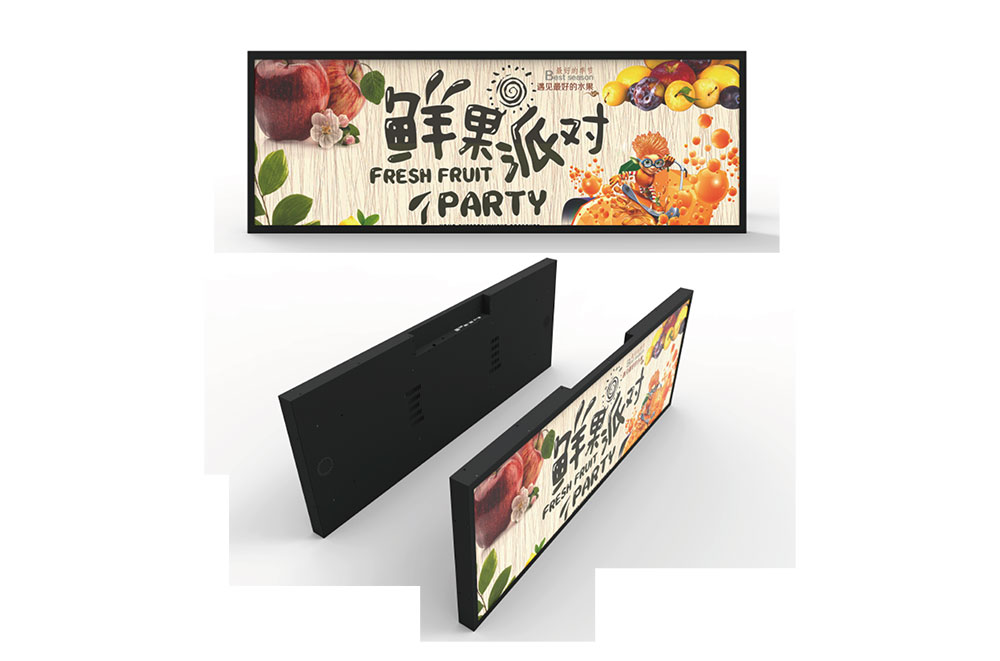
Industrial equipment rarely retires on the schedule that display supply chains follow. A control panel, medical cart, or outdoor kiosk may need to run reliably for ten to fifteen years, yet the TFT LCD inside it often reaches end-of-life (EOL) in three to five. When the original panel disappears, engineers face an uncomfortable choice: redesign the mechanical enclosure, rework the driver board and firmware, and requalify the entire product, or find a display that drops into the existing footprint without touching anything else. Pin to pin compatible alternatives exist precisely for that second path. This white paper from HITULCD explains what true pin compatibility means, why it matters for industrial programs, and presents ten proven replacement panels engineered to slot into legacy designs with minimal risk.
What "Pin to Pin Compatible" Actually Means
The phrase is used loosely across the industry, so it helps to define it precisely. A genuine pin to pin compatible alternative matches the original display across several dimensions simultaneously:
- Electrical interface: identical connector type, pin count, pin order, and signal definition. A 40-pin LVDS panel must map VCC, GND, LVDS pairs, backlight enable, and PWM dimming to the exact same physical pins.
- Mechanical outline: matching overall dimensions, active area, bezel opening, mounting hole positions, and thickness so the panel seats in the existing bracket and gasket.
- Optical and timing behavior: the same native resolution, pixel format, and a timing window that the existing timing controller can drive without firmware changes.
- Backlight architecture: compatible LED string configuration and current range so the original backlight driver operates within specification.
When all four align, the replacement becomes what engineers call a "form-fit-function" match. The board, the harness, the software image, and the enclosure all stay untouched. That is the outcome every maintenance and sustaining engineer is chasing.
Why Pin Compatibility Is a Strategic Concern, Not a Convenience
The cost of a display redesign is almost never the display itself. It is the requalification. In regulated markets, changing a panel can trigger EMC retesting, safety recertification, optical validation, and in medical or transport applications, formal design-change documentation. A single requalification cycle can consume months and tens of thousands of dollars in engineering and lab time. A pin to pin compatible swap collapses that effort to incoming inspection and a functional bring-up test.
There is also a continuity-of-supply dimension. Panel makers who serve consumer volumes discontinue industrial-grade parts with little warning because the industrial run rate is small relative to their consumer business. A supplier like HITULCD that commits to long lifecycle availability and designs replacements around legacy interfaces gives OEMs a hedge against that volatility. The goal is to decouple product lifespan from panel lifespan.
How to Evaluate a Candidate Replacement
Before reviewing specific models, it is worth establishing the checklist an engineer should run against any proposed alternative:
- Confirm the connector and pinout on paper first. Overlay the datasheet pin table of the candidate against the original. Look specifically at the position of backlight power, the dimming method (PWM versus analog), and the color-depth select pins.
- Check the timing chart against the host TCON. Even with matching resolution, verify that the pixel clock, horizontal and vertical blanking, and sync polarity fall inside what the source can generate.
- Validate backlight electrical limits. Compare forward voltage of the LED string and rated current. An LED string that expects a different voltage can overdrive or underdrive on the legacy constant-current driver.
- Verify the mechanical stack-up. Total thickness, mounting ear locations, and cable exit direction all matter inside a sealed industrial enclosure.
- Confirm environmental grade. Operating temperature, storage temperature, and vibration rating must meet or exceed the original for the deployment.
The 10 Recommended Pin to Pin Compatible Alternatives
The following HITULCD panels are engineered as direct replacements for widely deployed industrial TFT formats. Each entry notes the size class, interface, and the design intent behind the compatibility choices. Brightness is expressed as high-brightness where the panel targets outdoor or sunlight-readable applications.
1. HT101HDL-1000 — 10.1" WXGA LVDS Replacement
The 10.1-inch 1280×800 class is one of the most common in HMI panels and portable instrumentation. The HT101HDL-1000 targets that footprint with a standard 40-pin single-channel LVDS interface, 1000 cd/m² high-brightness output, and a wide -30°C to +80°C operating range. It is designed to replace legacy 10.1" WXGA modules whose backlight has degraded or whose supplier has gone EOL, preserving the original bezel opening and mounting pattern so the existing front housing carries over unchanged.
2. HT121HDL-1000 — 12.1" XGA Industrial Workhorse Replacement
The 12.1" 1024×768 XGA format has powered industrial controllers and medical monitors for two decades, and many of the original panels are long discontinued. The HT121HDL-1000 keeps the classic 20-pin LVDS pinout and the standard XGA timing so it drops onto existing single-board computers and industrial motherboards without a BIOS or driver change. With 1000 cd/m² and an optional wide-temperature build, it extends the service life of installed fleets rather than forcing a redesign.
3. HT150HDL-1000 — 15" XGA Panel-PC Replacement
Panel PCs and factory-floor terminals standardized heavily on the 15" 1024×768 format. The HT150HDL-1000 matches the traditional dual-channel connector footprint and the same active area, allowing it to seat directly into the resistive or projected-capacitive touch stack already bonded into the machine. High brightness makes it suitable for brightly lit production environments where older panels wash out.
4. HT156HDL-1000 — 15.6" FHD Wide-Format Replacement
As newer designs moved to 16:9, the 15.6" 1920×1080 panel became a fixture in kiosks and digital signage terminals. The HT156HDL-1000 provides a pin-aligned 30-pin or 40-pin LVDS option to match the two dominant legacy variants, letting integrators specify the exact pinout their existing harness uses. Its 1000 cd/m² rating and enhanced UV-stable polarizer suit semi-outdoor and window-facing installations.
5. HT170HDL-1000 — 17" SXGA Legacy Replacement
The 17" 1280×1024 SXGA panel is a stubborn legacy format: still deployed in industrial inspection and older medical imaging, but nearly impossible to source from original vendors. The HT170HDL-1000 rebuilds that format with a compatible dual-channel LVDS interface and the same 5:4 active area, so the mechanical bezel and the display controller both remain valid. This is a targeted rescue part for equipment that would otherwise require a full front-end redesign.
6. HT190HDL-1000 — 19" SXGA Control-Room Replacement
Control rooms and SCADA stations relied on 19" 1280×1024 displays for their generous viewing area. The HT190HDL-1000 preserves the interface and outline of the common industrial 19" module while adding high brightness and an extended half-life LED backlight, addressing the two most frequent failure and obsolescence modes at once. Continuous-operation ratings make it appropriate for 24/7 monitoring desks.
7. HT215HDL-1000 — 21.5" FHD Signage and Kiosk Replacement
The 21.5" 1920×1080 panel is the volume workhorse of interactive kiosks and self-service terminals. The HT215HDL-1000 offers a pin-compatible eDP or LVDS variant to cover both the newer and older interface generations found in this size, with the connector and mounting geometry matched to the prevailing industrial standard. At 1000 cd/m² it stays readable behind glass in retail and transit environments.
8. HT070HDL-1000 — 7" WVGA Embedded Replacement
Small 7" 800×480 WVGA panels sit inside handheld instruments, portable ultrasound, and compact HMIs, and their tiny FPC connectors make substitution especially unforgiving. The HT070HDL-1000 matches the common 40-pin RGB and 50-pin variants used in this class, aligning the interface-select and backlight pins so no adapter board is required. High brightness supports handheld outdoor field use where standard 7" panels fail in sunlight.
9. HT104HDL-1000 — 10.4" VGA/XGA Ruggedized Replacement
The 10.4" 4:3 panel remains embedded in ruggedized military-derived and transportation equipment long after commercial supply dried up. The HT104HDL-1000 reproduces the 20-pin LVDS interface and the exact 4:3 active area, and it is offered in a wide-temperature, high-vibration build to meet the demanding environments where these legacy 10.4" units live. It is engineered specifically to keep certified rugged assemblies in service.
10. HT133HDL-1000 — 13.3" FHD Mobile-Terminal Replacement
The 13.3" 1920×1080 format bridges portable industrial tablets and vehicle-mounted terminals. The HT133HDL-1000 provides a pin-matched eDP interface consistent with the dominant legacy 30-pin standard, so the graphics pipeline and the enclosure both carry forward. Its high-brightness panel and wide viewing angle address the sunlight-readability and off-axis requirements typical of mobile field deployment.
Managing a Pin-Compatible Transition in Practice
Even with a genuine form-fit-function match, a disciplined transition protects the program. HITULCD recommends procuring engineering samples of the candidate first and running a side-by-side bring-up on the actual target board rather than an evaluation kit, because host-specific TCON quirks only surface on real hardware. Capture the LVDS or eDP signal integrity, confirm the backlight current under the legacy driver, and verify dimming linearity across the full PWM range. Where the deployment is safety- or brightness-critical, measure luminance at the display surface after integration rather than trusting the panel datasheet in isolation, since front glass and touch layers attenuate output.
Document the swap as a like-for-like component substitution supported by the compatibility matrix. In most industrial cases this keeps the change below the threshold that triggers full recertification, which is the entire economic argument for choosing a pin-compatible part in the first place.
Conclusion
Pin to pin compatible alternatives are not merely a procurement convenience; they are a lifecycle strategy. By matching the electrical interface, mechanical outline, timing, and backlight architecture of legacy panels, a well-engineered replacement lets an industrial product outlive the displays it was originally built around, without the cost and delay of redesign or requalification. The ten HITULCD models profiled here span the most widely deployed industrial formats from 7 inches to 21.5 inches, each built with high-brightness output and wide-temperature options for demanding field conditions. For engineers facing an EOL notice, the right move is rarely to redesign the product. It is to drop in a panel that was designed to fit.