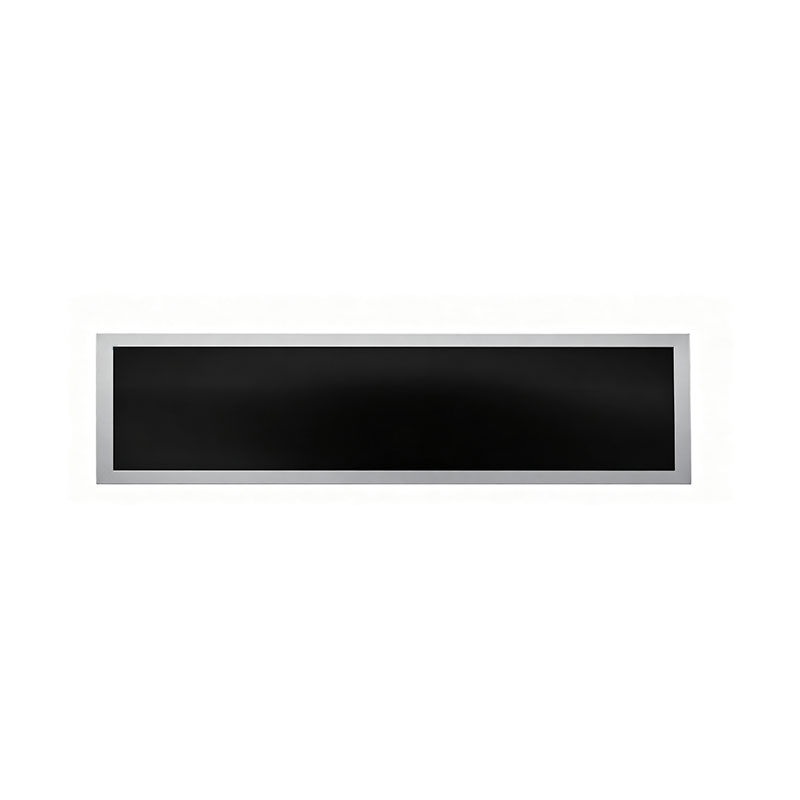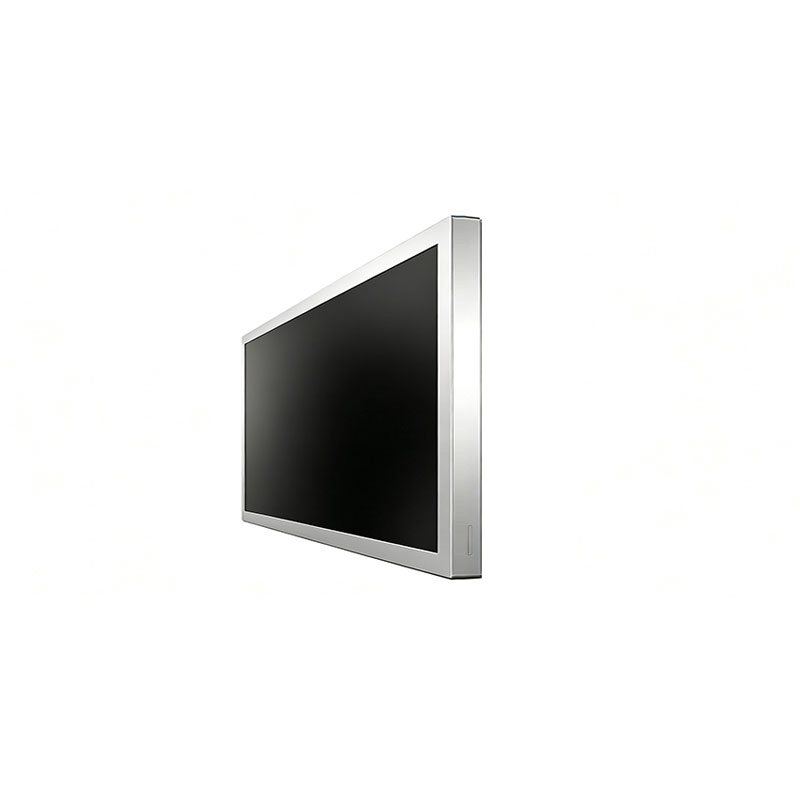
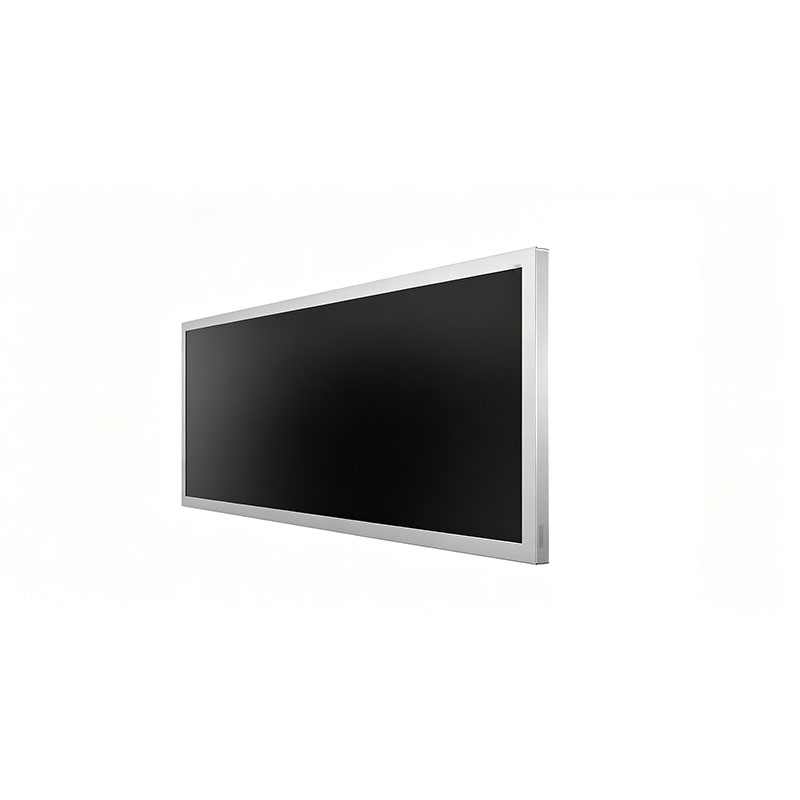
16.8" Ultra Wide Bar LCD Screen
MODEL: HT168HBM
Need customized solution?
Our engineering team is always ready to provide you with professional technical support and flexible customized services.
Understand light customization servicesBuilt by us. Configured for you.
HITULCD supplies LCD modules and display solutions directly from our manufacturing operation, giving OEMs, integrators and distributors direct access to engineering, customization and production.
Supply
Supplier Qualification
VerificationTechnical Specifications
| LCD PANEL PARAMETERS | DRIVER BOARD SPECIFICATIONS | ||
|---|---|---|---|
| ITEM | DETAILS | ITEM | DETAILS |
| Model Number | HT168HBM | Input Interface | LVDS, 30 Pins |
| Brand | HITULCD | Signal Type | LVDS |
| Product Series | 18.5" Cut Panel Series | OSD KEYS | Depends on LVDS controller |
| Diagonal Size | 16.8" Cut Stretched Bar (Cut from 18.5" Panel, 1/2 Cut) | OSD CONTROL | Depends on LVDS controller |
| Resolution | 1920 × 540, Aspect Ratio 3.56:1 (>3:1) | ||
| Product Category | Graphic Type Display | ||
| Panel Type | a‑Si TFT‑LCD, Complete LCM Module | ||
| Physical Shape | Flat Rectangle | ||
| Display Area (A.A) | 409.8(W) × 115.2(H) mm | ||
| Overall Dimension | 439.8(W) × 145.2(H) mm | ||
| Max Thickness | 17 mm | ||
| LCD Technology | IPS, Transmissive Polarizer | ||
| Typical Brightness | 1000 NITS (Adjustable range: 300~1000 NITS) | ||
| Transmissive Contrast Ratio | 1000:1 (Typ.) | ||
| Viewing Angle | 89°/89°/89°/89°(Min.)(L/R/U/D) | ||
| Viewing Direction | Full Viewing Angle | ||
| Display Colors | 16.7M Colors | ||
| Backlight Type | WLED | ||
| Touch Panel | Without Touch Function | ||
| Application Fields | Digital Signage, Cut Stretched Bar Displays | ||
| Operating Temperature | 0 ~ 50 °C | ||
| Storage Temperature | -20 ~ 60 °C | ||
OEM / ODM Stretched Bar LCD Solutions — 16.8" Ultra-Wide TFT Modules
From your mechanical drawing to a production-ready display module. We cut, seal, bond, drive and validate custom bar-type LCDs for OEMs, integrators and brand owners in retail, transportation and industrial markets.
1. Why Custom Bar Displays, and Why Now
Industry research shows steady demand for stretched bar displays, driven by three trends:
| Market driver | What it means for your product |
|---|---|
| Digital shelf-edge and in-store media | Retailers are replacing printed shelf labels with dynamic, price-updatable strips. Long, thin displays that fit existing shelving and refrigerated cases are required. |
| Transit and public-infrastructure upgrades | Trains, subways, buses and elevators need slim passenger-information strips that fit door headers, ceilings and narrow panels. |
| Space-constrained industrial and EV equipment | Chargers, HMI fronts, rack-mount devices and vending/kiosk products need a panoramic UI in a shallow enclosure. |
Published market reports forecast growth for stretched/bar-type displays at roughly 6% to 13% CAGR through the early 2030s, depending on scope and methodology, with retail and transportation the largest segments. Analysts also flag two constraints: higher cost than standard panels and a niche, non-standard form factor. This is exactly why a supplier who can do OEM/ODM customization matters. Off-the-shelf sizes rarely fit, and buying a custom module should not mean taking on cutting, sealing and reliability risk yourself.
2. What Buyers Tell Us They Need
Based on typical engineering and procurement inquiries for cut-panel projects:
Proof of feasibility before NRE: cut-line versus Gate/Source routing and TFT array
Reliability after cutting: edge sealing, 85/85, thermal shock, drop
Optical consistency: no edge light leakage, color shift or mura
Predictable cost and schedule: NRE, sample lead time, MOQ, yield
Long-term supply stability: source panel lifecycle and change control
Export compliance and documentation for EU/US markets
Our OEM/ODM process is built around these six points.
3. Service Models
OEM: Build to Your Specification
You provide the drawing and requirements; we manufacture to print.
Custom outline and cut dimensions based on the 16.8" ultra-wide platform
Your connector, FPC, cable and interface definition
Private-label packaging, labeling and barcode
Controlled BOM and change notification (ECN/PCN)
ODM: We Engineer the Solution With You
You provide the application and target; we develop the module.
Panel selection and cut-size recommendation
Backlight redesign for brightness, uniformity and edge light-seal
Driver board / controller board (LVDS, eDP, MIPI, HDMI options) [confirm per project]
Optical bonding, cover glass (AG/AR/AF) and touch integration
Mechanical design support: bezel, bracket and thermal advice
Optional Android / Linux player board for signage integration [confirm availability]
| OEM | ODM | |
|---|---|---|
| Design ownership | Customer | Shared / supplier-led |
| Engineering effort | Low–Medium | Medium–High |
| Best for | Established products needing a custom size | New product development, fast time-to-market |
| Typical start | Drawing + spec | Concept + requirements |
4. Customization Options
| Category | Options |
|---|---|
| Size and shape | Custom cut on one axis, custom aspect ratio, outline and corner design |
| Brightness | Standard / High brightness [up to 1,000+ nits, model-dependent] |
| Temperature | Commercial / wide-temperature version |
| Interface | LVDS / eDP / MIPI [per model], custom FPC and cable length |
| Touch | Projected capacitive, glove/water-tolerant options [confirm] |
| Bonding and glass | Optical bonding, AG / AR / AF, tempered cover glass, custom printing |
| Backlight | Edge-lit or direct-lit, dimming interface |
| Branding | Private label, custom packaging, serial / QR labeling |
5. OEM/ODM Project Workflow
Step 1: Requirement review. Share drawing, application, environment and volume forecast.
Step 2: Feasibility report (typically [__ business days]). Recommended source panel and cut line, routing-interference check, cutting method (mechanical wheel vs. picosecond laser), edge-quality target, risk list.
Step 3: Quotation and NRE. Transparent breakdown of engineering, jigs/tooling and driver board development.
Step 4: Engineering samples ([e.g. 20 pcs], approx. [__ weeks]). Includes inspection report and edge/optical evaluation.
Step 5: Validation. Reliability plan agreed with your QA team (85/85, thermal shock, high/low temperature, vibration, drop).
Step 6: Pilot run. Yield and process-capability confirmation before volume release.
Step 7: Mass production and supply. Incoming panel control, in-line inspection, 100% functional and optical test, forecast-based supply planning.
6. Quality & Reliability Assurance
Cutting: Dimensional tolerance [±0.2 mm typical], microscope edge inspection, defined chipping and micro-crack criteria
Sealing: Secondary edge seal [UV adhesive / other], automated dispensing, bead inspection
Optical: Light leakage, color shift and edge mura criteria agreed at sample approval
Reliability: Test items and conditions tailored to consumer or industrial grade; benchmark data from similar projects available under NDA
Traceability: Lot and serial tracking from source panel to finished module
Quality system: [ISO 9001 / IATF 16949 — list only certificates you hold]
7. Commercial Terms at a Glance
| Item | Information |
|---|---|
| NRE | [Per project; may be credited against volume orders] |
| Sample lead time | [__ weeks] |
| MOQ | [Custom models: __ pcs; standard cut sizes: __ pcs] |
| Mass-production lead time | [__ weeks ARO] |
| Target yield | [Confirmed after pilot run] |
| Incoterms | [EXW / FOB / DDP on request] |
| Payment terms | [T/T, L/C, or as negotiated] |
| Warranty | [__ months] |
| IP and confidentiality | NDA available; customer-owned design remains customer property |
8. Compliance & Documentation
RoHS and REACH declarations [confirm availability]
CE / FCC support for finished assemblies [confirm scope]
Packing list, COO and commercial documents for EU/US customs
Lifecycle management: last-time-buy notification and alternative source planning
9. Typical Programs
Shelf-edge and refrigerated-case digital price strips
Train, subway and bus passenger information displays
Elevator door and lobby panels
EV charger and industrial HMI front panels
Vending, kiosk and gaming machines
Rack-mount and test & measurement equipment
10. FAQ
Q: Can you customize based on the 16.8" model only, or other sizes too?Yes. The 16.8" is a reference platform; we also customize other cuttable panel sizes. [Confirm size range.]
Q: What is your minimum order for a custom size?MOQ depends on the source panel and cutting complexity. Please share your annual volume for a specific answer.
Q: Who owns the design and tooling?Customer-specific drawings and IP remain yours. Tooling ownership terms are defined in the project agreement.
Q: Can you support both prototyping and mass production?Yes, including a pilot run before volume release.
Q: Do you provide a driver board or only the LCD module?Both. We can supply the bare module, module with driver board, or a fully integrated unit. [Confirm.]
11. Start Your OEM/ODM Project
Send your drawing (DXF/DWG/STEP/PDF), target size and tolerance, interface, brightness/temperature needs, application and annual volume. We will respond with a feasibility assessment and quotation.
📧 [your-email@domain.com]
🌐 [your-domain.com]
📱 WhatsApp / WeChat: [number]
[Request Feasibility Review] | [Download OEM/ODM Brochure] | [Talk to an Engineer]
Specifications and terms are indicative and subject to project confirmation.
16.8" Ultra-Wide Stretched Bar LCD Module — Custom-Cut TFT for OEM/ODM Projects
Purpose-built ultra-wide TFT-LCD for narrow enclosures, shelf-edge, in-vehicle, elevator and industrial HMI applications. Engineered, cut, sealed and validated in-house — with a documented feasibility process before you commit to tooling.
Ideal for: Design Engineers · Procurement Managers · Project Leads · System Integrators
1. Product Overview
Standard 16:9 panels force compromises when your enclosure is long and shallow. The 16.8" ultra-wide bar LCD delivers a panoramic active area in a form factor that fits where conventional displays cannot, without stretched UI, cramped icons or wasted bezel space.
Our bar LCDs are produced by precision-cutting a mother TFT panel to your target dimensions, then re-sealing, re-bonding and re-testing the module as a complete, production-ready unit.
Key benefits
Ultra-wide aspect ratio — native panoramic layout for tickers, status bars, dashboards and multi-zone content
Space-efficient integration — fits narrow bezels, shelf rails, door panels and rack-mount fronts
Custom dimensions — cut size and outline tailored to your mechanical drawing
Industrial-ready options — high brightness, wide temperature, optical bonding, touch
Engineering support from day one — DFM/feasibility review before NRE is committed
2. Key Specifications
Values in
[brackets]are configurable or model-specific. Please confirm final figures against the datasheet for your selected variant.
| Parameter | Specification |
|---|---|
| Display size | 16.8" (diagonal) |
| Aspect ratio | [Ultra-wide, e.g. 16:3 / 16:4.5 — per model] |
| Resolution | [e.g. 1920 × ___] |
| Panel type | TFT-LCD, [IPS / ADS / VA] |
| Brightness | [Standard 400–500 nits / High brightness up to 1,000+ nits] |
| Contrast ratio | [e.g. 1000:1] |
| Viewing angle | [e.g. 178° (H/V) for IPS/ADS] |
| Interface | [LVDS / eDP / MIPI — per model] |
| Backlight | LED, [edge-lit / direct-lit] |
| Operating temperature | [Commercial 0–50 °C / Wide-temp −20 to +70 °C option] |
| Storage temperature | [−30 to +80 °C] |
| Options | Capacitive touch, optical bonding, AR/AG/AF cover glass, driver board, custom FPC/cable |
| Customization | Outline size, cut position, connector, brightness, cover glass, firmware/EDID |
3. Manufacturing Process & Feasibility Assessment
Cutting a finished TFT panel is a precision process. We treat feasibility as a formal engineering step, not an afterthought.
3.1 Cutting Method
We select the method per project based on glass thickness, tolerance, edge quality target and volume:
| Method | Best for | Notes |
|---|---|---|
| Mechanical wheel cutting | Straight cuts, cost-sensitive volume programs | Proven, high throughput; tight process control required at the edge |
| Ultra-fast (picosecond) laser cutting | Tight tolerances, minimal chipping, shaped or close-to-circuit cuts | Lower micro-crack risk; higher process cost |
Our engineers recommend the method in the feasibility report and justify it against your tolerance and reliability targets.
Dimensional tolerance: [±0.2 mm typical — confirm per project]
Cut-line positioning: Referenced to the active area and driver IC/FPC side
3.2 Circuit Routing Check (Gate / Source / TFT Array)
Before any cutting, we verify that your target size does not interfere with the panel's Gate/Source routing, TFT array, or seal-line region.
To start a feasibility review, please provide:
Mechanical drawing (DXF/DWG/STEP) with target outline and tolerances
Required active area (AA) and viewing area (VA) position
Interface and connector requirements
Target application, environment and estimated annual volume
Any special requirements (touch, bonding, brightness, temperature)
We return a feasibility report including the recommended source panel, cut line, and identified risks.
3.3 Edge Quality Control
Post-cut edge inspection under microscope
Chipping and micro-crack criteria defined in an agreed edge quality standard (shared with your QA team before sampling)
Edge grinding / chamfering where required to improve mechanical strength
4. Sealing & Reliability
4.1 Secondary Sealing (Anti-Leak / Anti-Moisture)
A cut edge exposes the cell gap. Proper re-sealing is what separates a lab sample from a production-worthy module.
Edge re-seal: [UV-curable adhesive dispensing / other approved sealant — per project]
Moisture barrier on cut edges to protect the liquid crystal layer and polarizer
Automated dispensing with in-line inspection for consistent bead height and coverage
4.2 Reliability Testing
Modules are validated against a test plan agreed with you. Typical test items:
| Test | Typical condition* |
|---|---|
| High-temp / high-humidity ("85/85") | 85 °C / 85% RH, [500 h] |
| High-temperature storage / operation | [80 °C / 70 °C, 500 h] |
| Low-temperature storage / operation | [−30 °C / −20 °C, 500 h] |
| Thermal shock | [−30 °C ↔ +80 °C, N cycles] |
| Vibration | [Per IEC 60068-2-6 / customer spec] |
| Mechanical shock / drop | [Per customer spec] |
*Conditions are configurable to consumer-grade or industrial-grade requirements. Benchmark data from comparable cut-panel projects is available under NDA on request.
4.3 Optical Performance
We inspect for edge-related defects specific to cut panels:
Light leakage at cut edges
Color shift / edge mura
Backlight-to-bezel alignment and light-seal design
Optical acceptance criteria are defined with you in the sample approval stage.
5. Cost, Lead Time & Volume
| Item | Information |
|---|---|
| NRE / engineering fee | [Quoted per project — depends on cutting method, tooling/jigs, FPC/driver board development. Often credited or reduced against volume orders] |
| Sample lead time | [First samples (e.g. 20 pcs): approx. __ weeks after drawing confirmation and NRE payment] |
| MOQ (mass production) | [e.g. __ pcs per order — flexible for pilot runs] |
| Expected yield | [Target yield stated per project after pilot run; process capability data shared during DFM review] |
| Mass-production lead time | [__ weeks ARO] |
| Packaging | ESD-safe trays, export carton, custom labeling on request |
6. Typical Applications
Retail: Shelf-edge digital signage, price-tag rails, promotional strips
Transportation: Bus/rail passenger information, in-vehicle displays, elevator door and landing panels
Industrial: HMI control fronts, rack-mount equipment, test & measurement
Energy & EV: Charger status displays, panel-narrow control interfaces
Vending, kiosk and gaming: Slim panoramic content zones
7. Why Work With Us
Feasibility first — engineering review before you invest in NRE
In-house cutting, sealing and testing — one accountable supplier
Documented quality — edge standards, reliability plans and inspection reports shared upfront
Flexible customization — dimensions, brightness, touch, bonding, interface
Export-ready — experienced with EU/US documentation, labeling and compliance (RoHS / REACH declarations available)
Long-term supply planning — source-panel lifecycle management and last-time-buy alerts
8. FAQ
Q1. Which cutting method do you recommend?It depends on tolerance, glass thickness and edge-quality targets. Mechanical wheel cutting suits straight cuts and cost-driven volume; ultra-fast laser is preferred for tight tolerance or cuts close to circuit areas. We recommend one in the feasibility report.
Q2. Will cutting damage the internal circuitry?Not when the cut line is validated against the Gate/Source routing and seal region beforehand. This is the purpose of the pre-cut feasibility review.
Q3. How do you ensure a cut panel won't leak or absorb moisture?We apply a secondary edge seal (e.g. UV-cure adhesive) and verify it with high-temperature/humidity and thermal-shock testing.
Q4. Can cut modules pass industrial reliability tests?Yes, with the correct process and materials. Test plans are tailored to consumer or industrial grade, and benchmark data from similar projects can be shared under NDA.
Q5. Is edge light leakage or mura a risk?It is a known risk for cut panels, so it is inspected and controlled through backlight light-sealing design and defined acceptance criteria.
Q6. What do I need to prepare to get a quote?Drawing, target size/tolerance, interface, brightness/temperature requirements, application, and estimated volume.
9. Request a Feasibility Review & Quote
Send us your drawing and requirements. Our engineering team will respond with a feasibility assessment, recommended cut solution and quotation.
📧 Email: [your-email@domain.com]
🌐 Website: [your-domain.com]
📱 WhatsApp / WeChat: [number]
📎 Files accepted: DXF, DWG, STEP, PDF
[Request a Quote] | [Download Datasheet] | [Talk to an Engineer]
Specifications are subject to change without notice. Please refer to the approved datasheet and sample specification for final parameters.
Know The Terms Before You Inquire.
|
01 — Shipping Terms
Incoterms Available
EXW
Ex Works — pick up from our factory
FOB
Free On Board — most common for ocean freight
CIF
Cost, Insurance & Freight — to your port
|
02 — Order Minimum
MOQ: 1 Units
Applies to standard specs. Custom brightness, cutting or bezel may adjust MOQ, confirmed at quotation. Sample units available before bulk order
|
03 — Payment Protection
Multiple Secured Methods
|
A Real Factory. Publicly Verifiable.
|
Legal Company Name
Shenzhen Hantu Jiashi Technology Co., Ltd.
|
Unified Social Credit Code
91440300306068446B
|
|
Legal Representative
YUN CHEN
|
Registered Capital
RMB 2,000,000
|
|
Established
May 23, 2014 (11+ years operation)
|
Business Status
● Active / In Operation
|
|
Registered Factory Address
Building B, Gangshen Innovation Park, Huaning Road, Dalang Sub-district, Longhua District, Shenzhen, Guangdong, China
|
|
Contact HITULCD
We'll respond via email within 24 hours. If you'd like to discuss details over WhatsApp or a call, please leave a preferred time and contact method in your message — we will never call you unannounced.
Related solutions
This product is suitable for the following industry application scenarios
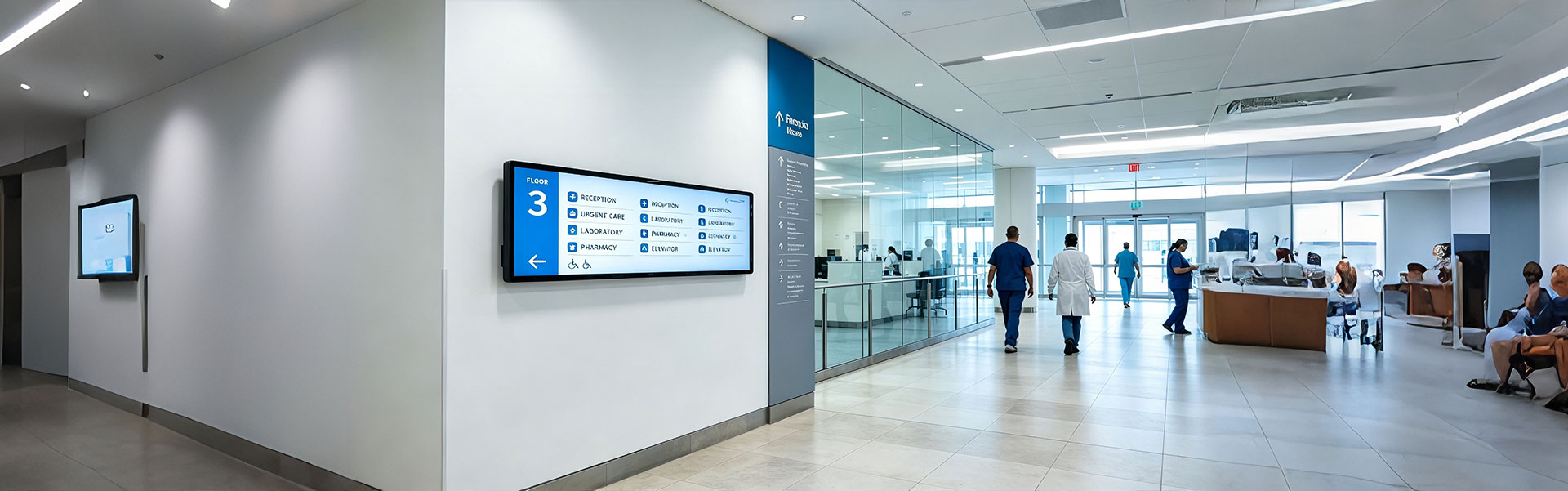
Floor Information Bar LCD Display Solution
Ultra-wide, high-brightness stretched bar LCD disp...
view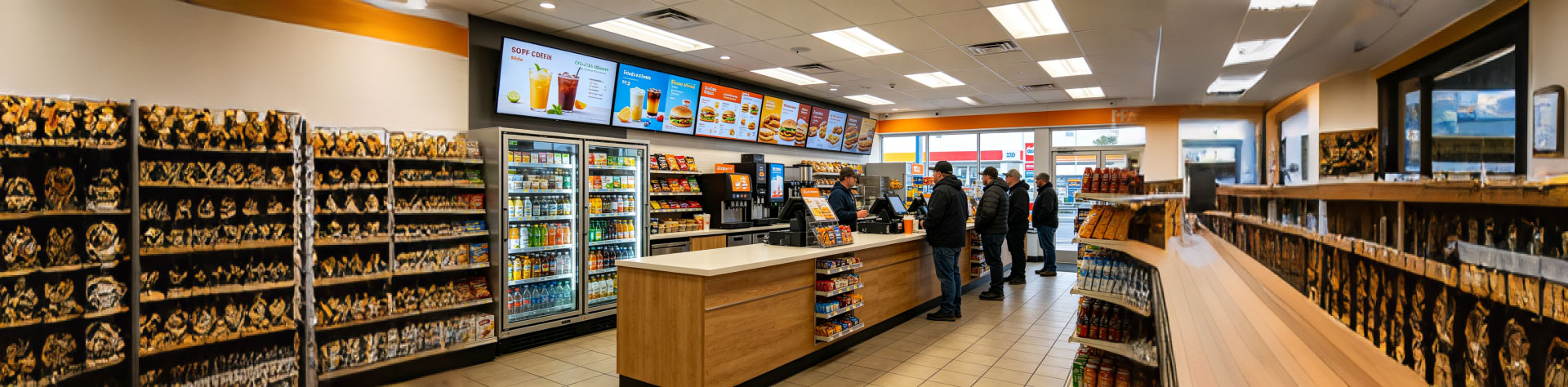
Convenience Store Bar LCD Display Solution
Ultra-slim, high-brightness stretched bar LCD disp...
view
Bus Passenger Information Stretched Bar Display Solution
A rugged, ultra-wide stretched bar display solutio...
viewRelated Products
You may also be interested in the following products